Category: Water

  • A Beginner’s Guide to Flyboarding

    A Beginner’s Guide to Flyboarding

    See if you can figure this one out:

    What can swim like a mermaid, jump out of water like a dolphin, and boost up into the air like Iron Man?

    Answer: You.

    You’ve probably seen the latest innovation that brings super power like capabilities to us mere humans.

    Yep, I’m talking about Flyboards.

    For those less acquainted with this fine piece of human accomplishment you might refer to it as one of those water jet pack things, or maybe a water hoverboard, or even a Jet Ski jet pack if you prefer.

    Whatever you want to call it, I’m sure we can all agree that these things are freakin’ awesome.

    After some practice you can be flipping, spinning, and diving your way through the ocean. Even the dolphins will envy your agility and grace as you’re gliding through the water and air.

    Instructors claim that it only takes about 3-7 minutes to learn basic maneuvers and if you have any experience with other board sports such as wakeboarding or snowboarding the learning curve drops dramatically.

    This isn’t just for you young studs either. Whether you’re 15 or 70 you can be shredding the waters with your very own Flyboard.

    If you’re one of those people always looking for the next thrill to get the adrenaline pumping through your system, there are probably only two things you are thinking when you see one of these new toys on the water:

    • I want to try that.
    • I want to buy that.

    Yeah… we know the feeling. That’s why we are going to dive into everything you need to know about Flyboards in this post.

    We’ll be covering what exactly a Flyboard is, how it all works, a brief overview of Flyboard history, and how to a buy a Flyboard so you can stop paying $300 per hour next time want to take one out for a spin.

    Also, just for fun, we scoured the web searching for the best Flyboard video and came up with six of the greatest ones just for you.

    What is a Flyboard?

    What exactly is this thing and how does it all work?

    Great question.

    Watch this short video and you’ll see exactly what a Flyboard is. And don’t worry, there are some more insane Flyboard videos below for your viewing pleasure!

    Simply put, a Flyboard is a board with bindings that your feet are strapped into. Beneath each foot is a water jet pack. These water jetpacks get their water from a Jet Ski that the Flyboard is attached to with a long tube and an adaptor.

    The water goes from the Jet Ski, through the connection tube, and out the jetpack device underneath your feet, which in turn propels you through the water and air.

    Just imagine for a second that you have your own personal fire hose and its attached to your feet.

    Yes. It’s that awesome.

    The throttle on the Jet Ski, also known as a Personal Water Craft (PWC), controls the amount of pressure that comes out of the Flyboard.

    Instead of the Jet Ski moving faster when you hold down the throttle, the energy is redirected into the tube giving the Flyboard user increased propulsion.

    When you’re ready to step up your skills you can get the adaptor kit that lets you be in control of your own speed while you’re on the Flyboard. Rather than having a certified instructor regulate the amount of propulsion, you are in full control.

    This adaptor is called an Electronic Management Kit. Your PWC will simply be following along behind you while you maneuver through the water.

    Pro Flyboarder, Trey Andrews says this about the Electronic Management Kit:

    “The learning curve is pretty steep, meaning it’s hard to start using the EMK but once you get the hang of it you will never want to be ‘driven’ again.”

    All of your movements are controlled by the direction of your feet and the way in which your body is positioned. Want to go forward? Lean forward. Want to go straight up into the air? Stand straight.

    Sure, it’s easier said than done at first, but after some practice you’ll get the hang of it.

    Who Makes Flyboards?

    Flyboards are a newer innovation in the extreme sports scene and were just recently invented in 2011.

    A professional Jet Skier from France named Franky Zapata and his company Zapata Racing invented and manufacturers the Flyboard.

    The idea presumably stemmed from Jetlev’s R200 Flyer. The idea for the Jetlev was first conceived in 2000 and took the team almost a decade to bring it to market.

    The Jetlev looked more like a jetpack since it is strapped to your back and controlled with your hands.

    This company created a high-speed pump and boat that comes with the jetpack device, which made the cost of the entire product an outrageous $100,000 USD.

    This turned the Jetlev into more of a rental and novelty product that people could try on vacation, but it didn’t have a price point that would allow it to go mainstream.

    The team over at Zapata Racing innovated on the concept by realizing that they could get the power from a Jet Ski instead of creating their own boat. The Jetlev was brought to market in 2009 and Zapata Racing followed soon after by launching their Flyboard in 2011.

    In 2012, the Flyboard manufacturer, Zapata Raching, held the first ever Flyboard World Championships in Doha, Qatar where 50 Flyboarders from over 20 countries competed for the title.

    There has been a world championship each year since 2012 and the number of Flyboarders continues to grow in both the women and men categories.

    When you create something as awesome as the Flyboard there will inevitably be some company competitors that try to get in on the action.

    Two of the companies that come to mind are X-Jets and Wataboard. X-Jets makes a similar product, which they are calling the Jetblade. Wataboard makes a more budget friendly version, which is simply called the Wataboard.

    Also, there is a new product on the market from the team over at Innespace, which is called the Jetovator. Imagine riding a bike with water jet packs attached to it and you’ll get an idea of what the Jetovator looks like.

    The great part about all of these companies competing and innovating is that over time we are left with better products at cheaper prices!

    The Best Flyboard Videos

    If you need some inspiration before you go out and ride a Flyboard for the first time or maybe just a quick reminder of how fun these things are, here is a roundup of the top Flyboard videos on the Internet.

    This is the original Flyboard video that sparked interest in the board around the world. You’ll notice that this version of the Flyboard has jetpacks connected to the hands to help stabilize the Flyboard.

    Later versions eliminated this and now the board is completely stabilized with your feet and body placement, leaving your hands free to help you balance, maneuver, and hold the Electronic Management Kit if you choose.

    This is the Flyboard video Zapata Racing used to promote the launch of their first version of the board. Skip to about a minute in to get to the good stuff… they went a little over the top with the intro on this one.

    This is another official Flyboard video from Zapata Racing. This one features the newer version of the Flyboard that no longer has the hand stabilizers. If you ever wanted to see someone do a double backflip with water jetpacks attached to their feet… this is the video for you.

    The Internet video sensation Devin Supertramp put together this awesome video featuring the Flyboard, cheering crowds, and some random people on Jet Skis!

    Want to see the best of the best Flyboarders compete? Check out this world cup video from 2014 in Dubai featuring the world’s top riders.

    If lasers, fire, and intense music are more your style then watch this video from an official Flyboard light show.

    Want more? Just search for Youtube Flyboard videos and you’ll keep yourself entertained for hours.

    Flyboard Price

    Now that you’ve been thoroughly inspired by some of the best Flyboard riders on the planet, you’re likely wondering how you can get your hands on one of these badass pieces of machinery.

    So, how much is a Flyboard?

    For a top of the line, 2015 Pro Series, the Flyboard’s price is between $5,500 and $6,000. If you want to save about five hundred bucks and get the older 2014 version, you can pick that Flyboard up for a price between $5,000 and $5,500.

    “Why is there a price range?” you might ask.

    Well the final price depends on the type of hose you get and whether or not you need an adaptor. If this is your first time buying one of these, then you will most certainly need the adaptor so that you can hook it up to your PWC.

    If you’re wondering what makes the newer version $500 more expensive than the 2014 version, Zapata added a few additional features into the latest model.

    First, the Zapata Racing team was able to decrease the weight of the Flyboard by 30%, giving the rider more control in the air as well as less water resistance due to the new materials they used in the design.

    Also, the board comes with adjustable footpads allowing you to customize your foot placement on the board, making the riding experience more comfortable.

    Lastly, the nozzles are now adjustable and give you increased efficiency while you’re riding.

    This price, however, does not include the PWC that you’ll need it to hook up to.

    You’ll need a Kawasaki, Seadoo, Yamaha, or Honda PWC that is less than 10 years old in order for the Flyboard to work properly.

    Besides the PWC, everything you need is included in the top priced option. This includes the Flyboard, bindings, pump, “U” pipe, rider hose, hose bearing and swivel, and foot straps.

    When you make your purchase you can decide whether to get the medium sized bindings for foot sizes 8-11 or the large sized bindings for foot sizes 11-13.

    The Flyboard competitor, Jetblade, is priced right in line with the Flyboard, while the Wataboard is a more budget friendly option priced at around $4,000. However, the Wataboard does not include bindings, which usually cost an additional $100-$300.

    The Electronic Management Kit for the Flyboard that allows you to control the propulsion with your hand costs an additional $1,399. If you’re planning on competing professionally, you’ll definitely want to get this upgrade.

    Some of the companies that sell Flyboards offer financing on the Flyboard kits allowing you to take home a brand new 2015 Flyboard for as little as $152 per month.

    That’s definitely a lot cheaper than the $100,000 jet pack model that came out in 2009!

    Where To Buy a Flyboard

    Zapata Racing works with distributors all over the world and these distributors will be your point of contact if you’re going to make a Flyboarding purchase.

    You can find a list of all the Zapata distributors who will be happy to help you with your Flyboard purchase on their website.

    If you want to purchase a Flyboard and would like to work with the people who were Flyboarding at the very beginning, check out Aquatic Aviation. You’ll find an entire online Flyboard store with Flyboard kits and parts, as well as other Zapata Racing products.

    The founders were riding Flyboards in 2011 and launched the first rental and dealership Flyboard company in all of North America in 2012.

    Conclusion

    Finally science is starting to catch up with our demands for hover boards and jet packs to fulfill humanities desire to fly!

    Flyboarding is a rapidly growing sport and you can be sure to see more Flyboards at lakes and oceans in the near future.

    Have you ever ridden a Flyboard? We’d love to hear about your experience in the comments below.

  • Using Night Vision in Extreme Sports

    Note: this post comes from Jim Van over at Integrated Components, a company that sells night vision equipment to extreme athletes.

    night vision ice climbing

    If your favorite outdoor sport is not challenging enough, try doing it on a moonless night under night vision goggles. If you’re a top performer, the learning might be shorter than you think.

    The two major things you’ll need to overcome:

    1. Limited Depth of Focus

    It takes practice. You may not be in an ideal position to reach up and to refocus, so you’ll have to take your best guess as to how far out to set the focus.

    2. Less Than a 180-Degree Field of View

    So far, only one person had an issue with vertigo until she realized she was moving her head up and down way too fast. Everyone is quick to realize there are many more shooting stars every night than are visible to the naked eye!

    Ice climbing, downhill skiing, and dog mushing are among the first three activities we’ve tried.

    Spelunking, fly and float fishing, back country boarding and skiing, motocross and desert racing, as well as Rocky Mountain 4X4 ing on 100 year old mining roads to ghost towns at over 10,000 ft are all on the docket in the coming month.

    Check out our YouTube channel here.


  • Barefoot Airplane Waterskiing

    Barefoot Airplane Waterskiing

    Like waterskiing while being towed by an airplane is not epic enough, Ben Groen decided to take it to the next level and do it barefoot. Check out this great video, shot with a GoPro in Florida.

  • Makuakia Rothman: Thoughts From A Champion Surfer

    Makuakia Rothman: Thoughts From A Champion Surfer

    “We take our sport seriously and we want to be at that elite level. We’re not beach bums. We train. We want to win.”

    What a powerful quote from Makuakia Rothman, the 2015 WSL Big Wave Tour champion. This video provides a great look into the life and motivations of a pro surfer, and a champion one at that.

  • 17 Incredible Scuba Diving Locations

    17 Incredible Scuba Diving Locations

    One of the best things about scuba diving is that there are countless incredible dive locations all over the world. We’ve done the research and found our favorite 17 scuba diving spots, all of which will make for the perfect diving getaway, regardless of your experience level.

    1) Blue Heron Bridge – Riviera Beach, Florida

    blue-heron-bridge

    In the waters around Blue Heron Bridge, located in southern Florida, you will find a myriad of marine life, from striated frogfish to bandtail sea robins to flying gurnards. And you will find it all in in just 12 feet of water. The best time to dive around Blue Heron Bridge is during high tide, when the water is at its deepest and is offering up the most creatures for you to see.

    2) Nakwakto Rapids – British Columbia, Canada

    nakwakto-rapids-scuba-diving

    In the wild backcountry of beautiful British Columbia, you will find one of Canada’s most beloved dive locations — Nakwakto Rapids. This location is known for its swift currents, which are some of the strongest anywhere in the world. The window for dives is often quite slim as well, so plan your outings carefully. As for the marine life you will see here, huge gooseneck barnacles are plentiful at Nakwakto Rapids, as are crab, sculpins, anemones of many colors, painted greenlings, and more.

    3) Point Lobos – Carmel, California

    point-lobos-scuba-diving

    Point Lobos National Park, just a little over two hours drive from San Francisco, offers up some of California’s most exclusive and enchanting scuba diving locations. If you’re looking for a quiet dive location, this is it, as only 15 buddy groups of scuba divers are allowed into the park each day. Massive forests of kelp are accessible very close to the park dock and parking area. Crabs and snails, lingcod, colorful nudibranchs, and harbors seals are always seen at Point Lobos.

    4) Red Sea – Egypt

    red-sea-scuba-diving

    The Red Sea Coast of Egypt is one of the most iconic destinations on the planet for many reasons, one of them being the coast’s incredible opportunities for scuba diving. Excellent underwater visibility, warm waters, and year-round diving make the Red Sea a fun place for divers of all experience levels. Should you need the help of a dive instructor, there are plenty to choose from in the area. Cities such as Dahab, Marsa Alam, Safaga, and Hurghada are popular places to base your dives out of and locate an instructor.

    5) The Blue Hole – Belize

    belize-blue-hole-scuba-diving

    Discovered by Jacques Cousteau in 1970, the Blue Hole is an incredible chute in the sea floor that drops several hundred feet through a thriving reef. Sounds great, right? You can understand why a trip to Belize to dive the Blue Hole is near the top of any diver’s bucket list. The hole is over 1,000 feet wide at the top, its massive size sticking out even more because of the shallow water surrounding it. Going down, you can enjoy over 400 vertical feet of exploration as you descend. Just keep an eye out for those pesky hammerhead sharks!

    6) The Great Barrier Reef – Australia

    great-barrier-reef-scuba-diving

    This is a place that will be near the top of every list of amazing scuba locations. It’s a marine playground so big that it can be seen from outer space. Yes, it’s the famed Great Barrier Reef of the Australian coast. Diving in this area gives you the option of exploring over 1,500 shipwrecks, seeing 1,500 different fish species, gorgeous coral, and more. Let’s just say that there’s quite a bit to see in the network of over 4,000 reefs, islands, and cays. Some of the more popular locations to scuba dive within the Great Barrier Reef are Blow Hole, Osprey Reef, and lighthouse Bommies. Diving is typically best between June and August, due to pleasant weather and the fact that there are less jellyfish around.

    7) The Yongala – Queensland, Australia

    the-yongala-scuba-diving

    Off the Australian coast, near Queensland, a famous shipwreck sits waiting for you to explore it. This shipwreck is The Yongala, which sank in 1911 after getting stuck in a cyclone. The sinking of the 109 meter-long vessel was a deadly one, killing 122 people and a couple animals, which has only added to its lore as a must-see dive location. Around and within the shipwreck you will see bull sharks, octopuses, turtles, tiger sharks, countless fish, sea snakes, stunning coral, and more.

    8) Barracuda Point – Sipadan Island, Malaysia

    barracuda-point-scuba-diving

    Enjoy huge walls of coral at Barracuda Point, where sharks will pass by regularly and groups of barracuda will congregate around you. This is a dive location where you can count on seeing large marine life every time you visit. Other species you may see here include grouper, jacks, turtles, white tips, parrotfish, and more.

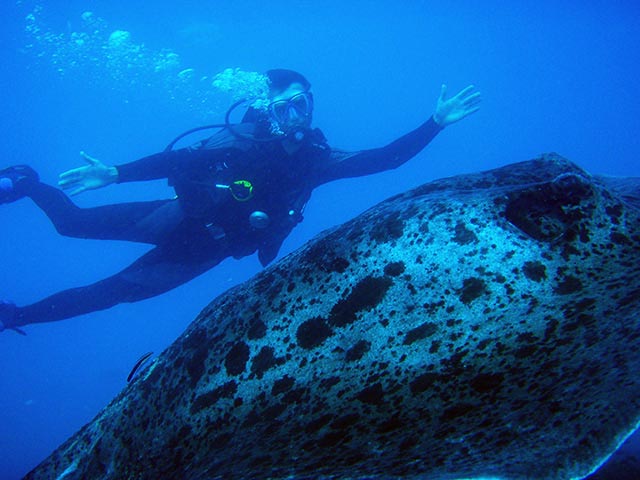
    9) Manta Ray Diving At Night – Kailua Kona, Hawaii

    manta-ray-scuba-diving

    The massive manta rays that Kona, Hawaii are known for will come out at night for you to see, thanks to sets of underwater lights on the ocean floor that attract plankton and give you a line of sight to these beautiful creatures. While hooked into a weighted line, all you have to do is relax and wait for the marine life to come to you as feeding time progresses.

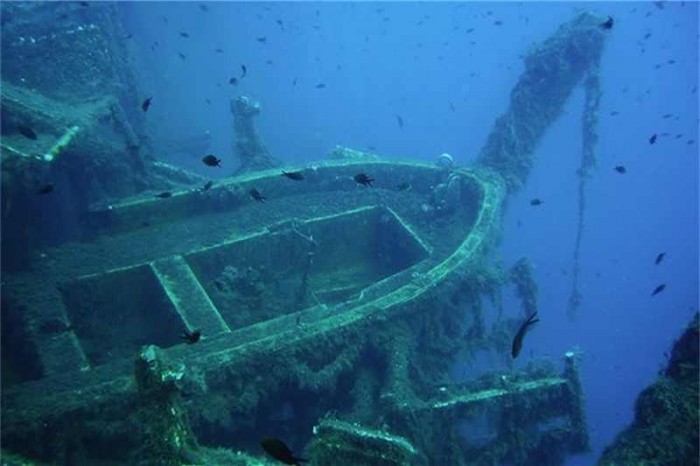
    10) The Liberty Wreck – Bali, Indonesia

    liberty-wreck-scuba-diving

    Dive photographers love this famous shipwreck off the coast of Bali, as it is the definition of a picturesque place to dive. What’s left of the Liberty is covered in corals, anemone, and gorgonians, and the black sand beneath it all makes for the perfect backdrop. You will also see large schools of trevally, goatfish, surgeonfish, and unicorn here.

    11) The Galapagos Islands – Ecuador

    galapagos-scuba-diving

    Roughly 1,000 kilometers off the coast of Ecuador, in the Pacific Ocean, are the Galapagos Islands — a string of flourishing volcanic islands with a rich history and some seriously great diving. This is a cold water diving area, so be prepared to bring a 5-7 millimter wetsuit or a drysuit of some kind. Whale sharks can be seen around the Galapagos most frequently between May and November, while hammerhead sharks can be seen year-round. Some of the more popular dive locations within the Galapagos are Darwin Arch, Darwin Island, Gordon’s Rock, and Wolf Island.

    12) The Cenotes – Yucatan Peninsula, Mexico

    cenotes-scuba-diving

    Cenotes are natural sinkholes, and there are tons of them to be explored along Mexico’s Yucatan Peninsula. What makes the cenotes so great? It’s the combination of salt water and fresh water, caused by the fact that the sinkholes connect with ocean-flooded underground cave systems. Because of this mixed salt and fresh water and their differing densities, a beautiful effect called halocline can often be seen by divers. Skull Cave and Tulum are two great places to start if you’re interested in diving the cenotes.

    13) Hot Sophia – Dominica

    hot-sophia-scuba-diving

    Hot Sophia is a dive site that is right in the middle of a large area of volcanic activity, making it an incredible place to explore. Here you will find a slight depression in the sandy ocean bottom, which is actually hot to the touch thanks to the volcanic activity below. Around this warm area you will also find gorgeous corals, eels, basket sponges, and more.

    14) The Zenobia Wreck – Cyprus

    zenobia-wreck-scuba-diving

    The Zenobia was a ferry that sank on its maiden voyage off the coast of Cyprus in 1980. Luckily, no lives were lost in the incident. To this day, The Zenobia lies on its side in the waters off Lanarka Harbour. This dive will get you down over 40 meters if you choose, and it is said by most divers who visit the site that a person will need multiple dives to do the size and beauty of the wreck of the Zenobia any justice. This is what makes this wreck one of the most well-known in the world for scuba enthusiasts.

    15) The Catalina Islands – Costa Rica

    catalina-islands-scuba-diving

    Only a 25 minute trip away from Tamarindo, the Catalina Islands are extremely accessible for scuba divers. This place is bursting with marine life, too. Divers will commonly spot manta rays, white tip sharks, and fish such as morays, grouper, buffoon, and more. The visibility is often quite good in the Catalinas, especially once you descend 18 meters or more.

    16) Jardines de la Reina – Cuba

    cuba-scuba-diving

    There are quite a few great dive locations along the Cuban coast, but the one that many believe to be the best is the Jardines de la Reina, which is a huge marine preserve holding incredible corals, sponges, fish, and sharks.

    17) Mnemba Island – Zanzibar

    mnemba-island-scuba-diving

    Off the northern coast of Zanzibar there is a small island — a place which many scuba divers find to be a true paradise. This place is Mnemba Island, one of the world’s greatest and most exclusive dive locations. Since the island is owned privately, you will have to be a guest of the Mnemba Island Lodge to dive here if you want to be near the coastline, though you can dive freely any distance over 200 meters from the island if you want to. Here you will find crystal clear waters, long reefs, groupers, trumpet fish, lion fish, turtles, and more.

    So there you have it. Visit any of these beautiful locations and you’re sure to have a scuba diving experience you won’t forget.

  • Winter Wakeskating In Bosnia

    Winter Wakeskating In Bosnia

    Wakeskating legend Brian Grubb recently made the long trip to Bosnia and Herzegovina to wakeskate in the area’s harsh winter conditions. He headed for Studeni Potok, also known as Icy Creek — a wintry environment featuring a combination of narrow creek stretches and powdery snow. Pulled by a 1,300 foot winch line, Grubb showed off his skills at fast speeds over some incredible terrain and water.

  • Wakeboarding: Powered By Ferrari

    Wakeboarding: Powered By Ferrari

    Jorge Gill had a seriously cool idea recently — to wakeboard down a drainage ditch while being towed by an F50 Ferrari. See how this epic experiment worked out in this great video.


  • Indonesian Longboarding With Harley Ingleby

    Indonesian Longboarding With Harley Ingleby

    Pro surfer Harley Ingleby heads to the Telos Islands in Indonesia to take on some beautiful barrels with a longboard. I love the style of this video, as it includes not only perfect surf footage, but also details the process involved with traveling to the destination.

  • An Amazing Pipeline Board Transfer By Jamie O’Brien

    An Amazing Pipeline Board Transfer By Jamie O’Brien

    Pro surfer Jamie O’Brien recently took to the legendary waters of Oahu’s North Shore, where he pulled off a flawless pipeline board transfer. Beautiful stuff to watch right here.

  • Shawn Dollar’s Thoughts On Mavericks

    Shawn Dollar’s Thoughts On Mavericks

    Legendary big wave surfer Shawn Dollar shares his thoughts on the incredible display of surfing from the young athletes at Mavericks on December 20th. Some phenomenal footage here, and some inspiring words from Dollar about doing what you love.