
One of the best things about scuba diving is that there are countless incredible dive locations all over the world. We’ve done the research and found our favorite 17 scuba diving spots, all of which will make for the perfect diving getaway, regardless of your experience level.
1) Blue Heron Bridge – Riviera Beach, Florida

In the waters around Blue Heron Bridge, located in southern Florida, you will find a myriad of marine life, from striated frogfish to bandtail sea robins to flying gurnards. And you will find it all in in just 12 feet of water. The best time to dive around Blue Heron Bridge is during high tide, when the water is at its deepest and is offering up the most creatures for you to see.
2) Nakwakto Rapids – British Columbia, Canada

In the wild backcountry of beautiful British Columbia, you will find one of Canada’s most beloved dive locations — Nakwakto Rapids. This location is known for its swift currents, which are some of the strongest anywhere in the world. The window for dives is often quite slim as well, so plan your outings carefully. As for the marine life you will see here, huge gooseneck barnacles are plentiful at Nakwakto Rapids, as are crab, sculpins, anemones of many colors, painted greenlings, and more.
3) Point Lobos – Carmel, California

Point Lobos National Park, just a little over two hours drive from San Francisco, offers up some of California’s most exclusive and enchanting scuba diving locations. If you’re looking for a quiet dive location, this is it, as only 15 buddy groups of scuba divers are allowed into the park each day. Massive forests of kelp are accessible very close to the park dock and parking area. Crabs and snails, lingcod, colorful nudibranchs, and harbors seals are always seen at Point Lobos.
4) Red Sea – Egypt

The Red Sea Coast of Egypt is one of the most iconic destinations on the planet for many reasons, one of them being the coast’s incredible opportunities for scuba diving. Excellent underwater visibility, warm waters, and year-round diving make the Red Sea a fun place for divers of all experience levels. Should you need the help of a dive instructor, there are plenty to choose from in the area. Cities such as Dahab, Marsa Alam, Safaga, and Hurghada are popular places to base your dives out of and locate an instructor.
5) The Blue Hole – Belize

Discovered by Jacques Cousteau in 1970, the Blue Hole is an incredible chute in the sea floor that drops several hundred feet through a thriving reef. Sounds great, right? You can understand why a trip to Belize to dive the Blue Hole is near the top of any diver’s bucket list. The hole is over 1,000 feet wide at the top, its massive size sticking out even more because of the shallow water surrounding it. Going down, you can enjoy over 400 vertical feet of exploration as you descend. Just keep an eye out for those pesky hammerhead sharks!
6) The Great Barrier Reef – Australia

This is a place that will be near the top of every list of amazing scuba locations. It’s a marine playground so big that it can be seen from outer space. Yes, it’s the famed Great Barrier Reef of the Australian coast. Diving in this area gives you the option of exploring over 1,500 shipwrecks, seeing 1,500 different fish species, gorgeous coral, and more. Let’s just say that there’s quite a bit to see in the network of over 4,000 reefs, islands, and cays. Some of the more popular locations to scuba dive within the Great Barrier Reef are Blow Hole, Osprey Reef, and lighthouse Bommies. Diving is typically best between June and August, due to pleasant weather and the fact that there are less jellyfish around.
7) The Yongala – Queensland, Australia
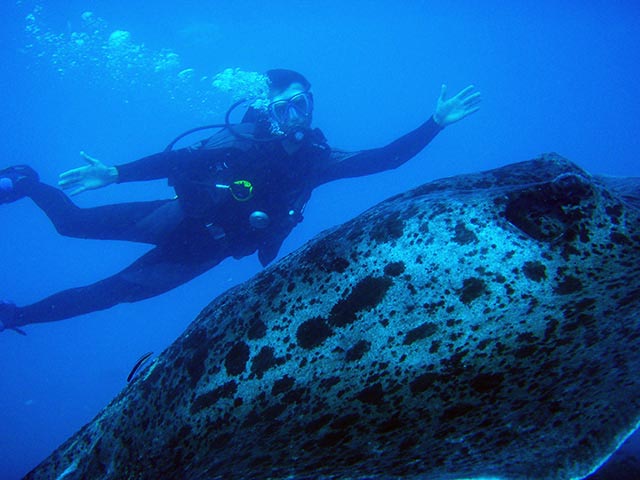
Off the Australian coast, near Queensland, a famous shipwreck sits waiting for you to explore it. This shipwreck is The Yongala, which sank in 1911 after getting stuck in a cyclone. The sinking of the 109 meter-long vessel was a deadly one, killing 122 people and a couple animals, which has only added to its lore as a must-see dive location. Around and within the shipwreck you will see bull sharks, octopuses, turtles, tiger sharks, countless fish, sea snakes, stunning coral, and more.
8) Barracuda Point – Sipadan Island, Malaysia

Enjoy huge walls of coral at Barracuda Point, where sharks will pass by regularly and groups of barracuda will congregate around you. This is a dive location where you can count on seeing large marine life every time you visit. Other species you may see here include grouper, jacks, turtles, white tips, parrotfish, and more.
9) Manta Ray Diving At Night – Kailua Kona, Hawaii

The massive manta rays that Kona, Hawaii are known for will come out at night for you to see, thanks to sets of underwater lights on the ocean floor that attract plankton and give you a line of sight to these beautiful creatures. While hooked into a weighted line, all you have to do is relax and wait for the marine life to come to you as feeding time progresses.
10) The Liberty Wreck – Bali, Indonesia
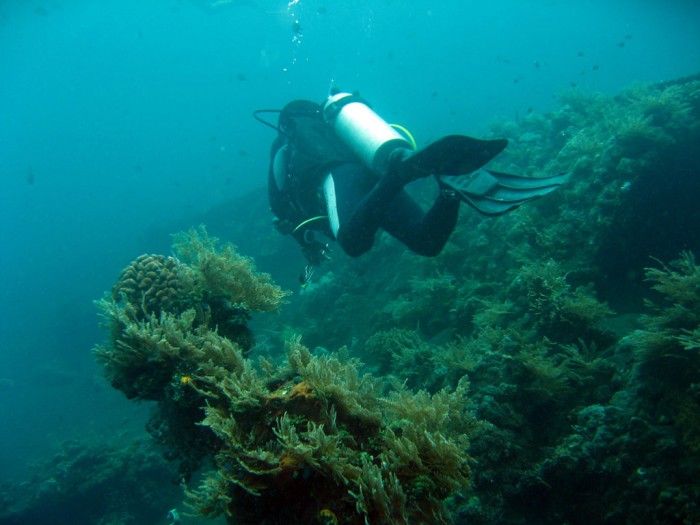
Dive photographers love this famous shipwreck off the coast of Bali, as it is the definition of a picturesque place to dive. What’s left of the Liberty is covered in corals, anemone, and gorgonians, and the black sand beneath it all makes for the perfect backdrop. You will also see large schools of trevally, goatfish, surgeonfish, and unicorn here.
11) The Galapagos Islands – Ecuador
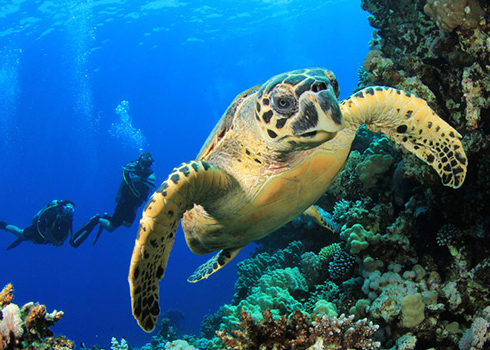
Roughly 1,000 kilometers off the coast of Ecuador, in the Pacific Ocean, are the Galapagos Islands — a string of flourishing volcanic islands with a rich history and some seriously great diving. This is a cold water diving area, so be prepared to bring a 5-7 millimter wetsuit or a drysuit of some kind. Whale sharks can be seen around the Galapagos most frequently between May and November, while hammerhead sharks can be seen year-round. Some of the more popular dive locations within the Galapagos are Darwin Arch, Darwin Island, Gordon’s Rock, and Wolf Island.
12) The Cenotes – Yucatan Peninsula, Mexico

Cenotes are natural sinkholes, and there are tons of them to be explored along Mexico’s Yucatan Peninsula. What makes the cenotes so great? It’s the combination of salt water and fresh water, caused by the fact that the sinkholes connect with ocean-flooded underground cave systems. Because of this mixed salt and fresh water and their differing densities, a beautiful effect called halocline can often be seen by divers. Skull Cave and Tulum are two great places to start if you’re interested in diving the cenotes.
13) Hot Sophia – Dominica

Hot Sophia is a dive site that is right in the middle of a large area of volcanic activity, making it an incredible place to explore. Here you will find a slight depression in the sandy ocean bottom, which is actually hot to the touch thanks to the volcanic activity below. Around this warm area you will also find gorgeous corals, eels, basket sponges, and more.
14) The Zenobia Wreck – Cyprus
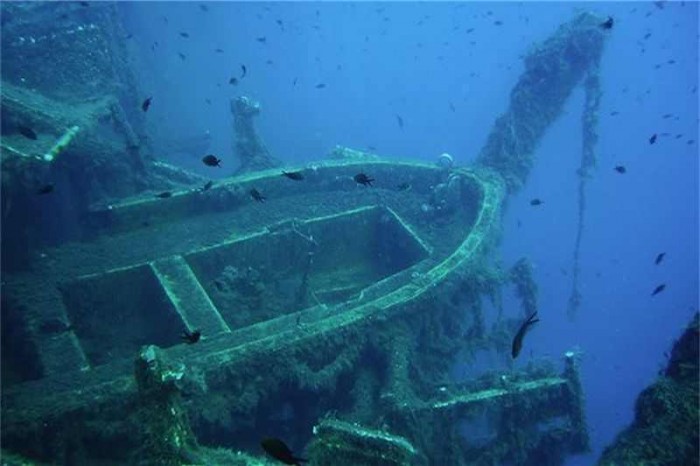
The Zenobia was a ferry that sank on its maiden voyage off the coast of Cyprus in 1980. Luckily, no lives were lost in the incident. To this day, The Zenobia lies on its side in the waters off Lanarka Harbour. This dive will get you down over 40 meters if you choose, and it is said by most divers who visit the site that a person will need multiple dives to do the size and beauty of the wreck of the Zenobia any justice. This is what makes this wreck one of the most well-known in the world for scuba enthusiasts.
15) The Catalina Islands – Costa Rica
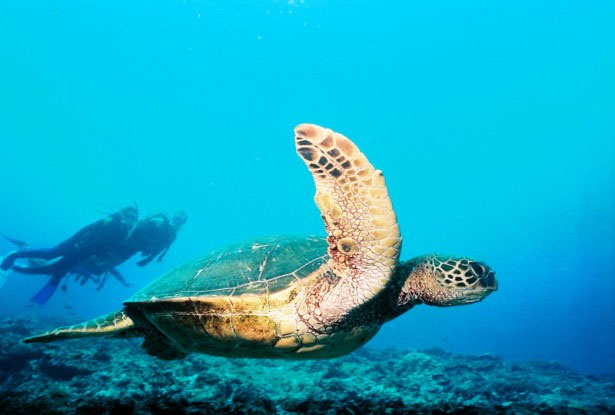
Only a 25 minute trip away from Tamarindo, the Catalina Islands are extremely accessible for scuba divers. This place is bursting with marine life, too. Divers will commonly spot manta rays, white tip sharks, and fish such as morays, grouper, buffoon, and more. The visibility is often quite good in the Catalinas, especially once you descend 18 meters or more.
16) Jardines de la Reina – Cuba
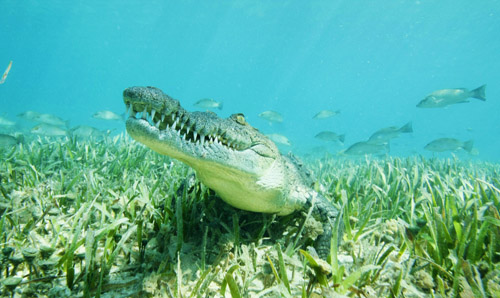
There are quite a few great dive locations along the Cuban coast, but the one that many believe to be the best is the Jardines de la Reina, which is a huge marine preserve holding incredible corals, sponges, fish, and sharks.
17) Mnemba Island – Zanzibar
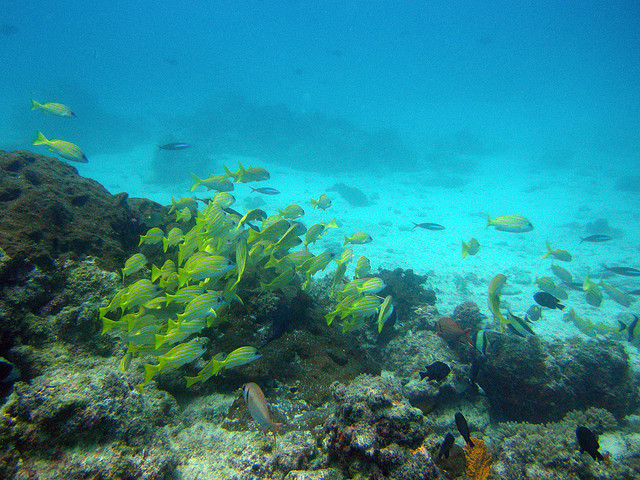
Off the northern coast of Zanzibar there is a small island — a place which many scuba divers find to be a true paradise. This place is Mnemba Island, one of the world’s greatest and most exclusive dive locations. Since the island is owned privately, you will have to be a guest of the Mnemba Island Lodge to dive here if you want to be near the coastline, though you can dive freely any distance over 200 meters from the island if you want to. Here you will find crystal clear waters, long reefs, groupers, trumpet fish, lion fish, turtles, and more.
So there you have it. Visit any of these beautiful locations and you’re sure to have a scuba diving experience you won’t forget.


