
Every year is an epic one for Alex Honnold, but 2014 was especially stunning. This is a great video of some of Honnold’s most impressive climbs of the past year. We can only look forward to what’s to come in 2015 from the world’s greatest climber.
Tag: alex honnold
-

Unearthed: Alex Honnold
Filmed by The North Face, this awesome video covers an incredible climbing trip taken to the Green River area in Utah by Alex Honnold (arguably the world’s greatest climber) and fellow climbers Matt Segal, Renan Ozturk, and Daniel Woods.
-

5 Ways Rock Climbers Make The World A Better Place
Much of the focus in climbing media is centered around the great feats of talented athletes. We throw around speeds, grades and the phrase “free-climbing” to talk about triumphs in the community. What we don’t always hear as much about, however, are all of the other accomplishments rock climbers make. Being a climber means more than possessing killer strength and solid technique. For many, it also means a big heart and giving back to the community. Here’s how rock climbers make the world a better place.
Climbers love the environment.

Like many outdoor adventurers, rock climbers care a whole lot about the place they spend so much of their time. National parks, state parks and Mother Earth in general are of great interest to many in the climbing community. Outdoor clothing company Patagonia has long been applauded for their strides toward environmentalism. Many climbing areas and camps stick to a strict “leave no trace” policy. Sure, every now and then a climber behaves badly, but before Mother Earth can punish them, there’s usually a swift reprimand from fellow climbers.
They spread energy.
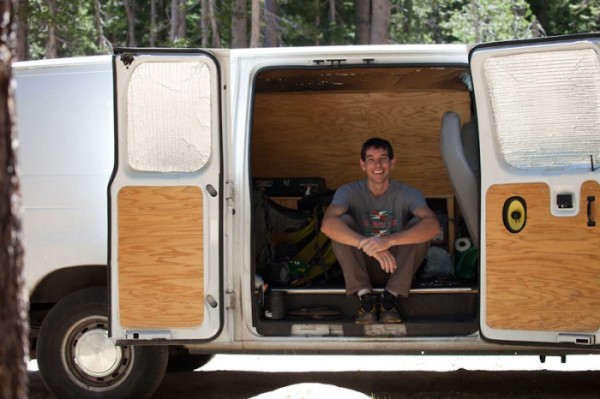
In addition to valuing our world overall, many rock climbers have taken a special interest in renewable energy. Solar power company Goal Zero sponsors Alex Honnold, who owns and lives in a van completely powered by sunshine. His mom’s house also has solar panels, he says in an interview with NatGeo’s Adventure Blog.
But beyond personal use, Honnold helps spread energy to those in need. The Honnold Foundation has helped support nonprofit solar projects. One included using solar power to bring residents in the Kayenta Region of the Navajo Nation clean water access.
Climbers lead lives of health and well-being.

In a country where more than one third of adults are obese, approaching wellness consciously is important. And though, as a group, we may guzzle a bit too much beer and eat Ramen on the regular, overall, we care about our health (or at least live a healthier life than most without even realizing it). Not only does climbing build solid, lean muscle, but it gets our hearts pumping from more than just adrenalin. An hour of climb time can burn more than 700 calories. All of those hours logged outside also result in a serious brain power boost, increasing memory, energy, creativity and relieving stress.
They help at-risk youth.

Rock climbing has been proven to do wonders for self-efficacy, not to mention the sheer joy of overcoming fear and challenges. Organizations like Escalando Fronteras (Climbing Borders) use this knowledge to help at-risk Mexican youth stay away from drugs, gangs and organized crime. By exposing children and teens to new opportunities that they may not otherwise experience, the organization strives to take advantage of the positive mentality that so often comes with climbing.
Rock climbers inspire all of us.

Whether you climb or not, you can still be awed by the feats of some of the greats. Lynn Hill paved the way for women climbers around the world, being the first woman to climb a 5.12d and the first to free-climb the Nose in 1993. In 1975, John Long had been the first to climb that same rock face in one day. Honnold climbed the three biggest rock faces in Yosemite in under 19 hours. Dave Graham and Daniel Woods eat V14s for breakfast. Climbers like these show us persistence, heart and a whole lot of badass. Climb on, guys!
-

Risks and Rocks: The Mentality Behind Mountain Sports

Rock climber and former Climbing Magazine editor Matt Samet knows his sport is dangerous. Until last year, he was the only climber to have successfully scaled Primate, a 90-foot route on Seal Rock in the Flatirons above Boulder, Col. With protective gear that was likely to tear under impact of a fall at the hardest sections, Samet climbed the most difficult part, 60 feet above the ground and over a giant boulder that he jokingly named “The Pillow.”
In the past two decades, climbing’s popularity has increased, resulting in an influx of climbing gyms in Chicago and elsewhere. But injury rates are on the rise too. The number of patients treated in U.S. emergency rooms rose 63 percent since 1990, according to the Center for Injury Research and Policy of the Research Institute at Nationwide Children’s Hospital in Columbus, Ohio.
Samet respects the dangers, but climbing creates a healing kind of fear compared to the agoraphobia and anxiety he suffers from. For years, he said he used prescription benzodiazepines to treat his condition and that led to a benzo addiction. Now, instead of using drugs, Samet relies on rock climbing near his home in Boulder, Col., for relief.
“It [rock climbing] is a fear that one can understand because you have a reason to be anxious or frightened at that point: you don’t want to fall,” said Samet. “It makes sense in a way that’s not chaotic. So in a way that’s the cure for the angst I feel in modern society.”
Whether climbers hit the Himalayas or a rock wall in the gym, rock climbing offers a rush.
That may be why drug use is often connected psychologically to rock climbing through a parallel personality dimension. Researchers call the personality trait that drug users and rock climbers have in common sensation seeking, according to Michael Bardo, a professor of psychology at the University of Kentucky Director and Director of the Center for Drug Abuse Research Translation. Sensation seekers are more likely to partake in high-risk activities, he said. Experts say that sensation-seekers’ brain function reinforces risky behavior.
Bardo works at a research center that views risk-taking as a predictor of drug use. Bardo said that high-risk takers tend to have a greater release of dopamine [a chemical neurotransmitter that helps control the brain’s pleasure and reward centers] than low risk takers.
“The current thought is that the brain of risk-taker is under-aroused and thus the stimulating event is an attempt to overcome this under arousal,” said Bardo.
Not all researchers agree that rock climbers should be classified as risk-takers. Dr. Eric Brymer, psychologist and researcher at Queensland University of Technology, in Australia, said that non-participants have typically associated risk taking and extreme sports in the same way that drug taking and risk taking have been linked. But his research suggests that risk taking and extreme sports are not necessarily tied together, Brymer said.
“Most athletes spend years training and learning to ensure that risks are not taken,” he said. “I would not classify extreme sport athletes as risk takers.”
Colorado climber Ben Spannuth agrees that a significant amount of training, discipline and reflection are necessary for rock climbing. The sport demands almost daily practice to get into a rhythm of feeling comfortable and moving well across the rock, he said.
“When I feel challenged everything seems to drown out except the immediately upcoming series of holds and how I’m going to move through them,” said Spannuth. “To be honest, the majority of the time I spend climbing is actually spent hanging on a rope thinking about what movement the holds are going to create.”

Immediacy and challenge as well as discipline and training are important to rock climber Alex Honnold, famous for free-soloing, a form of climbing done without any ropes or protection.
“I only set projects a few months out,” said Honnold. “I don’t have a big plan, I just go climbing all the time.”
The part of rock climbing that is so physical plays a role in brain chemistry. Physical activity increases dopamine release in the pleasure pathway, said Bardo. Experts note that other physically demanding sports such as running, football and tennis also stimulate pleasure sensations.
“Any novel or stimulating events release dopamine in pleasure pathways of the brain,” said Bardo. “Rock climbing is certainly novel and stimulating.”
Honnold, a Sacramento, Calif., native who spent 16 years learning his sport, said he would not classify the stimulation he finds in free-soloing as a surge of adrenaline. An intense rush while soloing would indicate a problem and safety concern.
“I wouldn’t say I get a rush,” said Honnold. “I would say I get a deep satisfaction. Doing something challenging and doing it well is one of the best feelings in the world. Skydiving is a rush. Or dropping in on a big line on skis. But climbing is so slow and demanding that’s it’s not the same kind of rush”.
Spannuth said that this aspect of challenge and problem solving, combined with physical activity has a positive effect on lifestyle. The action portion helps relieve stress, and much of the benefit comes from his love of the sport. Climbing certainly isn’t the only sport people enjoy, said Spannuth. But activities that contain physical challenges combined with problem solving and social components seem more likely to have these effects for him than something like forcing a mandatory run on the treadmill for 30 minutes each day.
“In my mind, it’s far from a workout when I head to the climbing gym or to climb outside,” said Spannuth. “Furthermore, climbing has additional mental health benefits by getting people outside.”
Mountaineer Billi Bierling, who works for Elizabeth Hawley of the Himalayan Chronicler, said she too enjoys the physical challenge and outdoor aspect of climbing mountains. She said she feels privileged to take long treks up mountains, such as Everest and Makalu, because she gets to witness views that most people never see.
“When I come back from an expedition, of course my body feels tired, but I feel good because I’ve been outside for the last seven weeks and I haven’t had to deal with an office,” said Bierling. “For me, that is an expedition. For a lot of people, it’s the summit, but for me the summit is a bonus.”
These days, athletes aren’t only risking their lives climbing mountains, but jumping off of them as well. Recently, BASE jumping has taken off. Extreme athletes, such as Nasr Al Niyadi and Omar Al Hegelan, jump from fixed objects, often mountains, and use a parachute to break their fall.
A recent study published in the New Zealand Medical Journal found that 35 BASE jumpers observed suffered an injury in at least one of the 9,914 total jumps they had collectively made, resulting in an estimated 0.4 percent injury rate. Professional football has a 6.9 percent chance of injury per player per game, according to the National Football League Players Association’s injury report, “Dangers of the Game of Football.”
Honnold said that flying sports, including paragliding, speed wings and BASE jumping, have a growing presence in the mountains. He also said that the increase in climbing gyms is bringing new talent into the sport. These gyms make climbing more accessible, especially in cities without mountains, and allow athletes to build strength and technique for outdoor climbing.
“I don’t know where the sport is heading,” he said. “Except for the obvious: harder and faster.”
As mountain sports increase in both popularity and risk-level, Bardo pointed out that risk-taking should not be viewed as a fully negative personality trait.
“If you look at this type of behavior in animal species [such as monkeys], risk-takers are often the best at locating new sources of food, water and mates,” said Bardo. “On the downside, they are also most likely to fall victim to predators.”
photo courtesy of Andrew Burr