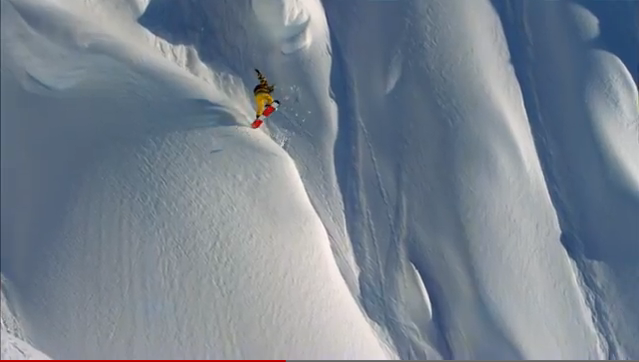
Yikes. From Garage Entertainment, Red Bull Media House, Surf Dive ‘N’ Ski, Sony Mobile and Maxum, this trailer reel previews Sessions, a movie for Australian extreme sports fans. The film is made up of 2012’s most gut-wrenching action sports clips. I want in.
Category: Water
-

5 Gnarly Places To Go Scuba Diving
Maybe you’ve jumped out of airplanes all over the globe, bungee-jumped the tallest bridges known to man or participated in some of the most insane adventure races. You’ve tapped into your inner adrenaline junkie on both land and air…but what about sea?
Goggle up Scuba Steve. Here are 5 of the world’s gnarliest places to go scuba diving.
Barrier Reef (Great Blue Hole), Belize

Located off the northeast coast of Central America, what sets this dive spot apart is the Great Blue Hole, believed to be the largest sink-hole in the world. Checking in at roughly 1,000 feet wide and 400 feet deep, the Great Blue Hole formed out of a limestone cave that collapsed during the last ice age. Today, it is a hot spot for many divers that come for the unique marine life, stalactites, dripstone sheets, columns and warm waters that make diving year round a possibility. Jacques-Yves Cousteau himself declared it one of the best diving spots in the world. Who am I to argue with Cousteau?
The Great Barrier Reef, Australia

It would be blasphemy to leave The Great Barrier Reef of Australia off this list. Plus, I don’t want to piss off the Aussie’s. They’re the raddest people I know. The Great Barrier Reef extends 1,430 miles along the northeastern coast of Australia. It is so large that you can actually see if from outer space. Many elements attract divers – 1,500 shipwrecks, 6 species of turtles and the chance to see dolphins, whales, and porpoises. But if you are really looking for a rush, The Great Barrier Reef is home to over 125 species of sharks. Experienced divers will recommend the Osprey Reef which provides beautiful scenery. If you’ve got kiddo’s diving with you, make sure to let them know they might find Nemo. The Great Barrier Reef is where this little guy lives.
Strait of Gubal, Egypt

The Strait of Gubal is located in the Red Sea just off the coast of Egypt. It is home to what many consider the top wreck dive site in the world, the SS Thistlegorm, a World War II British transport ship that was sunk by the Germans. What is so unique about this dive is that the sea has maintained unbelievable conditions of the wreck. Tanks, locomotives, army trucks, rifles, bikes and army gear is all completely visible. However, this is not the only visible ship wreck that can be found in the strait. There are dozens of others waiting to be explored.
Farallon Islands, San Francisco

Raise your hand if you’ve seen Jaws. Now raise your hand if you want to go swimming with him. Scuba diving in Farallon Islands off the coast of San Francisco is sure to give you that experience. The large Elephant Seal population attracts the car-sized Great Whites. This is the only place in the United States that you can cage dive with JAWS. This can cost you up to $770 for a one-day dive but could quite possibly be one of the more intense experiences you have ever had. If you’re concerned about not seeing one of the Great White beasts there are plenty of other shark breed including Hammerheads, Tiger sharks, and the Bull shark.
(Multiple Destinations), Thailand
If you want a smorgasbord of dive spots to tickle your fancy, look no further than Thailand, home to some of the most beautiful dive spots in the world. If gnarly scenery is your thing, then this is it! Thailand offers up some amazing spots in Phuket, Similan Islands, Hin Daeng, Khao Lak, Phi Phi Islands, Krabi, and Burma.
If danger is your middle name, one spot you might want to check out is Samaesan Hole, known as a “black, silty hole of death.” At 90-meters deep, it is the deepest dive in the Gulf of Thailand – sun rarely permeates its depths. The Samaesan Hole is a former military ammunitions dump ground that actually contains unexploded bombs. In case you didn’t catch that… UNEXPLODED BOMBS. There are not a ton of photos of this place due to the lack of sunlight that it gets. That just adds to the scary in my opinion.
Bonus: Nemo 33

Because Nerve Rush loves ya, lets hit you off with one more. Enter Nemo 33, the world’s largest diving pool. This is THE scuba diving center located in Uccle, Belgium. The diving structure contains 2.5 million liters of non-chlorinated spring water that houses caves, platforms, and windows so that visitors can scope the scene and view divers on the inside. Nemo 33 was built as a training center and is often used for film production. Cool fact about this dive spot – if you have the balls to take off your mask while underwater, you could actually drink the water. Don’t worry about having to hold you bladder either… plenty of places to go. Hmm, better not to drink the water, then.
photo credits: Dix_pics1 | pterantula | Eric Burgers | alfonsator | DrJohnBullas
-
7 Questions on IKO Certification with Fernando Subero of Kite Club Puerto Plata
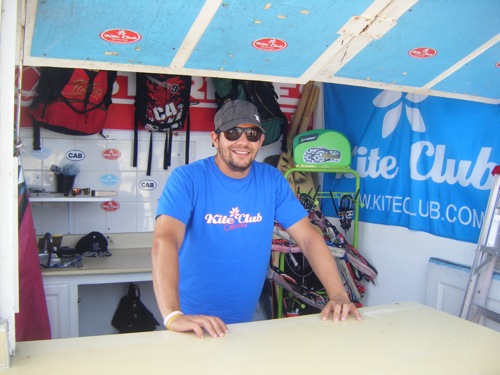
Meet Fernando Subero – former professional paintball player-turned kiteboardng instructor. I met Fernando on an impromptu adventure in Puerto Plata in the Dominican Republic where Fernando quite literally lives the dream. He lives on the top floor of a hostel he owns and spend his days at his kitesurfing school (Kite Club Puerto Plata) that starts at 11am. He has to show up at the beach every day and go kitesurfing – rough life, huh?
When I found out what he did, I cornered Fernando and begged him to teach me to kitesurf until he finally relented.. I spent 3 days getting certified with Fernando and between me biting it hard, I managed to sneak in some questions for you guys, just in case anyone is thinking about getting their IKO kiteboarding certification.

Let’s start with the basics. What is the IKO and what is an IKO certification?
IKO stands for International Kiteboarding Organization. IKO sets the standard on safety on kiteboarding lesson worldwide.
Your IKO certification is a card that is signed by the Instructor with his IKO number, certifying your kiteboarding riding level, and type of certification you have. The same card certifies whether you’re approved for power kites (land), snow kites (snow), or kiteboarding (water).
Can you explain the different levels of IKO certification? What do they each mean and what does each qualify you to do?
There are three levels of IKO certifications – 1 (discovery), 2 (intermediate), and 3 (independent). Each level consists of a set of basic skills that you need to pass in order to progress to the next level. The level and skill breakdown are as follows:
Level 1: Discovery
A In this level you will (1) Know safe wind directions and conditions for kiting. (2) Know the hazards on a spot. (3) Set up a trainer kite. (4) Know the use of safety systems.
B (1) Have basic flying skills with trainer kite. (2) Launch and land the trainer with an assistant. (3) Twist and untwist the lines while flying a kite. (4) Walk and change directiones while flying the kite (5) Know the wind window.
C (1) Set up a 4-5 line kite with a full power system. (2) Pre-flight check equipment and settings. (3) In-flight check equipment and settings. (4) Understand and use international communication signals. (5) Launch and land the kite to an assistant (and as an assistant). De-power a 4-5 line kite.
D (1) Control the kite hooked into the harness, (2) Understand the de-power system and can use the safety systems. (3) advanced flying skills with the de power kite. (4) Show full control of de power systems in flight.
E (1) Pull quick release and activate leash. (2) Recover the bar and kite and (3) Self-land the kite.
Level 2: Intermediate
F (1) Enter and exit the water independently and safely while controlling the kite. (2) Water re-launch the kite. (3) Body drag downwind. (4) Maintain correct kite position in the wind window. (5) Change direction to the left and right while body dragging. (6) Self rescue and pack down.
G (1) Upwind body drag to recover board. (2) Upwind body drag holding the board with one hand. (3) Enter and exit at the same point while upwind body dragging,
H (1) Know the power stroke for a water start. (2) Know the safety rules and theory for water start. (3) Can put board on the feet and maintain the correct position for water start.
I (1) Water start in both directions and ride a short distance. (2) Come to a controlled stop. (3) Understand weather forecast, tidal and wind effects. (4) determine the wind strength direction and quality. (5) Know the right of way rules. (6) Know equipments setup and choice according to weather conditions.
Level 3: Independent
J (1) Control the riding speed by edging. (2) Consistent riding in both directions,
K (1) Consistent riding in all directions including upwind. (2) Ride amongst other riders and water users, and respect the right of way rules,
L (1) Change of directions without stopping, make a toe side turn.
M (1) Self launch risk assessment (2) Self launch,
N (1) Know the theory and the safety rules for jumping (2) Land a basic jump.
Interesting, so how much does an IKO certification cost?
It really depends on what town or area you’re going to be taking lessons. At my school in Puerto Plata, lessons cost $50 USD/hour and it takes about 6 hours for an average person to get through the lessons and get up in the board. Some places charge upwards of $75-$80 and even $150/hour.
What should I look for in an IKO certified kitesurfing school?
You have to make sure the instructors are certified to teach so you can receive your IKO certification card. Be sure they’re not just throwing you on the board and that they run a a safe class.

Where can I learn to kitesurf?
Puerto Plata would be a great place (although I might be biased). Flat warm tropical waters, consistent trade winds and a lack of crowds make for great kiteboarding learning spots (all of which are true at Puerto Plata ;)).
How can you tell if a certain kite beach is a good place to get your certification?
It all depends, but the things I mentioned earlier (uncrowded, and steady winds) will help you get the most out of your time spent learning kiteboarding.
Any last words for soon-to-be kitesurfers out there?
Kiteboarding has become the number one growing watersport in the world, and one of the fastest growing sports in general precisely because the kiteboarding experience has no equal so go ahead, find a school and give it a shot (and make sure you’ve got a certified instructor!).
Fernando Subero is the owner and head IKO certified instructor at Kite Club Puerta Plata – a Domincan Republic Kite Boarding school in Puerta Plata on the north shore of the DR. He’s also been a professional paintball player in the United States before trading the camo and paint in for sun, sand, a board and a kite.
-

Learning To Kitesurf In The Dominican Republic
This is a guest post by Mark Lettinga, who currently lives in the Dominican Republic.
When you were a kid did you ever wish you could fly? Ever jump off a table, porch, or house-tested the unbelievable physics of the Mary Poppins umbrella trick? What about running across water like those lizards you see on the discovery channel? Ever tried that at a friend’s pool? How did that turn out? What if I said that you can conquer both of these childhood dreams at once, would you believe me? Would you be so excited that you race back to your parents house, squeeze into those old superman pajamas and say, “lets do this!”
Not only did I accomplish these dreams (without my pajamas by the way), but I found that it doesn’t take super powers at all, it’s called kite surfing! The sport of kite surfing involves kiting, wake boarding, and for the advanced, some high flying acrobatics that make you look pretty awesome. I have done some limited snowboarding and surfing but as far as kites go I haven’t touched one since I was a kid at grandma’s house in 1995.
When I first heard about kitesurfing the first of many questions I had was, “wait, uh you can do that?” It turns out you CAN do it and in less time that you think. All you need is some steady wind, lessons from a local kite school, and a free weekend where you can let that kid inside you accomplish his dreams.
For the past several months, I have been living and working in the Dominican Republic (DR), and what started off as a non-scheduled weekend beach trip to Puerto Plata ended up as the beginning of my kitesurfing experience. The north coast of the DR is known for its steady and consistent summer tradewinds making it a perfect spot for wind sports. Only 45 minutes east of Puerto Plata is a world renowned place for kiting called Cabarete, aka “kite beach,” where you can watch dozens and dozens of people out on the water riding the wind all at the once (and where Tammy Camp set her kiteboarding world record). While great conditions for the seasoned pro, it can be real intimidating, crowded and dangerous for a beginner. If you’re looking for the same summer tradewinds as Cabarete minus the crowed beach, Kite Club Puerto Plata is a great place to learn the sport.
During our weekend beach trip, Joel and I stumbled across a small surf shack along the beach which turned out to be a Kite Club kitesurfing school, and after a brief discussion with Fernando Suber, the owner we decided to sign up for lessons right then and there. We waited until our instructor was done with his previous lesson to say hello and get started on our training. Going into this kite boarding training I was feeling confidant yet a bit nervous because I didn’t want to fail. I usually pick things up fairly quickly and am really anxious to get up on that board and see what it feels like to be riding the wind. But like any adventure sport you need to learn the basics before you start acting like a pro or you could get into some serious trouble.

WORD OF ADVICE: Never surf YouTube the night before you start your first lesson looking for videos like “worst crashes of _____” (plug in your favorite adventure sport here!) It makes for some great nightmares!
Kitesurfing: Day 1
Our first lesson started off with our instructor teaching us all about wind and how the kite should be handled in relation to wind direction. Words like “power zone” and “wind window” were used and explained. He didn’t just give is a kite and let us start flying right away (as much as I secretly wanted to), he made sure we knew about how the landscape affects the wind that you will be using to kite board. Our instructor said wind knowledge is important for two reasons; First is so that a beginner can learn how to maneuver the kite in the presence of others. Second: once a person has been certified they can travel to any part of the world and have basic understanding of how to kite safely in different surroundings, no matter where the wind is coming from.
After the wind lesson, we started on the training kite – sounds kinda wimpy huh? But these kites aren’t the ones you flew when you were a kid at the local park – training kites can really move! After a minute or two of our instructor showing us some basic kite maneuvering, I found myself holding the reigns hoping I wouldn’t crash and burn on my first try. The wind was dying down a bit as a storm slowing rolled in which made handling the kite more difficult. I crashed the training kite several times before I got the hang of things and soon felt confident in my new found kite flying skills. An hour or so went by since we began our lesson, it was getting late and there just wasn’t enough wind to move to the next step, so we called it a day and thanked our instructor Fernando for a great start.
Kiteboarding: Day 2
We hit the beach nice and early the next day, excited about the possibility of getting on the board. Right away Fernando brought out a 6 meter kite that we would be using and as he took it out of the bag, he used the opportunity to teach us the very important lesson on how to prepare a kite. He had us run the lines, pump up the kite, and tighten the loops, all of which should be done with a careful eye. We learned trick of how to carry it down to the water and a quick lesson on the fundamentals of how to untangle lines. (Red always to the left!) We slipped into what looked like a big back brace with a bunch of clips attached everywhere, this in the harness which attaches you to the kite. With the bigger kite, our instructor had us first hold on to him as we were dragged though the water while he explained his actions, and then it was our turn to drag ourselves.
At first I wasn’t that good at flying this new kite and also had trouble properly handling it while I was being slowly pulled through the water. Joel and I rotated every half hour or so to take a break and also get some coaching from Fernando. After I was able to prove I wouldn’t crash the kite, I was able to be in the water alone and work on getting a more powerful pull and maintaining a steady pace through the water. After a couple rotations and a quick burger break and the beach bar next door, I was able to not only maneuver down the beach but also successfully retrieved my fallen kite out of the water – score!.
Like the day before, a storm was headed our way at around 4:30pm and we called it a day. We briefly talked with our instructor before we left and he told us that tomorrow we should be able to get on the board and ride. After a 5 hour day of getting dragged around in the ocean – we were excited to come back the next day and finally start looking like the pros.

Kiteboarding: Day 3
Right at 11am when the kite school opened, we started the day by demonstrating our new skills by assembling the kite by ourselves. Being sure to pumping it up properly, and make sure that the lines are straight and attached correctly, we had it done in no time. We hit the water to learn how to maneuver the kite up wind (yeah you can do that!) and also an important lesson on board retrieval in case you crash and need to grab your board. We used a 9 meter kite in the strong winds, and I could definitely feel the increase in power.
Within the hour I was strapped in with the board at my feet ready to give it a go. The board I was using was a fairly large – about the size of a large wake board – and I was strapped into a 9 meter kite with the wind blowing around 12-14 mph. Sitting in the water with the instructor holding me steady, I put my feet in the straps and whipped the kite around and felt a strong pull that lifted me right out of the water. I felt a rush of adrenaline and was thought I had this kite surfing thing in the bag but I soon realized I was in for a much longer day.
I was on my board briefly and then all of a sudden I lost speed and fell back to my seated position in the water. I heard the coaching of our instructor to straighten out my position and get aggressive with the kite, but my first run down the beach was a series of standing and falling. Several times I would lose track of my kite and let it sail all the way across the sky (big kite surfing no-no) which caused me to be pulled totally out of the water and crash in the wrong direction. It was one thing to fly a kite, but flying it while strapped to a board was a whole new game of multitasking.
Joel and I traded turns and I got a break from the crashing while I watched him start to get the hang of kiteboarding. It wasn’t until my 5th or 6th run that I was actually able to get up on the board and start to understand what I need to do – and then it happened. I went through the checklist of things to do in my head while I locked into the kite and slowly eased into the water. With the sun in my eyes and the board at my feet, I whipped the kite down aggressively toward the water and a strong pull lifted me up and onto my board. Back and forth back and forth I worked the kite determined not lose track of it like I had before. Gaining speed I took a look around and before I knew it I was 100 meters down the beach, I was kite surfing!

At the end of our weekend, I was pumped to have accomplished the goal of kite surfing and as an added bonus I received my IKO certification. This was just the beginning and I have a feeling there will be more kite weekend adventure to come!
Disclosure: Kite Club Puerto Plata is a great place to kiteboard in the Dominican Republic and graciously hooked us up with a discount while helping learn to kiteboard. They’re good friends of Nerve Rush and we will be going back.
-
Big Wave Surfing with Jeff Rowley
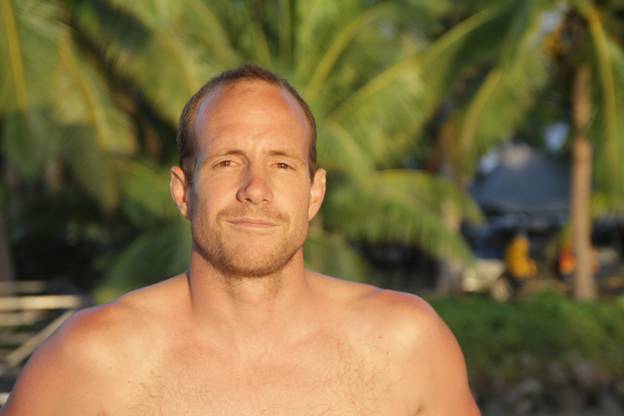
Jeff Rowley puts his head underwater and does what needs to get done.
From torpedoing down 50+ foot sea-claws to extreme lung capacity training, Rowley, a professional big-wave surfer, rides waves amongst the world’s best. He is the first Australian to paddle into Maui’s nefarious Peahi “Jaws” without Jet Ski tow-in aid. This wave is considered one of the world’s biggest and most dangerous waves, and until recently it was thought impossible to catch and ride without tow-in support.
Nerve Rush HQ was fortunate enough to catch up with Rowley between summer storm swells. Jeff, we appreciate your time here, my man! Keep pushing the limits.
What were your favorite beaches growing up in Australia? How did you get into surfing?
I started surfing when I was 6 years old, my parents owned a surf shop in Anglesea, Victoria, Australia, and my dad was a surfboard shaper, so I pretty much grew up on the floor of my dads shaping bay. From about 6 years of age I was on my own surfboard, but before that I was riding boogie boards in the tiny little shore break near home. I first started surfing big waves when I was about 17 years of age and I was really launched into that on the southern coast of Australia, just off Victoria. There’s a lot of reef breaks there and they catch a lot of the winter swells in really cold water, and they’re super isolated, there’s no one around, there’s a lot of cliffs and most of the time it was just myself, or myself and one other friend.
Surfing Jaws was your Everest? Could you tell our readers more about Jaws?
Surfing Jaws was my Everest. I spent the last 18 months with laser beam focus on preparation and training for surfing Jaws, so overcoming my fears to paddle into the wave was fulfilling my dream.
Becoming the first Australian to paddle into ‘Jaws’ Peahi on the island of Maui in Hawaii on 4 January 2012 was one of my biggest life achievements. At the same time, I achieved my 2012 Charge for Charity quest to paddle into, and catch a 50-foot wave. I was going to catch that wave no matter what happened, it was massive and I was in the right position and it was my time to go for it. I stood up and the wind hit me and tried to rip my board from under my feet as I started freefalling, I couldn’t see a thing but I pushed down as hard as I could and made the ride. I was like trying to catch and ride a Tyrannosaurus Rex with your bare hands – the best thrill but you’re so glad to be alive!
[youtube id=”nOIzWu7nFpY” width=”600″ height=”350″]
I had to train hard, overcome a number of barriers and conquer my fears to achieve this.
Paddling in is the ultimate challenge, it’s man vs ocean, actually it’s man vs himself. You have to constantly make decisions that will impact what happens next. For the big wave I caught at Jaws on January 30, I knew I was in exactly the right position the moment I saw it. I didn’t want to waste any energy paddling, I was under it and it was going to eat me if I didn’t make it. It was amazing to be recognized for my achievements when I placed 4th in the world in the Billabong XXL Global Big Wave Awards in the Ride of the Year category for the wave I caught at Jaws on that day.
How do you train (mentally & physically) for big-wave surfing?
Preparation plus opportunity equals success. I know exactly what I want to be doing with my life and I’m giving it 150%, I love it! I train hard in the pool- my empty lung holds are up to 2:23. I eat well. I’ve got 5 boards over 9’6″ because I’m prepared. At the beach I don’t psyche up, I calm down. I perform lung exercises before I paddle out that deprive me of oxygen, so my body is in a state of conserving energy. And then I have to be there on the best days to create the opportunity.
Long hold downs are inevitable. When Im down I count seconds and spins. In the pool I get tumbled for 50 seconds, untie my leash and swim 25m on an empty lung. When you have a serious wipeout, you really lose count of spins. I’m training to make two wave hold downs enjoyable, so when it happens I wont be under pressure.
When I’m surfing and the waves are really big, I prefer to calm down. A lot of my training is around trying to conserve my energy and making sure that I’m in a really good mental state before I go out there. If you get too excited you get too pumped up, you’re getting all your blood flowing and you’re burning all your oxygen before you even paddle out in the surf, and if you’re doing that your going to get yourself in a really heavy situation and it’s going to make you really stressed and that’s when you can get in trouble, so I prefer to really calm down, do a lot of lung exercises to prepare my body for being in a situation where it’s not going to have much oxygen and I’ve still got to be able to maintain coherence and function at 100%.

So there’s been a huge shift in my training and it just gives me so much more confidence in the water. So I think training is really important for me because I want to be the best in the world at big wave surfing and I want to be the best that I can be. For me to train in the pool where it’s in a controlled and safe environment you can push yourself way beyond what you thought was possible, and then when you go out in the ocean, the idea is that it’s never as bad as what you have prepared for.
Any advice/recommended resources for aspiring big-wave surfers?
Fear is always present but you have to refuse to focus on it. You have to leave it behind and focus on what you can achieve if you don’t hold back, if you give 150%. If you hold back the result is certain, but if you give 150% who knows what may come.
It’s definitely just yourself out there in the water and it’s just you that has to turn around and catch the wave but, back on land you actually need the support of a whole team of people – your family, partner, friends, photographers, surfboard shapers. When you ask the universe for what you want, there is a whole world of resources that also opens up to support you achieving your goals.
In 2012, I’m completely focused on big-wave surfing. I want to be at all of the best locations in the world on the biggest days. I’m really looking forward to surfing Jaws 50% bigger, or twice the size of what we’ve tried to paddle into. So I’ve just got my head down – under water, in the pool, in the gym every day trying to get as strong and fit as I can, and increase my breath hold. Because I’m really looking forward to pushing it out there and being the best I can be.
##
Here a few places you can find more of Jeff: Facebook | Twitter | Official Website
-
Electric Blue Heaven
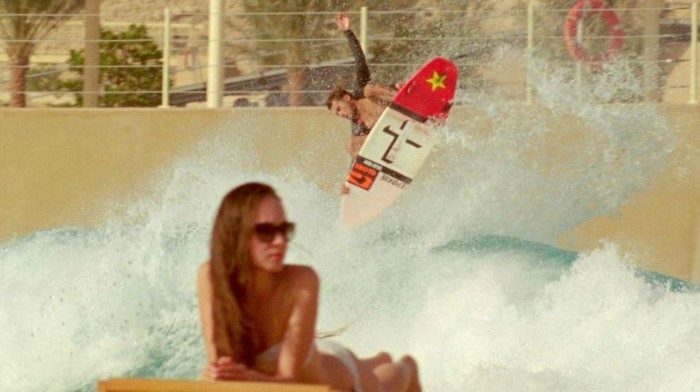
What do you get when you take 10 Russian models, a Lamborghini, the middle of the desert and surfer Dion Agius, riding the some of the largest man-made waves in world history?
This epic conceptual film, that’s what.
via Grind TV and @SteveKamb
-
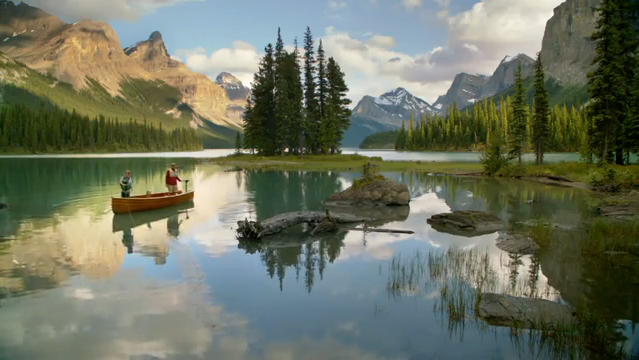
Breathtaking Alberta, Canada
Shot on location throughout Alberta, Canada, this promotional video shows off beautiful Alberta. Didn’t know much about Alberta before watching this video, but now thinking it’s worth a trip. Apparently this is one of many promotional commercials. Time to wade through the rest.
-
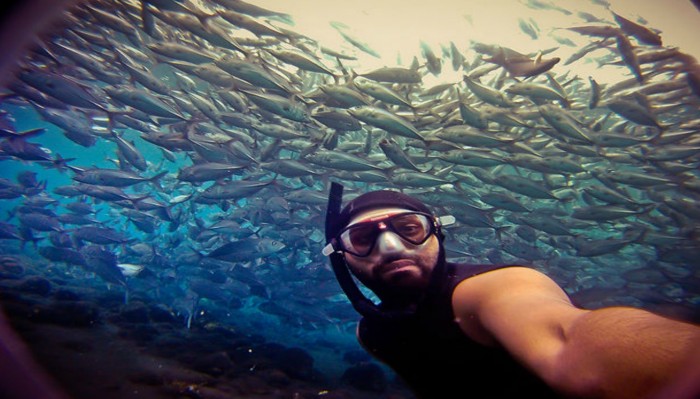
Freedive The World
Based out of Bali, Nerve Rush reader Trevor is an avid Freediver (underwater diving without scuba gear), and GoPro enthusiast. After shooting this on his GoPro Surf, he sent it in and we just had to post it. This goes great along with his Freediving guide, so if you’ve wanted to get started in freediving, there’s never been a better time than now.
-

How James Cameron Voyaged 6.83 Miles to the Ocean Floor
It was very lunar. a very desolate place, very isolated. My feeling was one of complete isolation, from all of humanity.
James Cameron, we salute you.
On March 26th, 2012, Cameron completed what is now the deepest solo-man dive in world history. 6.83 miles to the bottom of the ocean. With 30+ deep-sea dives to the Titanic and 7 years of preparation for this particular voyage, Cameron was no stranger to the open ocean — check out this clip to hear him wax philosophical on his experience.
[youtube id=”OX8cTtOEEyI” width=”600″ height=”350″]
The Challenger Deep, 6.83 Miles Down
 The Challenger Deep is a small, slot-shaped depression of the Mariana Trench, the world’s deepest canyon, situated about 200 miles southwest of Guam in the Pacific Ocean. The descent in Cameron’s proprietary bullet-shaped submarine took 2 hours and 36 minutes, and while the vessel was designed for a 6-hour trip, the mission was cut short a couple of hours in when a hydraulic fluid lead obscured Cameron’s view. It only took 70 minutes to ascend.
Cameron spent more than 3 hours drifting along the Challenger Deep, an alien-esque, desolate landscape more than 50 times grander than the Grand Canyon.
Armed with tools like a robotic claw, “slurp gun” and sediment sampler, Cameron collected samples. Video footage was captured via an 8-foot tall tower of LED lights.
When Cameron surfaced, he was unable to fully extend his arms and legs for hours.
A half-hour special, James Cameron: Voyage to the Bottom of the Earth, is running on National Geographic and showcases Cameron’s expedition.
-
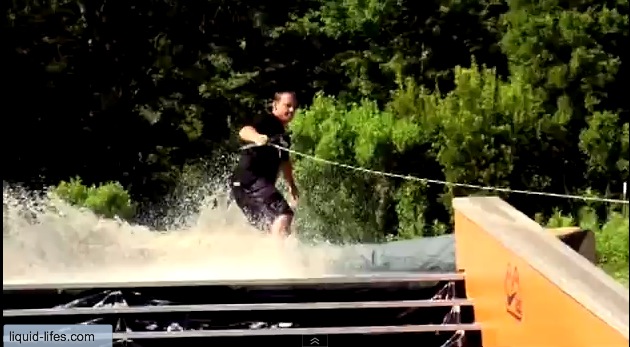
NIKE 6.0 Athletes Ben Horan, Andrew Pastura, Matt Manzari and Nick Taylor Go Wakeskating
A longer video than usual today on Nerve Rush, but it’s well worth it. Nike athletes Ben Horan, Andrew Pastura, Matt Manzari and Nick Taylor try out their wakeskates on film and capture some sick footage. Kick back, hit play and enjoy.
