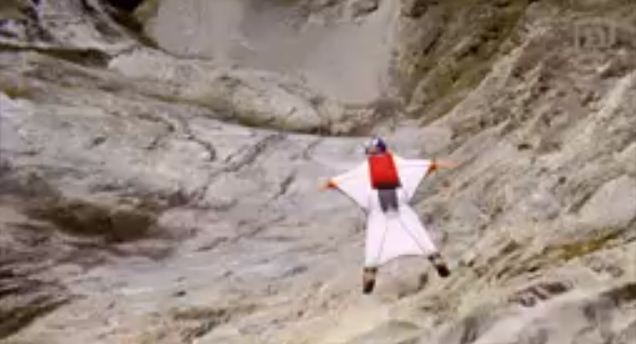
“An honest person. A kind person, a hilarious person, an incredibly gifted athlete, but most of all, somebody who dedicated his life to having fun.” RIP Shane McConkey, you were an inspiration for all of us adrenaline junkies out there.
Blog
-

Sheffield Adventure Film Festival Trailer
OK, so we’re a year late, but that doesn’t mean that the Sheffield Adventure Film Festival movie trailer isn’t worth a few minutes of your time as an adrenaline junkie.
-
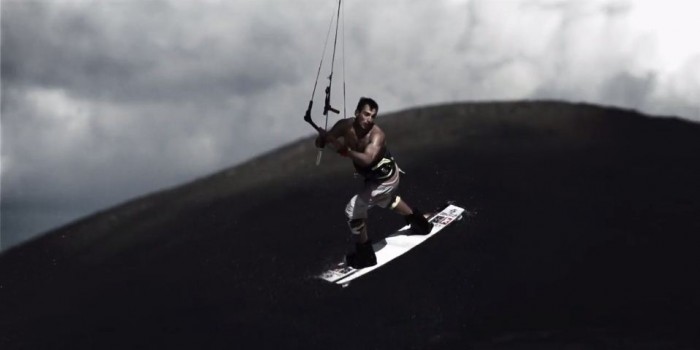
Youri Zoon Conquers Kiteboarding World Championship
Youri Zoon has been kiteboarding for more than ten years. His single goal as he dove deeper into the sport? A world championship title. Always fighting to add more power and style to the game, Youri is one of the world’s best freestyle kiteboarders. In 2011, his dream became his reality. But what remains after you achieve the ultimate reward?
-

7 Indoor Rock Climbing Gym Workouts
Not all of us are lucky enough to live the dirtbag lifestyle, climbing outdoor rock on a daily basis. For those of us tied down by, you know, bills, careers, families, school or other obligations, it’s important for us to keep up — or even increase — our strength and technique at our local gyms. That way, when we hit the outdoor routes on the weekends, we’re ready to climb, send and conquer. Here are 7 indoor rock climbing gym workouts to practice at the local walls and get you ready to hit the crags.
1. Build endurance by traversing the gym.

One of the fastest ways to build strength, technique and endurance is to traverse around the entire gym or bouldering cave. Set a stopwatch and climb. Focus on moving smoothly the entire time and continuously keep on climbing. Because you want to emphasize proper technique, don’t climb until the point of total exhaustion. Instead, work until you start to notice your hands and feet getting sloppy. Call it quits and try it again in another couple days. Remember, it doesn’t really matter how challenging the moves are as long as you’re continuously moving. Make it your goal to increase your minutes on the wall every single time you practice this traverse exercise.
2. Grow strength on a campus board.
Legend has it that the famous sport climber Wolfgang Gullich invented campus boards when he installed the first at his gym, “the Campus Center” (hence the name) in the late 80s. Since then, climbers have used the boards to build finger, arm and core strength by ascending and descending them using only their hands. To get started on one at your own gym, hang, with your fingertips, from the lowest slab. Engage your core and lift your bodyweight up until you’re able to grab the next slab with one hand. Repeat, using alternating hands, until you work your way to the top. If that’s too challenging, try beginning from the top and working your way down, slot by slot, in a controlled descent. Then, when you’re stronger you can aim for an ascent. As you advance, you can begin to go for longer reaches by skipping a slot or two between each grab.
3. Perfect your hand technique by practicing weight distribution through different holds.
One of the most important parts of climbing is knowing which holds require which type of grip and using your knowledge (and fast reflexes) to adapt quickly to new routes and problems. The Self-Coached Climber by Dan M. Hague and Douglas Hunter suggests building strength and technique on several types of holds. Some of the more challenging, yet most important holds to practice include:
- Slopers: These are generally large holds with smooth, yet fairly gradual angles. They often require using a flat, full hand and grabbing the hold as close to the wall as possible. It can also be helpful to position your weight under the sloper, keeping it as low as possible.
- Pockets: Named after their shape, these are often easy to grab, creating little bowls for your fingers to reach inside. However, they almost always only allow enough room for less than four fingers. The more challenging ones only fit a finger or two though. To practice these, work on your finger strength, choosing your strongest fingers to support your weight, careful to build strength in an effort to avoid injuries.
- Pinchers: A pinch, or pincher, requires you to use your fingers and thumb in opposition, creating a claw-like grip. Because fingers are often stronger than a single thumb, try to position your weight across from your fingers so that they are forced to bear most of the weight through opposition.
- Crimpers: Crimpers are tiny, horizontal notches in the rock, with a small ledge just big enough to fit your fingertips. They’re usually cut at a 90-degree angle. Because it can be tough to hold your entire weight on only your fingertips, try practicing these by laying your thumb flat across your fingertips, pressing down to provide extra security and strength.
4. Get into some fancy footwork by climbing without your hands.
One of the most common mistakes beginner climbers make is trying to drag themselves up the wall with their arms, not realizing that focusing on footwork creates a more efficient use of energy. But you don’t have to be a beginner to work on improving the way your feet climb. One way to force yourself to really focus on your lower half is to climb with a tennis ball in each hand, rolling along the wall. This way, you can still lean and balance against the wall, putting weight in your hands, but your feet will have to do all of the fancy work. Focus especially on using your toes, the most flexible, and therefore versatile, part of your foot.
5. Run.

Even if you’ve never logged more than a couple miles in your life, running can help improve your climbing endurance. These days, most major gyms offer a treadmill or two, along with some free weights, so take full advantage of these amenities! If you’re a total beginner, start out by setting small goals for yourself or even doing a combination of running and walking. Hate pounding along on a treadmill? Ditch your gym for the great outdoors and feel the wind in your hair and the pavement (or even better, trails) under your feet.
6. End your climbs with pushups.

All of that pulling yourself up the wall can be exhausting on your muscles, so, according to instructors at Earth Treks in Maryland, it’s important to end your climbing workout with the opposite motion. The perfect opposite to pulling? Pushing. Not only are pushups great for your arms and legs, but they’ll work your entire core, which is vital to becoming a stronger climber. It doesn’t matter if you can do five or 50. Challenge yourself, power through and end your climb session on a high note.
7. Get your yoga on.
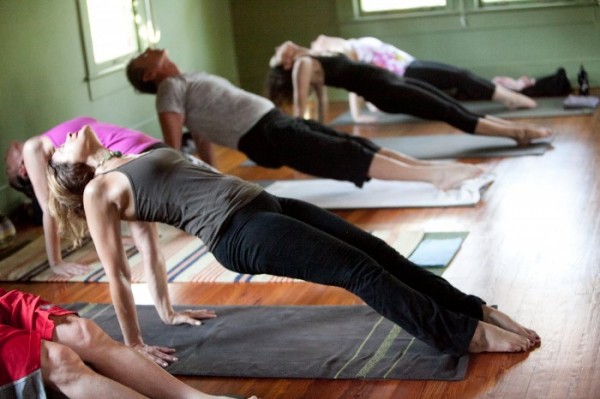
Yoga helps climbers increase flexibility, build strength and work on their mental focus. That’s why more and more gyms are starting to offer classes to their members. Sign up for a class, enjoy yourself and try to practice at least a couple times each week. Namaste to that!
-
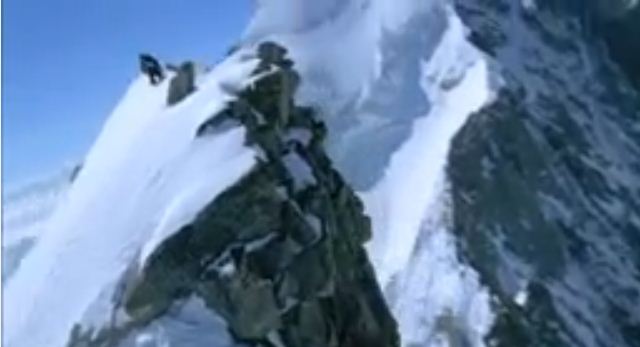
Thierry Donard, Epic Steep Skiing
It’s skiing and it’s steep and it’s technical. Watch Thierry Donard shred uber-steep faces and dodge sluffs and avalanches. Amazing work.
-

10 Most Bizarre Extreme Sports
While most people would be completely satisfied with the thrill of surfing, snowboarding or skateboarding, serious adrenaline junkies have been coming up with new and bizarre ways to get that extreme adrenaline rush. Below is a list of 10 of the most outlandish extreme sports we could think of. Bet you’ve never even heard of most of these sports!
1. Slacklining
Not to be confused with tight-rope walking, slacklining uses a wider fast mesh line that is strung slacker than a tight-rope. Much like tight-rope walking slacklining involves strong balancing skills and focus. Remember Dean Potter, the guy who highlined 6,000 feet up in the air across the Enshi Grand Canyon in China?
Slacklining has become so popular for its versatility and “slackers” ability to practice pretty much anywhere. There are a bunch of variations on slacklining which include urbanlining, tricklining, waterlining, highlining, windlining, freestyle slacklining and tunnelining.
2. Street Luge
This gravity-powered activity involves riding a street luge down a paved road or course. Ever go down a hill while sitting on your skateboard instead of standing? This sport originated in Southern California when skateboarders realized they could go much faster downhill by lying on their skateboards. Eventually someone developed a special street luge board and the sport really took off with professional competitions!
3. Volcano Surfing
Also known as ash boarding or volcano boarding, this sport involves boarding down the ashes of a volcano on a thin plywood or metal board. Riders hike up the volcano and then either stand or sit as they head back down to the bottom. This sport is actually pretty dangerous considering the volcanic ash is sharp and painful to fall on so riders are encouraged to wear protective gear while practicing. Pretty cool concept though!

4. Sky Surfing
By far one of the coolest activities on this list, sky surfing is a form of skydiving where the skydiver attaches a board to their feet and performs surf-style aerobatics during their freefall. This dangerous sport requires a substantial amount of practice and not every skydiving club permits sky surfing, but the video below of this guy sky surfing is pretty cool to watch!
5. Train Surfing
What started out as a means of transportation eventually became a form of extreme sport for daredevil thrillseekers. Train surfing first appeared as a sport in South Africa when teenagers from poor families would ride on the tops of trains for fun. Train surfers essentially risk their lives while performing tricks and dance moves on high speed trains. Train surfers face multiple risks including electrocution from overhead cables, serious injury, death and punishment by law enforcement. Below is a video of some kids in Russia train surfing.
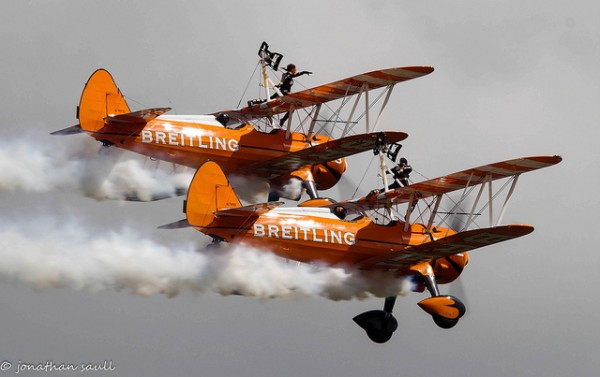
6. Wing Walking
Wing walking is similar to train surfing except wing walkers perform on the wings of moving airplanes. The earliest known instance of wing walking began in the early 1900’s when Ormer Locklear would climb out onto the lower wings of his plane during World War I pilot training. Wing walkers then began performing stunts with the goal of constantly outdoing one another. Such insane stunts as hanging by one’s teeth, transferring planes and doing handstands were often performed!
8. Trampo-Walling
Trampoline walling is pretty much exactly what it sounds like. Gravity-defying daredevils jump from heights upwards of 16 feet, land on a trampoline to bounce back up to the wall. Jumpers typically incorporate flips and twists as they go from trampoline to wall and back again. Former Cirque du Soleil performer Oliver Lemieux is one of the first to make trampo-walling a mainstream activity where people can now try in the safety of a gym.
7. Sepak Takraw
Sepak Takraw, or kick volleyball originated in Southeast Asia. Players use a rattan ball and only their feet, chest, head, or knees to score on the opponent by sending the ball over the net. Could be a fun game to start in your backyard! Check out the game video below.
9. Underwater Hockey
This bizarre underwater sport first originated in England in 1954 as a way for Southsea Sub-Aqua Club members to stay active during the cold months when open-water diving was no longer as appealing. The game, consisting of two 10-15 minute halves, calls for two teams of six to compete to move a hockey puck across the bottom of a pool to score on the opponents’ goal. The game requires players to hold their breath for long periods of time as they strive to push the hockey puck across the pool floor to score on the other team…a lot harder than it sounds! Equipment includes a snorkel, diving mask, fins, stick (also known as a “bat” or “pusher”) and a protective glove. Check out the video below of a US Women’s Underwater Hockey game!
10. Hangboarding
One day, a man named Don Arney had the random idea of combining hang gliding with snowboarding and so hangboarding was born! Hangboarders soar horizontally downhill on a hangboard which looks like this:

The “pilot” holds onto handlebars at the front of the hangboard while hanging from a T-shaped bar. The rudder at the back, where the pilot’s feet are secured, functions as a way to steer your way down the mountain as well as a brake in case you need to stop at any time.
Any sports we should add to this list?
-

McLaren P1 Extreme Testing on Ice
The McLaren P1 has been marketed as ‘the best driver’s car in the world on road and track.’ Or in this case, on a frozen lake.
-
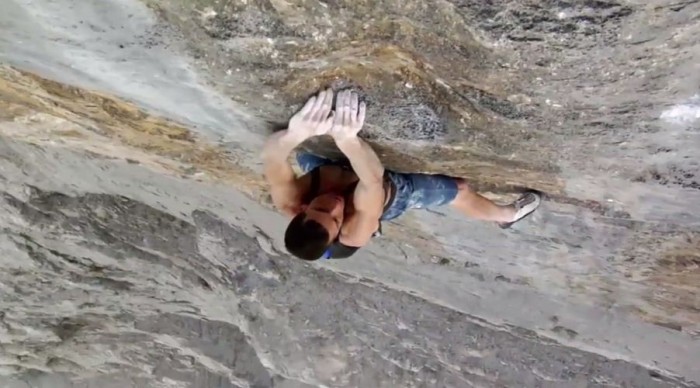
Dean Potter Talks Death
Mark Coleman, the Prana mindfulness ambassador, meets with Prana’s top athletes to understand their top game. In this session with Dean Potter, they both chat about death. Potter, one of the world’s most iconic adrenaline athletes, has a unique perspective on the topic.
-
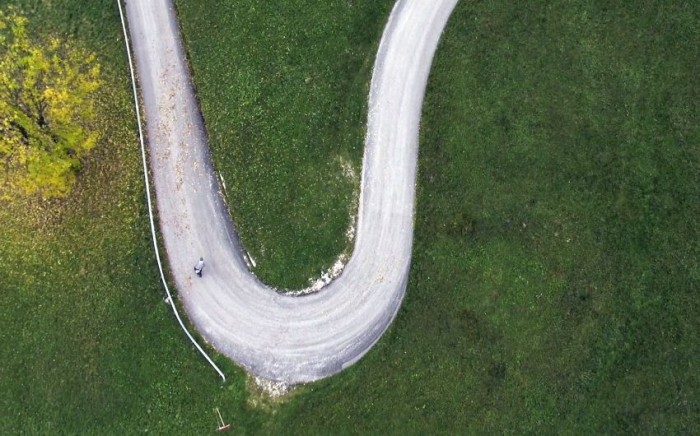
airv8 Aerial Photography Brilliance
airv8 specializes in close-range aerial photography. They use remote-controlled mulitcopters to capture their footage, and boy what an awesome point-of-view it is. In thier 2013 showreel, check out their capabilities.
-

Sam Light Kiteboarding in South Africa
Sam Light kiteboards in South Africa, both on the ocean and using a lake cable.