Blog

  • Hennessey Venom GT, the World’s Fastest Car

    Hennessey Venom GT, the World’s Fastest Car

    Holy batman.

    Just a couple of weeks ago, the Hennessey Venom GT set a new world speed record for 2-seat sports cars. If you can believe it, the car reached a top speed of 270.49 mph (435.31 km/h). THAT IS INSANE.

    The speed test was held at the Kennedy Space Center on the 3.2-mile space shuttle landing runway. The lucky driver? Brian Smith, Director of Miller Motorsports Park.

    Interestingly enough, the Venom GT was powered with Pennzoil Platinum® with PurePlus™ Technology. It’s the first of its kind – a synthetic motor oil made from natural gas.

  • Daniel Woods’ Second Lucid Dreaming Ascent

    Daniel Woods’ Second Lucid Dreaming Ascent

    Daniel Woods completed the second ascent of Lucid Dreaming (V15), after dark on Tuesday, January 28. The problem is set on Grandpa Peabody Boulder in the Buttermilks of Bishop, California. The crux of the problem requires a dyno, launching from a small, left-hand pinch, according to the Bishop Bouldering Blog, who reported Paul Robinson establishing the line in March of 2010.

    “Last night was a surreal moment for me. It was pitch black out with a couple lights shining to light up the golden pathway of Paul Robinson’s Lucid Dreaming,” Woods posted on his Instagram feed. “The humidity and cold combination was just right to be able to stick to the glassy, non-existent holds. I had a nervous feeling in my stomach about what was going to happen if I got through the crux section and had to commit to the final 30 foot slab section in the dark…”

    Woods first attempted the problem last March without success, but posted that this time around, every move felt perfect. He wore a headlamp to help him through the slab section in the dark.

    Richard Tyler Gross photographed the ascent and Kyle Berkompas captured it on video. Uncut video footage will soon be released, according to Woods’ Instagram, but nearly one month later, the footage has yet to go public. While we wait, check out the video above of Woods in La Sportiva’s Athlete Spotlight.

    Photo courtesy of Daniel Woods’ Instagram

  • Ice Biking Clarity on Lake Michigan

    Ice Biking Clarity on Lake Michigan

    Ryan LaBar rides a studded and fat tire bike on the clear ice of Lake Michigan.

  • Rio de Janeiro Urban Wingsuit Flying

    Rio de Janeiro Urban Wingsuit Flying

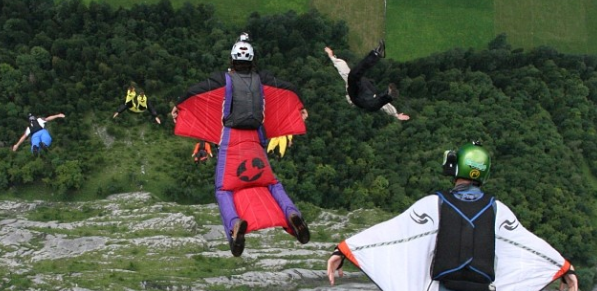
    An insanely low wingsuit flying line in one of the world’s most aesthetically beautiful cities, Rio de Janeiro.

  • Steve House: Shattered Ice Climbing Movie

    Steve House: Shattered Ice Climbing Movie

    “The wrong place, is it here? The wrong moment, is it now? Will I know?” After achieving his dream summit, Steve House finds himself empty.

  • Extreme Hiking: Volcanoes, Craters and Lakes Hotter than 100 Degrees C

    Extreme Hiking: Volcanoes, Craters and Lakes Hotter than 100 Degrees C

    Adventurers travel to New Zealand in search of the perfect hikes, occasionally dominating all nine Great Walks in one visit. The problem with the Great Walks, at least during the summer holiday season of December and January, is that everyone wants to do them. That makes for overbooked huts and campsites. But visitors can experience the extremities that New Zealand has to offer by visiting geothermal hikes on the North Island.

    Tongariro Alpine Crossing

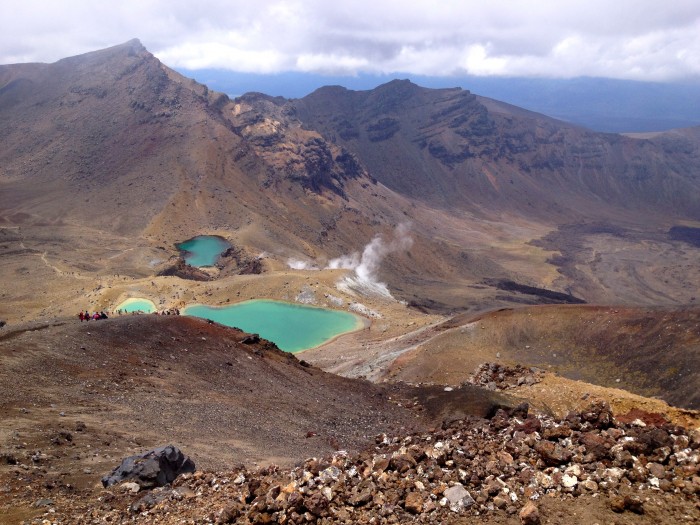
    The Tongariro Alpine Crossing is ranked again and again as the best day hike in New Zealand. A mini version of the three-day Northern Circuit trek, the Tongariro Alpine Crossing takes hikers past three volcanoes, volcanic craters and stunning, glowing blue lakes. Covering nearly 20 km, the track takes anywhere from six to 10 hours to complete, depending on if walkers choose to summit Mt. Tongariro.

    It begins on mostly flat land, zigzagging over volcanic rock and a small river. The trail is well marked and, unfortunately, rather crowded. About three km into the hike, a small trail leads off to a trickling waterfall. As it continues, the track carries up to Mt. Tongariro, the mountain that inspired Mt. Doom in Lord of the Rings. This is where the going gets quite a bit rougher. A steep hike up stairs and sharp inclines brings trekkers to the base of Mt. Tongariro, an active volcano that last erupted in August, 2012. Here, hikers can choose to scramble to the summit, a rocky climb, with virtually no path, or carry on toward the crater summit instead.

    The crater summit looks down into reddish, purple rocks with steam rising from within. Not much further, sit three lakes that shine blue-green behind the stinky, sulfur steam that clouds around them. The hike ends by descending in dozens of zigzags, back and forth. Finally, the last couple kilometers lead into the woods and over a rushing river. There’s no bridge so walkers must prepare to hop across on rocks.

    Waiotapu

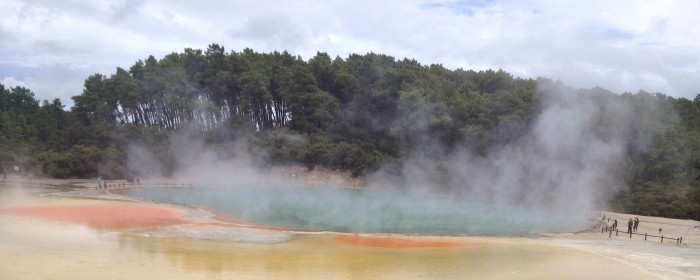
    Waiotapu’s tagline is “a geothermal wonderland,” and that it is. The hike through the park is much less extreme than the Tongariro Alpine Crossing and only takes most visitors an hour or two to complete. But the sites make up for what the hike lacks in extremity.

    The walk passes through several colorful lakes, ranging from lime green to aqua. The lakes all sit at well over 100 degrees C and stink strongly of steamy sulfur. Many fizz as Co2 bubbles to the surface. The trek also passes by bubbling, acidic mud swamps, gurgling as their air pockets surface, along with several purple and lime green craters and caves, formed by acidic steam and mingling minerals.
    IMG_9632

    Hot Springs

    Just outside of Waiotapu, hikers who’ve often stopped by on their way back from one of New Zealand’s Great Walks, can soothe aching legs in the natural hot springs. Just a few minutes from Waiotapu’s visitor center, travelers park their cars and dive in, but a sign nearby warns swimmers to keep their heads above water at all times to avoid the risk of contracting malaria.

    About 40 miles South, outside of Lake Taupo, is another hot springs more popular with locals. Hot water rushes down a small waterfall at Thermal Park, were it meets cooler water and creates a warm swimming spot. The pool on top of the waterfall is hotter than the average hot tub and an excellent place to revive sore, hiking muscles.

  • Obstacle Racing

    List of Obstacle Races

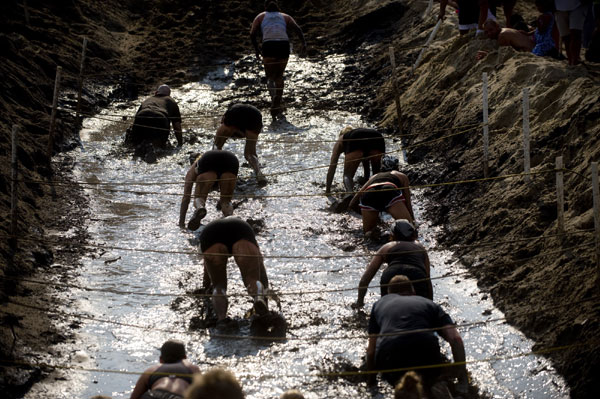
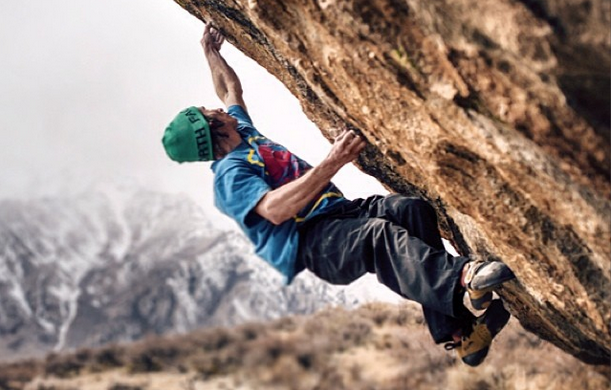
    Obstacle racing is a sport in which an individual must conquer different physical challenges that are in the form of obstacles. The combination of mud and trail runs makes it challenging as it tries to test the persons strength, agility, endurance and over-all performance.

  • Dean Potter Performs the First Ever BASEline

    Dean Potter Performs the First Ever BASEline

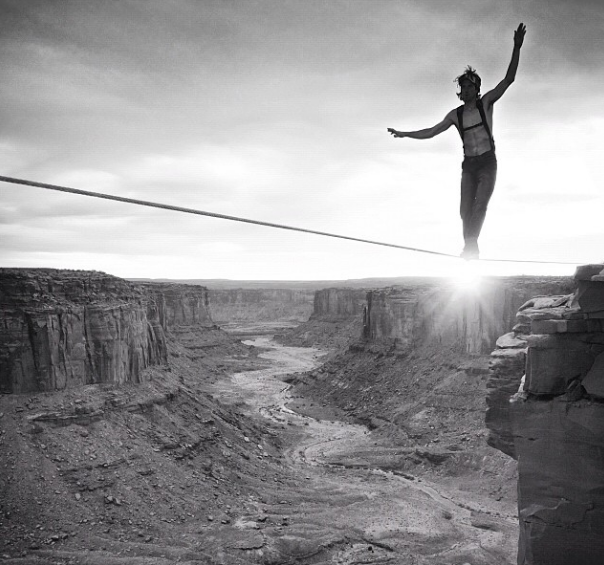
    Today, extreme athlete Dean Potter posted a photo on his Instagram feed of the first ever BASEline. He balanced, with his arms spread, across thin webbing, suspended above a deep canyon. While most would do everything in their power to stay on the line, clinging for dear life, Dean Potter was there to jump off.

    Dean Potter performed the first BASEline. BASElining, like it sounds, is a combination of BASE jumping and slacklining. Potter teetered across a line of webbing, wearing only his parachute pack and a pair of pants before diving into the air.

    Photo from Dean Potter's Instagram, by Jim Hurst
    Photo from Dean Potter’s Instagram, by Jim Hurst

    The feat was part of the promotion and research for Steven Kotler’s new book the Rise of SupermanThe book examines the point of consciousness that all extreme athletes share. “How did they do it?,” the book’s website reads. “In a word, ‘flow.’ Flow is the source code of ultimate human performance. It is a rare and radical state of consciousness where action and awareness merge, self vanishes, time slows down and major aspects of physical and mental performance skyrocket.”

    With his Flow Genome Project, Kotler works to explore how this mental state allows rock climbers, snowboarders, surfers and other extreme athletes to make split-second decisions and push their bodies to the their limits.

    The book goes out on March 4, 2013, but you can watch the trailer here:

    [youtube id=”Utd1oeZuOb8″ width=”600″ height=”350″]

  • The History of Yosemite’s Camp 4

    The History of Yosemite’s Camp 4

    Camp 4, in Yosemite National Park, sees the sunrise last, leaving it a few degrees below chilly on any given fall day. Every morning, campers rise, many before dawn. They roll out of their tents, bundled in fluffy jackets and worn beanies, heat a quick breakfast on their portable stoves and pack up their shoes, ropes and slings before setting off with the hope of sending a new route.

    Set deep in Yosemite Valley, west of Half Dome and east of El Cap, it’s no wonder that the crowded camp has housed world-famous climbers. As early as 1947, climbers such as Royal Robbins and Yvon Chouinard, who sent first ascents in the Valley, stayed at the campsite. As more climbers flocked to Yosemite, they set up camp at Camp 4, where they swapped techniques and climbing philosophies, making the campsite a sort of classroom for dedicated climbers.

    Many also credit Camp 4 with the founding of the popular sport slacklining. When climbers needed a rest day from a hard day on the rocks, they’d hook webbing around two trees and take turns balancing across the tightrope. Today, there are still a handful of slacklines set up in Camp 4, available for climbers to use while they break from sending big walls, just as they did decades before.

    In February, 2003 Camp 4 was officially listed with the National Register of Historic Places. In Yosemite’s news release of the registry, Linda McMillan, at the time Vice President of the American Alpine Club, said, “What makes this dusty little campground so historic and unique is its freewheeling, dynamic spirit and the people drawn to it over the decades. Camp 4’s spirit epitomizes the spirit of the American West–restless, unconventional, inventive, and filled with hope. Yosemite continues to offer new frontiers for the pioneers and explorers of its vertical walls.”

    Today, the climbing community still calls Camp 4 home. Some stay for weeks at a time, living on a diet of canned food and big walls. At the end of each day, climbers from Belgium, Italy and California come together to heat cans of beans and share stories from their day on the rocks. Some boast about newly sent routes, while others look for advice on how to tackle a stubborn problem. By 10 p.m. sharp, the camp falls silent and dying embers crackle softly as the climbers zip into their tents, drift off to sleep and prepare for the next day of climbing.

  • 5 Apps No Adventurer Should Be Without

    5 Apps No Adventurer Should Be Without

    In August, I loaded up my car with climbing gear, hiking boots, my new tent, my old, beat-up sleeping bag, my recently shaved dog and everything in between. We spent the better part of the last month road tripping from Myrtle Beach, north along the East Coast to Quebec, west to Montreal and back down south, along the Appalachian Trail. After three solid weeks on the road, I’ve come to appreciate my smartphone’s knowledge of the weather, sense of direction and ability to Google, “free camping [insert state here].” I also downloaded an embarrassing amount of iPhone apps throughout my trek. Here are the five I found most useful, that no adventurer should be without:

    AllTrails
    Price: Free

    AllTrails is the best hiking app on the market. Users vote on, review and contribute pictures from various hikes. Think of it as the Yelp! of hiking. With a wide variety of trails across the country, paths range from easy to difficult (and trust me, they mean difficult- many of the tougher climbs require technical climbing). Both mountain bike and hiking trails are featured, but hiking definitely dominates most of the database. The app features length, type of trail and all kinds of details, like if you should bring your dog or not. The best part is the option to search for trails around you, making AllTrails perfect for road trips and even discovering new hikes near home.

    Fishing Spots
    Price: Free

    This is awesome for finding good fishing spots nearby and what kind of fish users are catching. Users share tips for snagging the biggest catches in the area and demonstrate what type of bait to use. As far as apps go, it’s a bit on the excited side of notifications, but the information is incredibly useful and I’d highly suggest using this app if you’re looking for a new fishing spot.

    Slow Shutter Cam
    Price: $0.99

    Slow Shutter Cam’s simple to use and perfect for capturing starry night shots from your iPhone.

    Launch Sites
    Price: Free

    Those who travel with boats will love Launch Sites. It shows spots to launch kayaks, canoes and paddle boards all over the country. It has an extensive selection of over 17,000 launch sites across the U.S. Plus, fellow users report any fees, facilities and overall reviews of the launches.

    Woodall’s
    Price: Free

    Those desperate for a place to pitch their tent need look no further than Woodall’s iPhone app. Don’t let the name scare you. Although Woodall’s is primarily meant for RVs, there’s plenty of information about tent pitching too. Users filter their results based on location, pet availability and swimming sites. My only complaint is that most of the sites are in the $20+-range. I’d suggest checking out www.freecampsites.net before looking on the app, but it’s great in a pinch.