
It’s a common crash on this turn of the famous Mulholland Highway in Los Angeles. Yikes! Both cyclists are OK.
Tag: Cycling
-

How to Plan a Micro-Adventure on Your Bike
Last week, my friends Andy Owens and Richard Cammett (accompanied by the lovely Abby Smith — and our two dogs Willow and Ted — in the car) rode bikes from Manhattan to Montreal. The boys were pros, having done the trip from Boston in their college years. I was a total noob, who definitely struggled, but am proof that you don’t need to be a diehard cyclist to plan your own biking adventure.
I skinned both knees, got some gnarly bruises and even sat out for portions of the trip. But, as they say, you live, you learn. Here’s how to plan your own long distance cycling micro-adventure — minus the physical injuries.
Step 1. Pick your destination.
Choosing your cycling destination can be as systematic as a lottery raffle. We headed to Montreal because the boys had already made the trek from Boston several years before. If you want a little more order than throwing darts at a map, consider the following:- How long do you have to travel? Are we talking a weekend or a full week off of work? Also, ask yourself if you’d like any rest days and how much time you’d like to spend at your destination.
- How many miles do you want to log every day? We rode roughly 100 per day (although I cheated and jumped in the car for dozens of miles here and there). I wouldn’t suggested more than 80 for beginner cyclists, but if you’d like to stop and sightsee along the way, you can always bump it down to 50. Then, crunch the numbers and figure out how far you can travel.
- Pick a place that’s exciting to you for some reason. For us, Montreal was a lively city AND we got to cross the Canadian border (which makes it feel like you’ve logged some serious miles). Maybe you want to head south because you’re a diehard BBQ fan or maybe a band you like is playing in a city a couple hundred miles away. Choosing a destination that excites you is key to making all of your hard work feel worth it in the end.

Andy taking a water break (cred: Abby Smith) Step 2. Get your gear.
I started the trip with virtually nothing, not even a bike, meaning I learned the very basics. Before you head out to REI or EMS, determine if you’ll have car assistance or not. Without a car, you’re going for the lightest, most minimal luggage ever (we’re talking dirty cycling shorts every day), but with a car following you, you have a lot more flexibility in terms of what you pack. We were lucky enough to have car assistance. This is the gear we couldn’t have succeeded without:- A bike: I’m sure most people interested in pedaling across the country not only already have a bike, but also know a lot more about them than I do. If you don’t, people like these guys can certainly help you out. Here’s what I learned from my trusty pals and my own experience: The lighter, the better (read: carbon fiber). Correct fit counts (ask the workers at the shop to help you with this one). Electronic gear-shifting systems are seriously smooth. And bikes are majorly expensive. I was lucky enough to get a BMC granfondo on loan that fit all of my above recommendations. It was incredibly fast, comfortable and easy to ride. It’s also worth more than my car and WAY out of reach had I needed to buy it myself.
Cost: About $700 – however many thousands of dollars you’re willing to spend - Clip-in pedals: These are those small pedals that attach to cycling shoes. They allow you to pull, as well as push, with each pedal stroke. They’re essential for long distance trips because they distribute your leg power more efficiently and make your pedal rotations much more effective.
Cost: I spent about $250 on both the shoes and pedals - Bike shorts: Trust me on this one. Your butt will thank you later.
Cost: Around $30 - Cycling gloves: These prevent blisters from the handlebars. They are 100 percent necessary. Go for lightweight ones with vents if you’re doing a summer ride. Sweaty hands are no fun.
Cost: Roughly $25 – $50 - Spare tubes: I packed three spares for our 400-mile trip and didn’t use one. One of the guys, on the other hand, blew through four on the first day. It’s better to err on the side of caution with these.
Cost: $8 per tube - Spare tire: This is wise if you’re riding over a few hundred miles. I didn’t use mine, but one of the guys did. If you’re riding a route without bike shops along it, you probably want to pick one up before your trip.
Cost: $50 – $70 - Sunglasses: Not only will these shade your eyeballs from the sun, but they’ll also protect them from wind, bugs, rain and whatever else may be flying through the air. You don’t necessarily need to invest in cycling glasses – just make sure they fit under your helmet comfortably.
Cost: $25 – $300 - Either a jersey or saddle bag (or both): These carry your snacks, spare tubes and whatever else you’re bringing along.
Cost: $40 – $60 - Helmet: Duh.
Cost: $50 – $250
Step 3. Train. Hard.
This is the step that I made the biggest mistake on. I definitely didn’t train hard enough. Riding to work is not enough unless your commute is 50 miles. Start small with 15-mile rides and work your way up to the distance that you plan to ride every day on your trip. Also, unlike training for a marathon, at first you’ll want to allow 24 to 48 hours between long rides to let your muscles recover. But eventually, you’ll want to ride long distances back-to-back because that’s what you’ll do on your adventure. I started training about two months before the trip and that was definitely not enough, even with hard training. For a newbie setting out on a 400-miler, I’d suggest at least four months of prep. You may even want to Google around for a set training program (this 20-week one looks pretty legit). Something else that I learned the hard way? Clip-in pedals aren’t as easy as they look if you haven’t used them before so practice ahead of time.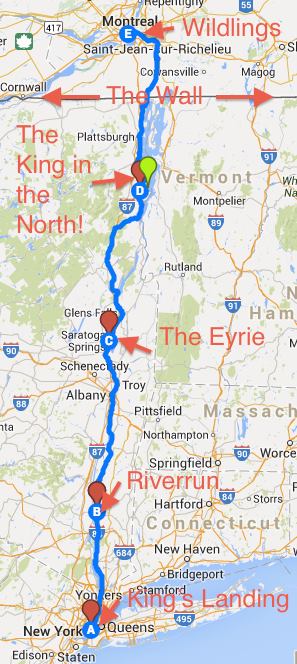
Our route, in Game of Thrones style (cred: Andy Owens) Step 4. Plan your route.
Google Maps offers mostly reliable cycling directions, and I’d suggest using this to plan your route. We camped along the way, using sites found at state parks or from this awesome site. You could also stay in hostels, use Couchsurfing or Warm Showers, which is pretty much the cycling equivalent. My one word of advice would be to plan your stops directly along your route. Ten extra miles may not seem like a lot now, but it sure feels like it after you’ve already logged 90.Step 5. Pack your grub.
How you approach this part is pretty personal. We basically lived off of Clif bars and energy gels, with a daily diner lunch. We also packed freeze-dried meals for camping. I always like to cook something that’ll reheat well (in this case, beans, chicken and rice), freeze it the night before the trip and bring it along to heat on a camping stove or fire the first night. That way, you’re not living on Ramen the entire time. Keep in mind that eight hours of cycling burns around 4,500 calories, so pack plenty and keep a couple granola bars on you at all times. Also, account for water, especially if you’re camping at sites without potable water. I filled up my two 20-ounce bottles every 25 miles or so.Step 6. Map out breaks.
Don’t pedal through the miles so quickly that you can’t stop and enjoy the scenery. We stopped after day three of our four-day ride to take a full 36 hours off of the bike seats. Luckily, the boys had a friend from college who worked on a farm in upstate New York. We spent a day weeding crops, feeding pigs and chowing down on her amazing, homegrown meals. I’d highly suggest planning out breaks like these along the way. They make all of those miles more bearable and will often be the most memorable parts of your cycling micro-adventure.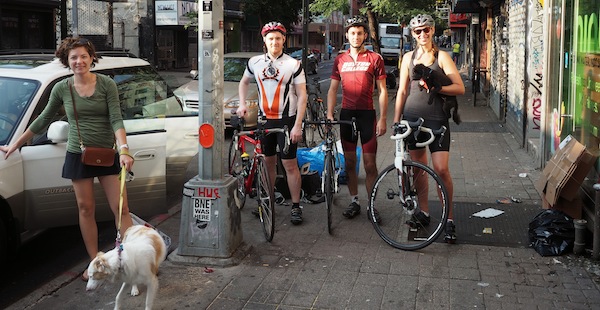
From left to right: Abby S., Willow, Andy, Richard, me, Ted (cred: Chris Robles) -
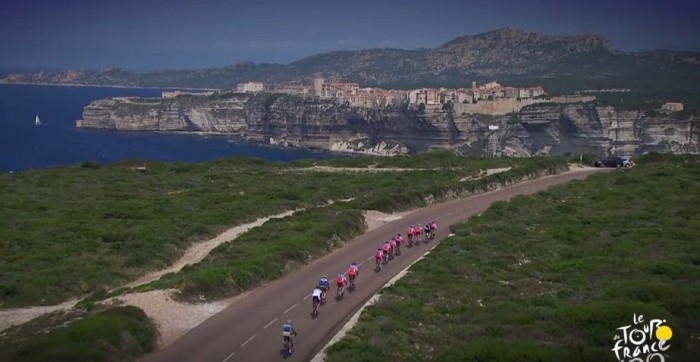
Tour de France in Corsica
In the 2013 Tour de France, three stages passed through the beautiful French island of Corsica, something that had never happened before.
-

Attention, a Life in Extremes
In “Attention, a Life in Extremes,” three exceptional adrenaline athletes are featured: Gerhard Gulewicz, a long distance cyler; Guillaume Nery, a freediver and internationally renowned wingsuit flyer Halvor Angvik.
-
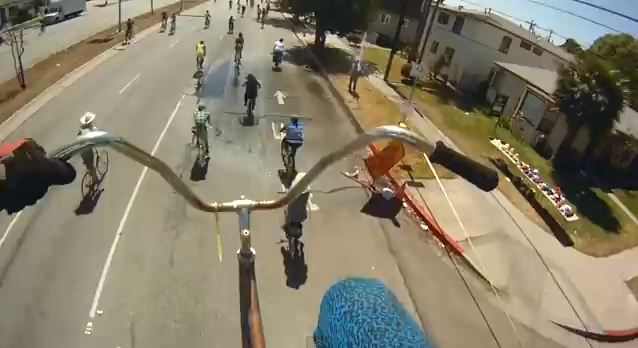
The Tallest Bicycle I’ve Ever Seen
Not sure where this comes from, but my favorite part is when the rider goes under the bridge. This whole video is amazing, in a very stressful way.
-
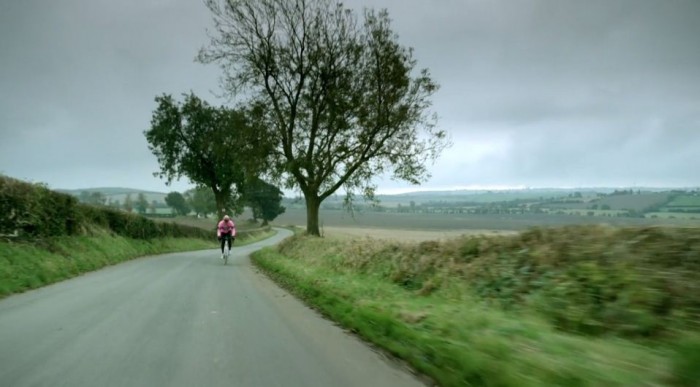
Rough Riders: Exposing Doping in Cycling
Cyclist turned “cantankerous” sports journalist Paul Kimmage has spent the last 22 years of his life working to get rid of doping in the sport of cycling. In this film trailer for Rough Rider, Kimmage likens himself to “dog shit on someone’s foot” and his battle to expose doping to the world.
-

Inside the Livestrong Foundation
Let’s set aside the fact that Lance Armstrong has been asked to return $4 million in Tour de France prize money. It’s the “most sophisticated doping scheme in sports history,” they say.
Let’s focus on the good that Lance Armstrong has done for the world. If it wasn’t for him the Lance Armstrong Foundation, now called the Livestrong Foundation, wouldn’t exist. To date, over $450 million has been raised to inspire and empower people affected by cancer.
The Livestrong Foundation, based in Austin TX, was started in 1997. Aside from inspiring and empowering those affected by cancer, the Livestrong Foundation seeks to provide practical information and tools. At one point, they used to offer funding for direct cancer research, but that is no longer the case.
In October of 2012, in the wake of a cycling doping scandal, Lance Armstrong voluntarily stepped down as chairman of the foundation. “”To spare the foundation any negative effects as a result of controversy surrounding my cycling career, I will conclude my chairmanship,” he provided in a statement.
At the moment, Doug Ulman serves as president and CEO of the Livestrong Foundation. Armstrong no longer sits on the board of directors.
And we can’t talk about the foundation without mentioning the wristband.
The Livestrong wristband was launched in May 2004 as a fund-raising item. It was developed by Nike and their advertisement agency Wieden+Kennedy. This seemingly simple yellow silicone band generated quite the following. Sold for $1 individually or in packs of 10, 100 and 1200, the goal was to raise $25.1 million, which was achieved in only six months.
By the end of 2004, the band was quite popular. John Kerry, Matt Damon and several athletes at the Athens 2004 Olympic Games were spotted wearing a Livestrong wristband. I personally remember them selling out on the website for weeks at a time.
Of course, if you’d like to make your own wristband, you can order wristbands yourself via a website like Label Yourself. Pretty easy and, who knows, maybe it’ll help you bring awareness to an important cause.
photo credit: sfxeric
-
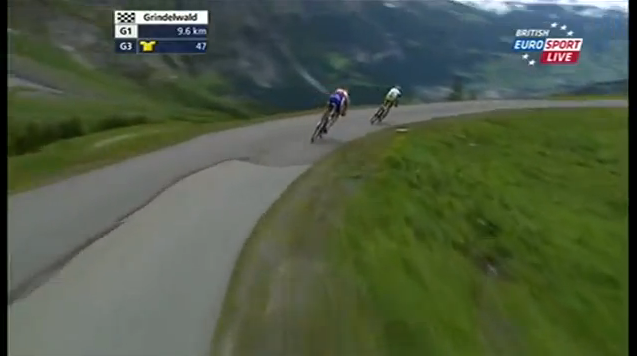
Damiano Cunego Attacks the Tour de Suisse
Just, hold on to your seats, everybody, because this could be a little bit nasty. Let’s just wish them all the very best, shall we.
If you’ve ever wanted to know what it’s like to race a bicycle professionally, check out this gut-wrenching descent. The turns are so hairy, the descent so steep, that the motorcycle-powered camera man has a hard time keeping up.
Pro tip: fast-forward to 2:30 to watch the descent.
-

Meet Natalie Sisson: Racing The Tour d’ Afrique
Here at Nerve Rush HQ, we are lucky to have such cool friends. Close amigo, Natalie Sisson, is going to be biking across Africa on the famed Tour d’ Afrique bike race. When we found out she was racing the Tour d’ Afrique and racing almost 6,500km of the race on her bike, we knew we had to have her on the site. I decided to jump in and find out more about Natalie and the race specifically.
____
What’s your cycling background Natalie?
I’d like to say it’s my favourite past time, but I’m more of a commuter cyclist, having braved the streets of London, England with a daily 40 minute commute one way, and then again in Vancouver. Canada. I’ve done a few sprint triathlons in the past and the cycle leg of one full triathlon, but nothing quite like this next adventure.
Just under 6,500km on a bike! Can you shine some light into your thoughts behind starting such a massive adventure?
It started with a conversation with a Canadian traveler on a slow bloat through Laos. When you have 8 hours to kill you can cover a lot of ground. We got to talking about this crazy bike tour that goes the length of Africa, from Cairo to Capetown. I was intrigued. I looked it up online and read the details of what was involved. I set myself a goal to do that ride one day.
One day happened to come five years later when I paid my deposit in early 2011 and committed to doing it in 2012. Once I commit to something it’s very rare that I don’t follow through on it. I also like to set myself personal challenges. It started in 2004 when I trained my ass off for 9 months to compete in a body sculpting competition… and won the regional title.
Then in 2007 I broke a world record by dragon boating across the English Channel with the Sisterhood. It felt Iike I was due my next challenge. This one seemed appropriate.

How are you preparing for this incredible adventure?
To be honest, not as well as I should have. In 2011 when I returned home to New Zealand for the first time in 5.5 years I got on a road bike and started training with my sister for a few events. The first was a 48km race, followed by a killer 100km race with some nasty hills.
This was all in the lead up to the Lake Taupo Cycle Challenge. This 160km race around the lake the size of Singapore, saw us in the saddle for over 7 hours. To me that was the best test of whether I could do that kind of distance. When I get to Africa we will ride between 100-180km 5-6 days in a row with just one day off.
Since that road race I’ve been travelling and running my business from the road and it’s really been hard to try and train under those circumstances. You actually need to base yourself somewhere to have access to your bike to ride daily and know routes to take. So I have been keeping fit playing Ultimate Frisbee, running and hitting the gym, but I really need to notch up some serious time in the saddle in these last 6 weeks!
I’ll do that by getting on my new bike I’ve bought or this epic adventure, and start cycling daily, as well as clocking up some longer 3-4 hour rides on the weekends, and building to a few days of riding in a row to get used to how my ass will feel.
Even with all those plans, there’s bound to be some things that come up. What are you most afraid of as you get ready for this race?
I have to say this one excites me and daunts me at the same time, I spoke to a guy who completed the whole trip last year, and he got typhoid from eating lettuce. He got so sick the organziers dropped him off at a hospital and told him to make his own way to Capetown. That part scares me a little. Being left to fend for yourself in a continent I’ve not yet travelled to. From the stories I’ve heard, it’s not one you want to be alone in, especially as a woman.
I guess the mental endurance is something I’m looking forward to testing out. I think I’m pretty tough from years of playing competitive sports, but this is something entirely different. Cycling up to 8 hours a day, pitching your tent, fuelling up on food, and then getting up to do it all again the next day, for 2 whole months is not for everyone.
I also had a friend send me this video clip from YouTube of a rider getting taken out by an antelope during a mountain biking race, I’m kind of hoping that won’t happen to me. Finally I’m adding pressure by attempting to raise $10,000 for Women Win and setting up my business to run without me for two months. That doesn’t scare me but it’s a whole other beast in itself from a preparation perspective.
This isn’t a short trip. You’ll be gone for quite a while. How are you funding all of this?
It is the most expensive trip I have undertaken in my life. The cost of the tour being the main expense at just over US$8,000. All up I’ve estimated it costing around US$15,000.
I am so lucky to have some fantastic sponsors who I approached, and who believed in what I was doing, I broke down my trip costs and they chose to sponsor a segment like bike parts, camping equipment, immunizations. So big ups to Chrometa, MeetingBurner, Unbounce, Six Figure Start and Kaleidoscope Marketing.
KP Athletic Wear stepped up to sponsor me with her own clothing line and GoPro sent me their awesome new Hero 2 HD camera plus bike and helmet mounts for free so I can capture the whole epic journey on video!
The rest I’m self funding as it was my personal challenge. My online business success over at the Suitcase Entrepreneur is picking up the tab :).
You’re doing this all for a purpose, right? Tell us about the cause you’re doing this for.
Yes I totally am. As a woman who’s played all sorts of sports since I was a kid, I can’t credit the impact playing them has had on my sense of worth, confidence, and naturally my mental and physical abilities. Playing an individual sport or being part of a team has taught me so much in life and in business.
So when I found out that an organization existed that was giving girls and women confidence and better rights through sport I had to check them out. Women Win is a leading global organization with a mission is to empower girls and women to achieve their rights through sport. Their vision is:
“a world where women and girls are strong leaders and agents of change in their communities.”
I’m doing a whole social media campaign and outreach in order to get maximum exposure for them and to raise $10,000 in donations. This amount could make a huge amount of impact for them. For example, here’s what the following donations can help with:
Amount Project
€ 10 A football for a girls sport team
€ 25 A sports uniform for 1 girl
€ 50 Monthly allowance for a girl leader training/ coaching girls
€ 100 1-year enrollment in a sports program for a girl
€ 200 Life skills workshop for 30 girls
€ 500 Tournament for raising awareness on GBV in a community
Where can Nerve Rush readers follow along with your journey? Anything else we should know?
I’d love for you to come visit the ride of my life on my blog. All the details are there, a fun video too and ways in which you can get involved.
In fact you can support my journey by buying a Human Powered Awesome t-shirt of which half the profits go to Women Win, or donate or simply spread the word!
Also come say hi on Twitter @nataliesisson and Facebook.
—
We’re pretty lucky here at Nerve Rush to run into so many people doing so many amazing things. If you know someone participating in some gut-wrenching adventure, send an email to hq@nerverush.com and let us know!
-
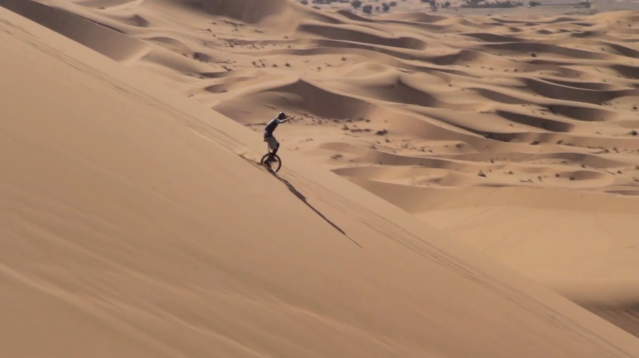
Extreme Unicycling with Lutz Eichholz
Ever tried unicycling? If not, this quick little video from Lutz Eichholz will have you rushing to find the nearest hacksaw so you can saw your bike in half and give it a try. Looks pretty awesome, although we can’t say for certain how awesome Lutz’s future children think the sport is.
You can find more info, videos and photos about Lutz over on his website.