At the time of this post, Danny MacAskill’s latest cinematographic masterpiece, The Ridge, has chalked up more than 11 million YouTube views. No big deal, considering he posted the video LESS THAN ONE WEEK AGO.
Drone pilot Lec Park offers an amazing perspective as Danny MacAskill delivers breathtaking trial cycling chops, riding up and down the Isle of Skye’s Loch Scavaig in the Cuillin Mountains.
When I beat nearly 17,000 other people to win a Warrior Dash obstacle race, I was more surprised than anyone.
It was my first obstacle race. I had no experience with any of the obstacles. And I was just having fun!
I didn’t do any specific exercises or or practice any of the obstacles. If you’re wondering how I did it, I’ll show you how to train for Warrior Dash without ANY obstacle experience.
My only goal was to have fun and see if Warrior Dash could live up to the hype. The experience led me to write a free report showing you the same principles that helped me win the race.
Most Warrior Dash courses have a narrow start – requiring a strategic start. Get close to the starting line so you don’t get caught behind the hordes of runners behind you, wading through mud and yelling warrior battle cries.
Obstacle courses are typically set up on trails or in enormous grass fields. The uneven footing will slow you down and present its own challenges, so stay vigilant about where you step.
The first obstacle will likely come out of nowhere (seeing around a lot of people is tough!). Take your time; you don’t want to get cut by barbed wire or suffer a running injury from one of the obstacles.
Soon, you’ll realize that the obstacles you’ll face are significant:
A cargo net stretching two stories high
A vertical wall with a thin rope to pull yourself to the summit
Multiple truck tires to jump through
A concrete tunnel to somehow traverse through
A cargo net to climb over (don’t get your leg caught!)
Mud, barbed wire, and fire. Get excited.
Don’t forget the hills! Most obstacle race courses are on an unforgiving series of rolling hills, uneven terrain, and wet grass.
Preparing for an event like this requires a smart approach – here’s how to achieve success.
How to Train for an Obstacle Course Race
Here are the top seven ways to train for an obstacle race:
Don’t get hurt! Barbed wire and fire are real! Slow down and crawl low enough under (and jump high enough over) these obstacles. Women should wear their hair low but put together so it doesn’t get caught. Make sure you assume all obstacles (like fire, electrically charged wires, or barbed wire) are real.
Start near the front.Don’t start near the back or you’ll be stuck behind the crowd. Bottlenecks behind obstacles always happen, so get out ahead of everyone else.
Slow down (seriously).Don’t rush over any of the obstacles. Even though you have to slow down, remember that you can’t continue if you fall off a 15-foot barrier and break your foot.
Strengthen those muscles!You’ll be a lot faster over the obstacles if you’re strong. You don’t need to bench 300 pounds, but get comfortable with general strength exercises like a good medicine ball workout.
If you want to run fast, run fast.Let’s remember that to run fast, you have to practice running fast. It’s very helpful to run a variety of paces in your training, whether that’s classic repetition workouts on the track, hill repeats, or fartlek runs
Become a trail runner. The VAST majority of obstacle race courses are on dirt paths, trails, grass, and other uneven terrain. You’ll be at a huge disadvantage if you’re not ready to run on this type of terrain. Trail running improves your proprioception, balance, agility, and ability to cover uneven terrain more quickly.
Run more. Always! There’s a reason I beat over 16,000 other runners to win a Warrior Dash and it has nothing to do with my agility, power, or strength. I was simply a stronger runner.
Train like a runner and you’ll dominate any obstacle race you enter.
Train Smart, Race Fast
Don’t be intimidated to enter your first obstacle race. The majority of registrants are more inexperienced than you are – and most obstacle races are completely accessible to anyone with even a small amount of fitness.
Run a trail race. The uneven terrain and hills will definitely prepare you for any off-road obstacle race.
A Parkour class will teach you how to run over obstacles quickly.
Obstacle racing is a new and different way to run fast. If you’re bored of traditional road races and need a different challenge, a race like the Warrior Dash might be just the thing to break you out of your rut.
Just remember that runners will always be the top finishers at any obstacle race so train accordingly!
It was in the late afternoon of a Thursday in June when I picked up my phone.
“Alan, are we going to do this? We’ve been talking about it for so long.”
While I think my brother, Dan, was a bit antsy after a long week in the office, the man had a point. For the last few years, we had discussed running a marathon together.
Marathon Failed Attempts
It’s not like we hadn’t tried before.
I made a valiant attempt in college. My friend Gabi and I ran through St. Louis’ Forest Park several times over the course of 8-10 weeks, following a strict four- month training schedule. After a particularly long run one weekend, my knee gave way when I got out of bed the next morning. Gabi and I made the executive decision to postpone our long distance exploits. Turns out that was a good decision, as we both pledged the same fraternity and likely wouldn’t have had much free time to safely finish our training.
My brother also once tried to run a marathon. I remember one of his training runs while we were visiting family in Indiana. It was Christmas time – cold and windy, and my brother went out for a solo 14-mile run. My family thought he was crazy, but I knew what he was going through. Despite biting gusts in his face during the latter half of his run home, he celebrated a victory that morning. He had officially run a longer distance than I ever had.
Like me, Dan’s knees started bothering him and he didn’t finish his training. Over the next couple of years, I got into obstacle racing and rock climbing, joining a local gym and racing events like the Tough Mudder, the Spartan Race, and even a zombie apocalypse-inspired mud run. Scary stuff.
Throughout 2013 and 2014, Dan and I had talked about another attempt. This time, we would train together. We went back and forth, trying to find the perfect race to sign up for. Do we race locally? Do we pick a city and fly there for the weekend? What races are available given our hectic work schedules, upcoming bachelor parties and vacations and conferences?
Holding Ourselves Back
Thing is, we couldn’t find a race that “worked.”
It wasn’t until Dan’s phone call last June that we realized…we don’t need a race. All we have to do is put our shoes on and run. We’ll figure out the details later. Trying to find the perfect race was holding us back from what’s most important. Let’s just start running, and we’ll take it from there.
He called on a Thursday, and we started our four-month training program that next Tuesday.
Our Marathon Plan
The plan was simple.
We’d follow the same four-month training plan that we had used before. While we both live in New York City, it was easier for us to train alone during the week and then, occasionally, to sync up on Saturdays for longer runs. I would train along the west side of Manhattan, hugging the Hudson River during my runs, and my brother would train along the East River.
We’d call each other regularly to chat about how we were feeling, to make sure we trained at the same pace, and to psyche each other up for the next run.
Unfortunately, after about 10 weeks of training and one particularly long run, Dan told me that something didn’t feel right. He had suffered knee and ankle injuries in the past, and he didn’t feel like continued stress was the right decision at the time.
Finishing Alone?
I’m proud of Dan for listening to his body, but I was upset that I no longer had a training partner. At that point, I was more than halfway done with my training, and I had just run the longest I have ever run before, a 16-mile Saturday morning session.
I decided to press on. There were still, of course, some details to sort through:
What would I eat the few days leading up to the race?
Without aid stations, what water and food would I carry with me?
What was my route? How would I hit 26.2 miles running around Manhattan like a crazy person on a Sunday morning, avoiding traffic?
Enter Joel, Ultramarathon Runner
Satisfied with my training, I set out to run my “DIY marathon” on Sunday, August 10th.
A few days prior to the run, I received a serendipitous text message from Joel Runyon, close friend and co-founder of Nerve Rush, an extraordinary human being who recently set out to run seven ultramarathons on all seven continents.
“Hey, I’m coming to NYC. You around?”
I responded back.
”Yes, any chance you want to run a marathon with me on Sunday morning?”
I figured, Joel was in the middle of ultramarathon training, so he likely had a longer run scheduled that weekend anyway. My hypothesis was validated when Joel agreed to join me on Sunday. I made a last minute trip to REI to pick up his favorite Clif Shot Bloks, and made plans to meet Joel at 7:00am the next morning.
The Serendipitous Ultramarathon
For the more novice ultramarathon runner, finishing the race safely is the most important accomplishment one can hope for.
The time doesn’t matter nearly as much as listening to your body, knowing how and when to take breaks, and constantly battling the “please stop now this is hurting” voice in the back of your head.
While I had been training at an 8:00-8:30 min/mile pace, Joel had been working with a professional ultramarathon coach at a slower pace. About 4-5 miles into our run — we both went out way too fast! — we both slowed down. Turns out this was a smart decision, as the temperature quickly picked up to 85+ °F. It was a hot and humid day, not ideal for long distances.
We ran up the Hudson River Parkway, from 10th Street to 109th Street, where we darted east until we hit the northwest corner of Central Park. We ran the Central Park Loop (a little over 6 miles) two times, then we made our way back to the Hudson River to run home.
Along the way, we snuck into a 5K race and “borrowed” their aid station, took a quick bathroom break, and stretched where we needed to. Running an ultramarathon, I learned, is about managing your body, and that’s what Joel taught me to do.
With about two miles left in our run, Joel looks at me and says, “Hey, want to make this an ultra?”
While ultramarathons tend to follow 50K, 100K, 50-mile or 100-mile courses, an ultramarathon is technically any race over the normal 26.2 mile distance.
Joel whipped out his fancy GPS watch, and we ran around a couple of Hudson River piers to tack on an extra tenth of a mile, putting our final race distance at just over 26.3 miles.
I set out to run a marathon, but I learned how to run an ultramarathon.
This won’t be my last 🙂
Just after Joel and I finished the NYC “ultramarathon.”
Professional Wakeskater and Red Bull Athlete Brian Grubb Tackles Historic Waterway, Taking the Sport to New and Compelling Places
What once served as a connector for the Atlantic Ocean to the heartland of America, now serves as a site for the next level of watersports. Professional Wakeskaters Brian Grubb and Andrew Pastura took their skills to the now-retired lock system and surrounding areas of Western New York’s Erie Canal in order to challenge themselves while honoring a piece of US history.
Still relevant but modernized, a lock is a device used for raising and lowering boats between stretches of water with varying levels on river and canal waterways. The Lockport, New York, Locks are the most significant historic site from the Erie Canal era that is still in operating condition. Drawing tens of thousands of visitors to the Niagara region per year, the Lockport Locks Heritage District is on it’s way to be one of three North American restored 19th Century canalways currently in existence.
Wakeskating, an adaptation of wakeboarding similar to skateboarding on water, is a sport usually reserved for riding behind boats, going off man-made rails, pipes and kickers located in lakes and flat bodies of water across the country. The vast lakes and outdoor activities of the Western New York and Great Lakes Region in the summer months give the young sport a home amongst locals but “popping” off the antiquated-but-not-forgotten locks has never been done before.
Red Bull Athlete Brian Grubb, who is considered an innovator and pioneer in the sport of wakeskating, spent ten years of his life in the New England area. He’s won numerous championship titles and brought the sport to the ends of the earth, including the rice patties of the Philippines, the swamps and bayous of New Orleans, the Cranberry Bogs of Wisconsin and the Kimberly Region of Western Australia. He, along with friend and leader of the next generation of wakeskaters, Andrew Pastura, from Cincinnati, can appreciate the uniqueness of a location like the 200-year-old lock system with its 12-foot drop and narrow causeway.
“It’s been a quite an accomplishment and great honor to bring wakeskating to the lock system and the Erie Canal of Upstate New York”, says Grubb. “The large drop from one lock to another was bigger than anticipated but being a part of history made it all worth it.”
This video comes from Eugene Muzykin, a Boston-based quadcopter pilot and longtime friend of Nerve Rush.
I’m pretty excited to share my latest project with Nerve Rush.
I got a chance to film a free and open-to-the-public fitness group called November Project doing their regular Wednesday 6:30 am morning workout. I captured them running the Harvard University Stadium spectator seat stairs. I filmed and edited together a short movie with aerial footage filmed with my DJI Phantom 2 quadcopter which has a GoPro camera attached to it.
I have been flying quadcopters to make short movies and take photos for about 6 months now.
I do not have any formal background or education in the film industry or aviation. However, flying quadcopters and getting stable video footage has become much easier with the latest technological improvements in that space. In my setup I am using 3-axis stabilizing system (gimbal) which uses three brushless motors to keep the GoPro camera leveled to the horizon regardless of the movement of the quadcopter. Improvement in batteries have also played a major role in recent surge of a range of quadcopter products coming to the market. After getting a lot of practice, numerous test flights to find best settings and adding FPV (live video preview of the GoPro image) I was able to capture the footage shared here.
Shooting at the Harvard Stadium was a very interesting experience. I spent a few hours planning what kinds of shots I wanted in this movie clip a few weeks before filming. Normally, sport stadiums are off limits for quadcopters. Stadiums are usually private properties, and quadcopter mid-air failure or loss of control could be very dangerous to spectators.
Since I was filming at Harvard Stadium, which is usually open to the public, I had less concerns about some of the issues mentioned above. I did take good precaution to ensure safety of the participants of the November Project workout by not flying directly over them. One issue I faced was the possibility of getting shut down by campus police or one of the Harvard Football team managers. From the research I’ve done I was not violating any FAA law or was not in any no-fly zone. However since quadcopters are so new, any official can take matter into their own hands. If I was flying recklessly, getting shut down would have been fully justified without needing a law for it.
Another challenge I faced was not being sure if the Harvard Stadium field itself was going to be used that morning. If there was a regular football practice going on that day, I would have had to launch from somewhere on the stadium stairs and catch the quad during the landing (no room for a landing otherwise). I practiced catching the quadcopter during landings weeks before I filmed at Harvard for this scenario specifically, but the football practice started late that day and there ended up being enough room on the stadium field for me to launch and land. From the technology standpoint everything went really well. I used 3 batteries for 3 flights to shoot video and one flight to shoot photos. There were some intermittent problems with GPS signal but that’s usually not a necessity for a good flight.
Overall it was a very fun experience.
It was a great opportunity to film a very motivated group of people at a really cool shooting location.
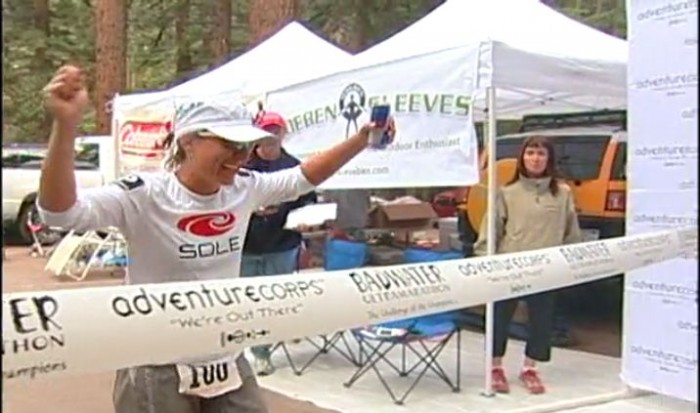
It’s an invite-only race and considered the toughest run on Earth. Running 217km – more than five marathons – in the hottest part of the U.S. in the hottest time of year, racers go from the lowest point in the U.S. to the highest point in the continental U.S., the summit of Mt. Whitney. “The shoes have literally melted down through the sole.” Damn!
Don’t know much about this video clip, but it’s beautifully edited, has a great soundtrack and gets me amped up for cliff jumping. What more could we ask for as adrenaline junkies?
One of the most popular climbing destinations on the planet with thousands of boulders strewn across hundreds of areas, Fontainebleau is a rock climbing playground. In this documentary, watch the world’s best rock climbers explore the hidden and beautiful boulders of this enchanted forest.


 and longtime friend of Nerve Rush.