Author: Alan Perlman

  • An Anatomically Correct Nut Tool for Climbers

    Just last week, a new climbing tool was launched on Kickstarter, and it’s causing quite a stir in the climber community. Dick’s Nut Tool is a nature-inspired nut tool designed in Portland, Ore., for crushers who want to send hard.

    What’s a Nut Tool?

    First used by British climbers in the 1950s, “nuts” are used to chock cracks for protection while climbing. Occasionally, nuts get stuck, and the hooked tip of a “nut tool” is used to hammer them out.

    Made of stainless steel 304, Dick’s has a Rockwell hardness of 70 and is almost twice as strong as aluminum, making it capable of busting out nuts in a multitude of shapes and sizes.

    The company was founded by Dick Cocksure in 2015, and recently, while ascending the rugged rocks of Lake Tahoe, Dick reflected on why he climbs and why he set out to revamp the nut tool:

    There’s just something magical about climbing, the way it stimulates so many parts of my body and brain at once. It leaves me totally awed.

    dicks-nut-tool

    Less than one week into the crowdfunding campaign, Dick and his team have raised almost 20% of their goal, and they’re absolutely delighted to see folks relishing the fruits of our labor.

    Campaign backer Andrew Traylor of Mountain Refugees writes:

    As a diehard old-school traddy, I’m naturally disgruntled by any new innovation in climbing technology. It just chafes me the wrong way, like a pair of cotton undies after a week in the Winds. So when I saw Dick’s new sparkly thing, I was pissed. How dare he make improvements to a product that already exists? Does he not understand that the initial form of any device is the most true and pure form achievable?

    The only thing that allowed me to even touch the damn thing was his encouragement of placing nuts. The more nuts, the better in my book. So I reluctantly took hold of this crack-probing implement and took it for a spin. To my surprise, it fulfilled my needs — my nuts have never moved so quickly! I’m happy to report its aid in removing hexes, wooden chocks, and stashed ham sandwiches from various fissures. I no longer cringe seeing Mr. Cocksure’s device swinging be- low my swami belt. I’ve decided that I’ll let it stay on my rack, for now.

    Echoing Andrew’s enthusiasm, A. Osborn writes from Portland, Ore.,

    I was following this off-width, really giving it all I had. It was way out of my league, but my leader was a babe, and I didn’t want to disappoint. So, was playing it real cool. Everyone knows that good protection is key to any tight spot. She was plugging a good mix, cams for days, but nuts too.

    I started feeling good, you know, in the rhythm. And like the hand of god smiting any chance of pride, a #10 BD nut was good ’n stuck. Fixed. My feeble hands quickly resigned their fate. I meekly called for a take.

    The good news was I had my nut tool. Dick’s Nut Tool, ergonomically designed just for such oc- casions. I grabbed my tool by the balls and set that nut free without so much as a second thought. Protection is key, but the tool is just as important.

    Lol. Check out the tool here.

  • Obstacle Race Training Guide

    Obstacle races are sweeping the world. Are you wondering what it takes to win one? Need a detailed training guide with gear, apparel and nutrition recommendations?

    In our complimentary 44-page guide, you’ll see:

    • How to prepare for an obstacle race to out-perform your competition
    • Which training plan to follow depending on what race you are competing in
    • Gear, apparel and nutrition recommendations
    • 11 warm-up and cool-down videos

    Download your obstacle race training guide links here:

  • Using Night Vision in Extreme Sports

    Note: this post comes from Jim Van over at Integrated Components, a company that sells night vision equipment to extreme athletes.

    night vision ice climbing

    If your favorite outdoor sport is not challenging enough, try doing it on a moonless night under night vision goggles. If you’re a top performer, the learning might be shorter than you think.

    The two major things you’ll need to overcome:

    1. Limited Depth of Focus

    It takes practice. You may not be in an ideal position to reach up and to refocus, so you’ll have to take your best guess as to how far out to set the focus.

    2. Less Than a 180-Degree Field of View

    So far, only one person had an issue with vertigo until she realized she was moving her head up and down way too fast. Everyone is quick to realize there are many more shooting stars every night than are visible to the naked eye!

    Ice climbing, downhill skiing, and dog mushing are among the first three activities we’ve tried.

    Spelunking, fly and float fishing, back country boarding and skiing, motocross and desert racing, as well as Rocky Mountain 4X4 ing on 100 year old mining roads to ghost towns at over 10,000 ft are all on the docket in the coming month.

    Check out our YouTube channel here.


  • Help Rebuild This New Paltz Climbing Coop

    Help Rebuild This New Paltz Climbing Coop

    Source: New Paltz Times

    Donate Here

    When a fire in the early morning hours of Saturday, February 7 destroyed the building at 91 North Chestnut Street in New Paltz, it took away more than the climbing and training gear inside belonging to the members of the New Paltz Climbing Cooperative, who had made the location their home base since 2011. The good news is that nobody was injured in the fire that also destroyed the STS Tire and Auto Center in the building, but the loss of the community gathering space meant more to the co-op’s members than the dollar amount of the equipment they lost.

    The New Paltz Climbing Cooperative was started by a group of friends who shared a passion for rock climbing. “The original idea was to create a space where the climbing community, which is quite large in New Paltz, could come together and climb and train and just have a general place that we could spend time together doing what we love,” says New Paltz High School science teacher Chad Foti. It all began pretty organically, with conversations between Foti and fellow climber Johann Kunz moving from “We should do this” to “I saw a space that might work” to “Hey, this will work.” Other co-founding members got on board — Angela Kunz, Mike and Julie Lillis and Don Spiro — and they secured the location at 91 North Chestnut Street in September of 2011, opening the doors that December.

    new-paltz-climbing-gym-2015-6

    “None of us ever aspired to run a business,” says Foti. “And even now, I don’t think of myself as having run a business. It was very much a community space; the fact that we were able to do it at all is amazing, let alone having had it last as long as it did.”

    By the time of the fire, the cooperative had approximately 100 members, who paid $350 a year to join, gaining them 24/7 access to the site. Maintenance and operations were handled in a communal effort; nobody drew a salary. “It was never meant to be something corporate,” Foti says. “All we were ever interested in was covering rent and insurance. The goal was to create a self-sustaining community climbing and training facility, and we ended up creating this micro-community, this mini-reality within New Paltz.”

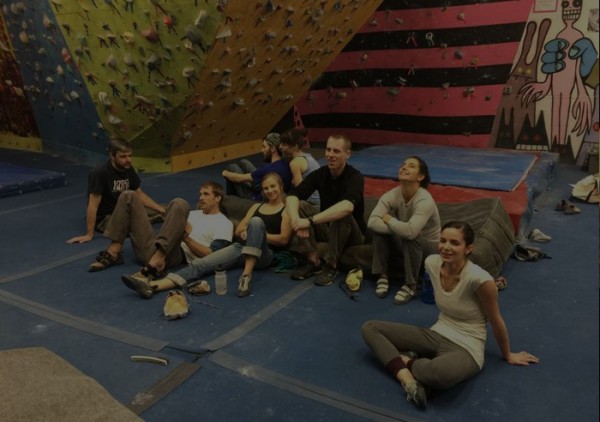
    The space had 15-foot-high ceilings and 2,400 square feet of wall space for climbing and bouldering along with exercise equipment and weights. Painted in bright colors in bold street-art style, the cooperative also had a comfortable area with couches for members to hang out in. All of the tools, materials and sweat equity needed to construct the interior was donated by members, who also pooled their resources in equipment, donating items from their home gyms. Climbing holds — which are more expensive than one might think, says Foti, at $8-$10 each — were also donated by members, who’d acquired them over the years while pursuing their rock climbing passion. “Just to give you a sense of scale, the number of climbing holds you need for a space equivalent to ours in the style of the climbing that we did is about two holds per square foot… so 2,400 square feet of space, you can do the math and we’re talking quite a lot of money just in the holds. Just myself, I had thousands of dollars in holds in there. We were able to source these things through the climbing community, but it took years.”

    new paltz climbing coopNow the prospect of starting over from scratch is daunting, but not insurmountable, says Foti. “It’s just something that we have to deal with.” At first he considered throwing in the towel, saying that part of him felt like, “We did it well and we went out at a high point,” but then he thought about the value of the community they’d created among local climbers. “Perspective is an important thing,” he says, “and nobody is pretending that this is a world-class tragedy, but it’s a resource that the New Paltz community had that they took advantage of, and is now at the moment, gone. Any personal wealth that was lost by anybody in this pales in comparison to the community lost. That’s really where it’s at and that’s why I’m still here and pushing forward to rebuild.”

    It will need a groundswell of community support to do that, Foti says; a true grassroots effort. “We’re fortunate that because of the impact we’ve made, we’ve had a myriad of climbing companies offer us holds at cost, which is absolutely phenomenal. But we still need to raise money to take advantage of that. So we’re looking for a new space and any kind of donations that we can to start accruing the kinds of things we need to start again. And the more that people realize what we’re about and what we’re trying to do, the more people will end up utilizing the space once we get it going again.”

    The time frame for rebuilding depends on fundraising and the generosity of the community, he adds, and they hope to stay in New Paltz. “We’re very much open to any possibility, but New Paltz is ideal,” says Foti. “It’s a wonderful place to be a rock climber. We have a unique situation here in that we have excellent, world-class climbing and we’re also really close to other cultural things. Most climbing areas are way out in the middle of nowhere. Yosemite in California is world class, obviously, but the closest true civilization is not close at all. Colorado has some great hamlets where you can kind of live close to the cliffs, but if you live in Denver, or even in Boulder, any of the good stuff is at least 45 minutes to an hour away. In New Paltz, I can literally live, work and play within ten minutes.”

    Foti’s passion for rock climbing is what brought him to the area 12 years ago in the first place, he says. “And the Climbing Cooperative made it an even better place. The co-op was this niche that made New Paltz even more viable as a climbing destination. There are not a lot of places like it, that’s for sure. It’s what you’d like to see in any climbing area. It gave everybody the opportunity, no matter who you were, the space to come and climb and make friends.” The best part about the gym, Foti says, was finding out that as much as he thought he knew who the other climbers in the community were, he found out through opening the space that there were actually many more than he’d been aware of. “It was dumbfounding how few people I knew before and how many connections we made through this gym.”

    Donation amount as of 3/6/15.
    Donation amount as of 3/6/15.

    Donations for rebuilding can be made at www.gofundme.com/rebuildnpcc, where two weeks after the fire, more than $7,000 has already been raised toward the $110,000 goal. And unlike some other crowdfunding sites that require an organization to meet its goal or lose all the funds, GoFundMe allows an organization to keep whatever they raise. There are still fees involved, however, so making a donation through the co-op’s website at www.newpaltzclimbingcoop.com is perhaps preferable, with fewer fees involved. “Either place would be great, though,” says Foti. The group has also begun holding fundraising events that will continue in the months to come, with a 5K run possibly in the works. More information can be found on the website or look for New Paltz Climbing Cooperative on Facebook.


  • Inside a 70-Mile Himalayan Stage Race

    Inside a 70-Mile Himalayan Stage Race

    I recently corresponded with Priya Darshini, Race Director and CEO of the WindChasers 70-Mile Himalayan Stage Race.

    What’s the history behind WindChasers?

    The WindChasers started out as a fun run organization with the objective of getting more and more people to run while discovering stunning remote locations in India that would otherwise be very difficult to access. Our quest was to eventually find the perfect running course for marathoners who wanted to progress to running ultras as well as something that would be challenging for elite ultra marathon runners.

    During one of our recent runs, Ram Sethu, another Race Director, and me mapped and designed the most stunning yet challenging race course that we had ever seen. The WindChasers became official in the year 2011 and we launched our first event, the Sandakphu 70-Mile Himalayan Stage Race.
    I have personally run around 9 Ultras (all in the Himalayas) and several marathons and half marathons.

    How many people are involved in putting on a race like this?

    Ram Sethu is my partner at The WindChasers and the other Race Director. He has run several marathons and ultras including The Last Desert races in Sahara, Gobi and several others in the Himalayas and elsewhere around the world.

    Our Course Director is Pemba Sherpa. He is an experienced climber and has spent most of his life in the mountains. He trained with his late grandfather Ang Tsering Sherpa a.k.a Mountain Man and is a celebrated climber and was on the first ever expedition to summit Mt. Everest with Mallory and Irvine in 1924.

    Ram, Pemba and I with our incredible crew of 25 sherpas hold the fort down at The WindChasers race.
    Our Official Medic this year is Dr. Anil Menon (MD, MPH) a.k.a ‘Space doctor.’ Dr. Menon is experienced in wilderness medicine, trauma, and is an aerospace medicine fellow from Stanford University. He works at trauma centers in Houston and Los Angeles and at NASA supporting launch and landing of astronauts to the International Space Station.

    Dr. Menon is an experienced runner himself and has supported ultra marathons in the Sahara Desert. He has also worked as a medic on Mount Everest expeditions, disaster response Reno Air Races, Indy 500, Earthquake disaster relief and Haiti to name a few.

    What’s the course like? What can racers expect this year?

    The Sandakphu 70-Mile Himalayan Stage Race is a challenging yet spectacular 70-mile 4 day boutique stage race located at the border of India and Nepal in the Himalayas.

    The course starts at 6000ft taking one through a pristine and stunning Himalayan national forest on day one, leading to the most surreal view of Kanchenjunga, the third tallest mountain in the world, on Day 2 at 12,000 feet. Day 3 is the full marathon day at 12,000 feet where runners literally run through clouds while Kanchenjunga, Mt. Everest, Lhotse and Makalu keep runners company! The final day takes runners from 12,000 feet back to 6600 feet as the course cuts through the mountain taking runners through quaint little nepali villages, forests and even waterfalls!

    The altitude, unpredictable weather and course which consists mainly of cobble stones and gravel make it rather challenging but it’s probably the beauty of the Himalayas that will take your breath away.

    Runners can also expect the most supportive and warm crew that will take care of them like we would our own family.

    If I’ve never run an ultramarathon before, is this race for me?

    Yes, our race is specifically designed for runners who are looking to run their first ultramarathon.

    Do you have any training resources you can share with our community?

    Once runners sign up for our race, our team puts together a personalized training program for each runner if requested.

    Awesome, thanks Priya for your answers! Folks, if you’re looking for a race to run and an adventure to experience, check out The WindChasers here. Registration opens April 2015!

  • Huge BMX Park Hidden 100 Feet Underground in an Abandoned Mine

    Huge BMX Park Hidden 100 Feet Underground in an Abandoned Mine

    indoor bmx park kentucky

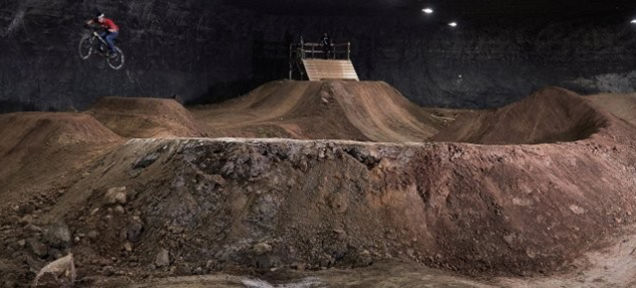
    Right now, indoor BMX parks are all the rage in cities across America. But obviously, these parks are limited by the size of the buildings they inhabit. How to overcome that constraint? Well, you could find an old limestone mine in Kentucky and built a BMX in its cave-like remains.

    That’s exactly what the owners of the Mega Underground Bike Park are doing. Next month, a 320,000-square-foot facility will open, 10-stories below Louisville, Kentucky. It features over five miles worth of interconnected trails, including countless ramps and obstacles. The park’s owners also say this is just the first of three phases in the development of the colossal underground park.

    bmx park abandoned mine

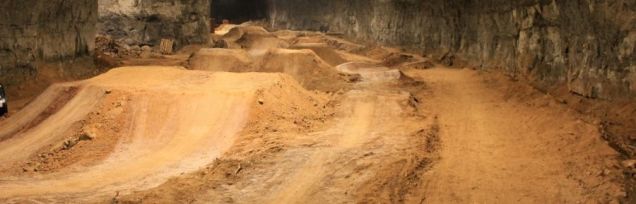
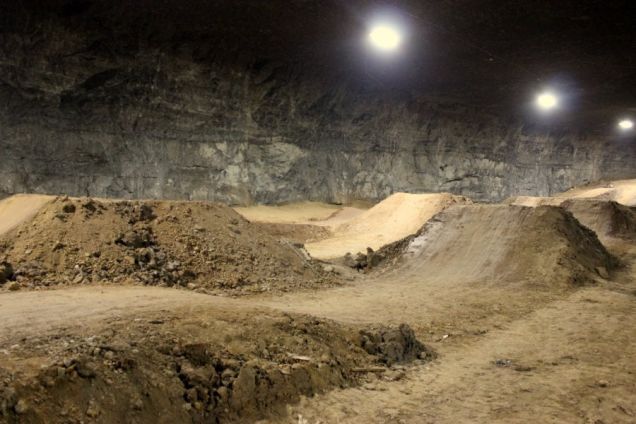
    Perhaps the most compelling part of an indoor park the size of the Mega Cavern is how versatile it is—it’s essentially a massive blank canvas, which can be made and remade all the time. The owners say they’re using their own blend of “craft dirt” to build the obstacles.

    bmx park kentucky indoor

    More wooden ramps are on the way, too, but the designers recently told Outdoor Magazine about why they like dirt so much:

    Dirt, you can tear it down and change it in a day, and it doesn’t cost you anything. With wood, every time you tear it down you lose some of the wood, so you have to buy more wood, buy more screws and nails. Dirt is very cost effective.

    Shredding it up in a cave full of dirt is about as extreme as it gets. You can’t help but wonder, though: Where did they put the bathroom?

    Source: Gizmodo via [BLDGBLOG, Outside]

  • Will Gadd Completes Historic First Ice Climb up Niagara Falls

    Will Gadd Completes Historic First Ice Climb up Niagara Falls

    Niagara Falls is the most famous waterfall in the entire world. The falls, which straddle the border of Canada and the United States, welcome 20 million visitors a year and are a national landmark for both countries – one of the world’s first tourist attractions, and simply put, a wonder of nature.

    See the incredible video of the climb above

    Plenty of people have gone down the falls over the years but Will Gadd – recently named a Nat Geo Adventurer of the Year – is the first person to ever go UP the falls. How? Well, he’s one of the world’s best ice climbers, and Niagara Falls was frozen.

    At least, Niagara was frozen enough to climb. “I checked out the spot we were thinking of climbing in the summer,” Gadd said. “You’d be swept away by the torrential downpour then.” But this year’s cold winter slowed water flow, allowing climbable ice to form. “On a warm winter, there’s no climb here.”

    The massive water flow constantly shakes the ground, and makes the ice shelves and walls around you unsteady and unpredictable

    After working with NYS Parks Department and NYS Parks Police, Gadd and his team were able to create a comprehensive plan to ensure the climb could be done safely and the necessary precautions were taken to protect the natural environment, as he put the final touch on one of his most epic years ever as a climber. “It’s one of the most visited places in North America,” Gadd said. “We have to treat it as a jewel, or it won’t work.”

    There were two priorities for the climb – ethics, and safety. “We’re doing it on natural protection,” Gadd said. “No bolts. There won’t be one thing left in the ice that wasn’t there to begin with, and that’s the best possible way to do it.” The line – which sits on the American side of the Horseshoe section of Niagara, near what’s known as Terrapin Point – extends approximately 147 feet from bottom to top.

    It’s a harsh environment and an intense challenge to stay attached to the wall, let alone climb it

    It’s not easy ice, either. “The ice is formed in layers,” Gadd said. “That means there’s a layer of ice, then snow (with a lot of air), then another layer of ice. It’s unstable, for sure.” Will estimates the grade at WI6+, as hard as it gets for this style of climbing. Tools he used include ice axes, crampons, and a specially-designed Black Diamond prototype “ice hook.”

    The day before the climb, Gadd dropped in from above to clear the route of dangerous hanging ice that could break off during his climb. “I was taking off pieces the size of small cars,” he says. After a full day in front of the route, it was ready.

    At one point I was behind the water, climbing on ice that froze behind the falls

    The environment may appear pristine, but it’s anything but peaceful. With 150,000 tons of water flowing over the crest every minute at speeds of nearly 62 mph, the water impact is equivalent to roughly 4,000 eighteen-wheel trucks hitting the ground at the same time.

    “The massive water flow constantly shakes the ground, and makes the ice shelves and walls around you unsteady and unpredictable,” Gadd said. “It’s a harsh environment and an intense challenge to stay attached to the wall, let alone climb it.”

    I was so close to the water, I could reach out and stick my ice tool in the Niagara Falls

    The route starts with an intense traverse over something Will came to call the “cauldron of doom,” where the waterfall slammed into a hole in the ice. “If you go in the ‘cauldron of doom,’ you’re done,” Gadd said. “You can hit rocks, drown, or freeze to death. Above the cauldron, he and his climbing partner Sarah set up a belay station in an ice cave a little smaller than a phone booth.”

    From there, he methodically picked his way up the route, stopping every few meters to add protection in the form of ice screws and climbing quick draws. One of the biggest challenges? Getting really, really wet.

    “I was so close to the water, I could reach out and stick my ice tool in the Niagara Falls,” Gadd said. “At one point I was behind the water, climbing on ice that froze behind the falls. I got [a] whole lot of Niagara down my neck!”

    That climb beat me up. I may have reached the top, but Niagara won the war

    Gadd ascended the route three times, taking about an hour for each ascent. The line lies nearly perfectly on the American-Canadian border – a fitting location for Gadd, who is a citizen of both countries, and the perfect finish to an incredible year that saw him put up a new route on Helmcken Falls, climb ice in Kilimanjaro, and take home top honors at the Ouray Ice Festival.

    So how did it feel to claim victory on top of Niagara? Actually, Will isn’t sure about the “victory.”

    “That climb beat me up. I may have reached the top, but Niagara won the war. At the end of the day I was hypothermic. That waterfall did a lot more damage to me than I did to it!” Victory or not, Gadd accomplished one thing for sure – an historic ice climb on the world’s most iconic waterfall.

    Source: Red Bull

  • Tommy Caldwell Crushes Dawn Wall’s 5.14c – Pitch 15

    Tommy Caldwell Crushes Dawn Wall’s 5.14c – Pitch 15

    What Tommy Caldwell and Kevin Jorgeson were able to accomplish this year is phenomenal – the first free climb ascent of El Capitan’s Dawn Wall in Yosemite.

    To lend some perspective, Caldwell has been working on this climb since 2007. The combination of endurance and perseverance is difficult to comprehend, even to those of us in the climbing community. Caldwell and Jorgeson lived on the wall for three weeks. They would use sand paper to file away the dead skin on their hands.

    The Dawn Wall has 30 pitches. Each pitch is between 100-200 feet, or the length of a rock climbing rope. The easiest pitch of the 30 is rated a 5.11 (learn more about rock climbing ratings here), and there are 5 pitches rated at 5.14 and higher. This represents the upper limit of difficulty seen in the sport over the last decade. The best climbers in the world sometimes takes weeks or months of practice to complete a climb this tough. It’s the hardest free climbing route in history.

    Tommy Caldwell described the holds as the “smallest and sharpest holds I have ever attempted to hold onto.”

  • LAAX: The Largest Halfpipe In The World

    LAAX: The Largest Halfpipe In The World

    Here’s some great video from the LAAX Snowpark in Switzerland, which now boasts the largest snowboarding halfpipe in the world. This thing is seriously impressive.

  • NR 004: Ricky Johnson, Motocross, Red Bull and the Frozen Rush

    NR 004: Ricky Johnson, Motocross, Red Bull and the Frozen Rush

    Welcome to the Nerve Rush podcast, episode 4.

    In this episode, we chat with Red Bull athlete and former motocross superstar, Ricky Johnson.

    At 16 years old, Ricky nabbed his professional license. It was 1980.

    Over the next 8 years, he became the #1 motocross racer in the world. Due to a debilitating injury at the height of his career, he found out he could no longer race motorcycles. He was only 26 years old.

    Today, Ricky’s a Red Bull athlete. He participates in events like the Red Bull Frozen Rush. His son is also a Red Bull athlete. They’re both crushing it.

    In this episode, we learn about Ricky’s background and transition from motocross to truck racing.

    Mentioned in this episode: