Category: Interviews

  • Inside Honey Badger, a Performance Energy Supplement Company

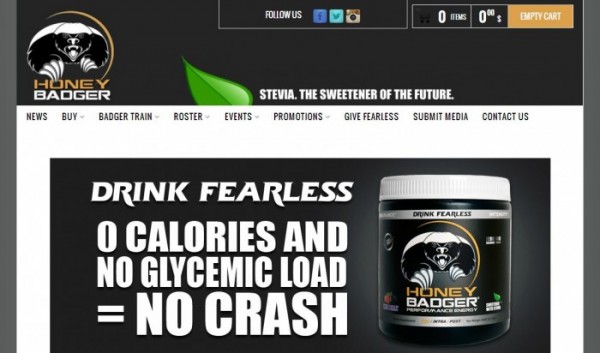
    I’m fascinated by the world of extreme sports. Not just by the athletes and their adventures, but also by the brands that help to power them. The heli-skiing companies. The obstacle race providers. The gear and apparel companies. And in this case, Honey Badger, an all-natural energy supplement drink.
    honey badger energy drink

    I’ve been in touch with the folks at Honey Badger for a while now. I’ve seen their recent website launch and have had the chance to chat with them on the phone. I’ll be honest – these guys seem fun. They have a really cool product, different than what you might initially think, and they’re poised to do some pretty big things in the extreme sports community.

    I fired some questions at Luke Cote, Honey Badger’s Director of Sales & Marketing, to learn more.

    What is your company mission?

    Our mission is to become the best supplement company in the industry. We have a game-changing concept that needs to be introduced into this ever-evolving market. Artificial sweeteners must go; sugar needs to be used in moderation and from natural sources. We feel we can help make an impact on people’s lives as well as have fun doing it. We intend to lead the charge in positive change within the industry. We also want to help grow our charity partner The Mark Forester Foundation. Mark was a roommate and best friend of Robert in the Air Force. All proceeds from our Liberty Bottles go straight to the MFF. We feel very strongly about the organization, as it is personally connected to us.

    How did Honey Badger get off the ground?

    Founded by Anthony Bonello.

    He enjoys living an active and health-conscious lifestyle. He worked long hours with his job in Nuclear Power and had trouble finding the energy to get in productive workouts. He started using PREWORKOUT Supplements and was hooked. After using several different brands he noticed that there were some issues with the formulas. It did not meet his criteria, and he thought that he could do better. He envisioned a PREWORKOUT that fit his personal preference and figured others would follow suit. The criteria consisted of being as natural and clean as possible, no fluff ingredients, and no sugar. Each ingredient had to be absolutely essential to the entire blend or it wouldn’t be added. After finagling with many formulas, many trial and error runs, on family and friends, he eventually created the premise of a formula.

    Excited with the results he called upon his most trusted allies; his Brother’s, to help form a company to develop this formula further. Then, came the most important question, what do we name this exciting new formula? There were so many names being tossed around. Nothing would stick. We knew the name had to bold and stick out in a very crowded market.

    The story begins with a uniquely fierce animal, which symbolizes everything our company represents. This animal demonstrates characteristics of fearlessness, determination, and resiliency. It can fend off deadly venomous snakes, predators twice its size and endure hundreds of bee stings, stopping at nothing to snack on its favorite foods. It’s lean and mean, resilient, full of energy and never stops moving forward. The fearless attitude and prominent characteristics are what caught our attention and proved a perfect fit in naming both the company and product line, HONEY BADGER. We secured the rights to the name of our category of products and the rest is history.

    How long have you been operational?

    The Company was Founded October 1, 2011. After a little over a year in development our first product was launched in December 2012.

    And you have sponsored athletes?

    Many sponsorship opportunities are popping up all over the place as we have a product that can be used by many athletes. We are looking at sponsorship opportunities, but since we are a small brand still, we have to focus on building the company first. We have several segments of business, which we have started to separate and focus on individually.

    So far, they are as follows:

    • Obstacle Racing
    • MMA
    • Extreme Athletes
    • Conventional Athletes
    • E-Gaming

    Our present sponsorship roster:

    • Jake Rhyner – Professional Triathlete
    • Adam Schindler – Professional MMA Fighter
    • Darrell Montague – Professional MMA Fighter
    • Claire Hewitt-Demeyer – Professional Snowboarder

    How did you find these athletes?

    Claire Hewitt-Demeyer was the first athlete to embrace Honey Badger. We had sent our friend Mad Max a few jars of Honey Badger. He let Claire try it and she was hooked. He put her in touch with us and the rest was history.

    Jake Rhyner is a friend of Robert Bonello, Co-Founder of Honey Badger. They originally met during Special Forces Air Force Combat Controller training. When searching for talent, Robert had mentioned Jake and described him as a “Beast” of an athlete. We reached out to Jake and got him on board with our product. Jake recently placed first in a triathlon in May. He’s going to be our secret weapon for an upcoming event, non-related to a triathlon. Not giving it away just yet. All we have to say is, “watch out!”

    Darrell “The Mongoose” Montague is an up-and-coming flyweight MMA fighter. This young man has tremendous potential and upside as he shows quickness and explosiveness. He recently won a big fight. He has a great manager, Steve Lara, CEO of WSMFights.com, doing his best to help get him into the UFC as he deserves a shot to fight the best.

    Adam Schindler is a friend of Ryan Bonello, Co-Founder of Honey Badger. Ryan was in Thailand, training in one of his passionate styles of fighting, Muay Thai. During his time at a training camp, he met Adam Schindler. They immediately became friends and stayed in touch as they both are from the US. Adam Schindler has been in the MMA scene for several years and had some major fights in the Bellator franchise. He suffered an unfortunate knee injury that set up back a while. He just had his return to the octagon recently and suffered another knee injury. This guy shows the true heart of a Fighter. His future in MMA is uncertain. But he’s a friend to us and we support him either way.

    How are you different than other energy drink and supplement companies?

    Our product is more than an energy drink. It’s a hybrid of performance and energy. The benefits of our synergistic blend can help with energy, endurance, focus, intensity, hydration, and recovery. We are marketing it as the ultimate PRE meaning it can be used PREWORKOUT, PREGAME, PREACTIVITY. We purposely designed it to be open-ended for use, and not isolated for one function. The versatility is what makes it unique as it can be used for many applications such as lifting, running, biking, dancing, driving, and gaming to name a few. It is very versatile.

    Our flavoring system is what sets us apart from the rest of the pack. No other comparable formula contains Stevia as the only sweetener. We’re breaking the mold of what everyone else is doing. Each ingredient in our formula has to be essential and serve a purpose. You can literally feel our formula working and quickly. We cut out all the fluff and it shows in the results. What I mean by fluff are filler type ingredients. We refuse to use ingredients that are beyond artificial and pose health risks. We will not compromise the health of our customers. We make products that we use ourselves.

    No marketing hype with Honey Badger, just pure, proven ingredients, in their superior forms for everyone to see. All the ingredients are sourced from reputable companies with proven track records of providing safe and pure ingredients. All ingredients are analyzed at the manufacturing facility to test for purity. We do not use proprietary blends. We list all the active ingredient amounts for all to see. We say, “active ingredients, because we do not disclose the amounts of the other ingredients in the supplement facts.” We feel it’s important to be as transparent as possible.

    Our approach and interaction with the customer is different. We are breaking the mold of traditional corporate models. We connect on a personal level with each and every customer. We try to go above and beyond for everyone. Building real relationships with real customers goes a long way. Social media allows us to instantly connect with people. We also use it to provide customer service by responding to people where they’re spending most of their time. Take a look at our Twitter feed @HoneyBadgerBev and you’ll get an idea of what’s going on with Honey Badger.

    What are your plans for the future?

    We are actively pursuing several sports. We like to call it the Three-Headed Monster. It’s Obstacle Racing, CrossFit, and MMA. All three are the fastest-growing sports out there.

    Our main focus is sponsoring Spartan Races beginning fall 2013 (Sacramento, Malibu, Fenway Park Boston, Austin). We feel Obstacle Racing is the least saturated within our product offering, and we have a huge opportunity to cement our brand within the sport. The Spartan Race presents one of the most challenging Obstacle Racing courses out there. The Honey Badger brand fits well with the rugged sport of Obstacle Racing.

    Some other Events we will be sponsoring and attending are a few big supplement events such as the Olympia and Arnold Classic, as well as an up and coming CrossFit league based out of Atlanta (AAL – Atlanta Affiliate League – Championship Series 6/29/13).

    One of our other very promising markets to pursue is the gaming industry, as we have recently generated significant interest from some reputable gamers who contacted us directly. This has led to a test marketing phase and so far we’ve begun to make some noise. Since a large audience within that market is teenagers, we’re confident their superiors/ parents would approve of our all natural, health conscious products over other brands, who take less of this into consideration.

    What is your company culture like?

    Right now our company culture is very family-oriented. We are aggressive, young, relentless, and get things done. The three founding members are all brothers. They’re very competitive amongst each other. Put them together and they synergistically work. Each team member brings value to the table and strives to succeed. At the end of the day it’s all about the customer! We truly stand by that, 150,000%!

    ##

    Luke, thanks for taking the time to answer some questions about your company. The Nerve Rush community looks forward to your growth! Check out their company here: drinkhoneybadger.com.

  • Coyote Lost at Sea: Mike Plant’s Colorful Sailing Career

    Coyote Lost at Sea: Mike Plant’s Colorful Sailing Career

    coyote lost at seaWhen Minnesota native Mike Plant entered the Vendée Globe, a legendary around-the-world sailing race, he had already completed three solo around-the-world races. He had beat competitors with more experience and with far more funding. To win, Plant had sailed through hurricanes, navigated six-story waves and survived an Indian Ocean capsizing in 45-foot seas.

    In November 1992, Plant had registered for his fourth expedition and in two weeks time was to set sail from France with his competitors. When Plant’s boat, Coyote, went missing in the mid-Atlantic, the sailing world held its breath.

    Now, twenty years later, the mystery and tragedy is unraveled.

    In Coyote Lost at Sea: The Story of Mike Plant, America’s Daring Solo Circumnavigator, author Julia Plant exposes some of the underside of her brother’s hero worship. It’s a fascinating read. Her diligence to understand precisely what happened to her brother adds a deeply emotional layer to the story.

    Julia Plant walks us through her brother’s life, from a solo trip to South America to secretly thwarting authorities in the Greek isles. Mike Plant epitomizes fearlessness and risk-taking of the highest order.

    I had the chance to ask Julia some questions about her book. Thank you to her and to her publishing company for putting us in touch!

    Writing a book is a big deal. What compelled you to kick-start the process? Why now, twenty years later?

    Mike’s life, even when he was alive, was always worthy of a book. He started to write one several times. I have always wanted to write, and this seemed a perfect opportunity for me. I started writing it within a year of Mike’s death.
    The fact that the book has come out only recently has nothing to do with me; I tried to find a publisher for years. McGraw-Hill expressed interest in the book in 2011. They wanted to get it out to coincide with the 20th anniversary of his death, but missed by a couple months.

    When conducting research for this book, did you find anything about Mike’s story surprising?

    I never knew Mike was the one who actually lit the match that burned down Danceland, and that he knew Jeff (his friend) took the rap for the crime, while he went to Europe to buy a sailboat.

    Imagine someone has just finished reading your book. What big takeaways would you like him/her to walk away with?

    I admired Mike’s appreciation or love for nature, for the wild places in the world. It was as if he needed to be in those places to feel alive. To many, the southern ocean was/is a frightening place, and Mike understood that it was scary there, but he also wanted to be there, because it was wild, devoid of mankind, and beautiful. In some ways, the absence of man’s presence, allowed it to be beautiful. I think that if more of us felt that way the world would probably be a better place.

    The obvious takeaway is that Mike proved how much a person can do if they make up their mind to do it, and the reason they can make that decision in the first place, is because they utterly believe it is the right thing to do, and he/she is the person to do it.

    Perhaps, the third takeaway would be that sometimes we all need a second chance, and one of the best ways to find that second chance, is in a place where no one knows our past.

    ##

    Julia, thank you again for your wonderful book and for taking the time to answer my questions.

    In 1993, the Plant family launched The Mike Plant Memorial Fund, which honors Mike’s passion for sailing. It offers sailing opportunities for kids who are likely to spend their childhood without ever coming near a sailboat.

  • James Clear, Habit Formation and Behavior Change [Interview]

    James Clear, Habit Formation and Behavior Change [Interview]

    [youtube id=”LStBOeDAxNw” width=”600″ height=”350″]

    James Clear is a weight lifter, travel photographer, entrepreneur and former All American baseball player. James writes for a community of superhumans about what it means to live a healthy life.

    In this interview we discuss extreme sports, habit formation and behavior change. You’ll learn why eating off a green-colored plate can be a good thing, and how identity-based goal setting is the way to go.

    James put together a special page for the Nerve Rush community, full of links and resources that sync up with the topics covered above.

    Check out the link here.

  • Mark Vermeersch & Team Timex [Interview]

    Mark Vermeersch & Team Timex [Interview]

    [youtube id=”hGhj5nLihT8″ width=”600″ height=”350″]

    In this interview, Team Timex triathlete Mark Vermeersch chats about his life as an amateur triathlete for Team Timex, attempting the most difficult Ironman-distance triathlon in the world and his non-racing life as a consultant.

    You can find Mark here:

  • Buccaneer Rampage: Newport, Oregon’s First Obstacle Race [Interview]

    Buccaneer Rampage: Newport, Oregon’s First Obstacle Race [Interview]

    [youtube id=”as8ZZqFIfwc” width=”600″ height=”350″]

    It all started with a muddy mountain biking race. An obstacle race next? Why not.

    After a series of successful community events, the Department of Parks and Recreation in coastal Newport, Oregon began mapping out Newport’s first obstacle race, the Buccaneer Rampage. Set to run on August 24th, 2013, the Buccaneer Rampage will undoubtedly be the gnarliest mud/obstacle race on the Oregon coast.

    As Peggy mentions in the interview, “IT’S GONNA BE GREAT.

    They’re building their own obstacles, and Liam has promised his racers a few clever surprises on the way.

    Oh, and the best pirate costume wins. Sounds like my kind of race!

    To those of you Nerve Rush supporters on the west coast – check out buccaneerrampage.com and register for the race. It benefits a great cause!

    Liam & Peggy – thanks for your time and look forward to following your success!

  • Lauren Rains, Microadventures and Outdoor Minded Mag [Interview]

    Lauren Rains, Microadventures and Outdoor Minded Mag [Interview]

    [youtube id=”vBzYjXjlGGc” width=”600″ height=”350″]

    Lauren Rains once told me that she replaced awkwardness with sexiness. Lauren, you’re hilarious.

    In this interview, we cover her two businesses, Outdoor Minded Mag and Wild World Creative, and other interesting projects she is up to, like microadventures and her “Don’t Just Watch” initiative.

    If you’d like to connect with Lauren, you can do so via Twitter or on her website.

  • Chase Norton, the Ko’olau and Death Valley [Interview]

    Chase Norton, the Ko’olau and Death Valley [Interview]

    [youtube id=”HV5XtV4hDxs” width=”600″ height=”350″]

    A recent contributor to Nerve Rush, Chase Norton hopped on with us to chat about his upcoming solo trek across Death Valley, a 228-mile unassisted journey that will take him about ten days to complete.

    In this video, Chase tells us about his background, about how he ended up the first person to trek across Oahu’s Ko’olau Mountain Range – it only took him a few years to research the most optimal route and logistics – and about some of his gear for Death Valley. I learned a thing or two..a graham cracker stove and Cuban fiber? Huh?

    Chase, thanks again for stopping by and best of luck on your upcoming expedition!

    If you’d like to connect with Chase, you can do so via Twitter or his website.

    Since there are only a few days left on his Kickstarter campaign, if you’d like to contribute, do so soon!

  • A Skate Trek Microadventure with Lauren Rains

    A Skate Trek Microadventure with Lauren Rains

    Lauren Rains is the editor at large of Outdoor Minded Mag, one of Nerve Rush’s favorite websites. Lauren is struck by wanderlust and spends most waking hours of her life either 1) exploring the outdoors around the globe or 2) working on various passion projects, be it film, to microadventures, to cooking chili. You can read about her adventures in life, business and travel on her blog, The Mad to Live. You can also catch up with her on Twitter at @LaurRAINS.

    Lauren took the time to chat with Nerve Rush about a recent microadventure that she completed. Lauren, take it away!

    Skate_TrekM2LIVE-Skatetrek

    1. What is a microadventure? What is microadventuring?

    A microadventure is basically a 12-48 hour (sometimes more) mini-expedition done through human-powered transportation (walk, bike, paddle, run, etc) that challenges you both mentally and physically, can be done in your own local backyard, and is one hell of a good time.

    You see, I’m a traveler at heart. Wanderlust bit me in the butt when I was an awkward teenage girl, and while I’ve replaced awkwardness with sexiness ;-), the travel bug is still with me and going strong. I’ve lived all over from China to Argentina to France, so when I’m in the US, microadventuring is my way of traveling when I’m not technically traveling. It combines my love for travel and exploring, with my love for outdoor adventure and challenge.

    While I typically look at microadventures as backyard adventure challenges to satisfy my wanderlust while I’m not traveling, this coming fall I will be embarking on my next world travel excursion and beginning my international microadventure series. After completing the Camino de Santiago (a 2 month walking pilgrimage across Spain) in August and September, I’ll be traveling to complete microadventurse around the world, including walking across Ireland by foot, kayaking the isles of Scotland, and then heading over to South East Asia to do things like SUP the western coastline of Thailand.

    2. Deconstructing your most recent skating microadventure, tell us more about:

    a) Logistics

    The plan was to start at sunrise and get there before nightfall. It would be an entirely self-supported trip, and upon reaching my final destination in downtown Denver, I’d hop on the bus and head straight back to my apartment in Boulder where I’d pass out immediately.

    Everything went according to plan except that by the time night fell, I still had 5 miles to go, and I forgot to bring a headlamp with me, making skating through the pot-holed filled streets of Denver quite an interesting challenge.

    Below you’ll see a map of the route I took, which I found through a bike forum online where people were discussing the best way to bike from Boulder to Denver.

    microadventure route

    b) Clothing

    While I love wearing top technology clothing, I decided to wear my “everyday” clothes on this trek:

    Jeans, a loose tank top, an open button-down plaid shirt for the warmer part of the day, and my Patagonia goose down jacket I can’t live without for the morning and evening.

    One of the great aspects of micro-adventuring is you don’t necessarily need all of the best, most expensive gear out there. I will say, however if I had chosen to do this over the summer, I would have sported a wicking base layer as wearing cotton will just slow you down and get heavy once you begin to sweat.

    c) Gear

    BOARD: I used a longboard from OZ Boards for this trek as my sponsor. I chose to seek out OZ as a sponsor because:

    1. They are a Colorado-based company, and being that this is where I now reside, I felt proud to be supporting a local business doing great things in my own backyard.
    2. They handcraft their boards with sustainable woods and use processes to make them – no bulk decks coming from China – this was made with 2 hands by a longboarder who loves what they do.
    3. They’re a small business run by entrepreneurs with passion. I fit right into this category with my own endeavors and love supporting those who are on a similar mission.

    BOARD COMPONENTS:

    Wheels – Abec 11 Flashback wheels | Bearings – ABEC 7 | Board Length – 40” | trucks – Randall R-11 180mm

    BACKPACK: I take my Kelty daypack with me wherever i go. It’s been with me on all my microadventures from the “50-Mile Walk Along the Atlantic” to “2 Days of Trekking the Himalayas.”

    ACCESSORIES: I rocked a Solepack, which is a backpack accessory, that clips around either side of the bag and holds another pair of shoes. While this is perfect if you’re hiking to a rock climbing destination and need both pairs of shoes, I used this to hold some flip flops I could rock after reaching my destination 12 hours later, knowing my feet would be a bit tired of my shoes.

    WATER: The Camel Pak is likely the greatest thing since sliced bread. When the sun is beating down and you don’t have the time or energy to stop and go, stop and go just to take a swig from your water bottle, the Camel Pak solves all of those problems.

    d) Food & Energy

    Water and Cliff Bars (white chocolate macadamia nut to be exact) throughout the day. I took a break around 3PM just outside of Denver to snack on an Italian sub. Upon reaching Denver, I went and got myself a hot chocolate and took it all in.

    e) Physical Training

    The most important part of training for this trip is to learn how to push with both feet. This is absolutely essential. Could you imagine skateboarding for 12 hours straight pushing on the same leg over and over and over again? Your leg would fall off after first turning to jelly.

    Other than that, just be in decent shape. I rock climb a few days a week after work, so I’m constantly keeping my body in check. As long as you aren’t a couch potato, it doesn’t take a lot of training to be able to accomplish t his type of trek.

    lauren rains longboarding

    3. You told me you had a mentor. Tell us about him/her.

    When it comes to adventuring, the mentor I who has inspired me the most is Alastair Humphreys. He’s the one who turned me onto the idea of microadventures, being that he was nominated as a 2012 Adventurer of the Year by National Geographic for a project he did called “A Year of Microadventures”. My goal is to become the twenty-something, American female version of him – same amount of badass, just I don’t have a beard to freeze to grow icicles on!

    Al Humphreys is a jack-of-all-trades adventurer: telling his stories with beautiful writing and videos with amazing cinamaphotography and photography. He speaks about his experiences to live audiences, self publishes books, has a popular blog – I admire his success, his commitment, and his dedication to quality on all fronts.

    skate trek with lauren rains

    4.) One of your upcoming spring microadventures is TAHOE CROSSING: A SUP Across Lake Tahoe at its Widest Point of 22 Miles. Tell us a bit about this.

    This idea was inspired by another one of my mentors, Jenny Kalmbach, a professional SUP who is not just an amazing athlete, but an amazing woman. She’s been nominated and has won the Female Paddlers of the year in the SUP awards, and once did a SUP journey called Destination: 3 Degrees in which she and fellow pro SUP Morgan Hoesterey, crossed the channels in Hawaii to bring awareness to plastic contamination in the ocean. In fact, she did a piece on the online magazine I run, Outdoor Minded Mag, for our Outdoor Hours series about the part of the trip they paddled over 80 miles through the night to cross one of the channels.

    The Logistics: I’ll be SUPing across Lake Tahoe in an expected 12 hours. This trip will be supported in that I’ll have a kayak with me there to film and photograph the adventure, as well as to help me navigate the boats as well as keep a cooler full of a few cold brews and a burrito.

    I look forward to seeing if this will kick my ass more than skateboarding 30 miles in 12 hours from Boulder to Denver!

    Where did you go on that first trek?

    I titled the first trek “From Sea to Marsh”. I started at the edge of the Atlantic Ocean, and didn’t stop until I hit the Saint John’s River 30 miles due west from the coastline. It was an extremely tough skate trek being that Florida is the flattest state in the US. There were no hills to glide down – it was one push after the next – through the morning, afternoon, and night. It kicked my ass, and I loved every moment of that day!

    How big a challenge was it?

    A big one!!! It was actually more of a mental challenge than a physical one. Sure, my legs felt like jelly by the end of it, but what was tough was going 12 hours on a solo mission skate trek. I remember at around 3 PM the sun was beating down, I was tired, I was hungry, and I knew I still had 15 miles to go. I wanted to turn back, and the only one there to tell me to keep going was myself.

    I think moments like those are very important though – when you face a challenge and you and you alone must get yourself through it. It builds our life muscle.

    What impact has skating had on your life muscle?

    Skating has taught me how to enjoy the process of getting from A to B. And I don’t just mean this in terms of 2 cities, but in terms of going after the things that I want most in my life. Sometimes, we get so focused on our final destination and outcome, that we forget to enjoy the ride, and to focus on the steps we need to take to get there.

    For the Boulder to Denver skate trek, I was so focused on getting to Denver before the sun set. Around 5 PM, the sun was fading and I still had a ways to go – and so I realized at that moment to stop rushing, to take it in, to let this be MY day, and to enjoy the process.

    Skate_TrekLauren-Rains-Skate-Microadventure-1

    What do you do when you’re not skating?

    I work a lot, but I love my work! I run Outdoor Minded Mag, which is an online digital magazine for world travelers that love outdoor adventures. I also run my own web design / media consulting company called Wild World Creative that caters to the travel industry. And when I’m not working, I like to just have a cold beer with friends. And when I’m not in the US doing that, then I’m traveling around the world and exploring. I also love rock climbing.

  • Tackling Adventure with Tim Moss

    Tackling Adventure with Tim Moss

    Ladies and gentlemen, Tim Moss is a beast.

    The Nerve Rush team has spent hundreds of hours culling together extreme videos, amazing athletes and adventurers, so when we came across Tim and started poking around his site, we took a deep breath and asked, WHY HAVE WE NOT TALKED TO THIS GUY BEFORE?

    I’ll let Tim tell you more about himself, but the short story is that he runs an online portal called The Next Challenge, where he encourages people to step outside their comfort zone and to dive into adventure travel. His site is chock full of articles, helpful resources and stories

    Tim is the epitome of the Nerve Rush community, and we were thrilled to connect with him.

    Take it away, sir.

    Who is Tim Moss, and what does he do?

    I am a person who enjoys physical challenges and trying new things. This has led me to climb new mountains, run long distances, travel around the world and so forth.

    More importantly, it put me in a position where others would approach me for help with their own plans: How do I start fundraising? What training do I need to do? How do you write a press release? I built on this and started a website – The Next Challenge – to write about my experiences, provide resources and offer support and encourage to other people.

    You broke a Guinness World Record in a rickshaw? Could you elaborate?

    In 2005, I was on an around-the-world challenge using as many different transport methods as possible. Before the trip was up, I was already brainstorming new ideas from a carriage on the Trans-Siberian Railway. A few weeks earlier I’d hitched a lift in a rickshaw in Berlin and came up with a plan to travel around the UK on one of them.

    It was 5 years before it came to fruition but, after doing some research on forums about the possibility of riding a rickshaw long distance, and signing up as a rider with a London-based rickshaw-taxi company (Bug Bugs – who later gave me the rickshaw I would use), I set off from Scotland to make my way back home.

    During planning I discovered that a couple had only recently set a world record for the longest distance cycled in a rickshaw. I realised it wouldn’t take much effort to go further and, although initially sceptical, a survey on my website indicated a strong preference for me to attempt it. As they say, the rest is history!

    Care to share one hilarious (and one terrifying) story from your challenges?

    I spent about 6 months in Oman last year with my wife where we undertook all sorts of fantastic adventures. They often seemed to go comically wrong though. Our first venture into the desert almost ended prematurely when we got our car stuck in sand before we’d even managed to park and start walking. We spent about an hour digging it out with some Tupperware and the lid of our cool box.

    On a subsequent trip we cycled 90-miles around a desert island on Christmas Day, nearly dying of dehydration by the end. We drove off to celebrate afterwards but when we tried to return to our campsite in the dark, we realised we had no idea where it was and spent several hours driving the circumference of this island, parking every few hundred yards to run onto the beach with a torch.

    My scariest moments come from my earliest expedition which was a mountaineering trip in Kyrgyzstan. On one memorable occasion we found ourselves descending what felt like a vertical ice wall. Struggling to cling to the ice with our axes and the front points of our crampons, my teammate below, Thom, shouted “I don’t think I can hold on any longer” and slipped. He was, of course, tied to me and the added weight pulled me off the ice too. Ben, tied above us on the top of the rope, looked down to see where the added drag had come from and was met with the spectacle of the two of us dangling from the rope that was tied to his harness. Not a good moment.

    Tell us about your first book! How’d that go?

    I recently had the marvellous pleasure of seeing something that I’d written printed and displayed in bookshops. The book is called ‘How to Get to the North Pole: and Other Iconic Adventures‘. It’s a balance of armchair explorer and practical guide to classic challenges like cycling around the world or crossing a desert.

    I wrote a couple of short articles on similar topics for my website like ‘How to Climb an Unclimbed Mountain‘. They were enjoyable to write and seemed to be useful and popular. So I decided to expand them into full blown chapters to combine into a book.

    It was a very painful process to write at times. Unlike telling your own story, with a practical guide book like this, I couldn’t just rely on knowledge that was in my head. Every single sentence had to be checked and cross-referenced for fear of making a casual mistake or incorrect assumption. It was quite tough going towards the end but very satisfying. Researching it also meant getting emails in my inbox from legends like Sir Chris Bonnington, Borge Ousland and Ran Fiennes which was cool.

    Given your site title, I must ask, What’s the next challenge?

    The current challenge has been to swim the length of the River Thames. My wife and I started last year and aimed to carry on this summer. Unfortunately, I had an operation on my shoulder which has stopped me from even the gentlest of breast strokes. That, combined with some health issues over the last few months have sadly meant challenges have rather been on hold.

    Hopefully we’ll be back in action soon.

    ##

    You can read more about Tim on his website, The Next Challenge.

  • Winning the Warrior Dash Obstacle Race with Jason Fitzgerald

    Winning the Warrior Dash Obstacle Race with Jason Fitzgerald

    Want to know what it feels like – and what it takes – to win an obstacle race? Nerve Rush interviewed Jason Fitzgerald, who recently beat out nearly 17,000 people in the Warrior Dash obstacle race in southeastern Maryland.

    Warrior Dash Champion! What does it feel like to be the baddest of bad asses in the obstacle race community?

    Surprising! I wasn’t going for the win and I’m amazed that I beat almost 9,000 other competitors by over a minute. A few minutes into the race I found myself in 3rd place and my competitive instincts kicked in; I just went for it.

    I won’t lie – it feels good – but the race has me thinking “how much faster could I go?” Since I wasn’t running at 100% effort, I might have to run another Warrior Dash to see what I’m really capable of. Stay tuned!

    Was this your first obstacle race? If not, how does it compare to the others you have done?

    Warrior Dash was my first obstacle race so I didn’t know what to expect. I knew the obstacles would be tough so I took my time going over them. They can get slippery from the water and mud so you have to be careful not to hurt yourself. My first priority was safety, followed closely by running fast in between the obstacles.

    Because of that strategy, the race felt more like an interval workout: run really hard, rest while going over an obstacle, repeat. It was exhausting!

    Jason Fitzgerald Obstacle RaceLet’s talk obstacle race training. How did you prepare for the Warrior Dash?

    I did zero specific obstacle training. I’m a distance runner so I’m always running a lot and at the time, my training was focused on the 5k distance. So I was in good shape and had the speed to run pretty fast in between all of the obstacles.

    One aspect of my training that really helped was that I do almost all of my running on hilly trails in Washington’s Rock Creek Park. Some parts of the trail are muddy, rocky, narrow, steep, and even dangerous (one of these days I’m going to fall in the river). Practicing those conditions and developing the coordination to run fast over uneven terrain really helped in Warrior Dash. The first half-mile of the race was on a similar terrain so it felt like any other training run for me.

    What’s next? Any nuggets of wisdom for potential Warrior Dash champions out there?

    I’m not sure when – or if – I’m doing another obstacle race, but there’s always that possibility! Right now I have my eyes set on a half-marathon in a few months with a few shorter races thrown in for fun. But there are a few quick lessons I learned from my Warior Dash win:

    • Start at the front (even if you’re slow) – you won’t have to wait behind people at obstacles and you’ll avoid the madness of the crowd.
    • Don’t wear very loose clothing – if it doesn’t get caught in the barbed wire (which is REAL!) it might come off in the mud pit.
    • Get ready for a lot of hills! Not every obstacle race has them, but most of them do and they’re tough.
    • Train on trails before the race. Like I mentioned, it’s incredibly helpful to be comfortable running on uneven terrain.

    Thanks for your time! Where else can Nerve Rush readers find you?

    My pleasure, hopefully your next obstacle race will be just as fun and fast. You can check out my running and coaching site at Strength Running. Also check out my detailed article on how to train for Warrior Dash if you want to learn how you can win your next obstacle race!

    Thanks for the interview and good luck with all your gut wrenching adventure!

    [photo credit: Benjamin Lehman]