
Every year is an epic one for Alex Honnold, but 2014 was especially stunning. This is a great video of some of Honnold’s most impressive climbs of the past year. We can only look forward to what’s to come in 2015 from the world’s greatest climber.
Tag: climbing
-

Siberian Free Soloing
The first American climbers to ever take to the epic landscape of Solby, Siberia, Brittany Griffith and Jonathan Thesenga, take you on a journey up some of the most exclusive climbing routes in the world with the help of colorful locals.
-

Unearthed: Alex Honnold
Filmed by The North Face, this awesome video covers an incredible climbing trip taken to the Green River area in Utah by Alex Honnold (arguably the world’s greatest climber) and fellow climbers Matt Segal, Renan Ozturk, and Daniel Woods.
-

5 Ways Rock Climbers Make The World A Better Place
Much of the focus in climbing media is centered around the great feats of talented athletes. We throw around speeds, grades and the phrase “free-climbing” to talk about triumphs in the community. What we don’t always hear as much about, however, are all of the other accomplishments rock climbers make. Being a climber means more than possessing killer strength and solid technique. For many, it also means a big heart and giving back to the community. Here’s how rock climbers make the world a better place.
Climbers love the environment.

Like many outdoor adventurers, rock climbers care a whole lot about the place they spend so much of their time. National parks, state parks and Mother Earth in general are of great interest to many in the climbing community. Outdoor clothing company Patagonia has long been applauded for their strides toward environmentalism. Many climbing areas and camps stick to a strict “leave no trace” policy. Sure, every now and then a climber behaves badly, but before Mother Earth can punish them, there’s usually a swift reprimand from fellow climbers.
They spread energy.
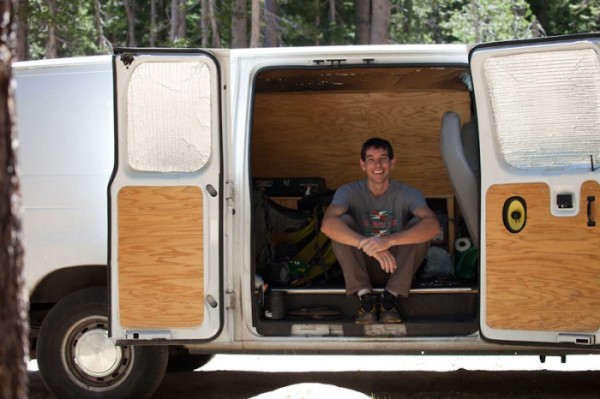
In addition to valuing our world overall, many rock climbers have taken a special interest in renewable energy. Solar power company Goal Zero sponsors Alex Honnold, who owns and lives in a van completely powered by sunshine. His mom’s house also has solar panels, he says in an interview with NatGeo’s Adventure Blog.
But beyond personal use, Honnold helps spread energy to those in need. The Honnold Foundation has helped support nonprofit solar projects. One included using solar power to bring residents in the Kayenta Region of the Navajo Nation clean water access.
Climbers lead lives of health and well-being.

In a country where more than one third of adults are obese, approaching wellness consciously is important. And though, as a group, we may guzzle a bit too much beer and eat Ramen on the regular, overall, we care about our health (or at least live a healthier life than most without even realizing it). Not only does climbing build solid, lean muscle, but it gets our hearts pumping from more than just adrenalin. An hour of climb time can burn more than 700 calories. All of those hours logged outside also result in a serious brain power boost, increasing memory, energy, creativity and relieving stress.
They help at-risk youth.

Rock climbing has been proven to do wonders for self-efficacy, not to mention the sheer joy of overcoming fear and challenges. Organizations like Escalando Fronteras (Climbing Borders) use this knowledge to help at-risk Mexican youth stay away from drugs, gangs and organized crime. By exposing children and teens to new opportunities that they may not otherwise experience, the organization strives to take advantage of the positive mentality that so often comes with climbing.
Rock climbers inspire all of us.

Whether you climb or not, you can still be awed by the feats of some of the greats. Lynn Hill paved the way for women climbers around the world, being the first woman to climb a 5.12d and the first to free-climb the Nose in 1993. In 1975, John Long had been the first to climb that same rock face in one day. Honnold climbed the three biggest rock faces in Yosemite in under 19 hours. Dave Graham and Daniel Woods eat V14s for breakfast. Climbers like these show us persistence, heart and a whole lot of badass. Climb on, guys!
-

7 Best Beginner Places to Rock Climb Around the World
There’s nothing like the feeling of fresh air, the beating sun and rough rock under chalked hands. But you don’t have to be Alex Honnold to enjoy some of the best crags in the world. Whether you want to jet overseas or stay put near your hometown, odds are there’s a good fit for you in one of these seven best beginner places to rock climb around the world.
7. Frankenjura, Germany
 Don’t let its reputation for challenging sport climbing fool you. Frankenjura has over 8,000 established routes, including nearly 300 graded under 5.9. Known for its pocketed limestone and variety of route lengths, there’s a little something for everyone in this land of crags and picture-perfect forests. Beginners can fool around, build up technique and pick up some knowledge by watching the experts go hard on their down time.
6. Red River Gorge, Kentucky, U.S.
 Some of the most popular climbing spots in the country aren’t necessarily the best for beginners. The East Coast Gunks, for example, is filled with trad routes, many of which are multi-pitch. Seneca Rocks has a bit of sport climbing, but is still made up of almost solely traditional routes. Red River Gorge, however is about 2/3 sport climbing. The area saw a surge of traffic in the ’90s, which was when many of the bolts were put into place and continued to grow. While it’s a safe bet that newbies will run into some serious climbers at the Red, every weekend during the on-seasons the place is packed with a wide variety of levels, beginners included.
5. Wye Creek, Queenstown, New Zealand
 Wye Creek sits just outside of Queenstown, the “adventure capital of the world,” and is home to an annual climbing festival each January. While mostly sport, Wye Creek offers a gigantic bang for its buck. Set on a cliff overlooking a bright blue, glacier-fed lake, even a short and simple climb feels like you’re on top of the world. The climbs are satisfying, and doable for beginners, but nothing beats the view.
4. Boulder Canyon, Colorado, U.S.
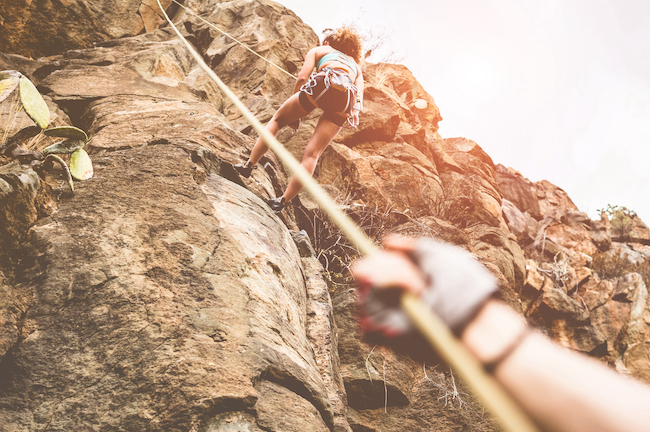 There’a reason that Boulder breeds so many serious climbers. The state offers an abundance of climbing options, meaning they’ve got a fair share of easier routes mixed in with the more challenging ones. Boulder Canyon features over 400 routes graded 5.9 and below, not to mention nearly 200 spots to set up a toprope anchor, for those not yet comfortable with sport or trad. Plus, it doesn’t hurt to kick back and enjoy Boulder’s killer beer scene after a hard day of climbing.
3. Railay, Thailand
 For those who are new to the sport, Railay, Thailand offers one of the most exotic places that still has a fair share of beginner routes. The pocket of paradise, accessible only by boat, features soaring, dramatic cliffs over the sparkling, blue water that surrounds the tiny island. With thousands of routes to choose from, a beginner is bound to find more than a few right up their alley. To make matters easier for climbers not yet comfortable with trad, nearly half of the routes in Railay are already bolted, making it simple to clip in and climb or boulder right over the water, where the warm waves will catch your fall.
2. Yosemite National Park, California, U.S.
 Yosemite is known around the world as one of the most magical places to climb. With gigantic domes and magnificent cliffs, driving toward the park’s tunnel feels a bit like entering a different time. Thousands of climbers sweep through Yosemite’s granite each year, speaking different languages, living out of vans, tents and cabins and enjoying their sport in what’s arguably the climbing mecca of the world. And the park’s history is as rich as its climbs, including the famous Camp 4, a campsite-turned-climbing-classroom that bred some of the greatest stone masters of all time. Yosemite National Park is well worth a visit for any beginner, even if only to soak up some history and observe the greats.
1. Your Neighborhood Gym
 The truth is that if you’re very new to the sport, it’s typically not safe nor practical to head outdoors right away, unless you have an experienced mentor or guide. For most people just taking on climbing, it’s easiest, safest and tremendously cheaper to start in your local rock gym. Sure, it may not be as glamorous as Thailand, Germany or Yosemite, but indoor climbing is a solid way to quickly build strength, technique and a circle of climbing buddies.
Did we miss any? Let us know in the comments below!
-
Using a Boat as Base Camp in the Antarctic
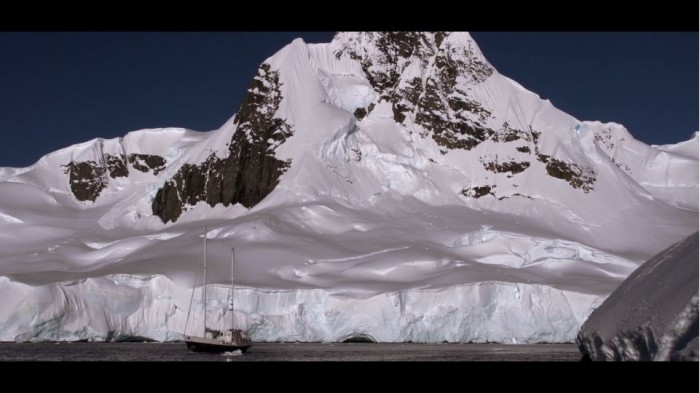
During their Mission Antarctic Trip, Xavier de Le Rue and Lucas Debari called “The Golden Fleece” their base camp. “The Golden Fleece” is a boat and served as their confined and temporary homehas been the base camp during Mission Antarctic. The crew discovered it when they met up with Captain Jerome Poncet in the Falkland Islands. Here is a guided tour given by of their confined and temporary home.
-
Daniel Woods’ Second Lucid Dreaming Ascent
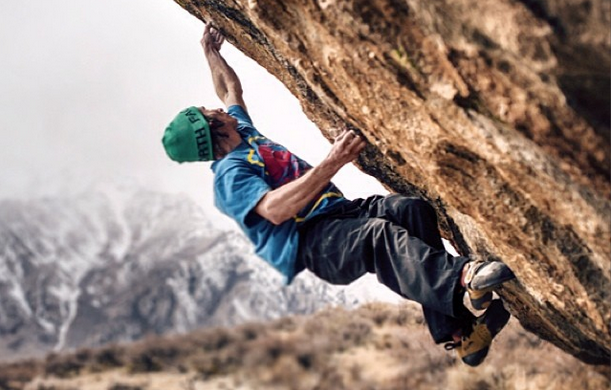
Daniel Woods completed the second ascent of Lucid Dreaming (V15), after dark on Tuesday, January 28. The problem is set on Grandpa Peabody Boulder in the Buttermilks of Bishop, California. The crux of the problem requires a dyno, launching from a small, left-hand pinch, according to the Bishop Bouldering Blog, who reported Paul Robinson establishing the line in March of 2010.
“Last night was a surreal moment for me. It was pitch black out with a couple lights shining to light up the golden pathway of Paul Robinson’s Lucid Dreaming,” Woods posted on his Instagram feed. “The humidity and cold combination was just right to be able to stick to the glassy, non-existent holds. I had a nervous feeling in my stomach about what was going to happen if I got through the crux section and had to commit to the final 30 foot slab section in the dark…”
Woods first attempted the problem last March without success, but posted that this time around, every move felt perfect. He wore a headlamp to help him through the slab section in the dark.
Richard Tyler Gross photographed the ascent and Kyle Berkompas captured it on video. Uncut video footage will soon be released, according to Woods’ Instagram, but nearly one month later, the footage has yet to go public. While we wait, check out the video above of Woods in La Sportiva’s Athlete Spotlight.
Photo courtesy of Daniel Woods’ Instagram
-
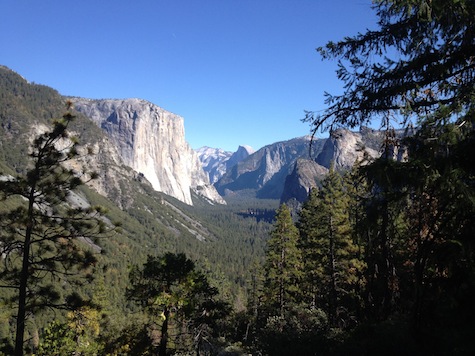
The History of Yosemite’s Camp 4
Camp 4, in Yosemite National Park, sees the sunrise last, leaving it a few degrees below chilly on any given fall day. Every morning, campers rise, many before dawn. They roll out of their tents, bundled in fluffy jackets and worn beanies, heat a quick breakfast on their portable stoves and pack up their shoes, ropes and slings before setting off with the hope of sending a new route.
Set deep in Yosemite Valley, west of Half Dome and east of El Cap, it’s no wonder that the crowded camp has housed world-famous climbers. As early as 1947, climbers such as Royal Robbins and Yvon Chouinard, who sent first ascents in the Valley, stayed at the campsite. As more climbers flocked to Yosemite, they set up camp at Camp 4, where they swapped techniques and climbing philosophies, making the campsite a sort of classroom for dedicated climbers.
Many also credit Camp 4 with the founding of the popular sport slacklining. When climbers needed a rest day from a hard day on the rocks, they’d hook webbing around two trees and take turns balancing across the tightrope. Today, there are still a handful of slacklines set up in Camp 4, available for climbers to use while they break from sending big walls, just as they did decades before.
In February, 2003 Camp 4 was officially listed with the National Register of Historic Places. In Yosemite’s news release of the registry, Linda McMillan, at the time Vice President of the American Alpine Club, said, “What makes this dusty little campground so historic and unique is its freewheeling, dynamic spirit and the people drawn to it over the decades. Camp 4’s spirit epitomizes the spirit of the American West–restless, unconventional, inventive, and filled with hope. Yosemite continues to offer new frontiers for the pioneers and explorers of its vertical walls.”
Today, the climbing community still calls Camp 4 home. Some stay for weeks at a time, living on a diet of canned food and big walls. At the end of each day, climbers from Belgium, Italy and California come together to heat cans of beans and share stories from their day on the rocks. Some boast about newly sent routes, while others look for advice on how to tackle a stubborn problem. By 10 p.m. sharp, the camp falls silent and dying embers crackle softly as the climbers zip into their tents, drift off to sleep and prepare for the next day of climbing.
-
Why Rock Climbing Should Not be an Olympic Sport
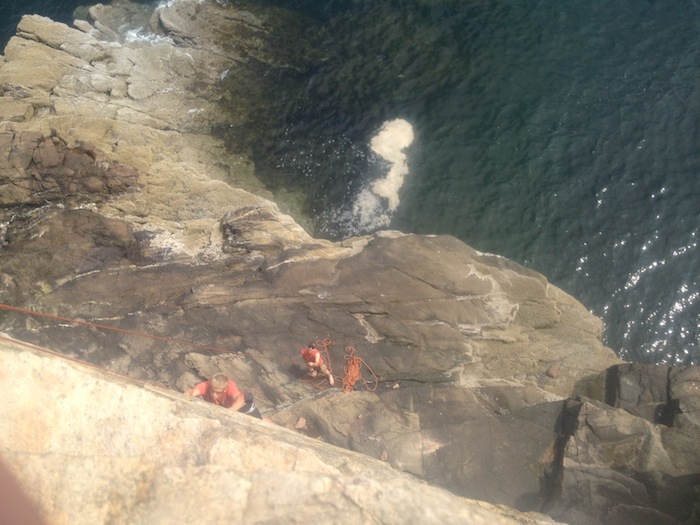
It was a cool, July morning in the farthest eastern location of the continental U.S. and my dog and I were trapped between a rising tide and a 100-foot granite wall. Before rappelling onto the platform hovering over the water, my rock-climbing companion Marcus Basiri had convinced me that I could send the climb. He pointed out that I’d conquered higher grades on routes near our home in Boston. What my strong, agile friend failed to take into account was my crippling fear of unclipping myself 100 feet in the air to complete the final 10 feet of the route without any protection. My lack of sleep and Red Bull-induced energy were also working against me.
Ted, my black Poodle-Bouvier mix, faced an even larger challenge. Four paws aren’t exactly ideal climbing equipment at Otter Cliffs. I decided to brave the Atlantic Ocean and swim to land, but the icy waves were too strong and cold for Ted’s 12-pound frame. Luckily, Tod, who was visiting Maine’s Acadia National State Park to lead a teen boy climbing expedition rushed to our rescue. He helped Marcus pack Ted into a backpack and teeter up the wall. Marcus’ chalked-up hands inched one over the other, grasping near-invisible ledges and cracks in the rough rock. His dark, shoulder-length hair remained secure in a low bun and Ted followed suit, keeping perfectly still. I swear he knew his life depended on it. The added weight pulled Marcus off balance, but finally, with Tod’s guidance, Ted and Marcus crawled up the wall to safety. If it wasn’t for the generous spirit of climbers like Tod at Acadia last summer, Ted may have been stranded at high tide.
That’s the type of community that rock climbing consists of: people willing to sacrifice their afternoon to lend a hand. This type of sportsmanship is rare in a sports world often dominated by competition, prizes and rank. We read about steroid abuse, cheating and even gun violence surrounding athletes in basketball, soccer and football. Rock climbing steers clear of scandal, largely due to the laidback culture associated with the sport. Sport climbing making its way into the Olympic games risks sacrificing its tight-knit, encouraging community.
In early 2012, the International Olympic Committee recommended wrestling be dropped from the 2020 Olympics to make way for a new sport. In September, wrestling will compete with baseball/softball, squash, karate, sport climbing, wakeboarding, wushu and roller sports for a place in the 2020 Olympics. Many climbing enthusiasts are eager to see their sport make it to the Games. Climber Adam Ondra admitted he’d compete if offered the opportunity, but plenty of climbers remain skeptical of the impact an Olympic slot would have on climbing. Those who embrace it for personal challenge, its tightly knit community or sheer adventure wonder how positive newfound popularity and enhanced competition will really be.
Michaela Kiersch [18] visited her Chicago home gym, Hidden Peak, over 100 times in the last six months. She was training for climbing competitions such as the American Bouldering Series, the national bouldering competition, hosted every year in Colorado. In the past five consecutive seasons, Kiersch competed in three adult world cups, two adult world championships and five youth world championships, where she placed 16th in August 2012. Last year, she competed in nearly 20 competitions, including regional, national and world, at times placing just a couple spots below big industry names such as Sasha DiGiulian.
But placing in national and world competitions is more than enough to satisfy Kiersch. Despite her success in the industry, she has reservations about rock climbing appearing in the Olympics in 2020.
“I look at climbing as a giant family, but if it grows we won’t be able to get as close to each other because there will be so many people,” said Kiersch. “It will be about winning and the glory of being the gold medalist instead of accomplishing something great.”
Kiersch worries that the familiar, friendly vibe of the climbing industry would fade with the sport’s Olympic acceptance. She admits the acceptance of rock climbing into the Olympics would bring the sport to more college campuses, resulting in college scholarships. Even though she’d love to pay for college with a climbing scholarship, she’s concerned that a newfound popularity would change her sport’s culture. At each competition, Kiersch and her competitors swap jerseys. This is how she makes friends from all over the world. Even the Russian climbers, whose instructors ban them from trading uniforms with other countries, have sneakily swapped with Kiersch, wanting to get in on the tradition.
Not all rock climbers are as concerned as Kiersch about the impact of sport climbing entering the Olympic Games. Legendary rock climber Alex Honnold, whose fame for his free solo climbing and record-breaking speed has only gained momentum since he was featured on 60 Minutes in October of 2011, doubts the acceptance or denial will have much of an impact on the sport. He assumes that Olympic acceptance would bring some more mainstream media attention to the sport that’s already rapidly growing in indoor gyms. In fact, 1,000 people take up rock climbing every day at U.S. climbing gyms.
“I don’t think that an Olympic appearance would drastically change that whole trend,” said Honnold. “It might speed things up a little bit. It might bring a bit more money to the sport, but probably wouldn’t revolutionize anything.”
Although Honnold’s life surrounds climbing [he dropped out of UC Berkeley to live out of his van, traveling and climbing] and he holds records like his soloing of the Yosemite Triple Crown—Mt. Watkins, El Capitan and Half Dome—in 18 hours and 50 minutes, he doesn’t consider it competitive climbing.
“Climbing is already pretty divided between indoor competition climbers and full on dirtbag adventurers,” said Honnold. “World cup competitors in Europe play a very different game than those of us who just climb outside all the time and travel and explore.”
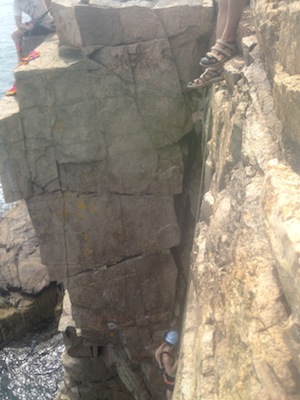
While Honnold continues outdoor climbing adventures, joining climbing bums on Yosemite’s soaring granite domes, Kiersch spends her free time training kids at her home gym, not for the Olympics, but for the pure joy of watching their accomplishments.
“A lot of people are inspired by the grades that pro climbers accomplish, but that’s not what inspires me,” said Kiersch. “I’m inspired when these kids overcome their fear of heights, send a problem that they’ve been working on for weeks or do four chin-ups instead of three. Accomplishing a goal that they’ve set and watching them get so excited gets me excited. The pro athletes are incredible for accomplishing such high grades, but in climbing, that kind of an accomplishment is more of a personal thing.”
Allowing sport climbing into the Olympics goes directly against the personal goal achievement that Kiersch speaks to. It risks glamorizing the sport and shifting its focus from personal accomplishment to gold medals. This type of competition may negatively impact the kind of community that’s perfectly content practicing in a dirty old basement bouldering gym. It may even take some of the generosity out of climbers willing to sacrifice an afternoon of their favorite activity to save my dog Ted from a high tide. Do we really want to risk changing a sport where the champions are known for their encouraging words, generosity and pure love of the outdoors?
-

First Ascent – Extreme Freeclimbing Movie Trailer
Featured in the 2006 Reel Rock Film Tour, First Ascent is a film about those places in the world that are too dangerous, too remote..or just too hard to climb. It’s about the glory of being first, of doing something nobody has ever done before. Another beautiful documentary from Sender Films.