Author: Joel Runyon

  • GORUCK Challenge [Race Profile]

    GORUCK Challenge [Race Profile]

    The GORUCK Challenge is not a race.

    We have to put this in here or the ex-special forces ops who put GORUCK together will show up at our house in the middle of the night for a “talk”. No, the GORUCK Challenge is an event of epic proportions testing the limits of your endurance and mental capacity to persevere. The official motto of the GRC (GORUCK Challenge for short) is:

    8-10 hours. 15-20 miles. Good livin’.

    8–10 hours. 15-20 miles. AKA Hell on earth (or as the GoRuck cadres say, “good livin’”). Yes, they are as nuts as they sound.

    What exactly happens at each of the challenges is sort of a mystery. Every GORUCK Challenge depends on the city and it’s attributess – which adds to the fun – every race *ahem* challenge is different. And, true to their special ops background, the GORUCK cadre leaders don’t even give you the starting point until the week of the actual challenge. You know, they gotta keep things under wraps.

    What Exactly Is In The GORUCK Challenge?

    Well, it is pretty hard to explain. The best best is to get it directly with our interview with GORUCK Challenge Lead Cadre Lou Lepsh. Also, we talked to GORUCK and they put this image sequence together for us. We think it explains itself pretty well.

    You’ll probably get wet, have to pick up really large objects (logs, bricks, etc), work together as a team and of course, do some serious running/walking/jogging to cover all those miles in such little time. You should make sure you’re in tip-top shape when you’re thinking about taking this on.

    You can sign up with a friend, but during the GORUCK everyone is a team. You must be 18 to participate (we assume this is so that you can sign your own death waiver – seriously, they have one). Roughly 94% of participants and those who do receive a solid dose of pride along with THE GORUCK patch – that’s never for sale. Welcome to the GORUCK family.

    Training For The GORUCK Challenge

    Think the challenge sounds tough? So do we. We went through and started to dig for a GORUCK training regimen – you know, maybe they might have something like the Tough Mudder training video. No such luck with the GORUCK Challenge. Looks like you’re on your own.

    Beer, aka the latest in advanced cellular repair technology, is the official drink of the GORUCK Challenge. Don’t take the Challenge so seriously. Go for a run or two, have fun, and just do it. It’s all mental.

    Thanks for the advice guys.

    Drink beer and it’s all mental. Well, 15-20 miles sounds pretty dang physical to me! But, if they tell us to drink some beer – I guess we won’t argue too much.

    That’s it. Seriously. They keep the GORUCK Challenge shrouded in mystery. If you want to learn more, you’re just going to have to sign up and find out for yourself. We did end up wrangling this video out of the GORUCK’s cadres hands to give you a sneak peak at what you’re in for if you do decide to take the GORuck plunge. Good luck!

    [youtube id=”rk2LWZ3_7xg” width=”600″ height=”350″]

  • Calling All Gut-Wrenching Adventure Submissions!

    Calling All Gut-Wrenching Adventure Submissions!

    Adventures

    Here at Nerve Rush HQ, we do our best to share only the finest gut-wrenching adventures and experiences we can amass. Whether it’s documenting every extreme sport known to man or going behind the scenes of the GORUCK Challenge, we’re all over it.

    But we realize we’re missing a huge source of adrenaline adventures right under our nose: YOU!

    So, we want to know: what adventures are you up to? We’re now accepting reader submissions for articles here on Nerve Rush!

    Got something else up your sleeve? Tell us!

    The Nerve Rush community is full of adventurers and travelers and we love to see what you guys are doing and share your stories and adventures as well as any gut-wrenching videos you see on the Internet superhighway or, better yet, videos you make yourself!

    Please send all any submissions to hq@nerverush.com.

    Stay adventurous out there!

    – Nerve Rush HQ

    photo credit: Rodrigo_Soldon

  • 7 Questions on IKO Certification with Fernando Subero of Kite Club Puerto Plata

    7 Questions on IKO Certification with Fernando Subero of Kite Club Puerto Plata

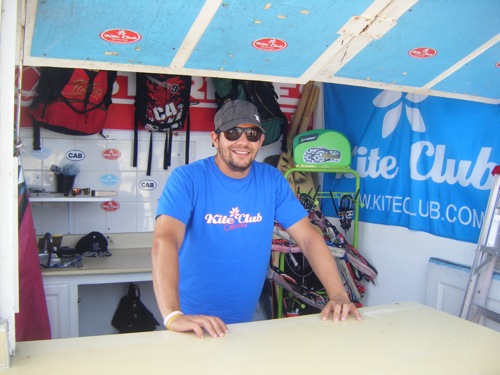
    Meet Fernando Subero – former professional paintball player-turned kiteboardng instructor. I met Fernando on an impromptu adventure in Puerto Plata in the Dominican Republic where Fernando quite literally lives the dream. He lives on the top floor of a hostel he owns and spend his days at his kitesurfing school (Kite Club Puerto Plata) that starts at 11am. He has to show up at the beach every day and go kitesurfing – rough life, huh?

    When I found out what he did, I cornered Fernando and begged him to teach me to kitesurf until he finally relented.. I spent 3 days getting certified with Fernando and between me biting it hard, I managed to sneak in some questions for you guys, just in case anyone is thinking about getting their IKO kiteboarding certification.

    Fernando Subero Kite Club Puerto Plata

    Let’s start with the basics. What is the IKO and what is an IKO certification?

    IKO stands for International Kiteboarding Organization. IKO sets the standard on safety on kiteboarding lesson worldwide.

    Your IKO certification is a card that is signed by the Instructor with his IKO number, certifying your kiteboarding riding level, and type of certification you have. The same card certifies whether you’re approved for power kites (land), snow kites (snow), or kiteboarding (water).

    Can you explain the different levels of IKO certification? What do they each mean and what does each qualify you to do?

    There are three levels of IKO certifications – 1 (discovery), 2 (intermediate), and 3 (independent). Each level consists of a set of basic skills that you need to pass in order to progress to the next level. The level and skill breakdown are as follows:

    Level 1: Discovery

    A In this level you will (1) Know safe wind directions and conditions for kiting. (2) Know the hazards on a spot. (3) Set up a trainer kite. (4) Know the use of safety systems.

    B (1) Have basic flying skills with trainer kite. (2) Launch and land the trainer with an assistant. (3) Twist and untwist the lines while flying a kite. (4) Walk and change directiones while flying the kite (5) Know the wind window.

    C (1) Set up a 4-5 line kite with a full power system. (2) Pre-flight check equipment and settings. (3) In-flight check equipment and settings. (4) Understand and use international communication signals. (5) Launch and land the kite to an assistant (and as an assistant). De-power a 4-5 line kite.

    D (1) Control the kite hooked into the harness, (2) Understand the de-power system and can use the safety systems. (3) advanced flying skills with the de power kite. (4) Show full control of de power systems in flight.

    E (1) Pull quick release and activate leash. (2) Recover the bar and kite and (3) Self-land the kite.

    Level 2: Intermediate

    F (1) Enter and exit the water independently and safely while controlling the kite. (2) Water re-launch the kite. (3) Body drag downwind. (4) Maintain correct kite position in the wind window. (5) Change direction to the left and right while body dragging. (6) Self rescue and pack down.

    G (1) Upwind body drag to recover board. (2) Upwind body drag holding the board with one hand. (3) Enter and exit at the same point while upwind body dragging,

    H (1) Know the power stroke for a water start. (2) Know the safety rules and theory for water start. (3) Can put board on the feet and maintain the correct position for water start.

    I (1) Water start in both directions and ride a short distance. (2) Come to a controlled stop. (3) Understand weather forecast, tidal and wind effects. (4) determine the wind strength direction and quality. (5) Know the right of way rules. (6) Know equipments setup and choice according to weather conditions.

    Level 3: Independent

    J (1) Control the riding speed by edging. (2) Consistent riding in both directions,

    K (1) Consistent riding in all directions including upwind. (2) Ride amongst other riders and water users, and respect the right of way rules,

    L (1) Change of directions without stopping, make a toe side turn.

    M (1) Self launch risk assessment (2) Self launch,

    N (1) Know the theory and the safety rules for jumping (2) Land a basic jump.

    Interesting, so how much does an IKO certification cost?

    It really depends on what town or area you’re going to be taking lessons. At my school in Puerto Plata, lessons cost $50 USD/hour and it takes about 6 hours for an average person to get through the lessons and get up in the board. Some places charge upwards of $75-$80 and even $150/hour.

    What should I look for in an IKO certified kitesurfing school?

    You have to make sure the instructors are certified to teach so you can receive your IKO certification card. Be sure they’re not just throwing you on the board and that they run a a safe class.

    Kite Club Puerto Plata

    Where can I learn to kitesurf?

    Puerto Plata would be a great place (although I might be biased). Flat warm tropical waters, consistent trade winds and a lack of crowds make for great kiteboarding learning spots (all of which are true at Puerto Plata ;)).

    How can you tell if a certain kite beach is a good place to get your certification?

    It all depends, but the things I mentioned earlier (uncrowded, and steady winds) will help you get the most out of your time spent learning kiteboarding.

    Any last words for soon-to-be kitesurfers out there?

    Kiteboarding has become the number one growing watersport in the world, and one of the fastest growing sports in general precisely because the kiteboarding experience has no equal so go ahead, find a school and give it a shot (and make sure you’ve got a certified instructor!).

    Fernando Subero is the owner and head IKO certified instructor at Kite Club Puerta Plata – a Domincan Republic Kite Boarding school in Puerta Plata on the north shore of the DR. He’s also been a professional paintball player in the United States before trading the camo and paint in for sun, sand, a board and a kite.

  • Learning To Kitesurf In The Dominican Republic

    Learning To Kitesurf In The Dominican Republic

    This is a guest post by Mark Lettinga, who currently lives in the Dominican Republic.

    When you were a kid did you ever wish you could fly? Ever jump off a table, porch, or house-tested the unbelievable physics of the Mary Poppins umbrella trick? What about running across water like those lizards you see on the discovery channel? Ever tried that at a friend’s pool? How did that turn out? What if I said that you can conquer both of these childhood dreams at once, would you believe me? Would you be so excited that you race back to your parents house, squeeze into those old superman pajamas and say, “lets do this!”

    Not only did I accomplish these dreams (without my pajamas by the way), but I found that it doesn’t take super powers at all, it’s called kite surfing! The sport of kite surfing involves kiting, wake boarding, and for the advanced, some high flying acrobatics that make you look pretty awesome. I have done some limited snowboarding and surfing but as far as kites go I haven’t touched one since I was a kid at grandma’s house in 1995.

    When I first heard about kitesurfing the first of many questions I had was, “wait, uh you can do that?” It turns out you CAN do it and in less time that you think. All you need is some steady wind, lessons from a local kite school, and a free weekend where you can let that kid inside you accomplish his dreams.

    For the past several months, I have been living and working in the Dominican Republic (DR), and what started off as a non-scheduled weekend beach trip to Puerto Plata ended up as the beginning of my kitesurfing experience. The north coast of the DR is known for its steady and consistent summer tradewinds making it a perfect spot for wind sports. Only 45 minutes east of Puerto Plata is a world renowned place for kiting called Cabarete, aka “kite beach,” where you can watch dozens and dozens of people out on the water riding the wind all at the once (and where Tammy Camp set her kiteboarding world record). While great conditions for the seasoned pro, it can be real intimidating, crowded and dangerous for a beginner. If you’re looking for the same summer tradewinds as Cabarete minus the crowed beach, Kite Club Puerto Plata is a great place to learn the sport.

    During our weekend beach trip, Joel and I stumbled across a small surf shack along the beach which turned out to be a Kite Club kitesurfing school, and after a brief discussion with Fernando Suber, the owner we decided to sign up for lessons right then and there. We waited until our instructor was done with his previous lesson to say hello and get started on our training. Going into this kite boarding training I was feeling confidant yet a bit nervous because I didn’t want to fail. I usually pick things up fairly quickly and am really anxious to get up on that board and see what it feels like to be riding the wind. But like any adventure sport you need to learn the basics before you start acting like a pro or you could get into some serious trouble.

    Kitesurfing DR Kite Club

    WORD OF ADVICE: Never surf YouTube the night before you start your first lesson looking for videos like “worst crashes of _____” (plug in your favorite adventure sport here!) It makes for some great nightmares!

    Kitesurfing: Day 1

    Our first lesson started off with our instructor teaching us all about wind and how the kite should be handled in relation to wind direction. Words like “power zone” and “wind window” were used and explained. He didn’t just give is a kite and let us start flying right away (as much as I secretly wanted to), he made sure we knew about how the landscape affects the wind that you will be using to kite board. Our instructor said wind knowledge is important for two reasons; First is so that a beginner can learn how to maneuver the kite in the presence of others. Second: once a person has been certified they can travel to any part of the world and have basic understanding of how to kite safely in different surroundings, no matter where the wind is coming from.

    After the wind lesson, we started on the training kite – sounds kinda wimpy huh? But these kites aren’t the ones you flew when you were a kid at the local park – training kites can really move! After a minute or two of our instructor showing us some basic kite maneuvering, I found myself holding the reigns hoping I wouldn’t crash and burn on my first try. The wind was dying down a bit as a storm slowing rolled in which made handling the kite more difficult. I crashed the training kite several times before I got the hang of things and soon felt confident in my new found kite flying skills. An hour or so went by since we began our lesson, it was getting late and there just wasn’t enough wind to move to the next step, so we called it a day and thanked our instructor Fernando for a great start.

    Kiteboarding: Day 2

    We hit the beach nice and early the next day, excited about the possibility of getting on the board. Right away Fernando brought out a 6 meter kite that we would be using and as he took it out of the bag, he used the opportunity to teach us the very important lesson on how to prepare a kite. He had us run the lines, pump up the kite, and tighten the loops, all of which should be done with a careful eye. We learned trick of how to carry it down to the water and a quick lesson on the fundamentals of how to untangle lines. (Red always to the left!) We slipped into what looked like a big back brace with a bunch of clips attached everywhere, this in the harness which attaches you to the kite. With the bigger kite, our instructor had us first hold on to him as we were dragged though the water while he explained his actions, and then it was our turn to drag ourselves.

    At first I wasn’t that good at flying this new kite and also had trouble properly handling it while I was being slowly pulled through the water. Joel and I rotated every half hour or so to take a break and also get some coaching from Fernando. After I was able to prove I wouldn’t crash the kite, I was able to be in the water alone and work on getting a more powerful pull and maintaining a steady pace through the water. After a couple rotations and a quick burger break and the beach bar next door, I was able to not only maneuver down the beach but also successfully retrieved my fallen kite out of the water – score!.

    Like the day before, a storm was headed our way at around 4:30pm and we called it a day. We briefly talked with our instructor before we left and he told us that tomorrow we should be able to get on the board and ride. After a 5 hour day of getting dragged around in the ocean – we were excited to come back the next day and finally start looking like the pros.

    Kitesurfing Dominican Republic

    Kiteboarding: Day 3

    Right at 11am when the kite school opened, we started the day by demonstrating our new skills by assembling the kite by ourselves. Being sure to pumping it up properly, and make sure that the lines are straight and attached correctly, we had it done in no time. We hit the water to learn how to maneuver the kite up wind (yeah you can do that!) and also an important lesson on board retrieval in case you crash and need to grab your board. We used a 9 meter kite in the strong winds, and I could definitely feel the increase in power.

    Within the hour I was strapped in with the board at my feet ready to give it a go. The board I was using was a fairly large – about the size of a large wake board – and I was strapped into a 9 meter kite with the wind blowing around 12-14 mph. Sitting in the water with the instructor holding me steady, I put my feet in the straps and whipped the kite around and felt a strong pull that lifted me right out of the water. I felt a rush of adrenaline and was thought I had this kite surfing thing in the bag but I soon realized I was in for a much longer day.

    I was on my board briefly and then all of a sudden I lost speed and fell back to my seated position in the water. I heard the coaching of our instructor to straighten out my position and get aggressive with the kite, but my first run down the beach was a series of standing and falling. Several times I would lose track of my kite and let it sail all the way across the sky (big kite surfing no-no) which caused me to be pulled totally out of the water and crash in the wrong direction. It was one thing to fly a kite, but flying it while strapped to a board was a whole new game of multitasking.

    Joel and I traded turns and I got a break from the crashing while I watched him start to get the hang of kiteboarding. It wasn’t until my 5th or 6th run that I was actually able to get up on the board and start to understand what I need to do – and then it happened. I went through the checklist of things to do in my head while I locked into the kite and slowly eased into the water. With the sun in my eyes and the board at my feet, I whipped the kite down aggressively toward the water and a strong pull lifted me up and onto my board. Back and forth back and forth I worked the kite determined not lose track of it like I had before. Gaining speed I took a look around and before I knew it I was 100 meters down the beach, I was kite surfing!


    Kitesurfing Dominican Republic

    At the end of our weekend, I was pumped to have accomplished the goal of kite surfing and as an added bonus I received my IKO certification. This was just the beginning and I have a feeling there will be more kite weekend adventure to come!

    Disclosure: Kite Club Puerto Plata is a great place to kiteboard in the Dominican Republic and graciously hooked us up with a discount while helping learn to kiteboard. They’re good friends of Nerve Rush and we will be going back.

  • Skydive over Wadi Rum with Skydive Jordan

    Skydive over Wadi Rum with Skydive Jordan

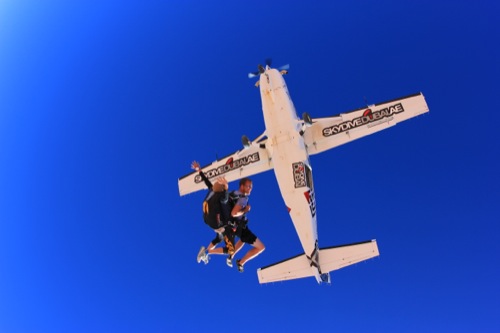
    As Lead Adventurer here at Nerve Rush HQ, I recently took off for a week to experience adventure in Jordan as part of a partnership with the Jordan Tourism Board. One of these incredible adventures was skydiving over Wadi Rum (the valley of the moon). While practically extraterrestial, we’re still debating internally whether we can include this on our top 7 places to skydive on each continent (does the moon count as a continent?). Anyways, between finishing my jump on the moon (which, by the way, is every bit awesome as it sounds) I sat down with Marwan Atalla, director at Skydive Jordan to find more about the details behind this unique adventure.

    Skydive Jordan
    Experiencing Gut-Wrenching Adventure First-Hand

    Marwan, what can you tell us about Skydive Jordan, one of the most unique adventures in the Middle East?

    The Royal Aero Sports Club of Jordan (RASCJ) was established with the purpose of promoting aero sports, and enhancing the tourists’ experience in Jordan. To date, RASCJ has offered Hot Air Balloon Rides, Micro-Light flights and Ultra-Light flights. The idea of introducing Skydiving has been under consideration for 3 years, but we wanted to do it safely, and professionally. We did our research and determined that Skydive Dubai had become one of the world renown skydiving facilities in the world. We approached them, and quickly found out that they were willing and enthusiastic partners. We signed a partnering agreement for offer skydiving in Jordan for a three week period during the summer if 2012. This would be a good way to test the location and the demand. Needless to say, everything exceeded our expectations, and Skydive Jordan 2012 was a huge success.

    What makes Wadi Rum such a great jump zone location?

    There are quite a few things about Wadi Rum that make it quite special, but the four main items include:

    1. Weather

    2. Location and proximity to Aqaba (only 40 minutes away).

    3. The availability of a natural flat area for the skydiving operation.

    4. The majestic view all the way from the ground, to 15,000 feet, and back down really makes you look like you’re skydiving on the moon.

    Skydive Jordan Wadi Rum3

    I speak from firsthand experience – you treat your customers ridiculously well, from signing up to the waiting room and jumping. What is your secret?

    One of our goals is to enhance tourism. Tourism is all about service, and the experience of the tourist is a crucial part of his/her trip. Our goal is to create positive, lasting memories for anyone visiting the south of Jordan and hope that this one-of-a-kind skydive experience can add to their overall experience in the country.

    Is skydiving new to Jordan? Could you talk about your partnership with Skydive Dubai?

    Jordan did have a very small skydiving operation, but it was located in an international airport, with a very small aircraft – so it was not sustainable. In order to move to a more sustainable model we entered into a partnership with Skydive Dubai which allowed us to tap into a pool of professionals with hundreds of thousands of hours of combined experience, as well as the latest equipment, aircraft and safety systems. We operate the skydive operation now as a partnership.

    Skydive Jordan Wadi Rum4

    Could you walk through what it costs to Skydive Jordan? What kind of packages and jumps does Skydive Jordan offer?

    The backbone of our revenue is the Tandem operation, in which a customer jumps with a licensed tandem master. We charge JD 190 per jump and jumpers get videos and photo stills included in that price. The price is below market in the Middle East and Europe thanks to the sponsorship of Skydive Dubai. Licensed sports jumper pay JD25 per jump.

    Nerve Rush note: The current conversion rate is close to JD1 = $1.4US. To get US costs, simply multiply those costs by 1.4x.

    Skydive Jordan Wadi Rum1

    Any future plans? What other adventures do you guys have up your sleeve?

    We plan to do Skydiving again in summer 2013. We are also looking into parasailing and gyrocopters. Safety is our number one concern, so we deliberately take our time and study all aspects of any new aero sport before introducing it. We also have to coordinate with the Civil Aviation Regulatory Commission of Jordan, which oversees our operations.

    Thanks Marwan for sharing the gut-wrenching adventure of Wadi Rum with us first-hand. We’ll definitely be coming back! If you’re searching for Middle East adventure, check out Skydive Jordan.

  • Freedive The World

    Freedive The World

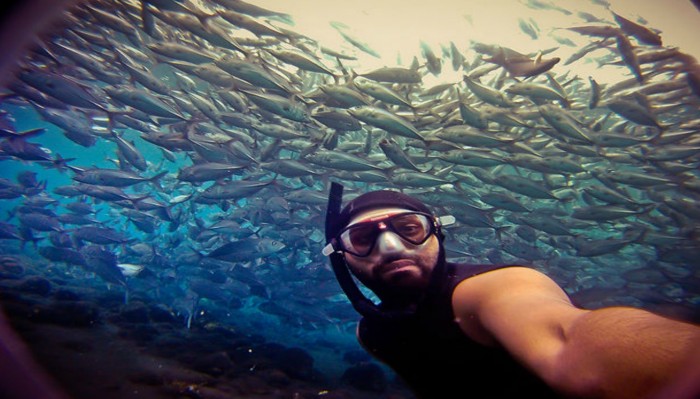
    Based out of Bali, Nerve Rush reader Trevor is an avid Freediver (underwater diving without scuba gear), and GoPro enthusiast. After shooting this on his GoPro Surf, he sent it in and we just had to post it. This goes great along with his Freediving guide, so if you’ve wanted to get started in freediving, there’s never been a better time than now.

  • NIKE 6.0 Athletes Ben Horan, Andrew Pastura, Matt Manzari and Nick Taylor Go Wakeskating

    NIKE 6.0 Athletes Ben Horan, Andrew Pastura, Matt Manzari and Nick Taylor Go Wakeskating

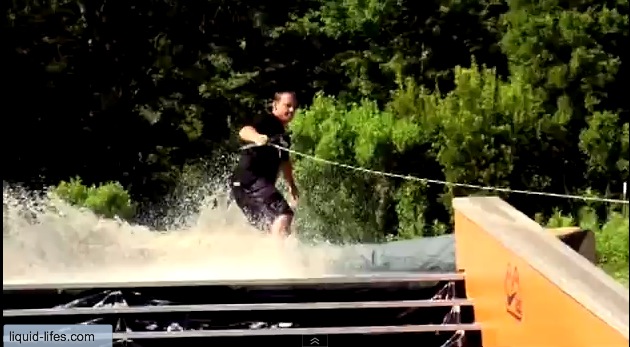
    A longer video than usual today on Nerve Rush, but it’s well worth it. Nike athletes Ben Horan, Andrew Pastura, Matt Manzari and Nick Taylor try out their wakeskates on film and capture some sick footage. Kick back, hit play and enjoy.

  • Kona Ironman World Championship [Race Profile]

    Kona Ironman World Championship [Race Profile]

    Swim 2.4 miles! Bike 112 miles! Run 26.2 miles! Brag for the rest of your life! – The Ironman Motto

    Introducing, the Kona Ironman World Championship.

    The coup de gras of the triathlon. The pinnacle of the

    sport. But how did this insane test of endurance come about? We’re so glad you asked.

    The Start

    Ironman Swim

    It all got started in 1978. In Oahu, Hawaii, following a running race, a debate broke out between endurance swimmers and runners. Who was the better athlete? Both slides remained unflinching. Meanwhile, someone claims that cyclists have the highest VO2 output (a measure of cardiovascular endurance).

    A challenge was born. Navy commander John Collins suggested that a combined race could finally settle the argument once and for all. As a result, the 3 longest distance races on Hawaii at the time were combined into an epic endurance race:

    1. The Waikiki Roughwater Swim (2.4 mile / 3.86km swim)
    2. The Around-Oahu Bike Race (115 miles / 185.07km bike)
    3. The Honolulu Marathon (26.2 miles / 42.195 km run)
    Collins recalls saying;
    “The gun will go off about 7 a.m., the clock will keep running and whoever finishes first we’ll call the Ironman.”

    Because the race needed to have consecutive legs, the bike race was shortened 3 miles to 112 miles so it would end at the marathon starting line. This meant the official distance for the first Ironman race ever was a total 140.6 total miles – and it’s been the same ever since. Whew! 12 people–including Collins–competed in that first race and Gordon Haller, a taxi cab driver at the time, crossed the finish line first and became the “original” Ironman with a time of 11 hours, 46 minutes and 58 seconds.


    Ironman Bike

    The race was held on Oahu until 1981, when it was moved to the Big Island of Hawaii where it now has its namesake of the “Kona Ironman.” The lesser populated island has proved to be an infamous location, daring athletes to brave 45mph crosswinds and 95 degree heat. The Kona Ironman is truly the ultimate test of endurance.

    Kona Ironman, Memorable Finishes

    Ironman Run

    Julie Moss 1982

    Named one of the most defining sports moments of sport by ABC Sport, Julie Moss’s Ironman finish in 1982 shot the sport of triathlon into the mainstream. With just a few minutes of televised footage, Moss turned a fringe sport into an international competitive sport. So what was so extraordinary about this? Moss was a 23-year old physiology student racing as part of a research experiment and surprisingly found herself out in front of the women’s course with just a few hundred yards left – her body began to fail and she could barely walk.

    Unable to keep moving forward on foot, Moss dropped to her knees and began to crawl towards the finish line. Just yards away from being done, Julie was passed by Kathleen McCarty who won the race. Undeterred, Moss, while being watched by millions, continued to crawl across the finish line where she collapsed capping off a race finish that truly has to be seen to be believed. Luckily, we have that video for you right here.

    [youtube id=”VbWsQMabczM” width=”600″ height=”350″]

    Sian Welch & Wendy Ingraham – The Crawl – 1997

    Channeling memories of Julie Moss’s ghost, Sian Welch and Wendy Ingraham experienced one of the very similar endings as Julie 15 years later. Just a few yards away from the finish line as they were entering the final shoot, both competitors collapsed. As they struggled to get up and continue racing, they discovered their body simple had nothing left. With their ability to walk, gone, they both began to crawl towards the finish line with Wendy Ingraham pulling ahead at the end with Sian Welch right behind her. Once again, a memorable finish you have to see to fully experience.

    [youtube id=”MTn1v5TGK_w” width=”600″ height=”350″]

    Kona Ironman Current Records

    Craig Alexander of Australia holds the current men’s Ironman course record with a finish time of 8 hours, 3 minutes and 56 seconds. Chrissie Wellington of Great Britain set the women’s course record in 2009 with a record time of 8 hours, 54 minutes and 2 seconds. Needless to say, these finishers were moving!

    Qualifying For The Kona Ironman

    Ironman Finish

    After the incredible televised finishes and the seemingly incredible distances athletes have to cross, the Ironman entry has become a hot ticket item in endurance racing. To handle the demand, Kona race organizers developed a qualifying system. Instead of an open registration, athletes can qualify 1 of 3 ways.

    • Earn a qualifying spot at a Ironman World Championship qualifying event (these can be either the 70.3 or 140.6 Ironman branded races)
    • Win a slot through the Kona lottery selection program
    • Win a slot through the Kona Ironman eBay auction.
    If you manage to get a slot, you’ll get to pay around $750 to participate in one of the most incredible races on earth (not to mention one of the most taxing). So if you’re up for it, remember the Ironman athletes’ motto:

    “Swim 2.4 miles! Bike 112 miles! Run 26.2 miles! Brag for the rest of your life!”

    Do you have what it takes to be called an Ironman?

    ___

    If you’re interested in running an Ironman..it all starts with a Sprint Triathlon. While Ironman athletes might look like Superman, they all had to start somewhere. Most triathletes start out with a sprint triathlon and despite what you might think, no matter your fitness level, you can train for a sprint triathlon in just 3 months. Give it a shot.

    photo credit: MACCALIVE via photo pin cc
    photo credit: MACCALIVE via photo pin cc
    photo credit: MACCALIVE via photo pin cc
    photo credit: MACCALIVE via photo pin cc

  • Greg Gasson Skydives Without a Parachute

    Greg Gasson Skydives Without a Parachute

    Some people get a rush by skydiving. For those where skydiving isn’t enough, there’s basejumping. For those where that’s not enough, there’s skylining. For those where that isn’t enough, there’s

    skydiving without a parachute. Say what? Yes, skydiving without a parachute. We’re all for adrenaline rushes, but this is as crazy at is sounds. There really aren’t words to describe this, so just go ahead and watch.

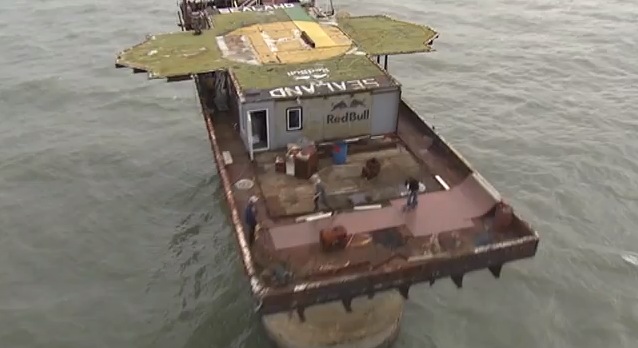
  • Skateboarding Sealand – The World’s Smallest Country

    Skateboarding Sealand – The World’s Smallest Country

    What do you do when you get access to the world’s smallest country? If you are the Red Bull skate team, you skate it. So they did. Not many outsiders get access to Sealand – a small WWII sea fort settled by Sir Paddy Roy Bates in 1967, but we’re glad the Red Bull team did and had the chance to film it.