Author: Joel Runyon

  • Getting Your AFF Certification with Kurt Swann

    Getting Your AFF Certification with Kurt Swann

    <img class="aligncenter size-large wp-image-2344" style="border: 1px solid black;" title="Kurt Swan AFF Cert” src=”http://alan.mystagingwebsite.com/wp-content/uploads/2012/05/IMG_0004-600×400.jpg” alt=”Kurt Swan AFF Cert” width=”600″ height=”400″ />Editors note: In the last year, Kurt Swann has gone from watcher, to tandem jumper, to AAF certified jumper. This is his story.

    Skydiving. That’s the one item that seems to be on most everyone’s “bucket list.”

    When most people say “skydiving,” they mean making a tandem jump where you’re strapped to an instructor during freefall. Scary, sure, but not quite scary enough to qualify as gut-wrenching adventure. So, while tandem jumping is a great experience, if you have the extra time, money, and desire to scare yourself silly, forget the tandem jump and sign up for an Accelerated Free Fall (AFF) course – the course that lets you jump out of a plane by yourself.

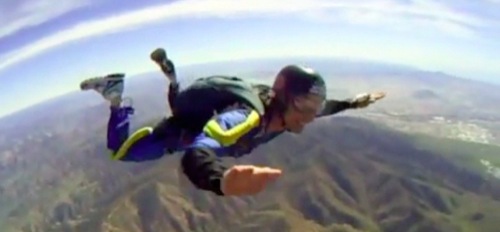
    At the end of your first lesson on the very first day, you’ll skydive wearing a parachute without being attached to anyone. Two instructors will fall along side you to help keep you steady. If you completely freak out they might be able to help you open your chute but other than that . . . you’re on your own.

    Mock Airplane Door
    Mock Airplane Door

    After you complete seven AFF lessons you’ll be cleared to jump solo. Completely on your own. No instructors. Just you. By yourself from over 2 miles straight up. I swear.

    Scary? Yes.

    Worth it? Definitely.

    Starting The Class

    My AFF class, which had about six students, began at 8:00 a.m. on a Saturday morning. Maybe it was my imagination, but everyone in class looked like they were on the way to a firing squad.

    The class started with the instructor telling us that it’s not too late to back out if we don’t think we can go through with the jump. Better to just stay on the ground instead of getting dressed up in skydiving gear, flying up to altitude only to chicken out and ride back down in the plane. Who wants to climb out of the plane after it lands and take the AFF walk-of-shame?

    Well . . . what a happy, cheerful way to begin the class.

    After that we were told of all the possible ways the parachute might malfunction. They even had videos showing various skydivers who had problems opening their chutes. They only showed us the first part of the videos, so I don’t know how the ill-fated jumps ended.

    We then learned about the gear we would use. The skydiving rig is like wearing a backpack but, instead of camping gear or dirty laundry, there are two parachutes inside.

    The main parachute is stuffed in a bag that’s attached to a smaller parachute, called a pilot chute. The bag with the main parachute is packed in the backpack-like container while the pilot chute is stuffed in a pouch on the bottom of the container. On the end of the pilot chute is a leather ball, slightly larger than a golf ball, which acts as a handle.

    Skydive Parachute
    The Chute

    So, to open the main chute, all you have to do is reach behind to the bottom of the container, grab the leather ball on the end of the pilot chute and fling it out. The pilot chute inflates and pulls the main chute out of the bag and container so it can inflate. Then we float safely to the ground. At least that’s the plan.

    In case things don’t go as planned with the main cute, another parachute, or “reserve” chute is also tucked away inside the container. We never see it because it’s only opened in case of an emergency. So we really don’t want to see it but if we need it, it’s there.

    We learned the basics of how the parachute fits in the container, how to open the chute, how to cut away the main parachute in case it malfunctions, how to open the reserve chute, and how to control the parachute after it opens.

    Then we learned the exact jump sequence we would use when exiting the aircraft. Every single step was rehearsed even to point of how to stand in the airplane door as get ready to jump. Something like this . . . left leg back, right leg bent at the knee, both hands holding the door frame, chest upright and facing the front of plane . . . etc etc. No detail was too small to ignore.

    Everything is rehearsed over and over and over. And over again. Because when actually jumping out of a plane wearing a parachute for the first time, a human brain goes into “slow motion stupid mode.” Tunnel vision takes over and the brain operates like it filled with glue.

    The Jump

    Okay, class is over and now it’s time to suit up and actually do this. It’s around 1:30 in the afternoon when it’s finally my turn. Rehearsal one last time on the ground with my two instructors. Then we climb into the plane.

    The plane ride up to 13,000 feet takes a little over 10 minutes. Looking back, it was all a blur.

    About half way up, one instructor makes me tell him one more time exactly what we’re going to do during the jump. How we stand in the door. What to do during freefall. How to open the chute. How to steer the canopy. How to land. I’ve gone over the steps all morning about a thousand times. And now one more time as we climb to altitude.

    The plane levels off and someone opens the door, which rolls up like a small garage door. We make our way to the exit just like we rehearsed. Only during the ground rehearsal there isn’t an 80 MPH wind blowing by the open door. Yikes.

    Taking tiny steps I get in position in the door between the two instructors. I make eye contact with the instructor inside, turn and looked at the instructor hanging on the outside the plane, bend my knees slightly while keeping my chest upright, look forward at the propeller, and then . . . push off.

    Kurt Swann AFF Fall

    This is crazy.

    Now we’re falling. Seriously, this is really crazy.

    Skydive Altimeter
    The Altimeter

    I look straight at the ground and can see the airport below. I’m supposed to be counting to 5, but I forget. Oh well, can’t remember everything. I guess at what feels like 5 seconds and then check the altimeter worn like a watch on my left wrist. It says 11,000 feet. I think.

    Then I make eye contact with the instructor on the left and then with the one on the right. They both give me a thumbs-up.

    That’s the end of the first task. Nothing more complicated than looking at my left wrist, reading a number on a dial, and then looking at two people who are only a couple of feet away.

    If someone asked you to do that on the ground, you would laugh. But when falling through the air at 120 MPH the impact of stress on my feeble brain makes this feel like quantum physics.

    The next task is to practice touching the handle that opens the parachute. Since I can’t see the small leather ball attached to the pilot chute, I have to locate it by touch. Slowly reach back with my right hand to the bottom of the container and touch the leather ball. Then bring my hand back up near my head.

    Repeat five times. Check altitude again. More eye contact with both instructors. More thumbs-up.

    Somewhere in this process, the goggles get loose on my face. I’m wearing glasses underneath them so maybe that’s part of the problem. One instructor adjusts the goggles for me and somehow, my glasses come off. Never to be seen or heard from ever again.

    Kurt Swann Skydiving

    Oh well. My vision’s not that bad so I can still see well enough without glasses. Besides it’s not like we can go look for them.

    When I see 6,000 feet on the altimeter, I “lock on” to it as rehearsed. At 5,500 feet I wave my hands in front to signal I am about to open. Then reach back to the leather ball, toss it out and guess what? The parachute opens. Just like they said it would. Crazy.

    Now the rushing wind of free fall is replaced by silence as I slowly glide to the ground. The instructors are gone and I am by myself under the canopy at about 4,500 feet. Above my head are two toggles attached to lines attached to rear corners of the canopy. Pull on the left toggle and the parachute turns left. Right toggle turn to the right. Pull both at the same time and the parachute slows and almost stops. Perfect.

    This is the best part of the day, since the parachute is open. It’s open without a malfunction, and I can fly around. Life is good.

    But then I realize I’m at the east end of the airport, when I should be at the west end for landing. Oops. All of a sudden, life is slightly less than good. A little correction gets everything back on track.

    At 1,000 feet, I fly parallel to the runway and at 500 feet make a left 90 degree turn. At 250 feet another left 90 degree turn to where I’m lined up for the landing area. The instructor talks to me in a radio attached to my helmet.

    Pull on the toggles that slow the parachute right above the ground and I land standing up. Back on the ground in one piece. Amazing.

    In the next several weeks I finished the AFF course and less than a year later I have made a total of 100 jumps. That’s a lot of jumps for me but still a very low number compared to many instructors who have thousands of jumps. Thousands and tens of thousands.

    And we’re still alive. It’s breathtaking, scary and definitely gut-wrenching, but it’s all worth it.

    So here’s the deal. If you ever think you’d like to learn to skydive . . .my recommendation? Do it.

    [youtube id=”DCDbyWS7bcI” width=”600″ height=”350″]

    —

    Got an extreme experience you’d like to share? Let us know at hq@nerverush.com
  • Levi LaVallee’s World Record Snowmobile Jump

    Levi LaVallee’s World Record Snowmobile Jump

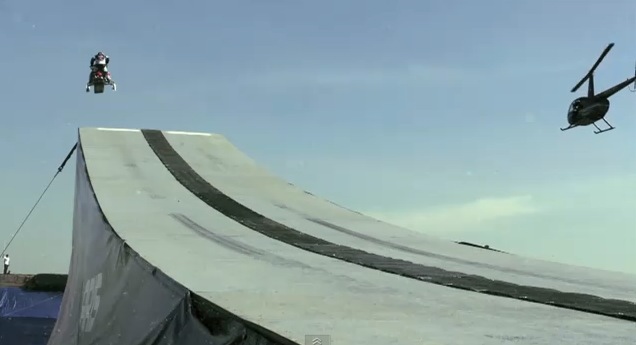
    Levi LaVallee jumps 361 feet on his snowmobile (60 feet longer than the current world record) at a Red Bull event in San Diego. Red Bull is there to capture the whole thing and make sure Levi’s f

    eat looks as incredible on film as it did in person.

  • Bobby Brown Triple Cork 1440 Slow Motion

    Bobby Brown Triple Cork 1440 Slow Motion

    Bobby Brown knows a little about sick aerial freestyle skiing. At just 20 years old, Bobby is an X-Games regular and is the only person ever to have landed a Switch Double Misty 1440, o

    r a Triple Flatspin. He was one of the first skiers ever to have landed a Triple Cork 1440. Luckily, Red Bull managed to grab it all on HD film and get Bobby to take us through his thought process during this insane trick in slow-mo. Enjoy.

    zp8497586rq
  • Our GORUCK Challenge Contest Winner

    Our GORUCK Challenge Contest Winner

    A few weeks back, we interviewed ex-special forces agent and GORUCK Challenge Lead Cadre Lou Lepsch. Along with the interview, we received a free GORUCK Challenge entry to give away to one of our readers.

    After much deliberation, we’ve came to a decision.

    Our winner: James Schipper – congratulations James!

    Here was James’ comment:

    goruckwinner

    When Scott chimed in on his comment, James piped up – not backing down just because he was “too old.”

    goruckwinner2

    So, congratulations James! Be on the lookout for an email outlining how to redeem your your free GORUCK Challenge entry. Enjoy some GOOD LIVIN’!

  • 5 Gut-Wrenching Activities [Inspired by Game of Thrones]

    5 Gut-Wrenching Activities [Inspired by Game of Thrones]

    This is a guest post by Yael Levy of dreamBIGLY.

    Dragon-taming! Jousting! Walking through fire! The characters in the fantasy hit TV show Game Of Thrones (based on George R.R. Martin’s series of books, A Song Of Ice And Fire) get up to all kinds of dangerous activities in the land of Westeros.

    These heroes and villains can barely leave their castles without mortal peril befalling them! (How’s that for adventure?). Embody the Game of Thrones spirit by mastering one of their extreme skills that allow them to fight another day. Their gut-wrenching challenges make perfect additions to any adrenaline junkie’s life list – here are some of our favourites:

    ARYA: Learn how to sword-fight

    Arya may be the smallest character, but she is a total badass and is drawn to sword-fighting like a moth to a flame. Luckily for modern-day knights-in-training, the art of sword-fighting has not completely been lost. There are schools and courses that offer sword-fighting lessons for those of us that want to learn how to do a bit more than just ‘stick ’em with the pointy end!’

    Academie Duello, the self-described ‘centre for swordplay’, offers Weapon Mastery, Warrior Fitness, and even Mounted Combat training! For more specialised weaponry skills, take a look at the Association for Renaissance Martial Arts, who offer training for the longsword, sword and dagger, rapier, cut & thrust progression, and the awesome-sounding ‘renaissance grappling’. Your new life as a Ser begins here!

    sword-fighting

    JON SNOW: Fend for yourself in the wild.

    jon-snow

    Jon Snow and the rangers of the Night’s Watch are the ultimate protectors of the realm, and as rugged as they come. Leaving everything they know behind them, they risk their lives crossing the Wall to the vast unknown, where wildlings, giants, wild animals and the Others await them.

    So, embrace your inner ranger and venture in the wild! Take a leaf from Bear Grylls’ book, who, by the way, would absolutely dominate the Nights Watch, and go native. There are some incredibly remote places on Earth where it really is every man for himself, where you can test your mettle by living off the land, surviving the elements, animals and poisonous mushrooms.

    tristan-de-cunha

    Our top candidate for your adventure? Tristan de Cunha, an archipelago of small islands in the middle of the Atlantic Ocean, and the most remote inhabited place on Earth. It is only accessible by boat, and there isn’t a regular service. Eek.

    BRAN: Climb something really really tall.

    bran-stark

    Brandon Stark is a prolific climber who likes to scale anything and everything. If he was a real boy, he’d probably have already made epic YouTube videos of him ascending ridiculously high peaks without safety ropes whilst drinking a Red Bull.

    spiders-rock-arizona

    So, chances are Bran would love to climb Spider Rock, Arizona – an 800-foot sandstone monolith spire that rises out of the ground like some otherworldly structure. It wouldn’t look out of place in Westeros, so get your gear, friends, and head on down to conquer it like a Stark!

    TYRION: Experience trial by combat!

    Tyrion is the black sheep of the Lannister clan, and, after being thrown in jail for an alleged crime, Tyrion demands a trial by combat!

    tyrion-lannister

    One of my favourite stories is that of the 60-year-old British man who, in 2002, tried to invoke the ancient practice of trial by combat rather than pay a £25 motoring fine. Fortunately (or unfortunately?), the UK courts rejected his offer of a fight to the death with the Driver & Vehicle Licensing Agency, but the question remains – how badass would it be to settle a disagreement with a good old fashioned bout of fisticuffs? If it’s good enough for Tyrion Lannister, surely it’s good enough for us?

    A great modern-day equivalent to a duel is a character-building endurance test. There are a plethora of events specially designed to break you into little pieces and make you squirm.

    tough-mudder

    A firm favourite is the Tough Mudder – Enroll yourself and your enemy, and you’ll face a 10-12 mile obstacle course, replete with 12-foot walls and underground mud tunnels, testing your strength, stamina and grit. The first person to the finish line gets ultimate bragging rights until the end of time. Sorted.

    DAENERYS: Learn to fire-walk

    Daenerys-Targaryen

    So Daenerys’ family are really into dragons, which apparently means that she’s impervious to fire! Handy!

    Become an honorary Targaryen by learning how to fire-walk. Yes, there are professional fire-walking companies that can teach you how to walk over hot coals without feeling a thing (allegedly). You could go one step further and join a circus skills workshop, where you could learn how to partake in a spot of fire-eating, fire-breathing, or fire-juggling! Burn baby burn! (Dragons are optional!)

    Fire-Breathing

    Game Of Thrones is full of activities that’ll get your adrenaline pumping. Level up your life by adding your ideas to your life list today. But be quick – Winter is coming…

    [Image Sources: hbo.com, William Attard McCarthy/Shutterstock.com, toughmudder.com]

    Yael Levey is the co-founder of dreamBIGLY – a website that’s all about getting you to live your dreams through the power of the life list! Yael lives in London, UK, and is passionate about helping people live the life they want. Follow her on Twitter.

  • Steve Kamb Exercises Around The World

    Steve Kamb Exercises Around The World

    A few months ago, good friend of Nerve Rush and fitness blogger, Steve Kamb of Nerd Fitness, booked a round-the-world trip for $418 – a self-funded  120,000+ mile, 16-country, 18-month adventure. Doing everything from pushups to pullups, parkour to handstand pushups, he decided to document his adventures by putting together an epic 3 1/2 minute video of him exercising around the world inspired by the original “Where The Hell Is Matt?” videos. Take that Nike – looks like he made it count.

  • Inside the GORUCK Challenge with Lead Cadre Lou Lepsch

    Inside the GORUCK Challenge with Lead Cadre Lou Lepsch

    We always say the favorite part of running an adventure site is the people we get to talk to. Today is no different. As soon as we found out about the GORUCK Challenge, we tracked down the people in charge of this massive gut-check adventure and told them we needed to talk. We got in touch in with Lead Cadre, Lou Lepsch – the ex-special ops agent in charge of this ridiculously awesome event, and in true Nerve Rush fashion, we bombarded him with questions.

    GoRuck Challenge Lou
    Lead Cadre & Ex-Special Ops Agent Lou Lepsch

    Also, as a bonus, at the end – we’ve got something awesome to give away, so you’ll want to check that out. But before we get to that, here’s a little bit more about the GORUCK Challenge from Lou himself.

    Thanks for talking with us Lou! Can you tell us a little bit about the GORUCK Challenge? How did you get involved?

    Simply put, the GORUCK Challenge is 12-14 hours of simulated Special Operations selection processes. Participants cover about 20 miles wearing GORUCK gear filled with bricks (meant to simulate kit -i.e. ammo.)  They are led by a GORUCK Cadre with a Special Operations background. The Cadre poses problems to the group, thus turning 30 individuals into a team over the course of the Challenge. Longer story, the GORUCK Challenge is a gut check – a test of one’s intestinal fortitude. It’s a slice of Special Operations training that gets your foot in the door.

    I got involved after a night of pool water with Jason when he visited me at Fort Bragg. He briefed me on the CONOP (Concept of Operations), and I thought it was awesome. We sat around drinking pool water while Java (GORUCK dog) tore up cases of Bud Heavy, and I was hooked.  Jason and I worked together in the Special Forces Q-Course, and the opportunity to work with him again was a no brainer.

    GoRuck Challenge Your Team

    How does being a Cadre fit into the race logistics? You lead classes?

    First thing the Cadre does is a boots on the ground reconnaissance of the ground and some target analysis – working out potential missions for the participants. We get a route from HQ a few days before, but the Cadre needs to spend a good four hours minimum – sometimes longer – to work out how that route will play out in real life.

    During the challenge, the Cadre poses scenarios to the team, events to test not only the individual but the team. The Cadre’s main job is to bring those individuals together as a team and form friendships for life. They just experienced something life changing and definitely not a 5K, and the bonds last a lifetime.

    GoRuck Challenge Annapolis Cold Water

    And you have a background in Special Ops? Whoa. Could you, ahem, elaborate?

    No.

    What separates the GORUCK Challenge from the many other adventure, obstacle and endurance races out there?

    The team, the city, and the Cadre. Much like Special Operations training that the Cadre all went through, you never know what to expect. You’ve got to focus on the task at hand – while also focusing on the bigger picture. The bigger picture is the team. Our events are in cities, and the route is designed to be a guided tour – a shopping tour with many coupons along the way.

    The city provides those real life problems for the team to solve. It’s not as if we are renting out a ski resort and putting logs there for people to carry from this cone to that cone. The Cadre separate us – you’ve got that legitimacy, but it also makes it a more personal event. It’s one Cadre with thirty people, and you really get to know each other. They always hate the Cadre at first, but by the end they love us. In the end, we want every single person to walk away knowing they accomplished something.

    GoRuck Challenge Cadre

    What training regimen would you recommend for a GORUCK participant expect?

    It doesn’t matter, because you’re still going to be sore. But I would recommend a CrossFit regimen with some minor distance running for cardio.  But in the end, it’s 90% mental. Don’t take it so seriously. Partake in some ACRT (Advanced Cellular Repair Technology, aka beer) like we all do.

    Where can we learn more about the GORUCK Challenge?

    Visit GORUCKChallenge.com and also check out @GORUCKChallenge on Twitter. The Cadre all tweet during the event, and we get a lot of suggestions from people following the challenge at home. It’s like watching GORUCK TV in real time!

    —

    Huge thanks to Lou and the GORUCK Challenge team for taking the time to speak with us. After this interview, I was so excited about GoRuck, I just had to do it. So I’m signed up for the first GoRuck Challenge as soon as I get back to the states.

    Now for the cool part: If you want to give GORUCK Challenge a shot for yourself, we’ve got a free entry pass to any of the GORUCK Challenges across the country (sorry international guys, GORUCK hasn’t quite made it across the pond yet). If you want to win a free pass to any GORUCK Challenge, let us know why below and our unbiased team of judges will pick our favorite as the winner.

    Stay adventurous out there!

  • Mike Dion Rides The Continental Divide

    Mike Dion Rides The Continental Divide

    In 2008, Mike Dion set out to film one of the most grueling adventure bike races on the planet – The Tour Divide. After a month of filming and 15 more of editing, the end result is Ride The Divide: an inspiring journey about the world’s toughest mountain bike race, which traverses over 2700 miles along the Continental Divide in the Rocky Mountains.

    The film weaves the story of three characters’ experiences with immense mountain beauty and small-town culture as they attempt to pedal from Banff, Canada to a small, dusty crossing on the Mexican border. The course itself climbs over 200,000 vertical feet over the Rocky Mountains. That’s the equivalent of ascending Mount Everest from sea level seven times. Nerve Rush’s own Joel Runyon sat down with Mike Di

    on to get the inside scoop on the race and the behind the scenes filming they did to capture it.

    Find more information about Ride The Divide and Mike’s other projects visit RideTheDivideTheMovie.com.

    Find Ride The Divide on Twitter | Facebook

    Buy Ride The Divide on iTunes or watch it on Netflix

    —

    Also, check out Mike’s new upcoming project: Reveal The Path at RevealThePath.com.

    zp8497586rq
  • Meet Natalie Sisson: Racing The Tour d’ Afrique

    Meet Natalie Sisson: Racing The Tour d’ Afrique

    Here at Nerve Rush HQ, we are lucky to have such cool friends. Close amigo, Natalie Sisson, is going to be biking across Africa on the famed Tour d’ Afrique bike race. When we found out she was racing the Tour d’ Afrique and racing almost 6,500km of the race on her bike, we knew we had to have her on the site. I decided to jump in and find out more about Natalie and the race specifically.

    ____

    What’s your cycling background Natalie?

    I’d like to say it’s my favourite past time, but I’m more of a commuter cyclist, having braved the streets of London, England with a daily 40 minute commute one way, and then again in Vancouver. Canada. I’ve done a few sprint triathlons in the past and the cycle leg of one full triathlon, but nothing quite like this next adventure.

    Just under 6,500km on a bike! Can you shine some light into your thoughts behind starting such a massive adventure?

    It started with a conversation with a Canadian traveler on a slow bloat through Laos. When you have 8 hours to kill you can cover a lot of ground. We got to talking about this crazy bike tour that goes the length of Africa, from Cairo to Capetown. I was intrigued. I looked it up online and read the details of what was involved. I set myself a goal to do that ride one day.

    One day happened to come five years later when I paid my deposit in early 2011 and committed to doing it in 2012. Once I commit to something it’s very rare that I don’t follow through on it. I also like to set myself personal challenges. It started in 2004 when I trained my ass off for 9 months to compete in a body sculpting competition… and won the regional title.

    Then in 2007 I broke a world record by dragon boating across the English Channel with the Sisterhood. It felt Iike I was due my next challenge. This one seemed appropriate.

    Natalie Sisson - Tour D Afrique

    How are you preparing for this incredible adventure?

    To be honest, not as well as I should have. In 2011 when I returned home to New Zealand for the first time in 5.5 years I got on a road bike and started training with my sister for a few events. The first was a 48km race, followed by a killer 100km race with some nasty hills.

    This was all in the lead up to the Lake Taupo Cycle Challenge. This 160km race around the lake the size of Singapore, saw us in the saddle for over 7 hours. To me that was the best test of whether I could do that kind of distance. When I get to Africa we will ride between 100-180km 5-6 days in a row with just one day off.

    Since that road race I’ve been travelling and running my business from the road and it’s really been hard to try and train under those circumstances. You actually need to base yourself somewhere to have access to your bike to ride daily and know routes to take. So I have been keeping fit playing Ultimate Frisbee, running and hitting the gym, but I really need to notch up some serious time in the saddle in these last 6 weeks!

    I’ll do that by getting on my new bike I’ve bought or this epic adventure, and start cycling daily, as well as clocking up some longer 3-4 hour rides on the weekends, and building to a few days of riding in a row to get used to how my ass will feel.

    Even with all those plans, there’s bound to be some things that come up. What are you most afraid of as you get ready for this race? 

    I have to say this one excites me and daunts me at the same time, I spoke to a guy who completed the whole trip last year, and he got typhoid from eating lettuce. He got so sick the organziers dropped him off at a hospital and told him to make his own way to Capetown. That part scares me a little. Being left to fend for yourself in a continent I’ve not yet travelled to. From the stories I’ve heard, it’s not one you want to be alone in, especially as a woman.

    I guess the mental endurance is something I’m looking forward to testing out. I think I’m pretty tough from years of playing competitive sports, but this is something entirely different. Cycling up to 8 hours a day, pitching your tent, fuelling up on food, and then getting up to do it all again the next day, for 2 whole months is not for everyone.

    I also had a friend send me this video clip from YouTube of a rider getting taken out by an antelope during a mountain biking race, I’m kind of hoping that won’t happen to me. Finally I’m adding pressure by attempting to raise $10,000 for Women Win and setting up my business to run without me for two months. That doesn’t scare me but it’s a whole other beast in itself from a preparation perspective.

    This isn’t a short trip. You’ll be gone for quite a while. How are you funding all of this? 

    It is the most expensive trip I have undertaken in my life. The cost of the tour being the main expense at just over US$8,000. All up I’ve estimated it costing around US$15,000.

    I am so lucky to have some fantastic sponsors who I approached, and who believed in what I was doing, I broke down my trip costs and they chose to sponsor a segment like bike parts, camping equipment, immunizations. So big ups to Chrometa, MeetingBurner, Unbounce, Six Figure Start and Kaleidoscope Marketing.

    KP Athletic Wear stepped up to sponsor me with her own clothing line and GoPro sent me their awesome new Hero 2 HD camera plus bike and helmet mounts for free so I can capture the whole epic journey on video!

    The rest I’m self funding as it was my personal challenge. My online business success over at the Suitcase Entrepreneur is picking up the tab :).

    You’re doing this all for a purpose, right? Tell us about the cause you’re doing this for.

    Yes I totally am. As a woman who’s played all sorts of sports since I was a kid, I can’t credit the impact playing them has had on my sense of worth, confidence, and naturally my mental and physical abilities. Playing an individual sport or being part of a team has taught me so much in life and in business.

    So when I found out that an organization existed that was giving girls and women confidence and better rights through sport I had to check them out. Women Win is a leading global organization with a mission is to empower girls and women to achieve their rights through sport. Their vision is:

     “a world where women and girls are strong leaders and agents of change in their communities.”

    I’m doing a whole social media campaign and outreach in order to get maximum exposure for them and to raise $10,000 in donations. This amount could make a huge amount of impact for them. For example, here’s what the following donations can help with:

    Amount               Project

    € 10                     A football for a girls sport team

    € 25                     A sports uniform for 1 girl

    € 50                     Monthly allowance for a girl leader training/ coaching girls

    € 100                   1-year enrollment in a sports program for a girl

    € 200                   Life skills workshop for 30 girls

    € 500                   Tournament for raising awareness on GBV in a community

    Where can Nerve Rush readers follow along with your journey? Anything else we should know?

    I’d love for you to come visit the ride of my life on my blog. All the details are there, a fun video too and ways in which you can get involved.

    In fact you can support my journey by buying a Human Powered Awesome t-shirt of which half the profits go to Women Win, or donate or simply spread the word!

    Also come say hi on Twitter @nataliesisson and Facebook.

    —

    We’re pretty lucky here at Nerve Rush to run into so many people doing so many amazing things. If you know someone participating in some gut-wrenching adventure, send an email to hq@nerverush.com and let us know!

  • Tour d’ Afrique [Race Profile]

    Tour d’ Afrique [Race Profile]

    This is a guest race profile by Natalie Sisson who’s riding the Tour d’ Afrique herself this year.

    Tour d’Afrique

    If cycling almost 12,000 km across Africa, from Cairo to Capetown sounds like fun to you, then Tour d’Afrique may be the bike expedition you’ve been waiting for. This bike race across Africa runs every year starting in January and finishing in May.

    “The Tour d’Afrique is the ultimate test of endurance and tenacity amidst some of the most beautiful environments and cultures in the world. Each day yields new and unexpected challenges, discoveries and friendships. Riding a bicycle is the perfect pace for exploring and encountering Africa on the outside and one’s own personal limits on the inside.” – Erin Sprague TDA 2010

    Entering it’s 10th anniversary, this is not for the faint hearted. Every day you will clock between 120-200km (75-125 miles), for 5-6 days straight over four months! You can either race it (around 25% of riders do this), or just make it through by riding to finish it. This expedition aims to test your endurance and spirit, physically, mentally and emotionally.

    The tour is broken down into 8 sections.

    Tour Leg Route Distance
    Pharaoh’s Delight Cairo – Khartoum 1,956 km
    The Gorge Khartoum – Addis Ababa 1,624 km
    Meltdown Madness Addis Ababa – Nairobi 1,687 km
    Masai Steppe Nairobi – Mbeya 1,214 km
    Malawi Gin Mbeya – Lilongwe 757 km
    Zambezi Zone Lilongwe – Victoria Falls 1,213 km
    Elephant Highway Victoria Falls – Windhoek 1,541 km
    Diamond Coast Windhoek – Cape Town 1,726 km

    You can choose to do the full tour or part of it, or just ride a section. I’m riding from Nairobi to Capetown in two months which is still just over 4,000 miles.

    tour-d-afrique

    The Tour d’ Afrique Course

    The terrain is hugely varied and each year it differs with some roads having been paved while others have deterioriated. That’s why it’s recommended you take a mountain bike with a spare set of road tyres and front forks you can lock out.

    From paved road through to corrugated, rutted, loose sand and hard packed gravel, you will be hitting some serious hills as well as muddy potholed roads when it rains too. The best thing to do is always expect the unexpected and get ready for some tough riding.

    What’s Provided

    Aside from a life changing experience, the Tour d’ Afrique organizing crew make sure you’re provided with camping sites, nutrition, tour organization and support – not to mention an unforgettable journey. They have two large trucks that take your gear to the next campsite each day so that you can focus less on gear and more on the grueling task of cycling.

    There is no luxury here however, the constant riding means you will have a sore ass and there will be days when you won’t be able to move out of your sleeping bag, let alone be able to climb on your bike to tackle some unrelenting terrain all over again.

    On the rest days you get to take a look around the “major” town you’re in, sample the local cuisine, jump online to share your tales with friends and loved ones back home and even treat yourself to a night at a lodge with a hot shower and bed….bliss.

    All this will set you back over 5,000 euros or around US$8,000. This does not include your flight, insurance, visas, immunizations and extra side trips like organized safaris you can choose to partake in. Nor does it include lodges or food on rest days. If you want to do the full race, you’re looking at a nice little figure of 9,400 euros or around US$12,500. So if you take the plunge, you better be committed to finishing!

    Personally, I’m budgeting around US$15,000 to cover all these costs, plus the bike, bike parts, camping and riding gear and anything else I think might come in handy in Africa!

    Daily Ritual

    If you’re not a morning person, the idea of waking up between 5:30 and 6:30 AM won’t appeal. you’ll have to get used to changing timezones, climate and hours of daylight too. Each day when you get up you pack up your camping gear and personal belongings, and eat breakfast that’s been prepared for you and then jump on your bike.

    Along the way you’ll be given more water, lunch and some snacks to last you through to when you reach camp again. You’ll be riding with anywhere from 25-50 other nutters who decided that riding the length of Africa was a good idea.

    Every evening, you’ll be given a rider briefing before dinner that will take you through the following day’s route, including navigation, hazards, interesting sites and accommodations. For every new country you visit you’ll also learn about the scenery, food, geography and history, and what to expect in terms of cycling through this country.

    The Takeaway

    After the course of 94 cycling days (each averaging 123km each), 24 rest days and 2 days of ferry boat travel (over 120 total days of travel), you’ll have traversed the entirety of Africa, from North to South. Over the course of the race, you’ll pass through 10 countries, along the Nile, past ancient temples, through the equator, past Mount Kilaminjaro, past the beautiful Victoria Falls, and finally arrive in Capetown – that is, if you can make it all the way there.

    Are you up for the challenge? You can find more information on the Tour d’ Afrique on their official website.

    You can follow me on the ride of my life when my expedition starting March 12th