Category: Race

  • Tour d’ Afrique [Race Profile]

    Tour d’ Afrique [Race Profile]

    This is a guest race profile by Natalie Sisson who’s riding the Tour d’ Afrique herself this year.

    Tour d’Afrique

    If cycling almost 12,000 km across Africa, from Cairo to Capetown sounds like fun to you, then Tour d’Afrique may be the bike expedition you’ve been waiting for. This bike race across Africa runs every year starting in January and finishing in May.

    “The Tour d’Afrique is the ultimate test of endurance and tenacity amidst some of the most beautiful environments and cultures in the world. Each day yields new and unexpected challenges, discoveries and friendships. Riding a bicycle is the perfect pace for exploring and encountering Africa on the outside and one’s own personal limits on the inside.” – Erin Sprague TDA 2010

    Entering it’s 10th anniversary, this is not for the faint hearted. Every day you will clock between 120-200km (75-125 miles), for 5-6 days straight over four months! You can either race it (around 25% of riders do this), or just make it through by riding to finish it. This expedition aims to test your endurance and spirit, physically, mentally and emotionally.

    The tour is broken down into 8 sections.

    Tour Leg Route Distance
    Pharaoh’s Delight Cairo – Khartoum 1,956 km
    The Gorge Khartoum – Addis Ababa 1,624 km
    Meltdown Madness Addis Ababa – Nairobi 1,687 km
    Masai Steppe Nairobi – Mbeya 1,214 km
    Malawi Gin Mbeya – Lilongwe 757 km
    Zambezi Zone Lilongwe – Victoria Falls 1,213 km
    Elephant Highway Victoria Falls – Windhoek 1,541 km
    Diamond Coast Windhoek – Cape Town 1,726 km

    You can choose to do the full tour or part of it, or just ride a section. I’m riding from Nairobi to Capetown in two months which is still just over 4,000 miles.

    tour-d-afrique

    The Tour d’ Afrique Course

    The terrain is hugely varied and each year it differs with some roads having been paved while others have deterioriated. That’s why it’s recommended you take a mountain bike with a spare set of road tyres and front forks you can lock out.

    From paved road through to corrugated, rutted, loose sand and hard packed gravel, you will be hitting some serious hills as well as muddy potholed roads when it rains too. The best thing to do is always expect the unexpected and get ready for some tough riding.

    What’s Provided

    Aside from a life changing experience, the Tour d’ Afrique organizing crew make sure you’re provided with camping sites, nutrition, tour organization and support – not to mention an unforgettable journey. They have two large trucks that take your gear to the next campsite each day so that you can focus less on gear and more on the grueling task of cycling.

    There is no luxury here however, the constant riding means you will have a sore ass and there will be days when you won’t be able to move out of your sleeping bag, let alone be able to climb on your bike to tackle some unrelenting terrain all over again.

    On the rest days you get to take a look around the “major” town you’re in, sample the local cuisine, jump online to share your tales with friends and loved ones back home and even treat yourself to a night at a lodge with a hot shower and bed….bliss.

    All this will set you back over 5,000 euros or around US$8,000. This does not include your flight, insurance, visas, immunizations and extra side trips like organized safaris you can choose to partake in. Nor does it include lodges or food on rest days. If you want to do the full race, you’re looking at a nice little figure of 9,400 euros or around US$12,500. So if you take the plunge, you better be committed to finishing!

    Personally, I’m budgeting around US$15,000 to cover all these costs, plus the bike, bike parts, camping and riding gear and anything else I think might come in handy in Africa!

    Daily Ritual

    If you’re not a morning person, the idea of waking up between 5:30 and 6:30 AM won’t appeal. you’ll have to get used to changing timezones, climate and hours of daylight too. Each day when you get up you pack up your camping gear and personal belongings, and eat breakfast that’s been prepared for you and then jump on your bike.

    Along the way you’ll be given more water, lunch and some snacks to last you through to when you reach camp again. You’ll be riding with anywhere from 25-50 other nutters who decided that riding the length of Africa was a good idea.

    Every evening, you’ll be given a rider briefing before dinner that will take you through the following day’s route, including navigation, hazards, interesting sites and accommodations. For every new country you visit you’ll also learn about the scenery, food, geography and history, and what to expect in terms of cycling through this country.

    The Takeaway

    After the course of 94 cycling days (each averaging 123km each), 24 rest days and 2 days of ferry boat travel (over 120 total days of travel), you’ll have traversed the entirety of Africa, from North to South. Over the course of the race, you’ll pass through 10 countries, along the Nile, past ancient temples, through the equator, past Mount Kilaminjaro, past the beautiful Victoria Falls, and finally arrive in Capetown – that is, if you can make it all the way there.

    Are you up for the challenge? You can find more information on the Tour d’ Afrique on their official website.

    You can follow me on the ride of my life when my expedition starting March 12th

  • Mike Hrostoski’s Tough Mudder Adventure

    Mike Hrostoski’s Tough Mudder Adventure

    This is a Nerve Rush reader experience post. We’ve profiled the Tough Mudder before, but facts only do so much to tell you about the level of adventure in an obstacle race. So loyal Nerve Rush reader Mike Hrostoski took it upon himself to jump in and find out for himself. Take it away Mike!

    Sometime this past spring, my friends Hannah and Lauren asked me if I wanted to run a Tough Mudder race with them. I recall the conversation over Facebook going something like this:

    Them: Hey, want to run Tough Mudder with us?

    Me: Huh? Tough Mudder? What is that?

    Them: It’s a 10-12 mile endurance event with obstacles designed by British Special Forces. We’ll run through miles of mud, crawl through underwater pipes, run up and down ski slopes, jump into a freezing cold river, climb a glacier, carry a log up a mountain, run through fire, and finish the race running through live wires with 10,000 volts of current running through them.

    Me: Hell yes!

    Fast forward to May 8, 2011 and I found myself staring up the slopes of Mt. Snow, VT with four other teammates. I came in with pretty high expectations of the race. I work out regularly, do yoga, and eat pretty well. I ran a half marathon lat October with no training and that was 13.1 miles. The Vermont Tough Mudder was only 10 miles so it couldn’t be that rough right?

    I was dead wrong. The first mile or so was straight up the mountain. We ran up and down the entire length of the mountain multiple times. In between running up and down ski slopes we dunked ourselves into freezing cold water time after time.

    At around mile 6 I had my first cramp. My calf completely locked up when I was pushing hard up a hill. I’ve gotten these before playing basketball so I just stretched it out, drank some more water, and pushed on. At around mile 8 the other calf locked up. A couple hundred meters after that my legs literally stopped working. They were completely cramping up from top to bottom. I’ve never experienced anything like that before. Soon I found myself on an ATV ride to the medic tent where I laid under heating blankets, ate a couple bananas and three Myoplex shakes, and drank around a gallon of water before I could even walk again. Bad times.

    Looking back at the race I realize that I didn’t drink anywhere close to enough water as I should have. And my training was basically non-existent. You know what the late, great John Wooden said, “Failure to prepare is preparing to fail.”

    Today is exactly six months from the day that I ran my first Tough Mudder. This Sunday I’ll try it all over again at the Tri-State Tough Mudder in my current home state of New Jersey. Big thanks to the Tough Mudder team for letting me run this one for free on a press pass. See, there are some perks to being a “published writer.”

    I’m feeling pretty good about this upcoming race. My diet has been super on point lately with my November Detox (I actually created a daily journal for it at: bit.ly/november-detox). I’ve also been training way harder than I did for the last race. In fact, I’m feeling good enough to even say:

    In a couple days I’ll be finishing the Tri-State Tough Mudder and checking another item off of the List of Adventure. Guaranteed.

    6 Days Later…

    I did it. I finished the Tri-State Tough Mudder. I barely finished, but I finished. Here’s how it all went down.

    I’ve been detoxing for the whole month of November, so to carb up the night before I ate the equivalent of a meal for three including an entire baking pan worth of sweet potato and pineapple casserole. Half of an entire pineapple and three sweet potatoes all cut into slices and baked in the oven for an hour with butter and cinnamon on top. All the dessert you need without any refined sugar. So delicious. I then got to bed super early and slept a solid ten hours with sweet dreams of running, jumping, crawling, and mudding (Really, I dreamt about the race the whole damn night).

    The morning started off like any other morning in November: 4 eggs, a whole pink grapefruit, and some yoga. I stopped by a convenience store to grab a bottle of water and three protein bars and hit the road for Raceway Park in Englishtown, NJ.

    When I got to the race site I was pleased to see flat land for as far as the eye could see. The Vermont Tough Mudder was nothing but running up and down mountains for ten torturous miles. NJ 1, Vermont 0.

    After signing my death waiver and checking in at the Media Check-In tent, I walked into the park to check out the scene. Pop quiz: What’s the main difference between an average New Jersey Tough Mudder and an average Vermont Tough Mudder? Around 20 pounds of muscle and no shirt. Why people in New Jersey are so jacked I don’t know, but there were plenty of guys running around that looked like Rambo. Of course I took the opportunity to join the shirtless New Jersey Tough Mudder crew, but kept my secret identity intact with the Luchador mask that has now traveled all over the world with me.

    Shortly after I checked in, I met up with my friend Lauren from the first Tough Mudder adventure and her friend Melanie. As soon as I met Melanie I knew we were going to get along. She had a red bandana on and a t-shirt that read “It’s The Freakin Weekend.” My kind of people. After the obligatory pre-race photoshoot to post Facebook pictures later, we lined up at the start. We walked up to the start just as the last heat had taken off so we got to line up in the front of our heat.

    After pumping us up with a little pre-race pep talk and reiterating the fact that we signed a death waiver, the emcee let us loose on the course. Unlike a usual race though, we started by chasing a monster truck. And since we were in the front of our heat, I started the Tri-State Tough Mudder sprinting behind a monster truck.

    I could explain the rest of the thirty-something obstacles in detail, but it’s easier to read about them all here on the Tough Mudder website: Tri-State Tough Mudder Course Map

    Some of the obstacles stuck out for me though, some because they were fun and others because they were absolutely brutal. The more memorable parts of the course were:

    • Swimming across a freezing cold river and climbing up a 15 foot rope ladder on the other side
    • Then immediately after that jumping off of a different 15 foot platform into the same freezing cold river and swimming back across
    • Running through the Mud Mile, a maze of trenches that had to be at least a quarter mile long through knee-high to waist-high mud
    • Crawling through mud under barbed wire 8 inches off the ground
    • Running through bales of straw soaked in kerosene and set on fire
    • Running around the actual race track carrying a tire
    • Successfully crossing a huge set of muddy monkey bars set over an ice cold lake
    • Crawling through muddy tunnels that were so long that you couldn’t see any light halfway through them
    • Getting shocked three times by live wires carrying a 10,000 volt shock

    Tough Mudder is also a great experience because of the tone that the race organizers set at the beginning of the race. All participants raise their right hand and recite the Tough Mudder pledge before they run the course. The pledge is: “As a Tough Mudder I pledge that… I understand that Tough Mudder is not a race but a challenge. I put teamwork and camaraderie before my course time. I do not whine – kids whine. I help my fellow Mudders complete the course. I overcome all fears.”

    I can’t even count the number of times I got a helping hand from a stranger pulling me through a dark muddy tunnel or pushing me up a 12 foot wall. In return I helped dozens of people over and under the obstacles. In a Tough Mudder race you aren’t running against the other participants, your running with the other participants and against the course. It’s really a great atmosphere.

    Of course the most memorable part of the day was crossing the finish line. The feeling of stepping across that line was such a great sense of accomplishment. For those 10-15 minutes after the race I felt nothing but pure happiness. My body was on the verge of failure again, but I just felt great.

    Completing the course has also set the baseline of what I know I can accomplish at a higher level. Several years ago I ran my first 5k. A year ago I ran my first half marathon. This weekend I ran a half marathon through hell. The next race will be a little harder,  a little longer, or a little tougher, but I know I’ll be able to do it. Success breeds success and right now I’m on a roll…

    We can’t wait to see what you do next Mike. Hopefully you’ll be able to share it with us (ahem, skeleton tryouts?). We couldn’t agree more – you’re on a roll!

    This post originally appeared on Michael’s own blog (first post, second post). Massive thanks to Mike for sharing this with the wider Nerve Rush audience. If you’re interested in guest posting on Nerve Rush with your own adventures or expertise, let us know – we’re always on the lookout for adventurists doing incredible things. Get in touch.

  • Warrior Dash [Race Profile]

    Warrior Dash [Race Profile]

    Adding to our list of obstacle races is the Warrior Dash. Based on a very short and unscientific poll I made, this seems to be the most well known adventure race. Although the Warrior Dash brands itself similar to the Tough Mudder, the Warrior Dash is really much more similar to the Mudathlon or the Spartan Race.

    Warrior Dash Obstacles

    This 3-4 mile obstacle race boasts almost 30 locations around the U.S. and is expanding fast. While each location has a variety of courses and no two races are the same, there are some staples obstacles that will conveniently show up no matter where you are.

    1. The Great Warrior Wall
    Grab a rope and start climbing! This 10+ foot wall has a few footholds, but just grab the rope and haul yourself up. Once you get to the top, you need to figure out a way to get down (besides falling). This obstacle takes longer to get through than others, so if there’s a line just sit back and enjoy watching people do things in the name of an obstacle course.

    2. Warrior Roast – The Fire Pit
    Fire in the middle of the course. Yea, that’s right. As you enter the final stretches of the race, you’ll see a few strips of blazing fire. The only way to get around them is to hurdle them like you’re in a high school track meet. Actually, to be fair, if you really want to go “full-Warrior” you can take off your shoes and walk right through it like a boss – just don’t blame us if you get burned!

    3. Muddy Mayhem – The Barbed-Wire Mud Pit
    At the end of most races, there is a barbed wire mud pit. A section at least 30-50 yards long of 2-3 feet deep of glorious mud. On top of that, there’s real barbed wire suspended about a foot over the actual mud pit. This means – you got it – that you are guaranteed to come out of this thing soaked with mud if you somehow managed to get through the rest of the race completely clean.

    Once you’re through, grab a banana and water while you rehydrate and head over to the celebration area. There, you can grab yourself a turkey leg and pick up your free beer and really start celebrating like the true Warrior you are.

    If you’re new to obstacle races, the Warrior Dash is a great way to get started. If you’re a veteran, it’s a good excuse to get outside and do a 5k in an unconventional setting and have some fun with your friends. However, if you’re looking for an obstacle course that’s a different level of challenge, you’ll probably want to check out the Tough Mudder.

    Happy Mudding!

  • La Ruta de los Conquistadores [Race Profile]

    La Ruta de los Conquistadores [Race Profile]

    La Ruta de los Conquistadores begins today and runs through November 5th. Stay tuned for any developments from the race! Check out the official website here: http://larutadelosconquistadores.com/ruta2011/

    Held annually in mid-November and starting in the small Pacific Coast beach town of Jacó, Costa Rica, La Ruta de los Conquistadores is a coast-to-coast mountain biking race that follows the route taken by the Spanish Conquistadors led by Juan De Cavallón in the sixteenth century.

    Undoubtedly one of the most difficult athletic events on the planet, La Ruta attracts hundreds of the very best mountain bikers and endurance racers from around the world each year. The unique and daunting Costa Rican territory is so harsh that, back in 1540, it took the Conquistadors 20 years to cross it—today, modern-day racers do it in 4 days.

    That’s intense.

    La Ruta de los Conquistadores Break

    La Ruta de los Conquistadores Course

    The course covers 240 miles and, between its sea-level start and finish, crosses 5 mountain ranges with a cumulative climb of 39,000 feet. You read that right. 39,000 feet.

    The terrain is varied and covers every imaginable riding surface, from gravel to pavement, hard-packed dirt, thigh-deep mud, volcano ash, sand, fireroad trails, singletrack and more.

    Racers ride through jungle, over active volcanoes, through farms, coffee fields, forests and small villages. They experience Costa Rica’s hot tropical climate as well as its cold-high mountain temperatures. The highest point in this grueling odyssey is the Irazú Volcano, which towers over San José at an altitude of 11,259 feet.

    Costa Rica is one of the most biodiverse places on the planet, packing a full 5% of the Earth’s species of birds, plants and animals onto just 0.01% of the planet’s land mass. La Ruta’s course takes racers through nine of the country’s twelve different microclimates, soaking them, freezing them, sweltering them—it’s a hell of a course.

    La Ruta de los Conquistadores Scene

    History of La Ruta de los Conquistadores

    Román Urbina, a native Costa Rican, started the event in 1992. Urbina, an elite athlete known for staging challenges to publicize Costa Rica’s endangered wildlife, decided to retrace the Conquistadores’ steps on his mountain bike with 34 fellow adventurers. They battled coastal heat, climbed up active volcanoes, forded rushing rivers by shouldering their bikes and skidded through mud—one of the original racers offered up $50 to whomever managed to finish first.

    For the next twelve years, only local Costa Ricans competed. In November 2005, Swiss racer Thomas Frischknecht won the race and a year later, Colombian Leonardo Páez took the crown. Costa Rica’s Federico Ramírez is the course’s legend, having won La Ruta five separate times. These days, at least a couple hundred riders attempt the annual course, the majority of them international. It’s been estimated that roughly 10% of the riders are women.

    La Ruta de los Conquistadores is a personal growth experience. While a few race La Ruta, most are just happy to finish the course. The race is about appreciating Costa Rica’s unique and natural beauty, about challenging yourself to survive arduous adversities.

    [images via Zero Kelvin / Tico]

  • Canadian Death Race [Race Profile]

    Canadian Death Race [Race Profile]

    O Canada!
    Our home and native land!
    True patriot love in all thy sons command.
    With glowing hearts we see thee rise,
    The True North strong and free!

    Canada, land of gravy fries, gun control and ice hockey. It’s also got this wee little all-terrain adventure challenge called the Canadian Death Race, and it’s one of the more intense obstacle races I’ve read about.

    [youtube id=”VYNtFx391Gk” width=”600″ height=”350″]

    An annual course held in and around Grande Cache, Alberta in August, the Canadian Death Race, which was first started in 2000, boasts 125 km of hiking and running within a 24-hour time period. As a racer, you’ll cross a major river and wind through the Canadian Rocky Mountains, covering over 17,000 feet of elevation change.

    The Canadian Death Race is influenced by Greek Mythology, specifically the myth of Charon, the ferryman of the dead. Each racing team–you can race individually or in a team of up to five people–is given a coin which must pass from person to person and summit to summit. Only when the coin is presented to the ferryman at the end of the course is the race completed.

    Longer obstacle races and adventure races typically have cut off times, specific times of day that you have to have completed a portion of the race by. This is to ensure the health and safety of racers and event coordinators. At the Canadian Death Race, the segments and times are:

    First leg, 19 km: The Downtown Jaunt [CUT OFF 12PM]
    -this is the shortest leg of the course
    -features several creek crossings and one significant downhill

    Second leg, 27 km: Flood & Grande Mountain Slugfest [CUT OFF 6PM]
    -the most technical section of the course
    -steep rocky drop-offs and unstable footing
    -long sustained climbing, lots of elevation gain

    Third leg, 21 km: Old Mine Road (or “City Slicker Valley”) [CUT OFF 7PM]
    -the easiest section of the course
    -big descent, expect knee-deep water crossings
    -stunning views of the Smoky River valley

    Fourth leg, 36 km: Hamel Assault [CUT OFF 4:15AM]
    -the longest section of the course
    -mostly dirt trail ad packed gravel
    -many racers admit defeat on this very remote and strenuous section

    Fifth and final leg, 24km, The River Crossing [CUT OFF 9AM]
    -for most runners, this leg will be completed in the dark, with much of the trail under a heavy canopy of trees, so eye protection is required

    As you can see, the Canadian Death Race is pretty brutal. Kudos to anyone out there who has completed it.

  • Human 2.0: The Long Run

    Human 2.0: The Long Run

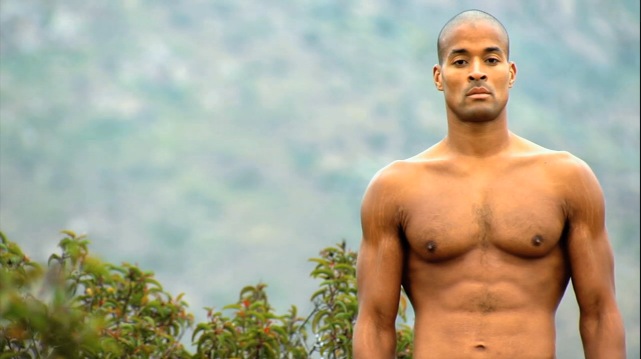
    I looked up the word “badass” in the dictionary, and I found David Goggins‘ name. The man is a Navy Seal and runs ultramarathons in his spare time. His morning workout is a 15-mile run, 60-mile bike and then he hits the weight room for fun. I like to think I know what “endurance” means, but compared to Goggins, I have no freakin’ clue. Check out this short film on him winning a 150-mile ultra marathon race. He really is the 2.0 version of humans.


  • Training for the Tough Mudder

    Training for the Tough Mudder

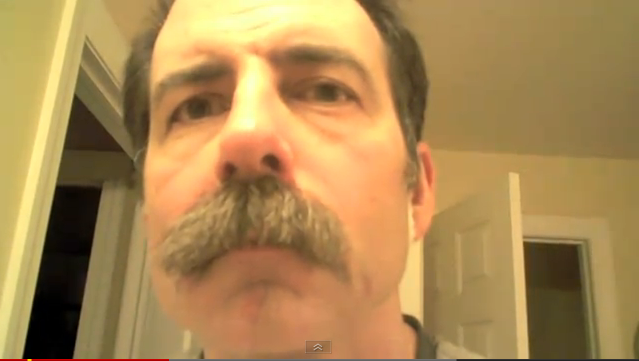
    From a 4:34am wake-up to a righteously rock star mustache, see what it takes to train for the Tough Mudder obstacle race. Starts humorous, actually gets a bit intense.

  • Iditasport Impossible [Race Profile]

    Iditasport Impossible [Race Profile]

    The Iditasport Impossible is the ultimate test of endurance. Forget your Ironmans, Ultra Marathons and the lot. Let us know when you’re tired of playing at the kiddie table. The Iditasport Impossible is the Ironman’s badass uncle who did a tour in Vietnam and then went back for vacation.

    Yes, you have to be nuts to do it.

    The Idistasport is Alaska’s Human Powered Ultra Endurance Race. There are four divisions: bike, ski, foot, and snowshoe.

    There are 3 Different Distances

    For the babies and small children, there’s the Iditasport 130, which as you might guess, runs 130 miles from Knik, Alaska to Finger Lake. 130 miles is the upper limit of most ultramarathons. For the Iditasport; however, things are just gettting started.

    Next up is the Iditasport Extreme, which runs 350 miles over the Alaska Range from Anchorage to McGrath. There aren’t any roads. You only get out by snowmobile or airplane. This is for the prepubescent boys who want to prove their manhood. 350 miles.

    Then there’s the Iditasport Impossible, which skips a whole other category of difficulty and is only for those interested in inflicting so much pain on themselves that they could be locked up in a room with padded walls, and they’d still find a way to inflict hurt themselves. This ridiculous race is 1,000 (that’s one thousand) miles from Anchorage, Alaska to Nome, Alaska. If you’re wondering where those are, keep wondering, because it’s entirely too far. To give you an idea of how far it is, completing the Iditarod Impossible would be like trying to go from New York to St. Louis. In snow…during subzero temperatures, with no backup plan. Absolutely insane.

    Guaranteed that none of the racers Are enjoying the scenery

    I wish there were more details to relay about this insane race in the tundra, but apparently most people that attempt it either die or spend the rest of their life trying to repress the memories of this tortuous event that there aren’t many details that actually escape. All the things we know, we have to gather from a few janky looking website (who cares what your website looks like when you’re a tundra-proven badass?)

    If you’re crazy enough to enter and have the cash to pony up for the registration costs (a pretty penny at $1150, not including drop bags, lodging, food and other contacts beyond the McGrath checkpoint which could run you as much as $5,000), here’s what you can look forward to.

    • Transportation from Golden Lion Best Western 1000 East 36th to race start at Knik Lake
    • Lodging and food at Winter Lake Lodge (mile 130) on Finger Lake CP 3
    • Lodging and food at Puntilla Lake/Rainy Pass Lodge (mile 165) CP 4
    • A tent camp and food in Rohn (mile 200) CP 5
    • Lodging and food in Nikola ( mile 300) CP 6
    • Lodging and food in McGrath (mile 350) at the finish line
    • A food/supply drop of 10 pounds each at the checkpoints Finger Lake and Rohn
    • Please keep your drops small, we bring those to their location via small ski plane.
      ( All survival gear, sleeping bags, clothing ect. must be carried from the start)
    • T-Shirt

    I haven’t confirmed this yet, but I’m fairly certain the t-shirt just says “I’m a badass.”

    If you’re one of the few that finish, you get forever bragging rights to say you’ve done a race too painful to accurately remember. And, if you’re lucky enough to not only survive, but actually win the whole thing, you get a free entry for the following year, to relive all the pain and agony you just got done with. Absolutely free. Congratulations.

    Just to give you an idea how impossible the Iditarod Impossible actually is, in 2001, 130 competitors started. 4 Finished. Good luck.

    [Photo]

  • Insane Downhill Bike Race in Chile

    Insane Downhill Bike Race in Chile

    The Valparaiso Cerro Abajo Race is a legendary urban bike race where the rider must brave jumps, stray dogs and stairs along a steep, twisting downhill path. A helmet camera provides a unique and harrowing first-person perspective.

  • Mudathlon [Race Profile]

    Mudathlon [Race Profile]

    With a tagline: Mud, Obstacles, Beer; the Mudathlon grabs your attention from the start.

    This obstacle race is “over 3 miles of 40+ challenging obstacles and 100 yard mud pits followed by an outstanding post-party that promises beer, live music and great food.”

    Based in the Midwest, Mudathlon started in Indianapolis and is quickly expanding to Northwest Indiana, Cincinnati, Northeast Ohio and Southern Wisconsin.

    As a 3-mile course, the Mudathlon is on the easier spectrum of obstacle races we’ve seen and open to all ages, so if you’re looking to break into adventure racing, this might be your thing. While entrants get a chip timed result, like many obstacle races, the race is billed as an event more than a race and while challenging, is doable for most people, even if you’re not much of an athlete.

    The obstacles on this mucker vary from course to course, but there are some staples you’ll find at each race. On “The Slide,” you’ll be flat on your back sliding through mud. “The Cricketed Creek Crossing” will have you crossing, jumping or sometimes running up, over or through a river along the course. But the landmark obstacle for the Mudathlon is the “Mucking Mud Pit,” a 100-yard pit of purely minted mud that racers have to cross face first. Eat Dirt!…err…Mud!

    Mudathlon

    While individual rewards are given out for the top 3 finishers for each group, teams are encouraged and awards are given out for teams of at least 5 people.

    All Mudathletes get the following with their registration fees:

    • Finishers Medal
    • Mudathlete Shirt
    • Mudathlete Bandana
    • Beer Mug
    • 1 Free Beer (for entrants over 21)
    • Post Race Feast
    • Chip Timed Result

    After the race, if you survive, sit back, grab your well-deserved beer, and reflect on how much of a mucking great time you just had (as well as how many other phrases you can use the word “mucking” in).

    Are you ready to be a mudathlete?

    [Photo via AtGeist]