
In April, we wrote briefly of an AT&T contest that called for an adventure filmmaker to hang out with and film Paul Rodriguez, a professional skateboarder. Fast-forward a few months, the winner has been chosen and the video above is a result of winner Andrew Lovgren’s hard and creative work. Shot in southern California.
Blog
-
![Zombie Race / Run For Your Lives [Race Profile]](https://www.nerverush.com/wp-content/uploads/2012/05/zombie-race.jpg)
Zombie Race / Run For Your Lives [Race Profile]
Are you ready for the zombie apocalypse?
Run For Your Lives, a 5K obstacle race, prepares anxious humans for a post-apocalyptic world. A world where zombies roam the streets in search of brains.

Getting hosed off after the race First organized in 2011 at Camp Ramblewood in Baltimore, MD, Run For Your Lives attracted 12,000 people and in 2012 expanded to 11 more locations. Registrants can either sign up as a zombie or as obstacle race participants. Zombies are encouraged to show up in their own costume, though they are supplied with wardrobe and professional make-up.
At the race in Amesbury Sports Park, I saw cowboy zombies, clown zombies, graduation zombies — you name it.
The Zombie Obstacle Race Course
So how does the race work, exactly? Well, like other obstacle races, participants trudge through mud and physically taxing obstacles. Throughout the course, zombies are positioned to try and steal one of 3 flags that each participant wears. It’s similar to flag football, though much more startling–I had zombies sneak up from behind, dart out from behind trees and leap up out of ditches. Fun stuff.

In Amesbury, the first obstacle was a large hill. Participants are placed in waves of 300-450 people, depending on the course. Obstacles are natural and man-made. At the race in Amesbury, I ran through chest deep water and mud, crawled under an electric fence, sprinted through a zombie-infested open field and nearly fell into a trap following a sign through a door that said, “Free Cookies in Here!”

Throughout, but mostly after the race, the Apocalypse Party features food, drinks, vendors, live music and games. Camping is highly encouraged.
How I Would Survive the Zombie Apocalypse
With a shot gun, of course. And some duct tape.
Despite a triumphant battle, my third flag was ungraciously yanked from my loins about two-thirds of the way into the course. Of the 5 other members on my team, one person survived! Again…shot gun.

-
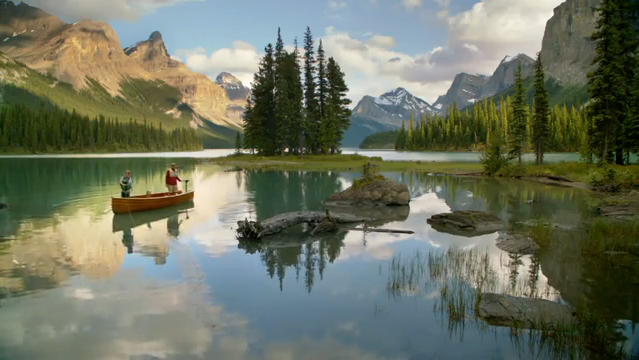
Breathtaking Alberta, Canada
Shot on location throughout Alberta, Canada, this promotional video shows off beautiful Alberta. Didn’t know much about Alberta before watching this video, but now thinking it’s worth a trip. Apparently this is one of many promotional commercials. Time to wade through the rest.
-
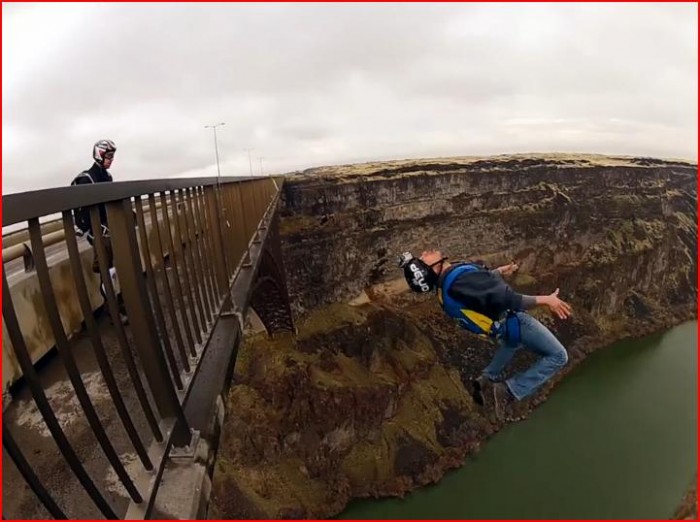
“10 Days of Sketch” BASE Jumping Trailer
Ladies and gentlemen, meet the Seattle BASE Clan, a group of BASE jumpers out of Seattle, Washington. They’ve got some gnarly videos over on their Facebook page. This one features jumps in Twin Falls, California and Moab.
Show them some love!
[Submitted by W. Hayes Holman]
-

8 of the World’s Most Gut-Wrenching Rallies
Ian is a 20-something adventurer and explorer participating in the Inca Rally this August.
##
In a time when dedicated race tracks didn’t exist, and paved roads were rare outside of city limits, rallying was the only way to race from point A to point B; and that’s exactly what racing enthusiasts did. In 1894 for example, the challenge was to get yourself and your car from Paris to Rouen, 79 miles. The winning car completed the time in 6 hours and 48 minutes with an average speed of only 11 miles an hour.
And there it was, the birth of the first rally.
For today’s thrillseeking adventurists, the premise is still the same: get your car, driver, and navigator from one place to another as fast as you can. You may have heard of such world-class rallies as the Dakar and WRC, but did you know about these 7 alternatives for the gut-wrenching traveler?
Peking to Paris
[youtube id=”DB6wVqTIgIc” width=”600″ height=”350″]
The first ever trans-continental rally was held between Peking and Paris in 1907, an epic challenge between a Prince and a Pauper. 5 cars set out from Peking, and 4 made it to Paris. They set out to prove that man and machine could go anywhere. Fast forward 90 years, and the Peking to Paris rally has been running ever since 1997.
What makes it different? Classes of cars range from 1920 right through to 1975. A 33 day adventure driving vintage and classic cars half-way around the world through some of the most remote scenery on earth.
Dates: 28 May – 29 June.
Entry Fee: Contactfor an information pack.Budapest-Bamako
[youtube id=”77KteGA_Uaw” width=”600″ height=”350″]
The Dakar may have been moved to South America (in 2009) due to security threats in Mauritania. But the Budapest-Bamako keeps the trans-Saharan driving adventure alive. The route takes you from Hungary through Austria, Italy, France, Spain, Morocco, Mauritania, and Mali before reaching Bamako.
What makes it different? A charity rally for those who’ve dreamed about the Dakar, Africa, the Sahara and hitting the open dirt under extreme circumstances. It’s a minimal assistance event, and there’s an adventure (touring) and competition (race) category. A two week drive in hostile terrain.
Dates: 25 January – 13 February.
Entry Fee: Variable, depending on entry date and category.Press Kit: Download Here
Mongol Rally
[youtube id=”4VwacRktz2c” width=”600″ height=”350″]
Organised by The Adventurists, the Mongol Rally is a 10,000 mile race from the Goodwood Circuit (UK) to Ulaanbaatar (Mongolia). There is no set course, you choose whatever path you like. Some teams choose the southern route (Turkey, Armenia, Iran, etc.) and others a northern route (Ukraine, Russia, Kazakhstan). The ‘unroute’ brings a whole new twist to the race. Picking the course is like being dealt a hand in texas hold em poker, you don’t know what you’re going to get but you have to keep on playing. Driving over mountains, across deserts, and through some of the planets more remote terrain.
What makes it different? The Mongol Rally has rules: tiny cars (1.2L or 125cc bike), under 10 years old, unsupported, with some of the profits going to charity.
Dates: 13 July – 24 August.
Entry Fee: £714. The Mongol Charity Rally, a cheaper alternative, and a pure charity rally.PutFoot Rally
[youtube id=”LGQOcavGaAM” width=”600″ height=”350″]
“7 Countries, 7 Checkpoints, 7 Parties, 7000km in 17 Days!” The Put Foot Rallyis for those who see themselves as explorers, unafraid to chart the uncharted, unfazed by running out of petrol or losing a tyre… in the middle of a pack of lions or herd of elephants. This adventure is for those who listen to the Garmin and Tom-Tom girls solely for their sexy voices.

What makes it different? The PutFoot Rally has checkpoints along the way. The route can be determined by your race team, but for talk you into a common route, they have these 5 checkpoints (parties) including South Africa, Zambia, and Malawi.
Dates: 20 June – 6 July.
Entry Fee: 14,000RandCentral Asia Rally

Organised by The Travel Scientists , the Central Asia Rally is a road race from Budapest to Tajikistan via the Ukraine, Southern Russia, Kazakhstan, Uzbekistan, and Afghanistan. An unsupported rally where you drive whatever you like, with optional participation in charity projects along the way. 18 days and 8,000 kilometres.
What makes it different? There are no vehicle rules, and 3 race categories: Competition (GPS scavenger hunt), Touring (explore the route at your own pace), and Extreme (vehicle over 25 years old).
Dates: 26 May – 12 June.
Entry Fee: Variable, depending on entry date and category. The Silk Road Race, a cheaper alternative, and a pure charity rally.The Inca Rally
[youtube id=”cWPTleyI6TU” width=”600″ height=”350″]
The Inca Rally is a new contender on the rally scene. Another charity rally. 8,000km from Peru to Guyana following in the steps of the legendary tale of El Dorado. No support crew, and more-often-than-not no GPS. Along the way, racers will climb vertiginous Andean peaks, cruise through vast plains, bask in the Caribbean sun and plunge into the Amazonian basin. There is no official route – just parties, events, and charity visits organised in each capital for the drivers who make it that far.
What makes it different? The adventure begins in Lima, where your haggling skills will be tested as you try to find the best possible machine that your limited pesos can buy. You may break down in the middle of nowhere and the closest spanner may be a lama ride away. You may decide to take a detour and end up in a peculiar rural festival for a few days. Or you may discover new routes that were not on the map. That is the beauty of the Inca Rally; you never really know what could happen.
Dates: 1 August – 21 August
Entry Fee: £200Alcan 5000
The Alcan 5000 deserves a mention simply because of the sheer toughness of the event. It’s the oldest, coldest winter road rally in the world. The rally route starts in Kirkland (Seattle) and heads north through Canada to Alaska where it finishes up in Anchorage. 4,490 miles of mostly snowpack, ice, falling snow and blowing snow. A competitive adventure that rewards experience, good judgement, consistency, reliability, and resourcefulness.
What makes it different? Didn’t I say that already? The oldest, coldest winter road rally in the world. Over 90% of the route is scenic touring, scoring is in short sections with equal penalty for early or late arrival.
Dates: 18 August – 26 August
Entry Fee: $2,900As you may have noticed, not all rallies are created equal. Some race simply for the thrill of adventure, some for profit (with a charity element), and others are pure charity rallies. You want adventure and excitement? Pull a team together, pick one of these multi-country rallies, and get out there!
-
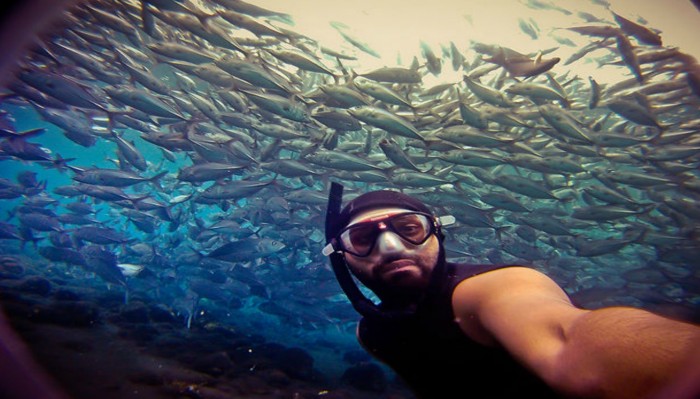
Freedive The World
Based out of Bali, Nerve Rush reader Trevor is an avid Freediver (underwater diving without scuba gear), and GoPro enthusiast. After shooting this on his GoPro Surf, he sent it in and we just had to post it. This goes great along with his Freediving guide, so if you’ve wanted to get started in freediving, there’s never been a better time than now.
-

How James Cameron Voyaged 6.83 Miles to the Ocean Floor
It was very lunar. a very desolate place, very isolated. My feeling was one of complete isolation, from all of humanity.
James Cameron, we salute you.
On March 26th, 2012, Cameron completed what is now the deepest solo-man dive in world history. 6.83 miles to the bottom of the ocean. With 30+ deep-sea dives to the Titanic and 7 years of preparation for this particular voyage, Cameron was no stranger to the open ocean — check out this clip to hear him wax philosophical on his experience.
[youtube id=”OX8cTtOEEyI” width=”600″ height=”350″]
The Challenger Deep, 6.83 Miles Down
 The Challenger Deep is a small, slot-shaped depression of the Mariana Trench, the world’s deepest canyon, situated about 200 miles southwest of Guam in the Pacific Ocean. The descent in Cameron’s proprietary bullet-shaped submarine took 2 hours and 36 minutes, and while the vessel was designed for a 6-hour trip, the mission was cut short a couple of hours in when a hydraulic fluid lead obscured Cameron’s view. It only took 70 minutes to ascend.
Cameron spent more than 3 hours drifting along the Challenger Deep, an alien-esque, desolate landscape more than 50 times grander than the Grand Canyon.
Armed with tools like a robotic claw, “slurp gun” and sediment sampler, Cameron collected samples. Video footage was captured via an 8-foot tall tower of LED lights.
When Cameron surfaced, he was unable to fully extend his arms and legs for hours.
A half-hour special, James Cameron: Voyage to the Bottom of the Earth, is running on National Geographic and showcases Cameron’s expedition.
-
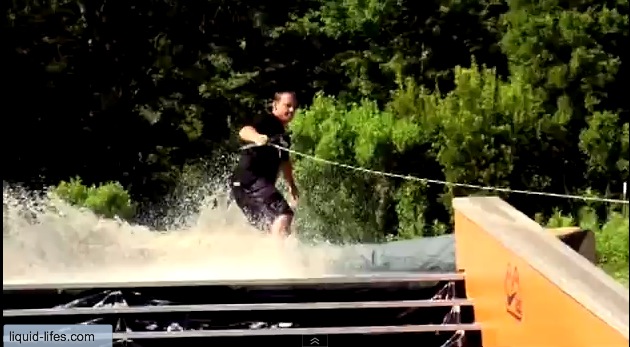
NIKE 6.0 Athletes Ben Horan, Andrew Pastura, Matt Manzari and Nick Taylor Go Wakeskating
A longer video than usual today on Nerve Rush, but it’s well worth it. Nike athletes Ben Horan, Andrew Pastura, Matt Manzari and Nick Taylor try out their wakeskates on film and capture some sick footage. Kick back, hit play and enjoy.
-
![Kona Ironman World Championship [Race Profile]](https://www.nerverush.com/wp-content/uploads/2012/04/Ironman-Run.jpg)
Kona Ironman World Championship [Race Profile]
Swim 2.4 miles! Bike 112 miles! Run 26.2 miles! Brag for the rest of your life! – The Ironman Motto
Introducing, the Kona Ironman World Championship.
The coup de gras of the triathlon. The pinnacle of the
sport. But how did this insane test of endurance come about? We’re so glad you asked.
The Start

It all got started in 1978. In Oahu, Hawaii, following a running race, a debate broke out between endurance swimmers and runners. Who was the better athlete? Both slides remained unflinching. Meanwhile, someone claims that cyclists have the highest VO2 output (a measure of cardiovascular endurance).
A challenge was born. Navy commander John Collins suggested that a combined race could finally settle the argument once and for all. As a result, the 3 longest distance races on Hawaii at the time were combined into an epic endurance race:
- The Waikiki Roughwater Swim (2.4 mile / 3.86km swim)
- The Around-Oahu Bike Race (115 miles / 185.07km bike)
- The Honolulu Marathon (26.2 miles / 42.195 km run)
Collins recalls saying;“The gun will go off about 7 a.m., the clock will keep running and whoever finishes first we’ll call the Ironman.”Because the race needed to have consecutive legs, the bike race was shortened 3 miles to 112 miles so it would end at the marathon starting line. This meant the official distance for the first Ironman race ever was a total 140.6 total miles – and it’s been the same ever since. Whew! 12 people–including Collins–competed in that first race and Gordon Haller, a taxi cab driver at the time, crossed the finish line first and became the “original” Ironman with a time of 11 hours, 46 minutes and 58 seconds.

The race was held on Oahu until 1981, when it was moved to the Big Island of Hawaii where it now has its namesake of the “Kona Ironman.” The lesser populated island has proved to be an infamous location, daring athletes to brave 45mph crosswinds and 95 degree heat. The Kona Ironman is truly the ultimate test of endurance.
Kona Ironman, Memorable Finishes

Julie Moss 1982
Named one of the most defining sports moments of sport by ABC Sport, Julie Moss’s Ironman finish in 1982 shot the sport of triathlon into the mainstream. With just a few minutes of televised footage, Moss turned a fringe sport into an international competitive sport. So what was so extraordinary about this? Moss was a 23-year old physiology student racing as part of a research experiment and surprisingly found herself out in front of the women’s course with just a few hundred yards left – her body began to fail and she could barely walk.
Unable to keep moving forward on foot, Moss dropped to her knees and began to crawl towards the finish line. Just yards away from being done, Julie was passed by Kathleen McCarty who won the race. Undeterred, Moss, while being watched by millions, continued to crawl across the finish line where she collapsed capping off a race finish that truly has to be seen to be believed. Luckily, we have that video for you right here.
[youtube id=”VbWsQMabczM” width=”600″ height=”350″]
Sian Welch & Wendy Ingraham – The Crawl – 1997
Channeling memories of Julie Moss’s ghost, Sian Welch and Wendy Ingraham experienced one of the very similar endings as Julie 15 years later. Just a few yards away from the finish line as they were entering the final shoot, both competitors collapsed. As they struggled to get up and continue racing, they discovered their body simple had nothing left. With their ability to walk, gone, they both began to crawl towards the finish line with Wendy Ingraham pulling ahead at the end with Sian Welch right behind her. Once again, a memorable finish you have to see to fully experience.
[youtube id=”MTn1v5TGK_w” width=”600″ height=”350″]
Kona Ironman Current Records
Craig Alexander of Australia holds the current men’s Ironman course record with a finish time of 8 hours, 3 minutes and 56 seconds. Chrissie Wellington of Great Britain set the women’s course record in 2009 with a record time of 8 hours, 54 minutes and 2 seconds. Needless to say, these finishers were moving!
Qualifying For The Kona Ironman

After the incredible televised finishes and the seemingly incredible distances athletes have to cross, the Ironman entry has become a hot ticket item in endurance racing. To handle the demand, Kona race organizers developed a qualifying system. Instead of an open registration, athletes can qualify 1 of 3 ways.
- Earn a qualifying spot at a Ironman World Championship qualifying event (these can be either the 70.3 or 140.6 Ironman branded races)
- Win a slot through the Kona lottery selection program
- Win a slot through the Kona Ironman eBay auction.
If you manage to get a slot, you’ll get to pay around $750 to participate in one of the most incredible races on earth (not to mention one of the most taxing). So if you’re up for it, remember the Ironman athletes’ motto:“Swim 2.4 miles! Bike 112 miles! Run 26.2 miles! Brag for the rest of your life!”
Do you have what it takes to be called an Ironman?
___
If you’re interested in running an Ironman..it all starts with a Sprint Triathlon. While Ironman athletes might look like Superman, they all had to start somewhere. Most triathletes start out with a sprint triathlon and despite what you might think, no matter your fitness level, you can train for a sprint triathlon in just 3 months. Give it a shot.
photo credit: MACCALIVE via photo pin cc
photo credit: MACCALIVE via photo pin cc
photo credit: MACCALIVE via photo pin cc
photo credit: MACCALIVE via photo pin cc -

Greg Gasson Skydives Without a Parachute
Some people get a rush by skydiving. For those where skydiving isn’t enough, there’s basejumping. For those where that’s not enough, there’s skylining. For those where that isn’t enough, there’s
skydiving without a parachute. Say what? Yes, skydiving without a parachute. We’re all for adrenaline rushes, but this is as crazy at is sounds. There really aren’t words to describe this, so just go ahead and watch.
