Blog

  • Exclusive Invitation to Gut-Wrenching Startup, Unbucket

    Exclusive Invitation to Gut-Wrenching Startup, Unbucket

    Greetings from Nerve Rush HQ.

    It’s been a fun summer over here, what with an all-expenses paid trip to Jordan, a bridge-day at theĀ highest bungee-jump in the United States and a number of other exciting projects we’re up to. I trust your summers are as gut-wrenching and adrenaline-packed as can be.

    Live it up, folks!

    Speaking of exciting projects, check out the guys over at Unbucket, a collaborative list-making platform that enables adventurers to publish, track and check off adventure-list items.

    unbucket screenshot

    A budding startup, Unbucket boasts a super-slick interface, and the two co-founders have been fantastic with feedback so far.

    This is where you come in.

    The gut-wrenchingly awesome team at Unbucket agreed to dish out an exclusive Beta-invite code for the Nerve Rush community. Not even a few months old, the Unbucket team is looking for power-users and feedback from an audience of thrill-seekers like yourselves.

    With your direct feedback, you can make a serious difference in how this platform pans out.

    So, what do you say? Want to see how fun it is to spin up insane Unbucket lists? Want to work directly with a startup? Here’s your chance.

    Claim Your Beta Invitation

    1. Visit Unbucket.com
    2. When prompted for an invitation code, type in nerverush

    Yep, that’s it.

    Need a more compelling reason to test out Unbucket? Read the email I received from Elliot, one of the co-founders, below.

    Pay particular attention to his bullet points.

    ##

    Last month we launched a private beta of Unbucket: A collaborative list-making platform for people to plan and document things to experience with those they care about most. Our vision is to actively bring people together over continuously shared experiences, and we think the organizational and inspirational power of lists is the best way to do this.

    We’re actively looking for beta testers and wanted to reach out to the Nerve Rush community for the following reasons:

    • As a community, you are the epitome of goal setters and doers. We want to know if Unbucket fits into your life.
    • Your lists will probably be some of the most interesting ones we’ve seen yet. Part of what we strive for is to use lists to inspire others to take action.
    • We’d love to understand if collaborative lists have a place in your life versus lists focused solely on the individual.

    We’ve created a beta invite code for the Nerve Rush community (nerverush) and I invite you to email me personally (elliot@unbucket.com). We can’t wait to hear your thoughts and hope Unbucket plays a role in helping you accomplish more than you ever believed was humanly possible.

  • Female Mountain Bikers Look to Reach New Heights

    Female Mountain Bikers Look to Reach New Heights

    As both fans and competitors gear up for the 2012 Olympic Games, we are country-first. However, for three female mountain bikers, this year’s participation goes beyond the flags on their sleeves.

    Instead, it will be about leveraging their collective strengths and determination to achieve greatness.

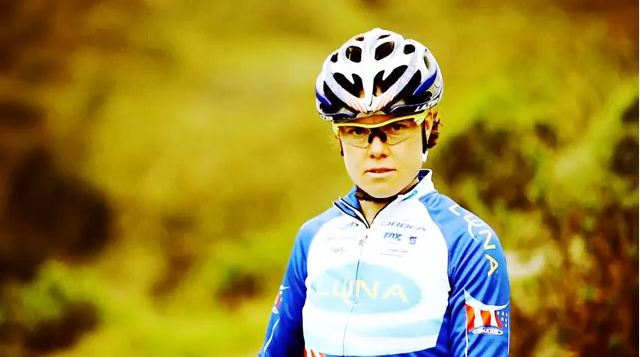
    In 2008, LUNA Chix Pro Team riders Georgia Gould for the U.S.A, Catharine Pendrel for Canada, and Katerina Nash for the Czech Republic, competed for the Gold in Beijing. Catherine, the current world champion in cross country mountain biking, finished 4th at the Olympics (by 9 seconds); Georgia, the reigning U.S.A. cross country champion finished 8th; and Katerina, a three time Olympian, did not qualify. They have come together as team members with a renewed sense of purpose that they hope will push them to new heights in London this summer.

    As this video highlights, they are ready for the quick and challenging course that awaits them. Even more so, they are excited to compete on behalf of the longest running, most successful, single-sponsor female team in the history of the professional sport. Sponsored by LUNAĀ®, The Whole Nutrition Bar for WomenĀ®, the goal of the LUNA Chix Pro Team is to inspire and motivate women from diverse backgrounds to mountain bike together. In addition to that goal, the team works closely with the Breast Cancer Fund to raise awareness on the environmental causes of breast cancer (the team will wear the Breast Cancer Fund logo on their uniforms). For Georgia, Catherine, and Katerina, these factors help push them through the finish line.

    [via Tom Channickat]

  • Learning To Kitesurf In The Dominican Republic

    Learning To Kitesurf In The Dominican Republic

    This is a guest post by Mark Lettinga, who currently lives in the Dominican Republic.

    When you were a kid did you ever wish you could fly? Ever jump off a table, porch, or house-tested the unbelievable physics of the Mary Poppins umbrella trick? What about running across water like those lizards you see on the discovery channel? Ever tried that at a friend’s pool? How did that turn out? What if I said that you can conquer both of these childhood dreams at once, would you believe me? Would you be so excited that you race back to your parents house, squeeze into those old superman pajamas and say, ā€œlets do this!ā€

    Not only did I accomplish these dreams (without my pajamas by the way), but I found that it doesn’t take super powers at all, it’s called kite surfing! The sport of kite surfing involves kiting, wake boarding, and for the advanced, some high flying acrobatics that make you look pretty awesome. I have done some limited snowboarding and surfing but as far as kites go I haven’t touched one since I was a kid at grandma’s house in 1995.

    When I first heard about kitesurfing the first of many questions I had was, ā€œwait, uh you can do that?ā€ It turns out you CAN do it and in less time that you think. All you need is some steady wind, lessons from a local kite school, and a free weekend where you can let that kid inside you accomplish his dreams.

    For the past several months, I have been living and working in the Dominican Republic (DR), and what started off as a non-scheduled weekend beach trip to Puerto Plata ended up as the beginning of my kitesurfing experience. The north coast of the DR is known for its steady and consistent summer tradewinds making it a perfect spot for wind sports. Only 45 minutes east of Puerto Plata is a world renowned place for kiting called Cabarete, aka ā€œkite beach,ā€ where you can watch dozens and dozens of people out on the water riding the wind all at the once (and where Tammy Camp set her kiteboarding world record). While great conditions for the seasoned pro, it can be real intimidating, crowded and dangerous for a beginner. If you’re looking for the same summer tradewinds as Cabarete minus the crowed beach, Kite Club Puerto Plata is a great place to learn the sport.

    During our weekend beach trip, Joel and I stumbled across a small surf shack along the beach which turned out to be a Kite Club kitesurfing school, and after a brief discussion with Fernando Suber, the owner we decided to sign up for lessons right then and there. We waited until our instructor was done with his previous lesson to say hello and get started on our training. Going into this kite boarding training I was feeling confidant yet a bit nervous because I didn’t want to fail. I usually pick things up fairly quickly and am really anxious to get up on that board and see what it feels like to be riding the wind. But like any adventure sport you need to learn the basics before you start acting like a pro or you could get into some serious trouble.

    Kitesurfing DR Kite Club

    WORD OF ADVICE: Never surf YouTube the night before you start your first lesson looking for videos like “worst crashes of _____” (plug in your favorite adventure sport here!) It makes for some great nightmares!

    Kitesurfing: Day 1

    Our first lesson started off with our instructor teaching us all about wind and how the kite should be handled in relation to wind direction. Words like “power zone” and “wind window” were used and explained. He didn’t just give is a kite and let us start flying right away (as much as I secretly wanted to), he made sure we knew about how the landscape affects the wind that you will be using to kite board. Our instructor said wind knowledge is important for two reasons; First is so that a beginner can learn how to maneuver the kite in the presence of others. Second: once a person has been certified they can travel to any part of the world and have basic understanding of how to kite safely in different surroundings, no matter where the wind is coming from.

    After the wind lesson, we started on the training kite – sounds kinda wimpy huh? But these kites aren’t the ones you flew when you were a kid at the local park – training kites can really move! After a minute or two of our instructor showing us some basic kite maneuvering, I found myself holding the reigns hoping I wouldn’t crash and burn on my first try. The wind was dying down a bit as a storm slowing rolled in which made handling the kite more difficult. I crashed the training kite several times before I got the hang of things and soon felt confident in my new found kite flying skills. An hour or so went by since we began our lesson, it was getting late and there just wasn’t enough wind to move to the next step, so we called it a day and thanked our instructor Fernando for a great start.

    Kiteboarding: Day 2

    We hit the beach nice and early the next day, excited about the possibility of getting on the board. Right away Fernando brought out a 6 meter kite that we would be using and as he took it out of the bag, he used the opportunity to teach us the very important lesson on how to prepare a kite. He had us run the lines, pump up the kite, and tighten the loops, all of which should be done with a careful eye. We learned trick of how to carry it down to the water and a quick lesson on the fundamentals of how to untangle lines. (Red always to the left!) We slipped into what looked like a big back brace with a bunch of clips attached everywhere, this in the harness which attaches you to the kite. With the bigger kite, our instructor had us first hold on to him as we were dragged though the water while he explained his actions, and then it was our turn to drag ourselves.

    At first I wasn’t that good at flying this new kite and also had trouble properly handling it while I was being slowly pulled through the water. Joel and I rotated every half hour or so to take a break and also get some coaching from Fernando. After I was able to prove I wouldn’t crash the kite, I was able to be in the water alone and work on getting a more powerful pull and maintaining a steady pace through the water. After a couple rotations and a quick burger break and the beach bar next door, I was able to not only maneuver down the beach but also successfully retrieved my fallen kite out of the water – score!.

    Like the day before, a storm was headed our way at around 4:30pm and we called it a day. We briefly talked with our instructor before we left and he told us that tomorrow we should be able to get on the board and ride. After a 5 hour day of getting dragged around in the ocean – we were excited to come back the next day and finally start looking like the pros.

    Kitesurfing Dominican Republic

    Kiteboarding: Day 3

    Right at 11am when the kite school opened, we started the day by demonstrating our new skills by assembling the kite by ourselves. Being sure to pumping it up properly, and make sure that the lines are straight and attached correctly, we had it done in no time. We hit the water to learn how to maneuver the kite up wind (yeah you can do that!) and also an important lesson on board retrieval in case you crash and need to grab your board. We used a 9 meter kite in the strong winds, and I could definitely feel the increase in power.

    Within the hour I was strapped in with the board at my feet ready to give it a go. The board I was using was a fairly large – about the size of a large wake board – and I was strapped into a 9 meter kite with the wind blowing around 12-14 mph. Sitting in the water with the instructor holding me steady, I put my feet in the straps and whipped the kite around and felt a strong pull that lifted me right out of the water. I felt a rush of adrenaline and was thought I had this kite surfing thing in the bag but I soon realized I was in for a much longer day.

    I was on my board briefly and then all of a sudden I lost speed and fell back to my seated position in the water. I heard the coaching of our instructor to straighten out my position and get aggressive with the kite, but my first run down the beach was a series of standing and falling. Several times I would lose track of my kite and let it sail all the way across the sky (big kite surfing no-no) which caused me to be pulled totally out of the water and crash in the wrong direction. It was one thing to fly a kite, but flying it while strapped to a board was a whole new game of multitasking.

    Joel and I traded turns and I got a break from the crashing while I watched him start to get the hang of kiteboarding. It wasn’t until my 5th or 6th run that I was actually able to get up on the board and start to understand what I need to do – and then it happened. I went through the checklist of things to do in my head while I locked into the kite and slowly eased into the water. With the sun in my eyes and the board at my feet, I whipped the kite down aggressively toward the water and a strong pull lifted me up and onto my board. Back and forth back and forth I worked the kite determined not lose track of it like I had before. Gaining speed I took a look around and before I knew it I was 100 meters down the beach, I was kite surfing!


    Kitesurfing Dominican Republic

    At the end of our weekend, I was pumped to have accomplished the goal of kite surfing and as an added bonus I received my IKO certification. This was just the beginning and I have a feeling there will be more kite weekend adventure to come!

    Disclosure: Kite Club Puerto Plata is a great place to kiteboard in the Dominican Republic and graciously hooked us up with a discount while helping learn to kiteboard. They’re good friends of Nerve Rush and we will be going back.

  • Big Wave Surfing with Jeff Rowley

    Big Wave Surfing with Jeff Rowley

    Jeff Rowley puts his head underwater and does what needs to get done.

    From torpedoing down 50+ foot sea-claws to extreme lung capacity training, Rowley, a professional big-wave surfer, rides waves amongst the world’s best. He is the first Australian to paddle into Maui’s nefarious Peahi “Jaws” without Jet Ski tow-in aid. This wave is considered one of the world’s biggest and most dangerous waves, and until recently it was thought impossible to catch and ride without tow-in support.

    Nerve Rush HQ was fortunate enough to catch up with Rowley between summer storm swells. Jeff, we appreciate your time here, my man! Keep pushing the limits.

    What were your favorite beaches growing up in Australia? How did you get into surfing?

    I started surfing when I was 6 years old, my parents owned a surf shop in Anglesea, Victoria, Australia, and my dad was a surfboard shaper, so I pretty much grew up on the floor of my dads shaping bay. From about 6 years of age I was on my own surfboard, but before that I was riding boogie boards in the tiny little shore break near home. I first started surfing big waves when I was about 17 years of age and I was really launched into that on the southern coast of Australia, just off Victoria. There’s a lot of reef breaks there and they catch a lot of the winter swells in really cold water, and they’re super isolated, there’s no one around, there’s a lot of cliffs and most of the time it was just myself, or myself and one other friend.

    Surfing Jaws was your Everest? Could you tell our readers more about Jaws?

    Surfing Jaws was my Everest. I spent the last 18 months with laser beam focus on preparation and training for surfing Jaws, so overcoming my fears to paddle into the wave was fulfilling my dream.

    Becoming the first Australian to paddle into ā€˜Jaws’ Peahi on the island of Maui in Hawaii on 4 January 2012 was one of my biggest life achievements. At the same time, I achieved my 2012 Charge for Charity quest to paddle into, and catch a 50-foot wave. I was going to catch that wave no matter what happened, it was massive and I was in the right position and it was my time to go for it. I stood up and the wind hit me and tried to rip my board from under my feet as I started freefalling, I couldn’t see a thing but I pushed down as hard as I could and made the ride. I was like trying to catch and ride a Tyrannosaurus Rex with your bare hands – the best thrill but you’re so glad to be alive!

    [youtube id=”nOIzWu7nFpY” width=”600″ height=”350″]

    I had to train hard, overcome a number of barriers and conquer my fears to achieve this.

    Paddling in is the ultimate challenge, it’s man vs ocean, actually it’s man vs himself. You have to constantly make decisions that will impact what happens next. For the big wave I caught at Jaws on January 30, I knew I was in exactly the right position the moment I saw it. I didn’t want to waste any energy paddling, I was under it and it was going to eat me if I didn’t make it. It was amazing to be recognized for my achievements when I placed 4th in the world in the Billabong XXL Global Big Wave Awards in the Ride of the Year category for the wave I caught at Jaws on that day.

    How do you train (mentally & physically) for big-wave surfing?

    Preparation plus opportunity equals success. I know exactly what I want to be doing with my life and I’m giving it 150%, I love it! I train hard in the pool- my empty lung holds are up to 2:23. I eat well. I’ve got 5 boards over 9’6″ because I’m prepared. At the beach I don’t psyche up, I calm down. I perform lung exercises before I paddle out that deprive me of oxygen, so my body is in a state of conserving energy. And then I have to be there on the best days to create the opportunity.

    Long hold downs are inevitable. When Im down I count seconds and spins. In the pool I get tumbled for 50 seconds, untie my leash and swim 25m on an empty lung. When you have a serious wipeout, you really lose count of spins. I’m training to make two wave hold downs enjoyable, so when it happens I wont be under pressure.

    When I’m surfing and the waves are really big, I prefer to calm down. A lot of my training is around trying to conserve my energy and making sure that I’m in a really good mental state before I go out there. If you get too excited you get too pumped up, you’re getting all your blood flowing and you’re burning all your oxygen before you even paddle out in the surf, and if you’re doing that your going to get yourself in a really heavy situation and it’s going to make you really stressed and that’s when you can get in trouble, so I prefer to really calm down, do a lot of lung exercises to prepare my body for being in a situation where it’s not going to have much oxygen and I’ve still got to be able to maintain coherence and function at 100%.

    jeff-rowley

    So there’s been a huge shift in my training and it just gives me so much more confidence in the water. So I think training is really important for me because I want to be the best in the world at big wave surfing and I want to be the best that I can be. For me to train in the pool where it’s in a controlled and safe environment you can push yourself way beyond what you thought was possible, and then when you go out in the ocean, the idea is that it’s never as bad as what you have prepared for.

    Any advice/recommended resources for aspiring big-wave surfers?

    Fear is always present but you have to refuse to focus on it. You have to leave it behind and focus on what you can achieve if you don’t hold back, if you give 150%. If you hold back the result is certain, but if you give 150% who knows what may come.

    It’s definitely just yourself out there in the water and it’s just you that has to turn around and catch the wave but, back on land you actually need the support of a whole team of people – your family, partner, friends, photographers, surfboard shapers. When you ask the universe for what you want, there is a whole world of resources that also opens up to support you achieving your goals.

    In 2012, I’m completely focused on big-wave surfing. I want to be at all of the best locations in the world on the biggest days. I’m really looking forward to surfing Jaws 50% bigger, or twice the size of what we’ve tried to paddle into. So I’ve just got my head down – under water, in the pool, in the gym every day trying to get as strong and fit as I can, and increase my breath hold. Because I’m really looking forward to pushing it out there and being the best I can be.

    ##

    Here a few places you can find more of Jeff: Facebook | Twitter | Official Website

  • M4L Training [Parkour Session]

    M4L Training [Parkour Session]

    Anthony Grosso sent us this video of his Parkour crew, kicking it in at Hillcrest Park in Fullerton, California on April 14th 2012. From the looks of it, their group, Movement 4 Life, is trying to open up a Parkour gym of their own. Parkour training, anyone? After watching this video…sign me up.

    via AnthonyGrosso

  • Skydive over Wadi Rum with Skydive Jordan

    Skydive over Wadi Rum with Skydive Jordan

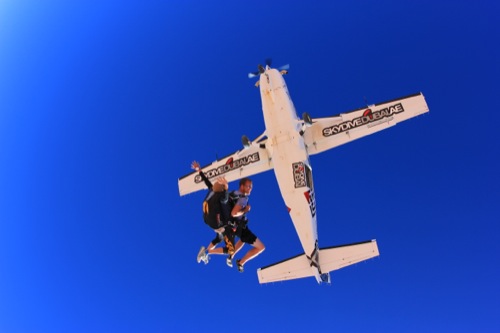
    As Lead Adventurer here at Nerve Rush HQ, I recently took off for a week to experience adventure in Jordan as part of a partnership with the Jordan Tourism Board. One of these incredible adventures was skydiving over Wadi Rum (the valley of the moon). While practically extraterrestial, we’re still debating internally whether we can include this on our top 7 places to skydive on each continent (does the moon count as a continent?). Anyways, between finishing my jump on the moon (which, by the way, is every bit awesome as it sounds) I sat down with Marwan Atalla, director at Skydive Jordan to find more about the details behind this unique adventure.

    Skydive Jordan
    Experiencing Gut-Wrenching Adventure First-Hand

    Marwan, what can you tell us about Skydive Jordan, one of the most unique adventures in the Middle East?

    The Royal Aero Sports Club of Jordan (RASCJ) was established with the purpose of promoting aero sports, and enhancing the tourists’ experience in Jordan. To date, RASCJ has offered Hot Air Balloon Rides, Micro-Light flights and Ultra-Light flights. The idea of introducing Skydiving has been under consideration for 3 years, but we wanted to do it safely, and professionally. We did our research and determined that Skydive Dubai had become one of the world renown skydiving facilities in the world. We approached them, and quickly found out that they were willing and enthusiastic partners. We signed a partnering agreement for offer skydiving in Jordan for a three week period during the summer if 2012. This would be a good way to test the location and the demand. Needless to say, everything exceeded our expectations, and Skydive Jordan 2012 was a huge success.

    What makes Wadi Rum such a great jump zone location?

    There are quite a few things about Wadi Rum that make it quite special, but the four main items include:

    1. Weather

    2. Location and proximity to Aqaba (only 40 minutes away).

    3. The availability of a natural flat area for the skydiving operation.

    4. The majestic view all the way from the ground, to 15,000 feet, and back down really makes you look like you’re skydiving on the moon.

    Skydive Jordan Wadi Rum3

    I speak from firsthand experience – you treat your customers ridiculously well, from signing up to the waiting room and jumping. What is your secret?

    One of our goals is to enhance tourism. Tourism is all about service, and the experience of the tourist is a crucial part of his/her trip. Our goal is to create positive, lasting memories for anyone visiting the south of Jordan and hope that this one-of-a-kind skydive experience can add to their overall experience in the country.

    Is skydiving new to Jordan? Could you talk about your partnership with Skydive Dubai?

    Jordan did have a very small skydiving operation, but it was located in an international airport, with a very small aircraft – so it was not sustainable. In order to move to a more sustainable model we entered into a partnership with Skydive Dubai which allowed us to tap into a pool of professionals with hundreds of thousands of hours of combined experience, as well as the latest equipment, aircraft and safety systems. We operate the skydive operation now as a partnership.

    Skydive Jordan Wadi Rum4

    Could you walk through what it costs to Skydive Jordan? What kind of packages and jumps does Skydive Jordan offer?

    The backbone of our revenue is the Tandem operation, in which a customer jumps with a licensed tandem master. We charge JD 190 per jump and jumpers get videos and photo stills included in that price. The price is below market in the Middle East and Europe thanks to the sponsorship of Skydive Dubai. Licensed sports jumper pay JD25 per jump.

    Nerve Rush note: The current conversion rate is close to JD1 = $1.4US. To get US costs, simply multiply those costs by 1.4x.

    Skydive Jordan Wadi Rum1

    Any future plans? What other adventures do you guys have up your sleeve?

    We plan to do Skydiving again in summer 2013. We are also looking into parasailing and gyrocopters. Safety is our number one concern, so we deliberately take our time and study all aspects of any new aero sport before introducing it. We also have to coordinate with the Civil Aviation Regulatory Commission of Jordan, which oversees our operations.

    Thanks Marwan for sharing the gut-wrenching adventure of Wadi Rum with us first-hand. We’ll definitely be coming back! If you’re searching for Middle East adventure, check out Skydive Jordan.

  • Meet the Moment | Win Year’s Supply of CLIF Bars

    Meet the Moment | Win Year’s Supply of CLIF Bars

    Want to win a year’s supply of CLIF Bars?

    CLIF Bar is running a Meet the Moment program to invite outdoor enthusiasts like yourselve

    s to share photographs and experiences from the kind of gut-wrenching adventures you embark on. Through user interaction with their site, CLIF Bar will donate up to $100,000 to five non-profits dedicated to protecting the outdoors. For each uploaded Moment, CLIF Bar will donate $5 on the user’s behalf to their selected non-profit partner. Partners include:

    • Access Fund
    • International Mountain Bicycling Association
    • Leave No Trace
    • Surfrider Foundation
    • Winter Wildlands Alliance

    An additional $1 will be awarded every time the Moment is shared via a social networking site. Even cooler, a grand prize winner will be selected from the Top 25 most shared/liked Moments, and he or she will receive another $10,000 for a non-profit – and a year’s supply of CLIF Bars.

    How to Post a Moment

    People are invited to upload their Moment at www.MeettheMoment.com. Each Moment will include a photo and caption describing it. Once submitted, the Moment will be posted to an interactive photo gallery where people will be able to learn the stories behind them, with the goal of inspiring more outdoor adventures.

  • 13 Films for the Armchair Adrenaline Junkie

    13 Films for the Armchair Adrenaline Junkie

    What a bummer! You had an epic trip planned with some dudes or dudettes…and a wrench got thrown in the mix.Ā You still itch for more adventure. Something to get your heart pumping.

    Well, Nerve Rush is coming through this week to give you your adrenaline packed fix. Put on your diapers, boys and girls, because these flicks are so intense you may just pee your pants.

    Lets roll!

    Endless Summer

    Endless summer is known as the “ultimate surfing movie.” It follows the adventures of big wave riders as they scour the globe in search of the perfect wave. Director Bruce Bowen follows California surfers Mark Hynson, Robert August, and himself as they ride waves with sharks in Australia, step into liquid in West Africa, the clear waters of Hawaii, and the tropical paradise of Tahiti. With essentially their surfboards as all the luggage they need these three friends embark on an epic quest to find the perfect wave all the while embracing different cultures, people, and growing up a bit while traveling the globe.

    Endless summer also features one of the greatest soundtracks you will come across.

    “You can’t tell how good a wave is until you actually ride it.

    Crank

    This film outlines the story of former hitman, Chev Chelios (Jason Stathem) who is attempting to turn his life around. A former employer who is seeking vengeance against Ā Chev for hanging up the guns in the middle of a job has injected him with a deadly chemical that will end his days if he does not keep his heart rate from falling below a certain level. Chev spends the majority of the film ramping up his adrenaline with reckless abandonment for his body and safety in pursuit of the men that have kidnapped his girlfriend and are trying to kill him off.

    Plus, it’s Jason Stathem people. One of the worlds premiere badasses!

    “Well, I’m glad to hear that. Listen, I’ve been fatally poisoned, there’s probably a psychopath heading over there to torture and kill you as we speak, but don’t bother getting out of bed, I’ll be there in a flash… Maybe you could fry me up a waffle or something, kay?”

    Man on Wire

    Parkour, slack-liners, and high flying acrobats have nothing on Philippe Petit. In a feat you have to see to believe the 24 year old French man on August 7th, 1974 illegally rigs a high-wire in-between the World Trade Towers of New York city. As a crowd begins to grow below, Petit dances the line for over an hour. The documentary not only outlines a dramatic act of bravery and courage but also addresses an underlining theme of respect and adoration that Philippe was paying to the city of New York and the buildings themselves.

    Philippe was a somewhat misunderstood creative genius as the details, thought process, and carrying out of this artistic crime can sometimes be overshadowed by the sheer guts of the act itself. Man on a wire is consistently ranked as one of the top 50 documentaries of all time.

    Life should be lived on the edge of life. You have to exercise rebellion: to refuse to tape yourself to rules, to refuse your own success, to refuse to repeat yourself, to see every day, every year, every idea as a true challenge – and then you are going to live your life on a tightrope.

    Drop Zone

    Pete Nessip (Wesley Snipes) plays a Federal Marshall whom is escorting a criminal computer mastermind, via jet, to his new home behind bars. The plane is hi-jacked by a group of sky-diving terrorists interested in the computer nerds hacking skills and a special air-raid scheduled for July 4th in Washington D.C.

    In order to bring down the terrorist group led by a former DEA agent gone rogue (Gary Busey), Nessip must be trained in the art of Sky diving at a rapid rate. Aerial acrobatics and uncanny cinematography ensue as Nessips time is running out.

    Tid bit: Nessip is actually an anagram for the leading mans last name (Snipes)

    Ueli Steck: The Swiss Machine

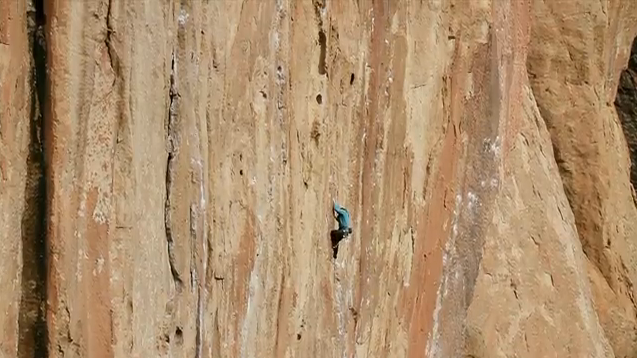
    Ueli Steck known as “The Swiss Machine” is regarded as one of the worlds best and fastest free climbers in the world. This documentary not only tells the story of Ueli and his record breaking climbs in the Swiss Alps but also shows the balance between chasing shear adventure and putting your life on the line for it. Ueli defines what Ā human potential is capable of if you go for what you believe in regardless of what society defines as possible. Not a movie to watch while you play PartyPoker in the background — it’ll be hard to take your eyes off the screen!

    Dangerous 8,000 foot climbs and stunning scenic views accompany Ulei in his quest to climb some of the worlds most difficult summits faster than anyone has ever done before. Ueli is also an avid trail runner and uses it as a big part of his training. Here he explains the difference between his two loves.

    It’s simple. You climb as fast as possible. There is one big difference from trail running. If you make a mistake, you’re gonna’ die! So, in a technical speed ascent, I never push my body to its absolute limit. That’s too dangerous. Of course, while training, I push myself as hard as I can. If you run and you get tired, you run slower. On a speed ascent, if you go over your limit, you fall.

    The Art of Flight

    The most recent film to make this list is “The Art of Flight.” This film is the snow boarding version of “Super Size Me,” in that everything is done big. Real BIG. From the shots of giant mountain ranges to the filming of snow boarder Travis Rice and friends dropping in on some of the worlds most dangerous snow covered peaks. Avalanches, injuries, and severe weather conditions add an extra element to danger to a sport that already epitomizes pushing your limits in some of the most extreme elements.

    The jumps are getting bigger. The consequences are getting heavier.


    Point Break

    Sup Brah! Point Break follows Johnny Utah (Keanu Reeves) as an undercover agent that the FBI is paying to learn to surf big waves in search of what they believe are a gang of beach bum bank robbers that disguise themselves as the ex-presidents. Gnarly surf clips, a bodacious foot chase, and one of the more memorable skydiving scenes you will ever see highlight this adrenaline junkies dream film. Plus, it features Keanu Reeves and the Red Hot Chili Peppers…. nough said.

    It’s not tragic to die doing what you love.


    The Human Spider Returns

    “The Human Spider Returns” is a short documentary in a five part series that features some of the most prominent daredevils in the world, any of which could have been included here. This particular entry in the series introduces us to urban free climber Alain Robert (our second frenchman) who is known as the “French Spider Man” for his insane climbing assaults on some of the worlds highest skyscrapers. Following him for nearly two years the film showcases some of his most epic free climbs and introduces us to the one building that has seem to elude him. The 88-storey Petronas Towers of Maylasia. Bare hands, chalk dust, and Alain’s shear nerve are the only thing that stands in his way.

    The limit that he is now searching for is a limit that is close to the limit of life and death.

    Riding Giants

    It’s a wonder how Laird Hamilton, Greg Noll, and Jeff Clark float given the weight of their balls! Along the same lines as Dogtown and Z-boys, Riding Giants not only address the culture and lifestyle of a unique sport but also the individuality and freedom that those involved in big wave riding are proud to represent. Fused in are life and death accounts of surfers tackling what would seem insurmountable odds as they battle what can only be classified and Poseidon like waters.

    What are you going to do? I’m going to the North Shore to ride big waves and find out who I am.


    xXx

    Get your mind out of the gutter people. This is the story of Xander Cage (Vin Diesel) an adrenaline junkie with no distinction between life and death. His outrageous stunts and disregard for authority land him in prison where the government soon finds and blackmails him. Hired to help bring down a Russian crime ring, Xander performs motorcycle stunts, base jumps from moving vehicles, and snowboarding tricks in an extreme sports version of James Bond.

    Yeah. Cars, boards, bikes. I like anything fast enough to do something stupid in.


    Extreme Ops

    If you’re looking for your adrenaline fix this may be it. This film has got you covered. As three extreme sport athletes travel to the Austrian Alps to film a commercial in which they are being chased by an avalanche they accidentally catch a Serbian war criminal on camera. Adventure ensues from white water rafting, big mountain skiing, extreme snowboarding, skydiving, motorcycle stunts, base jumping, and monster helicopter stunts as they try and stay alive. Extreme Ops dials it up a notch to meet all your Nerve Rush fantasies.


    180 Degrees South

    Conquers of the useless is what they call themselves. 180 Degrees South is a documentary that shows us in detail world explorer Yvon Chouinard and friend Doug Tompkins as they traveled from sunny California in 1968, to the deep edges of a world less traveled in Patagonia. American adventurer Jeff Johnson follows in Yvon’s foot steps as he traces the exact path Yvon and friend Doug took. Jeff climbs ice capped mountains, surfs unchartered big waves, rock climbs, hits white waters, and sails rough waters in raging storms.Ā Along the way Jeff discovers environmental disasters that threaten the once pure sanctuaries that Yvon encountered years before, as wells as noble heros that fight to preserve them.

    Fear of the unknown is the greatest fear of all. But we just went for it.

    I Believe I Can Fly

    Known as the Skyliners this is a film that follows a group of friends as they stare death in the face by combining BASE jumping, rock climbing, slack lining, and high wire balancing acts above mountain tops and in between skyscrapers and famous land marks around the world. There is a scence in which one of them does a handstand on the edge of a cliff thousands of feet above the earth. That should tell you enough about how nuts these cats are.

    A free man is someone who is true to himself. Who follows his dreams and turns them into reality.Ā  You have to put fear to one side, it will always be there, but you have to follow your path.Ā  It’s all possible if you put enough energy into it.Ā  A free man, to me, is someone who tries to make his dreams come true.

    BONUS: If you have kids that need a dose of adrenaline

    Got a couple of kids that like to jump from couch to couch, seem to break bones every other week, and are always in to mischief? Sit down and enjoy Surf’s Up with them .

    The story of young penguin Cody Maverick (Shia LaBeouf) from Antartica that idolizes a big wave surfing Pen Gu legend, Big Z (Jeff Bridges). Important life lessons and extreme adventure and danger ensue as Cody tries to win the memorial “Big Z surf off.”

    It’s gonna be amazing. Honestly, it’ll be the best wave of my life, and I hope the cameras are rolling because you’re gonna want to watch it over and over and over and over again. It’s gonna be awesome.

    With so many amazing armchair adrenaline junkie movies out there we surely could not get to them all. What are some of your favorites? Post to comments and lets debate.

    photo credit: Thomas Hawk

  • Electric Blue Heaven

    Electric Blue Heaven

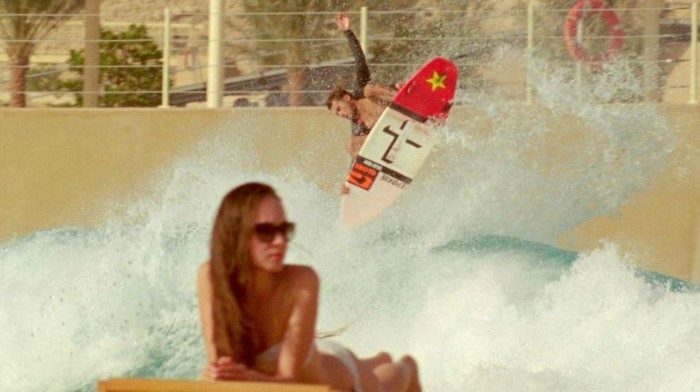
    What do you get when you take 10 Russian models, a Lamborghini, the middle of the desert and surfer Dion Agius, riding the some of the largest man-made waves in world history?

    This epic conceptual film, that’s what.

    via Grind TV and @SteveKamb

  • How I Walked Across America

    How I Walked Across America

    This is a guest post from Nate Damm who not only is a fantastic writer but, last year, spent 7.5 months walking across America. Yes, WALKING ACROSS AMERICA. I asked Nate to share some of his thoughts and images from the trip. You can reach him at Nate Damm or message him on Twitter.

    ##

    I’m Nate Damm, and from February 26 to October 15 of 2011, I walked across the United States. My route took me from from Lewes, Delaware to San Francisco, California. I walked across/in Delaware, Maryland, West Virginia, Ohio, Kentucky, Indiana, Illinois, Missouri, Kansas, Colorado, Utah, Nevada and California. I still haven’t calculated exactly how many miles I walked, but my best guess would be around 3,200.

    Training & Logistics

    My training strategy was a bit lazy, as I was living in Maine prior to the walk beginning and the winter temperatures kept me indoors. The plan was to get in shape as I went and take it slow at first. This turned out to be a good strategy, actually, and within a few weeks things were going pretty smoothly.

    Logistically, walking across a continent can get pretty tricky. Water and food sources are constantly on the mind of a walker. And on top of that, you have to find a place to sleep each night. I was on a very tight budget, so usually this meant finding a hidden place off the side of the road where I could set up my tent (hopefully) undetected.

    The Typical Day Of A Cross Country Walker

    A typical day for me would start at around 7 AM, sometimes earlier, sometimes later. A lot of when I woke up in the morning depended on how secure of a sleeping spot I had. If it was a heavily wooded area where I knew nobody would see me, I’d often sleep in. On nights when I was hiding in a shed or in a small patch of trees in a residential area, it would be much earlier so I could get up and out before the sun came up.

    After waking up I would first take my tent down and pack everything up, then enjoy a relaxing breakfast. Usually this was something small that required no preparation, such as Pop Tarts and an energy drink of some kind (unhealthy, I know).

    I’d shoot for at least 6-8 miles straight first thing in the morning to get a good chunk of my daily mileage out of the way, then slow down from there. Afternoons were usually filled with many breaks and taking time to chat with anyone who was interested.

    My favorite time to walk was in the evening around dusk, so I would spend that time watching the sun set and finding a place to sleep. Once I did, I’d set up my tent and usually just sit outside and read or catch up on phone calls. Dinner was usually some sort of canned pasta, eaten cold out of the can. Cooking was just not something I wanted to take the time or energy for.

    The typical day was often not overly exciting, but that’s the way I liked it. The pace of an on-foot lifestyle is extremely slow, which definitely can take some getting used to. I grew to love it quickly.

    walking across america

    Unexpected Acts Of Kindness

    Without a doubt, the best part of the walk was the random acts of kindness that I experienced. Almost daily, and sometimes multiple times each day, complete strangers would stop and help me out in whatever way they could.

    Sometimes this was a simple conversation, others it was the gift of a cold drink or sandwich. Many times I would meet someone as I was walking down the road and begin talking to them, and an hour later I would be freshly showered and eating dinner with an entire family, then spending the night in their guest room.

    One of my favorite memories of kindness from the walk was from a day in West Virginia. It was around 30 degrees out, and snow was forecasted for the quickly approaching night with temperatures dipping down to 15 degrees. After a 20+ mile day I was cold, exhausted and nervous about camping in such cold weather, as my gear was not meant for temperatures that low. As I was heading out of town to find a place to camp in the woods, I heard a shout from the house to my left. A raspy voice yelled out, ā€œHey! Ya want some cookies?!ā€ I could not see the person who was shouting to me, but yelled back, ā€œHell yes I want some cookies!ā€ A man stepped out into his driveway and invited me in, then after talking for a while said I could sleep in his guest room for the night. He took me on a driving tour of the area, including a visit to the farm he grew up on, which was nestled deep in the West Virginia hills on a long dirt road. It was an amazing place that still had water gravity fed into the house from a spring in the hills. He then cooked me one of the most massive meals I’d ever eaten in my life. I woke up the next morning to fresh snow on the ground, feeling quite glad that I hadn’t woken up in it and had made a great new friend in the process.

    In Nevada, I randomly met a guy named Rick, and we started talking about life on the road. Earlier in his life he had spent 9 years living in his truck, traveling all over the U.S. and Canada. He put 600,000 miles on his Ford F150 during that time and went wherever he wanted. It was a nice conversation, but eventually we parted ways as I had to continue West.

    The next day a truck rumbled up next to me, and it was Rick. He was ready to help me out with car support and camp with me for a few days. Over the following few days Rick traveled with me, would give me water and food every 5 miles or so and then camp with me at night. I learned that he had been a POW in Vietnam, where he was also wounded. He escaped from the POW camp to safety, which was a story that was intense beyond anything I’d ever heard. Around our nightly campfires he shared stories from combat that blew my mind and brought tears to my eyes on several occasions.

    He was a cancer survivor, and had also been in a coma for 2 ½ months after suffering a stroke. He had once been given 6 months to live because of a brain tumor, but opted for a very risky surgery which ended up working. Rick was the toughest and most interesting person I’d ever met. One night he told me, ā€œI’m losing my vision, so every night I sit out and watch the sunset. I could lose my vision anytime. I’ve soaked up everything I can, my whole life’s been that way.” Eventually Rick needed to head home, and I needed to prepare myself for my final state border crossing into California.

    As he hopped in his truck, Rick looked at me and said something I’ll never forget, “Remember, there’s no end to the adventures unless you put an end to them yourself, you control everything, keep going.”

    The hospitality I experienced and stories I heard throughout the walk far exceeded any expectations I had prior to hitting the road.

    walking america

    The Final Stretch

    The last section of the walk was bittersweet. I was excited to see friends and family after a long 7 ½ months on the road, but nervous about what would come next. Walking was the only thing I’d really enjoyed doing in my life up to that point, so I knew it would be a tough adjustment when the time came to settle back into a somewhat normal lifestyle. I did my best to enjoy every moment as much as possible as I wound my way out of the Sierras, through Napa Valley and toward San Francisco.

    The final day was a whirlwind and went by quickly. Joined by a fantastic group of friends and family, I made my way over the Golden Gate Bridge and along the rocky coast on a beautiful hiking trail. Before I knew it I was walking through one final neighborhood, down one last hill and then found myself standing in sand. I approached the ocean in front of me slowly and rather calmly, but once my feet hit the water I was struck by the magnitude of what I’d just done. I was a bit more emotional than I’d care to admit, but it was a wonderful moment.

    walk across america

    What I’m Doing Now

    I’m currently living in the great state of Maine. I spend most of my time these days walking (of course), spending time with friends and working on projects like Gadlr and other geeky Internet stuff. Most of this upcoming summer will be spent living in my Subaru and exploring new places, while also visiting many of the people who helped me last year on the walk, which should be a blast.