Tag: rock climbing

  • 5 Must-Have Apps for Rock Climbers

    5 Must-Have Apps for Rock Climbers

    We may head to the crags to unplug, but there’s no doubt that a little technology can go a long way toward your success on the rocks. Maybe you need a guide, or a few creative knots in your back pocket (figuratively and literally), or maybe you’re after a spot to pitch your tent. No matter which you’re after, here are five apps no rock climber should leave home without:

    The Mountain Project
    Screen shot 2014-09-29 at 9.36.49 PM

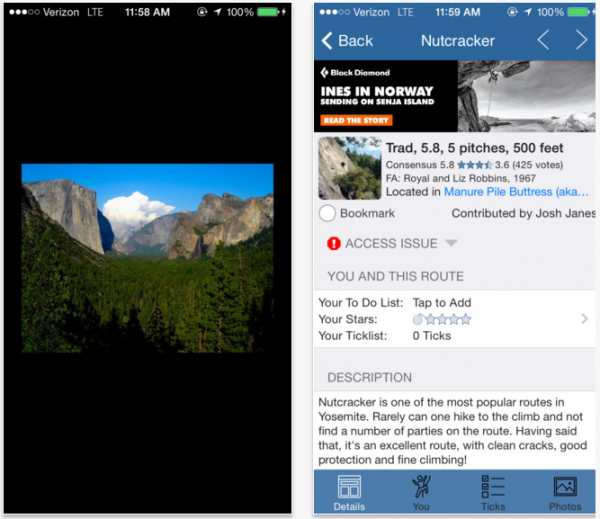
    The Mountain Project has long been acknowledged as a leading app for finding the best routes. The app is essentially a digital climbing guide that fits in your pocket. While the app definitely has a few bugs to work out, compared to the website, the developers have done an excellent job of creating a platform where climbers can share the routes and problems in areas around the country. Because of its widespread user base, major climbing areas are covered well and only continue to grow as more people use the application. It also divides climbing spots into type of climbing, along with grade, making it a step above many other digital climbing guides on the market. The Mountain Project is easily one of the widest spread, most used climbing networks.
    Price: Free

    KnotGuide
    Screen shot 2014-09-29 at 9.35.13 PM

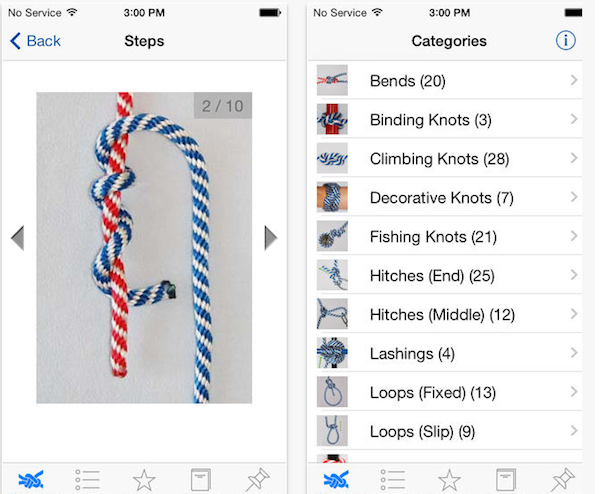
    Setting up anchors? Tying into a climb? Download KnotGuide. The beauty of setting up anchors is the creativity that goes into it. Depending on the equipment you have and trees and boulders you have to work with, there are countless ways for you to tie in. KnotGuide expands that creativity by increasing your knowledge of knots. Look up ones you’ve heard of or browse new knots. Either way, you can expand your climbing capability by increasing the flexibility of your anchor setting skills.
    Price: Free

    REI

    Screen shot 2014-09-29 at 9.33.26 PM

    In a pinch where you’re stuck on a climbing trip and suddenly realize you need more gear? REI has one of the most advanced outdoor adventure shopping apps out there. Not only can you find the closest REI to you, but you can do your research. Read up on the favorites of the nuts, ropes or shoes that you’re after, but not based on REI’s word. The reviews on the app are written by actual customers. Plus, REI’s return policy remains unbeatable.
    Price: Free

    Camp Finder

    Screen shot 2014-09-29 at 9.27.56 PM

    It’s not all about sending new ascents. When you’re on the rocks, eventually you’ll need a place to stay. Camp Finder helps those who love the outdoors find camping and RV spots across the country. It includes maps, photos and price ranges, so you always know exactly what you’re getting into. The app takes a bit of time to load though, so allow for ample internet connection or extra loading time.
    Price: $3.99

    Yonder

    Screen shot 2014-09-29 at 9.30.40 PM

    Want to document your adventures on the mountains? Instagram tends to be crowded with inspirational quotes and food porn. Instaead, upload your pictures to Yonder, a photo sharing channel made specifically for the outdoor-minded. Here, you can post your adventure shots to those who actually appreciate and love the great outdoors.
    Price: Free

  • 5 Ways Rock Climbers Make The World A Better Place

    5 Ways Rock Climbers Make The World A Better Place

    Much of the focus in climbing media is centered around the great feats of talented athletes. We throw around speeds, grades and the phrase “free-climbing” to talk about triumphs in the community. What we don’t always hear as much about, however, are all of the other accomplishments rock climbers make. Being a climber means more than possessing killer strength and solid technique. For many, it also means a big heart and giving back to the community. Here’s how rock climbers make the world a better place.

    Climbers love the environment.

    leave no trace

    Like many outdoor adventurers, rock climbers care a whole lot about the place they spend so much of their time. National parks, state parks and Mother Earth in general are of great interest to many in the climbing community. Outdoor clothing company Patagonia has long been applauded for their strides toward environmentalism.  Many climbing areas and camps stick to a strict “leave no trace” policy. Sure, every now and then a climber behaves badly, but before Mother Earth can punish them, there’s usually a swift reprimand from fellow climbers.

    They spread energy.

    alex and van

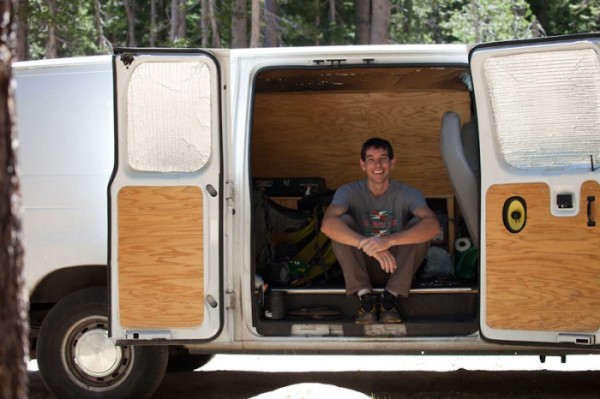
    In addition to valuing our world overall, many rock climbers have taken a special interest in renewable energy. Solar power company Goal Zero sponsors Alex Honnold, who owns and lives in a van completely powered by sunshine. His mom’s house also has solar panels, he says in an interview with NatGeo’s Adventure Blog.

    But beyond personal use, Honnold helps spread energy to those in need. The Honnold Foundation has helped support nonprofit solar projects. One included using solar power to bring residents in the Kayenta Region of the Navajo Nation clean water access.

    Climbers lead lives of health and well-being.

    sasha

    In a country where more than one third of adults are obese, approaching wellness consciously is important. And though, as a group, we may guzzle a bit too much beer and eat Ramen on the regular, overall, we care about our health (or at least live a healthier life than most without even realizing it).  Not only does climbing build solid, lean muscle, but it gets our hearts pumping from more than just adrenalin. An hour of climb time can burn more than 700 calories. All of those hours logged outside also result in a serious brain power boost, increasing memory, energy, creativity and relieving stress.

    They help at-risk youth.

    Screen shot 2014-09-04 at 6.50.03 PM

    Rock climbing has been proven to do wonders for self-efficacy, not to mention the sheer joy of overcoming fear and challenges. Organizations like Escalando Fronteras (Climbing Borders)  use this knowledge to help at-risk Mexican youth stay away from drugs, gangs and organized crime. By exposing children and teens to new opportunities that they may not otherwise experience, the organization strives to take advantage of the positive mentality that so often comes with climbing.

    Rock climbers inspire all of us.

    lynn hill

    Whether you climb or not, you can still be awed by the feats of some of the greats.  Lynn Hill paved the way for women climbers around the world, being the first woman to climb a 5.12d and the first to free-climb the Nose in 1993. In 1975, John Long had been the first to climb that same rock face in one day. Honnold climbed the three biggest rock faces in Yosemite in under 19 hours. Dave Graham and Daniel Woods eat V14s for breakfast. Climbers like these show us persistence, heart and a whole lot of badass. Climb on, guys!

  • Rock Climbing Out of Sight in Fontainebleau

    Rock Climbing Out of Sight in Fontainebleau

    One of the most popular climbing destinations on the planet with thousands of boulders strewn across hundreds of areas, Fontainebleau is a rock climbing playground. In this documentary, watch the world’s best rock climbers explore the hidden and beautiful boulders of this enchanted forest.

  • 7 Indoor Rock Climbing Gym Workouts

    7 Indoor Rock Climbing Gym Workouts

    Not all of us are lucky enough to live the dirtbag lifestyle, climbing outdoor rock on a daily basis. For those of us tied down by, you know, bills, careers, families, school or other obligations, it’s important for us to keep up — or even increase — our strength and technique at our local gyms. That way, when we hit the outdoor routes on the weekends, we’re ready to climb, send and conquer. Here are 7 indoor rock climbing gym workouts to practice at the local walls and get you ready to hit the crags.

    1. Build endurance by traversing the gym.

    indoor rock climbing training

    One of the fastest ways to build strength, technique and endurance is to traverse around the entire gym or bouldering cave. Set a stopwatch and climb. Focus on moving smoothly the entire time and continuously keep on climbing. Because you want to emphasize proper technique, don’t climb until the point of total exhaustion. Instead, work until you start to notice your hands and feet getting sloppy. Call it quits and try it again in another couple days. Remember, it doesn’t really matter how challenging the moves are as long as you’re continuously moving. Make it your goal to increase your minutes on the wall every single time you practice this traverse exercise.

    2. Grow strength on a campus board.

    Legend has it that the famous sport climber Wolfgang Gullich invented campus boards when he installed the first at his gym, “the Campus Center” (hence the name) in the late 80s. Since then, climbers have used the boards to build finger, arm and core strength by ascending and descending them using only their hands. To get started on one at your own gym, hang, with your fingertips, from the lowest slab. Engage your core and lift your bodyweight up until you’re able to grab the next slab with one hand. Repeat, using alternating hands, until you work your way to the top. If that’s too challenging, try beginning from the top and working your way down, slot by slot, in a controlled descent. Then, when you’re stronger you can aim for an ascent. As you advance, you can begin to go for longer reaches by skipping a slot or two between each grab.

    3. Perfect your hand technique by practicing weight distribution through different holds.

    One of the most important parts of climbing is knowing which holds require which type of grip and using your knowledge (and fast reflexes) to adapt quickly to new routes and problems. The Self-Coached Climber by Dan M. Hague and Douglas Hunter suggests building strength and technique on several types of holds. Some of the more challenging, yet most important holds to practice include:

    • Slopers: These are generally large holds with smooth, yet fairly gradual angles. They often require using a flat, full hand and grabbing the hold as close to the wall as possible. It can also be helpful to position your weight under the sloper, keeping it as low as possible.
    • Pockets: Named after their shape, these are often easy to grab, creating little bowls for your fingers to reach inside. However, they almost always only allow enough room for less than four fingers. The more challenging ones only fit a finger or two though. To practice these, work on your finger strength, choosing your strongest fingers to support your weight, careful to build strength in an effort to avoid injuries.
    • Pinchers: A pinch, or pincher, requires you to use your fingers and thumb in opposition, creating a claw-like grip. Because fingers are often stronger than a single thumb, try to position your weight across from your fingers so that they are forced to bear most of the weight through opposition.
    • Crimpers: Crimpers are tiny, horizontal notches in the rock, with a small ledge just big enough to fit your fingertips. They’re usually cut at a 90-degree angle. Because it can be tough to hold your entire weight on only your fingertips, try practicing these by laying your thumb flat across your fingertips, pressing down to provide extra security and strength.

    4. Get into some fancy footwork by climbing without your hands.

    One of the most common mistakes beginner climbers make is trying to drag themselves up the wall with their arms, not realizing that focusing on footwork creates a more efficient use of energy. But you don’t have to be a beginner to work on improving the way your feet climb. One way to force yourself to really focus on your lower half is to climb with a tennis ball in each hand, rolling along the wall. This way, you can still lean and balance against the wall, putting weight in your hands, but your feet will have to do all of the fancy work. Focus especially on using your toes, the most flexible, and therefore versatile, part of your foot.

    5. Run.

    rock climbing workout running

    Even if you’ve never logged more than a couple miles in your life, running can help improve your climbing endurance. These days, most major gyms offer a treadmill or two, along with some free weights, so take full advantage of these amenities! If you’re a total beginner, start out by setting small goals for yourself or even doing a combination of running and walking. Hate pounding along on a treadmill? Ditch your gym for the great outdoors and feel the wind in your hair and the pavement (or even better, trails) under your feet.

    6. End your climbs with pushups.

    rock climbing pushup training

    All of that pulling yourself up the wall can be exhausting on your muscles, so, according to instructors at Earth Treks in Maryland, it’s important to end your climbing workout with the opposite motion. The perfect opposite to pulling? Pushing. Not only are pushups great for your arms and legs, but they’ll work your entire core, which is vital to becoming a stronger climber. It doesn’t matter if you can do five or 50. Challenge yourself, power through and end your climb session on a high note.

    7. Get your yoga on.

    rock climbing yoga workout

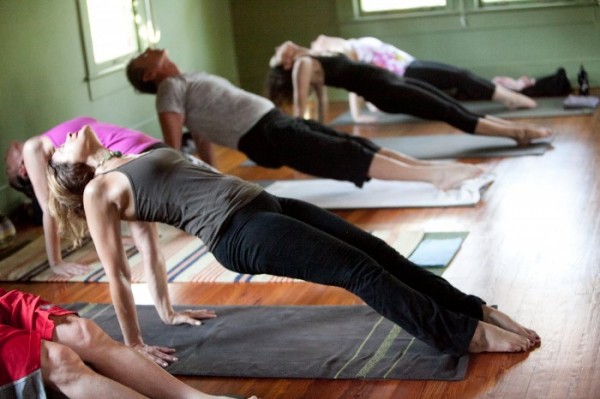
    Yoga helps climbers increase flexibility, build strength and work on their mental focus. That’s why more and more gyms are starting to offer classes to their members. Sign up for a class, enjoy yourself and try to practice at least a couple times each week. Namaste to that!

  • Dean Potter Talks Death

    Dean Potter Talks Death

    Mark Coleman, the Prana mindfulness ambassador, meets with Prana’s top athletes to understand their top game. In this session with Dean Potter, they both chat about death. Potter, one of the world’s most iconic adrenaline athletes, has a unique perspective on the topic.

  • 7 Best Beginner Places to Rock Climb Around the World

    7 Best Beginner Places to Rock Climb Around the World

    There’s nothing like the feeling of fresh air, the beating sun and rough rock under chalked hands. But you don’t have to be Alex Honnold to enjoy some of the best crags in the world. Whether you want to jet overseas or stay put near your hometown, odds are there’s a good fit for you in one of these seven best beginner places to rock climb around the world.

    7. Frankenjura, Germany

    Don’t let its reputation for challenging sport climbing fool you. Frankenjura has over 8,000 established routes, including nearly 300 graded under 5.9. Known for its pocketed limestone and variety of route lengths, there’s a little something for everyone in this land of crags and picture-perfect forests. Beginners can fool around, build up technique and pick up some knowledge by watching the experts go hard on their down time.

    6. Red River Gorge, Kentucky, U.S.

    Some of the most popular climbing spots in the country aren’t necessarily the best for beginners. The East Coast Gunks, for example, is filled with trad routes, many of which are multi-pitch.  Seneca Rocks has a bit of sport climbing, but is still made up of almost solely traditional routes. Red River Gorge, however is about 2/3 sport climbing. The area saw a surge of traffic in the ’90s, which was when many of the bolts were put into place and continued to grow. While it’s a safe bet that newbies will run into some serious climbers at the Red, every weekend during the on-seasons the place is packed with a wide variety of levels, beginners included.

    5. Wye Creek, Queenstown, New Zealand

    Wye Creek sits just outside of Queenstown, the “adventure capital of the world,” and is home to an annual climbing festival each January. While mostly sport, Wye Creek offers a gigantic bang for its buck. Set on a cliff overlooking a bright blue, glacier-fed lake, even a short and simple climb feels like you’re on top of the world. The climbs are satisfying, and doable for beginners, but nothing beats the view.

    4. Boulder Canyon, Colorado, U.S.

    There’a reason that Boulder breeds so many serious climbers. The state offers an abundance of climbing options, meaning they’ve got a fair share of easier routes mixed in with the more challenging ones. Boulder Canyon features over 400 routes graded 5.9 and below, not to mention nearly 200 spots to set up a toprope anchor, for those not yet comfortable with sport or trad. Plus, it doesn’t hurt to kick back and enjoy Boulder’s killer beer scene after a hard day of climbing.

    3. Railay, Thailand

    railay beach rock climbing For those who are new to the sport, Railay, Thailand offers one of the most exotic places that still has a fair share of beginner routes. The pocket of paradise, accessible only by boat, features soaring, dramatic cliffs over the sparkling, blue water that surrounds the tiny island. With thousands of routes to choose from, a beginner is bound to find more than a few right up their alley. To make matters easier for climbers not yet comfortable with trad, nearly half of the routes in Railay are already bolted, making it simple to clip in and climb or boulder right over the water, where the warm waves will catch your fall.

    2. Yosemite National Park, California, U.S.

    Yosemite is known around the world as one of the most magical places to climb. With gigantic domes and magnificent cliffs, driving toward the park’s tunnel feels a bit like entering a different time. Thousands of climbers sweep through Yosemite’s granite each year, speaking different languages, living out of vans, tents and cabins and enjoying their sport in what’s arguably the climbing mecca of the world. And the park’s history is as rich as its climbs, including the famous Camp 4, a campsite-turned-climbing-classroom that bred some of the greatest stone masters of all time. Yosemite National Park is well worth a visit for any beginner, even if only to soak up some history and observe the greats.

    1. Your Neighborhood Gym

    The truth is that if you’re very new to the sport, it’s typically not safe nor practical to head outdoors right away, unless you have an experienced mentor or guide. For most people just taking on climbing, it’s easiest, safest and tremendously cheaper to start in your local rock gym. Sure, it may not be as glamorous as Thailand, Germany or Yosemite, but indoor climbing is a solid way to quickly build strength, technique and a circle of climbing buddies.

    Did we miss any? Let us know in the comments below!

  • Beautiful Climbing (and BASE Jumping) in Wadi Rum, Jordan

    Beautiful Climbing (and BASE Jumping) in Wadi Rum, Jordan

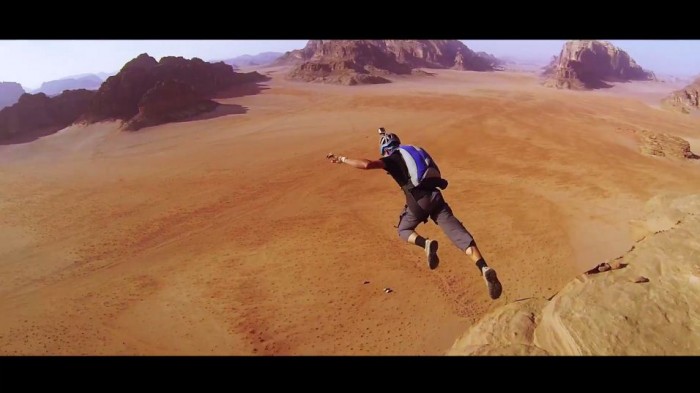
    Don’t be fooled by the hypnotic Sigur Ros soundtrack, because this video of rock climbing and BASE jumping in Wadi Rum, Jordan is as intense as they come.

  • Jimmy Chin Talks Yosemite Climbing

    Jimmy Chin Talks Yosemite Climbing

    A lot of the greatest rock climbing feats have happened at Yosemite. It’s the epicenter of rock climbing, both historically and today. Listen to Jimmy Chin talk rock climbing and share his story as a rock climber.

  • Meet Steph Davis, Female Rock Climber and BASE Jumper

    Meet Steph Davis, Female Rock Climber and BASE Jumper

    Professional climber and BASE jumper Steph Davis heads to Mineral Canyon, Utah. Watch her re-discover an old and difficult Steve Hong route, where she BASE jumps off the top.

  • Chicago’s First Big Rock Climbing Gym Set to Open This Winter

    Chicago’s First Big Rock Climbing Gym Set to Open This Winter

    Chicago’s skyline towers over any hill within a several-hour-radius- not the ideal terrain for rock climbers. Countless yoga studios, weight rooms and pools clutter the third largest city in the country, enough to satisfy any athlete, with the exception of climbers. Outside of a handful of rock walls thrown into gyms as afterthoughts, and one solid, yet tiny, bouldering room, Chicago lacks an indoor rock climbing facility. As soon as Winter 2014, this will all change when First Ascent comes to the Windy City.


    I had a conversation with three climbers who are spearheading the new gym’s launch to find out details about what we can expect from First Ascent. CFO Joe Zentmyer’s heading the gym’s financial needs, while Dan Bartz is taking charge of most of the gym’s groundwork. Jon Shepard runs general business oversight and the legal side of First Ascent. All three are heavily involved in the climbing community, along with majority of the investors backing Chicago’s first big rock gym.

    First Ascent will reside on the north side of Chicago, north of Logan Square, near Avondale, at 3500 N. Spaulding Avenue.  The new gym will offer climbers 26,000 square feet of climbing, including a main wall and 5,000 square feet of bouldering. Climbers will have the opportunities to lead, sport climb and top rope, and a fitness center featuring weights and cardio machines will be available for cross training. First Ascent will even save space for a yoga studio, where climbers can stretch and strengthen. An added café and locker rooms with showers will give work commuters somewhere to climb and freshen up before or after work.

    “There will be lots of climbing surface,” said Shepard. “With anything from beginner terrain to expert, overhanging and lead terrain.” Shepard said that it is especially exciting for all of those who head down to the Red River Gorge, the best close climbing to Chicago (and close, meaning 400 plus miles). Many at the Red encounter trouble sending new routes because of their lack of training space options. First Ascent will give those dedicated climbers a spot to train for their next big projects during the workweek.

    While First Ascent’s steep climbs and advanced bouldering will cater to the elite climbers, the First Ascent team also hopes to draw in beginners and everyone in between. Classes in safety, technique and outdoor climbing will be offered, as the First Ascent team, especially Bartz, a Teach for America alum, highly values education within the sport.

    The team behind First Ascent is also interested in expanding competition climbing in Chicago. While elite climbing competitions have gained more media hype in recent years, there aren’t as many competitive opportunities for average climbers. The opening of a large rock gym, like First Ascent, could bring attention to Chicago as a mecca for this type of climbing competition, with the potential to grow the climbing community in the Midwest.

    “The Chicago climbing community is extremely unique,” said Bartz. “Because we live so far away from real rock, you really have to be dedicated to the sport, so there’s a really supportive network here. Everyone’s down-to-earth. It’s kind of that Midwestern charm that you get a little bit too.” Bartz expects First Ascent to work with that community and grow it, giving climbing access to those who just don’t have it right now. He also hopes it will unite a currently fragmented community, divided between small gyms scattered throughout the city. “We’re excited to have a place where everyone can climb together and allow people from different climbing pockets to come together, meet each other and get psyched up for their next project,” said Bartz.

    So why has it taken so long for a solid rock gym to make it to Chicago? According to Zentmyer, it’s really tough to build one in the Chicago area. It’s challenging to find the right location and real estate situation for a building as big as a climbing gym requires, not to mention the funding to back it. A location change, moving First Ascent from the South Loop to the Logan Square/Avondale location also slowed down the project, but with the kinks worked out, the gym should be up and open this coming winter. The First Ascent team members attribute a large portion of their success to sourcing themselves directly from Chicago, the city they’re building in, surrounding themselves with the climbers for whom they’re building First Ascent.

    Rock climbers in the Windy City anxiously await the long overdue arrival of a large rock gym, like First Ascent, pulling with it the potential to put Chicago on the map in the rock climbing world.


    Photo courtesy of Walltopia