Tag: slider

  • Writing Rocks: The Story Behind Two of Today’s Biggest Climbing Writers

    Writing Rocks: The Story Behind Two of Today’s Biggest Climbing Writers

    matt samet climbing writerRock climber, journalist and former editor of Climbing magazine Matt Samet didn’t expect to become a writer. He originally started out studying geology at UC Boulder, but eventually switched to journalism. After graduating, he moved to Italy where he traveled Europe, reporting on the World Cup and sport climbing.

    Throughout it all, he battled an addiction to prescription drugs, which doctors had prescribed to him to help him cope with anxiety. The drugs affected his focus and vocabulary recall. He said his addiction hindered his writing ability because he couldn’t think coherently when he was coming off of them.

    Author John Long, on the other hand, had his own high: free soloing. Often credited for popularizing the form of climbing, Long pursued dangerous climbs in an effort to feel alive.

    “Climbing is not for everybody,” he said. “If you look at high performers doing these activities, they all tend to be people who gravitate toward intense experiences… A lot of times I wish I was like my daughter or someone else so that I wouldn’t have to do that to feel alive.”

    Long documented his free soloing experiences in one of his most prized pieces, the Stonemasters. The book depicts the dangerous climbs of famous adventurers in the 1970s. Published in 2009, the work took the Banff Film and Book Festival’s Grand Prize in 2010.

    Unlike Samet, Long comes from strictly a literary background, rather than a journalistic one. That’s never stopped him, however, from filling even his fictional tales with very real stories.

    “I don’t dream up some kind of thing and then go out and try to find an experience so I can write about it,” said Long. “I have always used a construct of fiction to write nonfiction stories, which is one of my tricks.”

    Long modestly credits his success as an author, as well as his free solo legacy, to the small amount of competition. He believes that because there weren’t many writing about climbing, and virtually none about soloing at the time, his work quickly rose to the top.

    “I’m not a journalist. I didn’t grow up studying journalism. I don’t do fact and figure stuff. I’ve always been a narrative writer,” said Long. “Literature is about experience and I always wrote from that perspective. Because I was one of the only guys doing that, I ended up being real popular. Not because I was any better, but because there wasn’t really anyone else.”

    Because of its small size, some question the quality of writing within the climbing community. While Long believes that quality adventure writing does exist, he doesn’t think that there’s an overwhelming amount of it.

    “The industry can’t support it [adventure writing],” said Long. “One of the reasons that I think I won so many awards on this stuff is because the bar’s so low.”

    Samet believes that it’s less rare to have both a strong climber and a talented writer. He knows many outdoor writers who are also trained journalists.

    “I certainly have put energy into both climbing and writing,” he said. “There are so many variants [of skill levels] that it’s hard to say that people are climbers first and writers second…I think that there’s plenty of education out there.”

    While his earlier work leans toward more technical writing for engaged climbers, Long’s most recent pieces strive to capture adventurous stories that even non-rock climbing readers would appreciate. The transition in his work is tied to the transition in his own life. These days, many of the people he’s surrounded by are part of the literary world, rather than heavily involved in his sport.

    “I’m trying to write that stuff for mankind, not a climbing audience,” said Long.

    Much of Samet’s work continues to cater to the climbing society. Last year, he published a climbing dictionary filled with the sport’s jargon. In Climbing Dictionary: Mountaineering Slang, Terms, Neologisms and Lingo, not only are words and phrases defined, but historical content is also thrown in. For example, for “harness” he examined what climbers did before harnesses and what the first ones looked like.

    Samet just released a memoir that documents his climbing adventures and battle against his addiction. Death Grip, a 300-page book, tells of how the author sought out risk, danger and adventure, while at the same time suffering from anxiety, depression, extreme dieting and a crippling dependency on benzodiazepines.

    “A lot of people think we have this glorious lifestyle where we jet around, and get assignments, and make tons of money, but it’s hard work like anything,” Samet said. “Even if you’re your own boss, you still need to sit down and kick your own ass at the computer when you’d rather be out playing.”

  • Perfect Getaway Final Round

    Perfect Getaway Final Round

    Argh!

    It’s the last week of our Nerve Rush treasure hunt, a Perfect Getaway challenge sponsored by Captain Morgan.

    To enter, you simply have to answer the following riddle about Captain Henry Morgan. It requires a bit of Google research. When you know the answer, post a comment at the bottom of the post.

    The mechanism used to set the prisoner free; the number of these found in the 2010 Panama excavation is this challenge’s key.

    As a reminder, here is some of the loot at stake!

    1. Osprey Men’s Aether 85 Backpack
    2. Men’s G-Shock Watch – DW6900DS-1
    3.  Jawbone Big Jambox Wireless Bluetooth Speaker
    4.  GoPro HERO3 BLACK Edition
    5.  Beats By Dre Beatbox Portable
    6.  New iPad mini
    7.  Nike+ SportWatch GPS powered by TomTom
    8.  Revo “Guide” Sunglasses
    9.  AT&T Pantech Element
    10.  ROK Espresso Machine
    11.  Apple TV
    12.  Solargorilla
    13.  Fossil Estate Framed Duffle
    14.  Kindle Fire HD 8.9” 4G LTE Wireless
    15.  Ninja Mega Kitchen System
    16. Masterbuilt – 30-inch Electric Digital Smokehouse
    17.  Samsung – 2.1 –Channel Soundbar with Wireless Subwoofer
    18.  Samsung Digital Camera MV800

    Again, what’s the answer?

    The mechanism used to set the prisoner free; the number of these found in the 2010 Panama excavation is this challenge’s key.

  • Perfect Getaway: Round Two

    Perfect Getaway: Round Two

    Argh Matey!

    We’re back in week two of our Captain Morgan Treasure Hunt, a real contest with real prizes.

    To enter this week, you simply have to answer the following riddle about Captain Henry Morgan.

    The Captain’s vessel is of great fame. The answer to this challenge is in its name.

    Got it? Let us know in the comments. As a reminder, all comments, right or wrong, are valid entries in an epic contest giveaway.

    As a reminder, here is some of the loot at stake!

    1. Osprey Men’s Aether 85 Backpack
    2. Men’s G-Shock Watch – DW6900DS-1
    3.  Jawbone Big Jambox Wireless Bluetooth Speaker
    4.  GoPro HERO3 BLACK Edition
    5.  Beats By Dre Beatbox Portable
    6.  New iPad mini
    7.  Nike+ SportWatch GPS powered by TomTom
    8.  Revo “Guide” Sunglasses
    9.  AT&T Pantech Element
    10.  ROK Espresso Machine
    11.  Apple TV
    12.  Solargorilla
    13.  Fossil Estate Framed Duffle
    14.  Kindle Fire HD 8.9” 4G LTE Wireless
    15.  Ninja Mega Kitchen System
    16. Masterbuilt – 30-inch Electric Digital Smokehouse
    17.  Samsung – 2.1 –Channel Soundbar with Wireless Subwoofer
    18.  Samsung Digital Camera MV800

    In case you need one more reminder, enter to win one of the prizes above by answering the following riddle in a comment below:

    The Captain’s vessel is of great fame. The answer to this challenge is in its name.

  • Captain Morgan Treasure Hunt: Clue #1

    Captain Morgan Treasure Hunt: Clue #1

    Ahoy!

    It’s the first week of our Captain Morgan treasure hunt. The first clue is here and daylight is ticking! So challenge your inner adventurer & start the hunt with the riddle below:

    Clue #1

    In 1668, Morgan sealed the prisoner’s fate. Atop a creature he got away, the number of which you must say.

    Watch the video below to unravel this puzzle’s answer.

    [youtube id=”ctrUY4CWocY” width=”600″ height=”350″]

    Remember, solve the mystery in the video and then comment below.

    Important: Post your answer in the comments for a chance to win some serious loot. Of course, Nerve Rush has to win the swag too, so the more you share, the better swag we’ll get to give away. The highest number of comments on this post wins & ONLY the comments left here on the Nerve Rush site count towards that total.

    Now a prepared adventurer always knows what’s at stake, so while we know there’s untold treasure in the adventure ahead, we have confirmation that if we total the most comments out of the other 10 sites hunting for the treasure, we’ll be picking at least two of the following prizes from the booty and give them away to our crew (that’s you) to help you prepare for your next adventure.

    Some of the Loot at Stake

    1. Osprey Men’s Aether 85 Backpack 
    2. Men’s G-Shock Watch – DW6900DS-1
    3.  Jawbone Big Jambox Wireless Bluetooth Speaker 
    4.  GoPro HERO3 BLACK Edition 
    5.  Beats By Dre Beatbox Portable 
    6.  New iPad mini
    7.  Nike+ SportWatch GPS powered by TomTom
    8.  Revo “Guide” Sunglasses
    9.  AT&T Pantech Element
    10.  ROK Espresso Machine
    11.  Apple TV
    12.  Solargorilla
    13.  Fossil Estate Framed Duffle 
    14.  Kindle Fire HD 8.9” 4G LTE Wireless
    15.  Ninja Mega Kitchen System
    16. Masterbuilt – 30-inch Electric Digital Smokehouse
    17.  Samsung – 2.1 –Channel Soundbar with Wireless Subwoofer
    18.  Samsung Digital Camera MV800

    Remember, solve this riddle & comment below. The captain is waiting.

    In 1668, Morgan sealed the prisoner’s fate. Atop a creature he got away, the number of which you must say.

  • Extreme Treasure Hunting with Captain Morgan

    Extreme Treasure Hunting with Captain Morgan

    Public service announcement!

    Over the next few weeks, you’ll have the chance to participate in a treasure hunt. You can win a number of goodies. Think GoPro cameras, sponsored parties and all kinds of adventure gear. Boom.

    Inspired by the real Admiral Henry Morgan, a notorious 17th-century British buccaneer, Captain Morgan is bringing real-life adventure back into their brand, launching a series of “Perfect Getaway” videos put together by an Academy Award-winning crew. Explosions, sound effects, you name it. Let’s get extreme.

    Nerve Rush and Captain Morgan are working together in a sponsored campaign, rife with REAL prizes, fame and fortune.

    Here’s how to win:

    Starting Monday, April 15th, I’ll be posting one video per week on the site. The first installment is below.

    [youtube id=”ctrUY4CWocY” width=”600″ height=”350″]

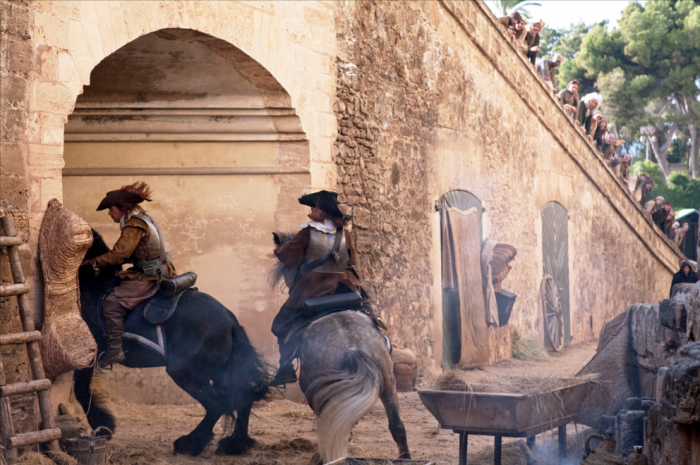
    Follow Captain Henry Morgan as he implements a strategy to rescue one of his crew members, held captive by his nemesis Don Alonzo.  Each new video will move Morgan’s adventure forward.

    In the next video installment, a clue will be released sometime during the video. Answer the clue by commenting at the bottom of the post.  That’s it. All correct answers will be considered as entries in the contest giveaway. The more comments from the Nerve Rush community, the more prizes. It’s a community effort, so bring your friends.

    Huzzah!

    If you’re interested in learning more about adventure, treasure hunting and Captain Morgan, check out their real search for buried treasure off the coast of Panama.

  • James Clear, Habit Formation and Behavior Change [Interview]

    James Clear, Habit Formation and Behavior Change [Interview]

    [youtube id=”LStBOeDAxNw” width=”600″ height=”350″]

    James Clear is a weight lifter, travel photographer, entrepreneur and former All American baseball player. James writes for a community of superhumans about what it means to live a healthy life.

    In this interview we discuss extreme sports, habit formation and behavior change. You’ll learn why eating off a green-colored plate can be a good thing, and how identity-based goal setting is the way to go.

    James put together a special page for the Nerve Rush community, full of links and resources that sync up with the topics covered above.

    Check out the link here.

  • Why Rock Climbing Should Not be an Olympic Sport

    Why Rock Climbing Should Not be an Olympic Sport

    It was a cool, July morning in the farthest eastern location of the continental U.S. and my dog and I were trapped between a rising tide and a 100-foot granite wall. Before rappelling onto the platform hovering over the water, my rock-climbing companion Marcus Basiri had convinced me that I could send the climb. He pointed out that I’d conquered higher grades on routes near our home in Boston. What my strong, agile friend failed to take into account was my crippling fear of unclipping myself 100 feet in the air to complete the final 10 feet of the route without any protection. My lack of sleep and Red Bull-induced energy were also working against me.

    Ted, my black Poodle-Bouvier mix, faced an even larger challenge. Four paws aren’t exactly ideal climbing equipment at Otter Cliffs. I decided to brave the Atlantic Ocean and swim to land, but the icy waves were too strong and cold for Ted’s 12-pound frame. Luckily, Tod, who was visiting Maine’s Acadia National State Park to lead a teen boy climbing expedition rushed to our rescue. He helped Marcus pack Ted into a backpack and teeter up the wall. Marcus’ chalked-up hands inched one over the other, grasping near-invisible ledges and cracks in the rough rock. His dark, shoulder-length hair remained secure in a low bun and Ted followed suit, keeping perfectly still. I swear he knew his life depended on it. The added weight pulled Marcus off balance, but finally, with Tod’s guidance, Ted and Marcus crawled up the wall to safety. If it wasn’t for the generous spirit of climbers like Tod at Acadia last summer, Ted may have been stranded at high tide.

    That’s the type of community that rock climbing consists of: people willing to sacrifice their afternoon to lend a hand. This type of sportsmanship is rare in a sports world often dominated by competition, prizes and rank. We read about steroid abuse, cheating and even gun violence surrounding athletes in basketball, soccer and football. Rock climbing steers clear of scandal, largely due to the laidback culture associated with the sport. Sport climbing making its way into the Olympic games risks sacrificing its tight-knit, encouraging community.

    In early 2012, the International Olympic Committee recommended wrestling be dropped from the 2020 Olympics to make way for a new sport. In September, wrestling will compete with baseball/softball, squash, karate, sport climbing, wakeboarding, wushu and roller sports for a place in the 2020 Olympics. Many climbing enthusiasts are eager to see their sport make it to the Games. Climber Adam Ondra admitted he’d compete if offered the opportunity, but plenty of climbers remain skeptical of the impact an Olympic slot would have on climbing. Those who embrace it for personal challenge, its tightly knit community or sheer adventure wonder how positive newfound popularity and enhanced competition will really be.

    Michaela Kiersch [18] visited her Chicago home gym, Hidden Peak, over 100 times in the last six months. She was training for climbing competitions such as the American Bouldering Series, the national bouldering competition, hosted every year in Colorado. In the past five consecutive seasons, Kiersch competed in three adult world cups, two adult world championships and five youth world championships, where she placed 16th in August 2012. Last year, she competed in nearly 20 competitions, including regional, national and world, at times placing just a couple spots below big industry names such as Sasha DiGiulian.

    But placing in national and world competitions is more than enough to satisfy Kiersch. Despite her success in the industry, she has reservations about rock climbing appearing in the Olympics in 2020.

    “I look at climbing as a giant family, but if it grows we won’t be able to get as close to each other because there will be so many people,” said Kiersch. “It will be about winning and the glory of being the gold medalist instead of accomplishing something great.”

    Kiersch worries that the familiar, friendly vibe of the climbing industry would fade with the sport’s Olympic acceptance. She admits the acceptance of rock climbing into the Olympics would bring the sport to more college campuses, resulting in college scholarships. Even though she’d love to pay for college with a climbing scholarship, she’s concerned that a newfound popularity would change her sport’s culture. At each competition, Kiersch and her competitors swap jerseys. This is how she makes friends from all over the world. Even the Russian climbers, whose instructors ban them from trading uniforms with other countries, have sneakily swapped with Kiersch, wanting to get in on the tradition.

    Not all rock climbers are as concerned as Kiersch about the impact of sport climbing entering the Olympic Games. Legendary rock climber Alex Honnold, whose fame for his free solo climbing and record-breaking speed has only gained momentum since he was featured on 60 Minutes in October of 2011, doubts the acceptance or denial will have much of an impact on the sport. He assumes that Olympic acceptance would bring some more mainstream media attention to the sport that’s already rapidly growing in indoor gyms. In fact, 1,000 people take up rock climbing every day at U.S. climbing gyms.

    “I don’t think that an Olympic appearance would drastically change that whole trend,” said Honnold. “It might speed things up a little bit. It might bring a bit more money to the sport, but probably wouldn’t revolutionize anything.”

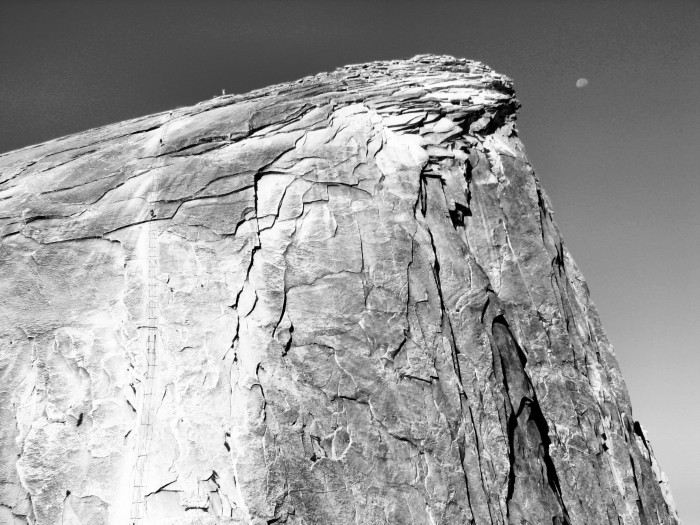
    Although Honnold’s life surrounds climbing [he dropped out of UC Berkeley to live out of his van, traveling and climbing] and he holds records like his soloing of the Yosemite Triple Crown—Mt. Watkins, El Capitan and Half Dome—in 18 hours and 50 minutes, he doesn’t consider it competitive climbing.

    “Climbing is already pretty divided between indoor competition climbers and full on dirtbag adventurers,” said Honnold. “World cup competitors in Europe play a very different game than those of us who just climb outside all the time and travel and explore.”

    Acadia, Maine Otter

    While Honnold continues outdoor climbing adventures, joining climbing bums on Yosemite’s soaring granite domes, Kiersch spends her free time training kids at her home gym, not for the Olympics, but for the pure joy of watching their accomplishments.

    “A lot of people are inspired by the grades that pro climbers accomplish, but that’s not what inspires me,” said Kiersch. “I’m inspired when these kids overcome their fear of heights, send a problem that they’ve been working on for weeks or do four chin-ups instead of three. Accomplishing a goal that they’ve set and watching them get so excited gets me excited. The pro athletes are incredible for accomplishing such high grades, but in climbing, that kind of an accomplishment is more of a personal thing.”

    Allowing sport climbing into the Olympics goes directly against the personal goal achievement that Kiersch speaks to. It risks glamorizing the sport and shifting its focus from personal accomplishment to gold medals. This type of competition may negatively impact the kind of community that’s perfectly content practicing in a dirty old basement bouldering gym. It may even take some of the generosity out of climbers willing to sacrifice an afternoon of their favorite activity to save my dog Ted from a high tide. Do we really want to risk changing a sport where the champions are known for their encouraging words, generosity and pure love of the outdoors?

  • 36 Pull-Ups in 60 Seconds: Meet Ron Cooper

    36 Pull-Ups in 60 Seconds: Meet Ron Cooper

    cooper pull up world recordMeet Ron Cooper, world record holder for the most number of pull-ups in 60 seconds.
    Ron competed in Ninja Warrior last year, won a Warrior Dash and has top finishes in many local New England races. He often competes with his wife, Katie, a former All American 5K runner.

    I asked Ron to tell us a bit about his training schedule, the Guinness World Record process and his future plans.

    Ron, thanks for joining us!

    36 pull-ups in 60 seconds. Congratulations! How did you train for that?

    Thanks! I’ve been doing pull ups twice a week since high school, and usually my pull up sessions are fairly intense. Apparently the compounding effect of doing so many pull ups over such a long time was enough to sneak my name into the Guinness World Records.

    In terms of training for the record, I stuck to twice a week pull up sessions, each of which lasted about a half hour. I did and still do five to seven sets of various types of pull ups and chin ups twice a week.

    Can you walk through the Guinness World Record process start to finish?

    The process is actually a little cumbersome, which is probably why not many people make attempts. First I had to contact Guinness to let them know I was going to have a record attempt. Upon their green light that I could make the attempt, I then had to follow their lengthy instructions to insure the integrity of the attempt. First I had to coordinate a bunch of disinterested parties to help make the attempt official. I had to have two video cameras filming me from two different angles, the front and the side, to make sure my form was proper (no kipping, full arm extension on descent, chin above bar on ascent). I also needed a photographer, a timer, a police officer, a personal trainer as a judge, and some type of media coverage. Then I had to mail all my “proof” footage and signed documents into Guinness, and wait a few months for their response. Getting the certificate and the letter that I set the record in the mail was absolutely awesome. I’m just an every day guy, so to have a Guinness World Record is a lifetime achievement that I’m very proud of.

    You’re going to be on Ninja Warrior? How did that happen?!

    I still have to get on the show for this year! The audition process is going on now, and I should likely know if I’m on or not in the next few weeks. I got on last year, and got royally humbled on the first obstacle. The competition is very real, and the obstacles are insanely difficult. I’d love to get back on the course and have some redemption.

    I first saw American Ninja Warrior when I was flipping through channels one night a couple of years ago and was immediately entranced. Once I discovered that there was going to be open casting for the following season, I went into high training mode. I eventually sent in an audition video, and managed to get the invite. My wife, Katie, even got invited down to compete, so we made a family affair of it. We brought our kids down to Miami, where the filming was for our region, and had a blast. We met some great people, and competed alongside some of the best athletes in the country for obstacle racing.

    In your opinion, what are 3 things people can do to improve their fitness?

    Here are three rules I live by that if others live by they will have maximum success in fitness. Rule number one is consistency. Every morning at 5:30 AM when I hit the gym or the roads for a run I always know that 95% of the battle is just getting out the door. Once I’m in motion I know I’ll give a good effort, I always do. Consistency led me to a Guinness World Record, but most importantly it has led me to a healthy lifestyle.

    ron cooper warrior dash

    Rule number two for me is to stay within myself. It’s good to use the bar someone else has set as motivation, but at the end of the day we are all unique and have our own strengths and weaknesses, and someone will always be better. As long as I do the best I can and give it my all each and every day, I can’t be mad.

    Rule number three is to always be a student. I’m always looking for ways to improve, and never think I know everything. Learning new training keeps it fun and interesting, and leads to better gains. This is especially true with obstacle racing. Since these races really only have become mainstream since 2010, we’re all learning. There are no rule books.

    What’s on the horizon? Any races or events this summer?

    I’m signed up for several obstacle course races this summer. I love them. They are so much fun. I’m currently signed up for Warrior Dash, Superhero Scramble and Spartan Race. I’m sure I’ll do some local road races too. Nothing to get the pulse going like a race.

    I might even attempt to beat my own Guinness World Record for pull ups. I unofficially did 39 pull ups in a minute recently, 3 better than my previous record. I’d like to have my best effort be the one I put forward.

    But in the meantime, I’ll keep my fingers crossed that I can get back on American Ninja Warrior, and if so, I’ll do my best to get some revenge on the course for last year.

  • “Brett” Music Video with Big Wave Surfer Jeff Rowley

    “Brett” Music Video with Big Wave Surfer Jeff Rowley

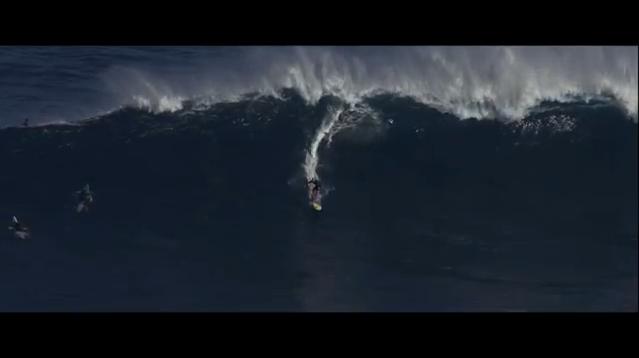
    Big wave footage from a recent session with Jeff Rowley toying with Hawaii’s “Jaws” reef break. I think the video compliments the song well, no? Song is The Soundmen – Brett.


  • Chicago Climbs Rank, Not Mountains

    Chicago Climbs Rank, Not Mountains

    Michaela Kiersch [18] stared up at the colorful holds towering over her at a 40-degree angle. Around her, kids moved with the agility of monkeys up and down the walls, swinging, falling and hanging upside-down. “Dave, I’m gonna need a spot on this one,” Kiersch shouted across the chaos.

    She dusted some climbing chalk off of her black, yoga pants while she waited for coach Dave Hudson, an up-beat man with shaggy blond hair, to saunter over. Kiersch sat down, facing the wall and placed her feet on two holds. Her callused hands grabbed a higher hold and she began to move up the wall. She ascended slowly, but consistently, crossing foot over foot, hand over hand. Her muscular back flexed under her blue sports tank as she danced with the wall, her long, blonde ponytail swinging with each reach. Hudson stepped under her, supporting her with both hands, in case of a fall, but she never faltered. She finished the route and dropped to the mat with a thud.

    Hidden Peak Climbing Gym sits in the basement of a gymnastics facility in Goose Island, Chicago. A light dusting of chalk coats every shoe, couch and person in it. It’s about the size of a one-bedroom apartment and a wet spot appears on the carpet in the far corner of the room every time it rains. It’s a rough replacement for the soaring, granite domes of Yosemite or the steep, quartz cliffs of New York’s Gunks, but Chicago offers its climbers virtually no natural rock. Even without miles of mountains and boulders, this grungy rock gym turns out climbers strong enough to win national competitions. Kiersch is one of them.

    mk1

    In the past consecutive seasons, Kiersch competed in three adult world cups, two adult world championships and five youth world championships, where she placed 16th in August 2012. Last year, she competed in near 20 competitions, including regional, national and world, at times placing just a couple spots below big industry names such as Sasha DiGiulian.

    “At competitions, while you’re competitive, you’re cheering for your competitor… almost to do better than you. You want them to accomplish things that you know are pushing their limits,” said Kiersch. “It’s a really supportive community and I love that about it.”

    Even though she prefers sport climbing for its one shot, all or nothing opportunity at competitions, she’s training for the Open and Youth American Bouldering Series Nationals, held in Colorado Springs February 22-23 and March 1-3.

    Training involves three hours, four or five days each week, often focused on the same wall for 40 or 50 moves. Exercises cover everything from timed climbing circuits to chin-ups and pushups. Hudson sets new routes for his climbers every week. For Kiersch, the most challenging part of preparing for the 2013 American Bouldering Series was keeping momentum after a draining sport climbing season that spanned from February until October 2012. Her mental and physical exhaustion contributed to a rocky start, heading into her last youth bouldering season. Despite her shaky beginning, she’s stuck to a strict training schedule and hopes to do well at bouldering nationals.

    When she’s not training herself, Kiersch helps Hudson coach the rest of the youth team. Sophie [8] and Lila [10] admire Kiersch’s ability and encouragement. Both agree that Kiersch will sweep nationals. “I mean she is the 16th best climber in the world,” said Lila. “She’s my best climber,” said Sophie.

    Kiersch credits Hudson for the strong youth climbers coming out of Chicago in recent years. He trained Isabelle Faus and Kasia Pietras, who often make climbing news for difficult bouldering sends across the country. Though she started at a different gym, she headed to Hidden Peak in 2006 in search of Hudson’s training. Hidden Peak youth climbers often outperform those from other gyms with advantages of natural rock and larger facilities such as those in Boulder, Colorado.

    “I give Dave all the credit,” said Kiersch. “Our practices are more structured than the other teams [around the country]. He always comes to practice with a game plan: something we’re going to do and a reason it’s going to work.”

    Manager and coach Hudson has called Hidden Peak his home gym for over 15 years. He started climbing after college and broke into the climbing industry, managing gyms in California and Utah before returning to his hometown of Chicago.

    “The climbing scene in Chicago is a good one and smaller than some cities, but it’s no longer ‘small’ anywhere these days with the strong growth in the sport over the last 10 years,” said Hudson who loves the size and culture of Hidden Peak, in particular. “The Peak is great because it has that old school, almost co-op feel and friendliness.”

    Despite the strong cultural environment at Hidden Peak, Chicago climbers like Kiersch are starved for natural walls. Kiersch, along with other Hidden Peak members, often drive seven hours south to Kentucky’s Red River Gorge on a Friday evening, set up a tent in the middle of night, wake up, climb, sleep in a tent again and pack it up in the morning to drive back after another half day of climbing on Sunday. “Climbing outside is a nice oasis,” said Kiersch. “You get to warm up at your own pace instead of doing drills. You give it a good attempt because you want to, not because you have to.”

    The sport has seen a recent surge in gym climbing popularity. One thousand people take up rock climbing every day at U.S. climbing gyms. This trend will likely continue if rock climbing is accepted as an Olympic sport. Kiersch also believes that the acceptance of rock climbing into the Olympics would bring the sport to more college campuses, resulting in college scholarships. Even though she’d love to pay for college with a climbing scholarship, she worries that a newfound popularity would change her sport’s culture.

    “I look at climbing as a giant family, but if it grows we won’t be able to get as close to each other because there will be so many people,” said Kiersch. “It will be about winning and the glory of being the gold medalist instead of accomplishing something great.”

    While enthusiasts rally for the sport to be the next Olympic game, Kiersch will keep climbing routes in the grungy basement gym of Hidden Peak. Even though she spends majority of her time on the same, sloped wall, Hudson habitually switches up his the routes, bringing new challenges to his Chicago team.

    “I love that the movements are different every time you climb and there’s no limit to it,” said Kiersch, sitting in her tiny, home gym that she’s come to over 100 times in the last six months. “There’s always going to be something harder to climb.”

    Kiersch took second place at the Female Junior 2013 Bouldering Youth Nationals and Isabelle Faus placed third in the 2013 Female Bouldering Open Nationals.