Author: Alan Perlman

  • Tackling Adventure with Tim Moss

    Tackling Adventure with Tim Moss

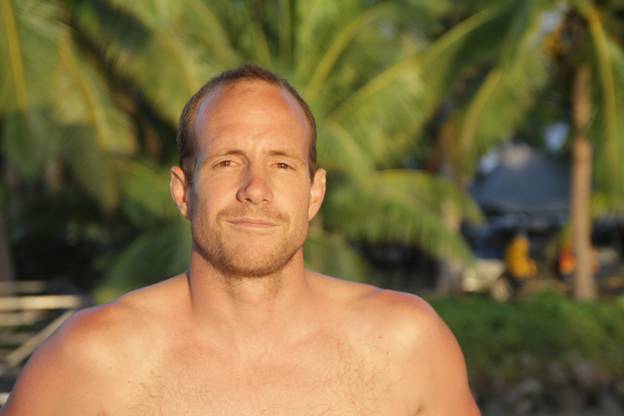
    Ladies and gentlemen, Tim Moss is a beast.

    The Nerve Rush team has spent hundreds of hours culling together extreme videos, amazing athletes and adventurers, so when we came across Tim and started poking around his site, we took a deep breath and asked, WHY HAVE WE NOT TALKED TO THIS GUY BEFORE?

    I’ll let Tim tell you more about himself, but the short story is that he runs an online portal called The Next Challenge, where he encourages people to step outside their comfort zone and to dive into adventure travel. His site is chock full of articles, helpful resources and stories

    Tim is the epitome of the Nerve Rush community, and we were thrilled to connect with him.

    Take it away, sir.

    Who is Tim Moss, and what does he do?

    I am a person who enjoys physical challenges and trying new things. This has led me to climb new mountains, run long distances, travel around the world and so forth.

    More importantly, it put me in a position where others would approach me for help with their own plans: How do I start fundraising? What training do I need to do? How do you write a press release? I built on this and started a website – The Next Challenge – to write about my experiences, provide resources and offer support and encourage to other people.

    You broke a Guinness World Record in a rickshaw? Could you elaborate?

    In 2005, I was on an around-the-world challenge using as many different transport methods as possible. Before the trip was up, I was already brainstorming new ideas from a carriage on the Trans-Siberian Railway. A few weeks earlier I’d hitched a lift in a rickshaw in Berlin and came up with a plan to travel around the UK on one of them.

    It was 5 years before it came to fruition but, after doing some research on forums about the possibility of riding a rickshaw long distance, and signing up as a rider with a London-based rickshaw-taxi company (Bug Bugs – who later gave me the rickshaw I would use), I set off from Scotland to make my way back home.

    During planning I discovered that a couple had only recently set a world record for the longest distance cycled in a rickshaw. I realised it wouldn’t take much effort to go further and, although initially sceptical, a survey on my website indicated a strong preference for me to attempt it. As they say, the rest is history!

    Care to share one hilarious (and one terrifying) story from your challenges?

    I spent about 6 months in Oman last year with my wife where we undertook all sorts of fantastic adventures. They often seemed to go comically wrong though. Our first venture into the desert almost ended prematurely when we got our car stuck in sand before we’d even managed to park and start walking. We spent about an hour digging it out with some Tupperware and the lid of our cool box.

    On a subsequent trip we cycled 90-miles around a desert island on Christmas Day, nearly dying of dehydration by the end. We drove off to celebrate afterwards but when we tried to return to our campsite in the dark, we realised we had no idea where it was and spent several hours driving the circumference of this island, parking every few hundred yards to run onto the beach with a torch.

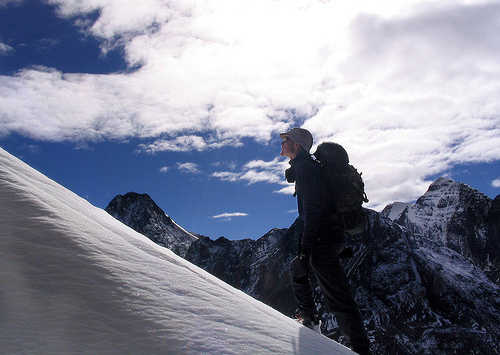
    My scariest moments come from my earliest expedition which was a mountaineering trip in Kyrgyzstan. On one memorable occasion we found ourselves descending what felt like a vertical ice wall. Struggling to cling to the ice with our axes and the front points of our crampons, my teammate below, Thom, shouted “I don’t think I can hold on any longer” and slipped. He was, of course, tied to me and the added weight pulled me off the ice too. Ben, tied above us on the top of the rope, looked down to see where the added drag had come from and was met with the spectacle of the two of us dangling from the rope that was tied to his harness. Not a good moment.

    Tell us about your first book! How’d that go?

    I recently had the marvellous pleasure of seeing something that I’d written printed and displayed in bookshops. The book is called ‘How to Get to the North Pole: and Other Iconic Adventures‘. It’s a balance of armchair explorer and practical guide to classic challenges like cycling around the world or crossing a desert.

    I wrote a couple of short articles on similar topics for my website like ‘How to Climb an Unclimbed Mountain‘. They were enjoyable to write and seemed to be useful and popular. So I decided to expand them into full blown chapters to combine into a book.

    It was a very painful process to write at times. Unlike telling your own story, with a practical guide book like this, I couldn’t just rely on knowledge that was in my head. Every single sentence had to be checked and cross-referenced for fear of making a casual mistake or incorrect assumption. It was quite tough going towards the end but very satisfying. Researching it also meant getting emails in my inbox from legends like Sir Chris Bonnington, Borge Ousland and Ran Fiennes which was cool.

    Given your site title, I must ask, What’s the next challenge?

    The current challenge has been to swim the length of the River Thames. My wife and I started last year and aimed to carry on this summer. Unfortunately, I had an operation on my shoulder which has stopped me from even the gentlest of breast strokes. That, combined with some health issues over the last few months have sadly meant challenges have rather been on hold.

    Hopefully we’ll be back in action soon.

    ##

    You can read more about Tim on his website, The Next Challenge.

  • The Martial Arts “Tricking” Guide

    martial arts tricking guide

    Anthony Mychal exists at the crossroad between fitness and athleticism. As a professional, he’s a writer appearing on the likes of T-Nation, LIVESTRONG.com, STACK, and Greatist. As a dude, he’s a self-proclaimed performance goonie that practices martial arts tricking. He splatters his ideas about building a body that matters on a weekly basis on his blog.

    ##

    Martial arts tricking is an aesthetic blend of flips, kicks, and twists. Not to be confused with parkour or freerunning, martial arts tricking (“tricking” for short) is another underground sport that’s rapidly gaining fans and participants across the world. The recently held World Tricking Championship—an event sponsored by the likes of RedBull, Undefeated, and Beats by Dr. Dre—showcased the grace and athletic talent tricksters bring to their sport.

    The vast majority of tricksters have no formal martial arts or gymnastics training. Instead, they are driven by a passion for doing the seemingly impossible—this is one of the true beauties of tricking. But the best thing about tricking? Anyone can start at anytime.

    Tricking Equipment

    Pleasing the minimalist inside us all, tricking is defined by the equipment not needed. Most people begin tricking with only two things: bare feet and a bed of grass. The last time I checked, the cost of these items was reasonable. So much for the bad economy.

    Going barefoot is more necessity than cosmetic. There’s something stimulating about having a strong sensory connection with the ground. Shoes not only slip, but also add unnecessary bulk. Most tricks benefit from less weight carried on the extremities.

    The only piece of equipment to consider is a video camera. Tricking is a “feel” based sport. Getting a sense of body position in space is tough work at first. Having a second look helps dissect technique for future training sessions. Nothing beats slow motion video on the computer.

    Tricking Skills

    martial arts tricking guideSince tricking is sister to gymnastics and brother to martial arts, it borrows a lot of skills from both of these disciplines.

    Flexibility plays a huge role in tricks. Not just from an ease of performance standpoint, but also from a cosmetic standpoint. Although tricking holds philosophical meaning to some, the sport is still rooted in creating visually stunning movement. The crisper, flashier, and aesthetically pleasing trickster will always be better than someone of equal (or greater) talent that has sloppy technique. In the tricking world, the former person would be referenced as having “clean” tricks.

    I should note, however, that technique is also largely individual. Unlike gymnastics and other formal sports, tricking thrives on the incorporation of personal style and flare. Points aren’t deducted for doing things differently, and in some instances, it’s encouraged. This makes tricking a breath of fresh air as it allows for true self expression.

    The type of flexibility needed for tricking is called dynamic flexibility. Dynamic flexibility is the ability to actively move a muscle about its joint, which is different than the standard sit-and-reach-esque stretching you’re likely familiar with.

    Sinking into a stretch and holding one position for an extended period of time is known as static stretching. Although static stretching can benefit dynamic flexibility and subsequently tricking, dynamic flexibility is the priority. (Especially to prevent hamstring and groin pulls on kicking tricks.)

    Basic kicking ability is important. The martial arts roots are what separate tricking from most other forms of freestyle acrobatics. Keep in mind, however, you don’t have to be a martial artist to trick. Most tricksters teach themselves the basic martial arts kicks, such as front kicks, side kick, hook kicks, and crescent-style kicks.

    Reactive ability, although not necessary from the start, is a key component of tricking. Being explosive and quick on your feet defines a good trickster. Unlike most other characteristics, however, this usually develops naturally over time by virtue of the progressive nature of the sport. Training for it separately can overtax the body and put your priorities in the wrong place.

    Mental strength is the unsung hero among the clam and clatter. Although tricking is hugely physical, the high flying moves are only made possible if fear can be tamed. The first hurdle is usually the backflip, although moves become ever more complex over time. The mental battle never really ends.

    Start Tricking – the Basic Trick Classes

    Although the logistics aren’t written in stone, there are a few basic categories that each trick falls into. Each category has “basic” tricks that serve as the starting point and gateway for more advanced tricks.

    Aerial-based tricks are no-handed cartwheel-esque tricks. The earliest progression in this category is the two handed cartwheel itself. After two handed cartwheels become comfortable, one hand is used. From there, speed and crispness are emphasized while trying to ditch both hands.

    Kicking-based tricks separate tricking from the rest of extreme underground sports. This category starts with the tornado kick and 360 crescent kick. With the addition of twists and subtleties, these moves turn into the 540 and the 540 hook/crescent (sometimes called a cheat 720 kick).

    Twisting-based tricks borrow unique moves from Wushu, specifically the butterfly kick and twist. Eventually, however, twisting elements weasel into nearly every trick.

    Flipping-based tricks start with the backflip and frontflip, although the backflip is much more important. Of all categories, flips are the most mentally taxing. Like twisting, however, flipping tricks make their way into a lot of more advanced moves. It’s important to conquer fear of flipping early to ensure smooth progress.

    Other tricks that don’t necessarily fit into the above categories also make their way into the sport. Some from other forms of martial arts, others from different forms of acrobatics. For instance, one of the basic tricks, the doubleleg, has roots in capoeira.

    How to Start Tricking

    Advanced tricking techniques appear daunting, but the beauty of tricking is its progressive nature. By starting at the bottom, you rarely extend beyond your comfort zone. Don’t forget: all it takes is one sunny day to get going. Here are some suggestions for starting.

    First, simply stretch outside on a warm day. Remove your shoes and feel the grass in between your toes. Start off with some dynamic stretching: front leg lifts, back leg lifts, side leg lifts, trunk rotations, and arm swings. This will warm-up the hips enough to start practicing basic martial arts kicks like the hook kick, inside crescent kick, and outside crescent kicks.

    Second, dive into your acrobatic side and throw some cartwheels, tornado kicks, and 360 crescents. These moves are foundational, and fear shouldn’t be much of an issue. Don’t dismiss their importance. For some, solid work on these entry level skills proves possibility in further advancement.

    Third, study videos online to fully understand form. There are great resources out there. Tricks Tutorials has been a mainstay of great information and walkthroughs. Trick Training is another up and coming website that might be worth taking a look at too.

    Despite the absolute madness that can be witnessed in some YouTube videos, everyone starts out at the same step. Everyone stretches. Everyone practices the basics. Everyone has a little fear. But after some practice sessions and confidence building, you will be chucking advanced tricks without care and having a lot of fun in the process. So get out there. Get tricky. Outside of your perception of possibility, what do you have to lose?

    [photo credit: Tyson Cecka]

  • Winning the Warrior Dash Obstacle Race with Jason Fitzgerald

    Winning the Warrior Dash Obstacle Race with Jason Fitzgerald

    Want to know what it feels like – and what it takes – to win an obstacle race? Nerve Rush interviewed Jason Fitzgerald, who recently beat out nearly 17,000 people in the Warrior Dash obstacle race in southeastern Maryland.

    Warrior Dash Champion! What does it feel like to be the baddest of bad asses in the obstacle race community?

    Surprising! I wasn’t going for the win and I’m amazed that I beat almost 9,000 other competitors by over a minute. A few minutes into the race I found myself in 3rd place and my competitive instincts kicked in; I just went for it.

    I won’t lie – it feels good – but the race has me thinking “how much faster could I go?” Since I wasn’t running at 100% effort, I might have to run another Warrior Dash to see what I’m really capable of. Stay tuned!

    Was this your first obstacle race? If not, how does it compare to the others you have done?

    Warrior Dash was my first obstacle race so I didn’t know what to expect. I knew the obstacles would be tough so I took my time going over them. They can get slippery from the water and mud so you have to be careful not to hurt yourself. My first priority was safety, followed closely by running fast in between the obstacles.

    Because of that strategy, the race felt more like an interval workout: run really hard, rest while going over an obstacle, repeat. It was exhausting!

    Jason Fitzgerald Obstacle RaceLet’s talk obstacle race training. How did you prepare for the Warrior Dash?

    I did zero specific obstacle training. I’m a distance runner so I’m always running a lot and at the time, my training was focused on the 5k distance. So I was in good shape and had the speed to run pretty fast in between all of the obstacles.

    One aspect of my training that really helped was that I do almost all of my running on hilly trails in Washington’s Rock Creek Park. Some parts of the trail are muddy, rocky, narrow, steep, and even dangerous (one of these days I’m going to fall in the river). Practicing those conditions and developing the coordination to run fast over uneven terrain really helped in Warrior Dash. The first half-mile of the race was on a similar terrain so it felt like any other training run for me.

    What’s next? Any nuggets of wisdom for potential Warrior Dash champions out there?

    I’m not sure when – or if – I’m doing another obstacle race, but there’s always that possibility! Right now I have my eyes set on a half-marathon in a few months with a few shorter races thrown in for fun. But there are a few quick lessons I learned from my Warior Dash win:

    • Start at the front (even if you’re slow) – you won’t have to wait behind people at obstacles and you’ll avoid the madness of the crowd.
    • Don’t wear very loose clothing – if it doesn’t get caught in the barbed wire (which is REAL!) it might come off in the mud pit.
    • Get ready for a lot of hills! Not every obstacle race has them, but most of them do and they’re tough.
    • Train on trails before the race. Like I mentioned, it’s incredibly helpful to be comfortable running on uneven terrain.

    Thanks for your time! Where else can Nerve Rush readers find you?

    My pleasure, hopefully your next obstacle race will be just as fun and fast. You can check out my running and coaching site at Strength Running. Also check out my detailed article on how to train for Warrior Dash if you want to learn how you can win your next obstacle race!

    Thanks for the interview and good luck with all your gut wrenching adventure!

    [photo credit: Benjamin Lehman]

  • Uh, a Personal Jetpack? Yes Please.

    Uh, a Personal Jetpack? Yes Please.

    generic viagra pills

    ack” width=”300″ height=”168″ />

    It’s taken 3 years of testing, but Troy Hartman, professional aerial stuntman with a colorful history of insane, gut-wrenching stunts, has finally done it.

    His original goal was to build a proprietary jet-engine powered wing (à la Yves Rossy). In the process of designing the wing, two concerns materialized right out of the gate; 1) operating the jet engine close to his body and 2) operating the jet engine at high-altitude. Yep, I’d say those are both pretty important.

    The jet-engine powered wing turned into a much more involved project. Troy realized that if he was going to put this much effort into testing and prototyping, he might as well–in his words–trick it out. The final result, after weeks of tinkering in his garage (and a number of failed tests in the empty fields of Southern California), was a fairly compact jet backpack of Troy’s own design.

    Phase 1 testing was done on skis. In a YouTube video that’s reached more than half a million eyeballs, Troy demonstrated fast uphill ascents and reached a top speed of 47 mph.

    Phase 2 testing, I’m happy to report, was a raging success. Filmmaker Brent Barbano and his crew captures it beautifully below.

    [youtube id=”Yolum7_0UCA” width=”600″ height=”350″]

    And when I flip that switch to fire the jet pack, just the sound and power send this pulse of adrenaline through my veins. And it’s electrifying.

    Troy Hartman, Professional Aerial Stuntman

    troy hartman personal jet pack

    With a degree in Aeronautical Engineering and a background in the U.S. Air Force, Troy Hartman is no stranger to the aerial world. He’s a professional aerial stuntman, BASE jumper and inventor.

    Troy pioneered skysurfing. The story goes — he snuck a board onto a skydiving plane and jumped out before anyone could stop him. The sport flourished, as did Troy; he went on to become an X Games Gold Medalist. His commercial was the #1 ranked advertisement of Super Bowl 1998.

    For a time, Troy was a television host on the MTV series “Senseless Acts of Video.” After 3 seasons of 40+ gut-wrenching stunts, many of which has never been done before, Troy stepped out of the spotlight to focus on smaller projects of his own.

    Oof. A Personal Jetpack!

    Troy’s personal jetpack utilizes engines that are designed for Unmanned Aerial Vehicle (UAV) applications. What that means is..they’re massive. Twice the thrust of those used by Yves Rossy.

    The engines run at 100,000 RPM and 1500 degrees Fahrenheit, mere inches from his skin.

    Both Troy and Brent, the filmmaker, are currently collaborating to produce more content, in addition to documenting the continuing development of the jetpack and jet-engine powered wing.

    Stay tuned, folks.

    You can find out more information about Troy on his personal website.

    [pics courtesy of Brent Barbano & film crew]


  • 7 Gut-Wrenching Modes of Transportation

    7 Gut-Wrenching Modes of Transportation

    Folks, it’s 2012.

    In case you haven’t noticed yet, we’re living in the future. A future of hovercrafts and human-powered helicopters, new cars topping speeds of 250+ mph and, wait for it, water-powered jet-packs.

    Getting from point A to point B has never been so fun. Curious what my options are, I poked around the Internet superhighway in search of the world’s wackiest & most gut-wrenching modes of transportation.

    Here are 7 options I came up with.

    1. Bugatti Veyron Super Sport

    bugatti veyron fastest car in the world

    Yikes. By today’s standards, the world’s fastest street legal car. From 0-60mph in just 2.4 seconds, this Bugatti roars up to speeds of 267 mph and costs a whopping $2,400,000. Gut-wrenchingly fast.

    2. The Monowheel

    Seen during the closing ceremonies of the Beijing 2008 Olympics, the monowheel is a one-wheeled single-track vehicle, where the rider sits within or next to the wheel.

    monowheel

    Funny story — while monowheels are typically used in jest or for recreation today, they were actually considered serious modes of transportation from the 1860s through to the 1930s.

    Seems much more fun than a unicycle.

    3. The Duck Bus

    Half-boat, half-truck, this amphibious bus, code-named DUKW, played a crucial role in the allied invasions during World War II. Interestingly enough, more than 40% of all over-beach supplies in Normandy were transported by DUKWs during the first four months.

    duck bus boston

    Today, these duck buses are typically used as tourist attractions in harbor, lake and river cities like Boston and San Francisco. I’ve ridden one before — super fun.

    4. The Wuppertal Schwebebahn (Floating Tram)

    This suspended railway in Wuppertal, Germany ferries upwards of 80,000 people a day. While it looks more like a theme park attraction, it is the oldest electric elevated train in the world.

    Wuppertal Schwebebahn floating tram

    One ticket, please.

    5. The JetLeve

    Yes, a water-powered jet pack. The JetLeve is $100,000 and, for the gamers out there, akin to something Mario wears in Super Mario Sunshine.

    [youtube id=”im1iNq02Kz0″ width=”600″ height=”350″]

    The pack is tethered to the water via a hose and has a maximum altitude of 27 feet but can run at a healthy 35 mph for up to two hours. Imagine a lake, 10 of these JetLevs, a ball and a couple of goals.

    Water polo 2.0?

    6. The Tuktuk

    Ah, the classic tuktuk. These motorized three-wheelers  originated in Bangkok, Thailand and then spread to Laos, Cambodia, Pakistan, India and Bangladesh — if you’ve traveled to Asia or certain parts of Africa, you’ve likely encountered the tuktuk in all of its chaotic glory.

    tuktuk transportation

    The tuktuk thrives in high-speed, traffic-congested environments and is sure to provide its rider with the trip of a lifetime.

    7. The Powerbocker

    powerbocker price

    Remember moon shoes?

    The powerbocker actually works. Attach these power springs to your feet, and you can jump as high as 7 feet and run up to speeds of 20 mph. That’s as fast as an Olympic sprinter. I’d love to see Usain Bolt rock a pair of powerbockers.

    Coming in at under $200, they’re quite affordable and seem like a fun way to explore urban terrain.


    I can see it now — powerbocking parkour! You heard it here first, folks.

    photo credit: Ben_in_london, djwudi, Peter Wick, wwwuppertal, Alex E. Proimos, scoutjacobus

  • ‘Jet Man’ Stunts Alongside Fighter Jets Over Alps

    ‘Jet Man’ Stunts Alongside Fighter Jets Over Alps

    A whopping title, but a whopping video. Jetman Yves Rossy soars across the Swiss Alps, boasting is own tailor-made jet pack. Leaping from a helicopter and performing a series of aerial acrobatics, Rossy joined two fighter jet planes in synchronized flight.

    In the past, Rossy has also flown the English Channel and looped around a hot-air balloon.

    Nerve Rush HQ salutes you, sir.

  • Darren Berrecloth, Master of (Mountain Biking) Movement

    Darren Berrecloth, Master of (Mountain Biking) Movement

    Attempting to ride in a place where nobody has is exhilarating and scary.

    Every movement is critical.

    Knowing that one small mistake can literally be fatal.

    With helicopters hovering delicately above, Darren Berrecloth, professional mountain bike freerider, tackles Cameron, Arizona. No other mountain biker has ridden the kind of line he sought out.

    This video is part of a four-part series via Degree Men on select adventure sport athletes including snowboarder Travis Rice, base jumper Miles Daisher, mountain biker Darren Berrecloth and adventurer Bear Grylls.

  • Exclusive Invitation to Gut-Wrenching Startup, Unbucket

    Exclusive Invitation to Gut-Wrenching Startup, Unbucket

    Greetings from Nerve Rush HQ.

    It’s been a fun summer over here, what with an all-expenses paid trip to Jordan, a bridge-day at the highest bungee-jump in the United States and a number of other exciting projects we’re up to. I trust your summers are as gut-wrenching and adrenaline-packed as can be.

    Live it up, folks!

    Speaking of exciting projects, check out the guys over at Unbucket, a collaborative list-making platform that enables adventurers to publish, track and check off adventure-list items.

    unbucket screenshot

    A budding startup, Unbucket boasts a super-slick interface, and the two co-founders have been fantastic with feedback so far.

    This is where you come in.

    The gut-wrenchingly awesome team at Unbucket agreed to dish out an exclusive Beta-invite code for the Nerve Rush community. Not even a few months old, the Unbucket team is looking for power-users and feedback from an audience of thrill-seekers like yourselves.

    With your direct feedback, you can make a serious difference in how this platform pans out.

    So, what do you say? Want to see how fun it is to spin up insane Unbucket lists? Want to work directly with a startup? Here’s your chance.

    Claim Your Beta Invitation

    1. Visit Unbucket.com
    2. When prompted for an invitation code, type in nerverush

    Yep, that’s it.

    Need a more compelling reason to test out Unbucket? Read the email I received from Elliot, one of the co-founders, below.

    Pay particular attention to his bullet points.

    ##

    Last month we launched a private beta of Unbucket: A collaborative list-making platform for people to plan and document things to experience with those they care about most. Our vision is to actively bring people together over continuously shared experiences, and we think the organizational and inspirational power of lists is the best way to do this.

    We’re actively looking for beta testers and wanted to reach out to the Nerve Rush community for the following reasons:

    • As a community, you are the epitome of goal setters and doers. We want to know if Unbucket fits into your life.
    • Your lists will probably be some of the most interesting ones we’ve seen yet. Part of what we strive for is to use lists to inspire others to take action.
    • We’d love to understand if collaborative lists have a place in your life versus lists focused solely on the individual.

    We’ve created a beta invite code for the Nerve Rush community (nerverush) and I invite you to email me personally (elliot@unbucket.com). We can’t wait to hear your thoughts and hope Unbucket plays a role in helping you accomplish more than you ever believed was humanly possible.

  • Female Mountain Bikers Look to Reach New Heights

    Female Mountain Bikers Look to Reach New Heights

    As both fans and competitors gear up for the 2012 Olympic Games, we are country-first. However, for three female mountain bikers, this year’s participation goes beyond the flags on their sleeves.

    Instead, it will be about leveraging their collective strengths and determination to achieve greatness.

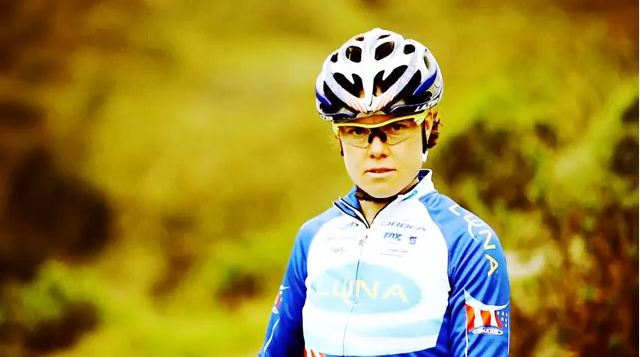
    In 2008, LUNA Chix Pro Team riders Georgia Gould for the U.S.A, Catharine Pendrel for Canada, and Katerina Nash for the Czech Republic, competed for the Gold in Beijing. Catherine, the current world champion in cross country mountain biking, finished 4th at the Olympics (by 9 seconds); Georgia, the reigning U.S.A. cross country champion finished 8th; and Katerina, a three time Olympian, did not qualify. They have come together as team members with a renewed sense of purpose that they hope will push them to new heights in London this summer.

    As this video highlights, they are ready for the quick and challenging course that awaits them. Even more so, they are excited to compete on behalf of the longest running, most successful, single-sponsor female team in the history of the professional sport. Sponsored by LUNA®, The Whole Nutrition Bar for Women®, the goal of the LUNA Chix Pro Team is to inspire and motivate women from diverse backgrounds to mountain bike together. In addition to that goal, the team works closely with the Breast Cancer Fund to raise awareness on the environmental causes of breast cancer (the team will wear the Breast Cancer Fund logo on their uniforms). For Georgia, Catherine, and Katerina, these factors help push them through the finish line.

    [via Tom Channickat]

  • Big Wave Surfing with Jeff Rowley

    Big Wave Surfing with Jeff Rowley

    Jeff Rowley puts his head underwater and does what needs to get done.

    From torpedoing down 50+ foot sea-claws to extreme lung capacity training, Rowley, a professional big-wave surfer, rides waves amongst the world’s best. He is the first Australian to paddle into Maui’s nefarious Peahi “Jaws” without Jet Ski tow-in aid. This wave is considered one of the world’s biggest and most dangerous waves, and until recently it was thought impossible to catch and ride without tow-in support.

    Nerve Rush HQ was fortunate enough to catch up with Rowley between summer storm swells. Jeff, we appreciate your time here, my man! Keep pushing the limits.

    What were your favorite beaches growing up in Australia? How did you get into surfing?

    I started surfing when I was 6 years old, my parents owned a surf shop in Anglesea, Victoria, Australia, and my dad was a surfboard shaper, so I pretty much grew up on the floor of my dads shaping bay. From about 6 years of age I was on my own surfboard, but before that I was riding boogie boards in the tiny little shore break near home. I first started surfing big waves when I was about 17 years of age and I was really launched into that on the southern coast of Australia, just off Victoria. There’s a lot of reef breaks there and they catch a lot of the winter swells in really cold water, and they’re super isolated, there’s no one around, there’s a lot of cliffs and most of the time it was just myself, or myself and one other friend.

    Surfing Jaws was your Everest? Could you tell our readers more about Jaws?

    Surfing Jaws was my Everest. I spent the last 18 months with laser beam focus on preparation and training for surfing Jaws, so overcoming my fears to paddle into the wave was fulfilling my dream.

    Becoming the first Australian to paddle into ‘Jaws’ Peahi on the island of Maui in Hawaii on 4 January 2012 was one of my biggest life achievements. At the same time, I achieved my 2012 Charge for Charity quest to paddle into, and catch a 50-foot wave. I was going to catch that wave no matter what happened, it was massive and I was in the right position and it was my time to go for it. I stood up and the wind hit me and tried to rip my board from under my feet as I started freefalling, I couldn’t see a thing but I pushed down as hard as I could and made the ride. I was like trying to catch and ride a Tyrannosaurus Rex with your bare hands – the best thrill but you’re so glad to be alive!

    [youtube id=”nOIzWu7nFpY” width=”600″ height=”350″]

    I had to train hard, overcome a number of barriers and conquer my fears to achieve this.

    Paddling in is the ultimate challenge, it’s man vs ocean, actually it’s man vs himself. You have to constantly make decisions that will impact what happens next. For the big wave I caught at Jaws on January 30, I knew I was in exactly the right position the moment I saw it. I didn’t want to waste any energy paddling, I was under it and it was going to eat me if I didn’t make it. It was amazing to be recognized for my achievements when I placed 4th in the world in the Billabong XXL Global Big Wave Awards in the Ride of the Year category for the wave I caught at Jaws on that day.

    How do you train (mentally & physically) for big-wave surfing?

    Preparation plus opportunity equals success. I know exactly what I want to be doing with my life and I’m giving it 150%, I love it! I train hard in the pool- my empty lung holds are up to 2:23. I eat well. I’ve got 5 boards over 9’6″ because I’m prepared. At the beach I don’t psyche up, I calm down. I perform lung exercises before I paddle out that deprive me of oxygen, so my body is in a state of conserving energy. And then I have to be there on the best days to create the opportunity.

    Long hold downs are inevitable. When Im down I count seconds and spins. In the pool I get tumbled for 50 seconds, untie my leash and swim 25m on an empty lung. When you have a serious wipeout, you really lose count of spins. I’m training to make two wave hold downs enjoyable, so when it happens I wont be under pressure.

    When I’m surfing and the waves are really big, I prefer to calm down. A lot of my training is around trying to conserve my energy and making sure that I’m in a really good mental state before I go out there. If you get too excited you get too pumped up, you’re getting all your blood flowing and you’re burning all your oxygen before you even paddle out in the surf, and if you’re doing that your going to get yourself in a really heavy situation and it’s going to make you really stressed and that’s when you can get in trouble, so I prefer to really calm down, do a lot of lung exercises to prepare my body for being in a situation where it’s not going to have much oxygen and I’ve still got to be able to maintain coherence and function at 100%.

    jeff-rowley

    So there’s been a huge shift in my training and it just gives me so much more confidence in the water. So I think training is really important for me because I want to be the best in the world at big wave surfing and I want to be the best that I can be. For me to train in the pool where it’s in a controlled and safe environment you can push yourself way beyond what you thought was possible, and then when you go out in the ocean, the idea is that it’s never as bad as what you have prepared for.

    Any advice/recommended resources for aspiring big-wave surfers?

    Fear is always present but you have to refuse to focus on it. You have to leave it behind and focus on what you can achieve if you don’t hold back, if you give 150%. If you hold back the result is certain, but if you give 150% who knows what may come.

    It’s definitely just yourself out there in the water and it’s just you that has to turn around and catch the wave but, back on land you actually need the support of a whole team of people – your family, partner, friends, photographers, surfboard shapers. When you ask the universe for what you want, there is a whole world of resources that also opens up to support you achieving your goals.

    In 2012, I’m completely focused on big-wave surfing. I want to be at all of the best locations in the world on the biggest days. I’m really looking forward to surfing Jaws 50% bigger, or twice the size of what we’ve tried to paddle into. So I’ve just got my head down – under water, in the pool, in the gym every day trying to get as strong and fit as I can, and increase my breath hold. Because I’m really looking forward to pushing it out there and being the best I can be.

    ##

    Here a few places you can find more of Jeff: Facebook | Twitter | Official Website