Category: Blog

  • Sandboarding Outside Swakopmund, Namibia

    Sandboarding Outside Swakopmund, Namibia

    In August, 2010 I traveled to Windhoek, Namibia. The purpose of the trip was work–at the time I was researching the cost-of-living in southern Africa for a global mobility consulting firm–but with a gap in my schedule, I found myself with a bit of free time.

    Eager to escape the city and thrust myself into Namibia’s adventure scene, I decided to go sandboarding.

    Namibia, Sandboarding (and Sand-Skiing) Paradise

    Sandboarding has adherents throughout the world, but Namibia offers up some of the steepest (and world’s oldest) sand dunes. From Rhino Park in Windhoek, Namibia’s capital, I hopped in a 15-passenger shared van for the 5 hour trip to Swakopmund.

    Leaving the city and entering the desert, the landscape became more distinct and peculiar. Distant and undulating hills, sun-bleached shrubbery, craggy outcroppings. Termite mounds spawned up from the ground like long, skinny and gnarled fingers. The desert was ragged, dusty and seemingly endless, Namibia’s own sandy heart of darkness.

    By the time I checked into the Desert Sky Lodge, I had just enough time to catch the sunset. I ran down to Swakopmund’s Atlantic shore and snapped this photograph.

    Swakopmund Pier

    The following morning, I was picked up at by Alter Action, a Swakopmund-based adventure company. I hopped in a van with a guy from Portland, Oregon and was soon joined with a group of overland travelers from the U.K. and Australia.

    Fifteen minutes later and we were on site, at the base of the dunes.

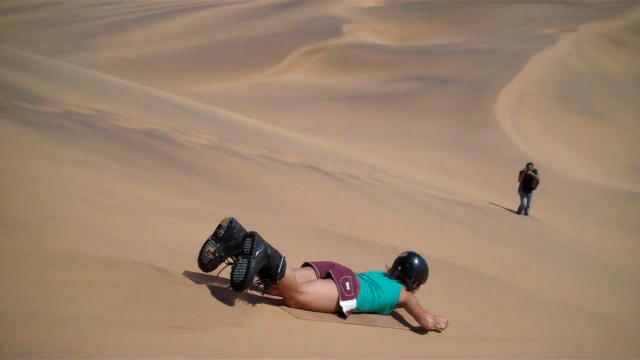
    Instead of traditional sandboarding (standing up on a waxed snowboard), I opted to lie down on a flexible wooden sheet. I was told I’d go faster, be able to ride longer dunes and, since I’m not too comfortable on a snowboard, I’d have more fun! It was fun indeed; on the steepest run, I reached a speed of 74km/hr (46mph). This is what it looks like.

    [vimeo id=”14343631″ width=”600″ height=”350″]

    The Guinness World Record in speed sand-skiing (using skis, so not a board or waxed sheet) was set on a nearby dune that same summer, on June 6th, by Henrik May, a German living in Namibia. He reached a speed of 92.12 km/hr

    It was an amazing day. 40+ people, from the U.K., Australia, Italy and France among other countries, throttling down dunes in the Namib Desert, the oldest desert in the world.

    That afternoon, I found another passenger van to shuttle me back to Windhoek. I arrived just after dinner and went back to work the next morning.

  • Swedish Andreas Fransson’s Ski Descent of Denali

    Swedish Andreas Fransson’s Ski Descent of Denali

    In the summer of 2013, I plan to climb Mt. McKinley, the highest mountain in North America. And when I stand on the summit, I plan on representing Nerve Rush in the triumphant, glorious manner it deserves.

    As it stands, this expedition is about 1.5 years away. In the meantime, as I pad my bank account for the necessary gear and logistics, I also begin to think about a training schedule that will optimize my chances at reaching the summit. Standing tall at 20,320 feet, Denali is no easy climb.

    Currently in armchair-mountaineering mode, I occasionally find myself browsing the Internet for Denali-related resources. Training programs, trip reports, maps, you name it. Just recently, I stumbled upon something remarkable and definitely Nerve Rush worthy.

    Andreas Fransson, Swedish Alpinist Extraordinaire

    Andreas Fransson, a 28-year old Swedish alpinist and extreme skier, has the rare kind of prowess we at Nerve Rush HQ tend to swoon over. Not only is he capable of scaling mountains with world-renowned alpinist, but he’s one of the best extreme skiers in the world, buddying up with the likes of French snowboarder Xavier de Le Rue.

    In 2010, Fransson shattered the upper half of his body in the French Alps when a wet-slab avalanche ripped him from his rappel. A year later, in May 2011, he broke new ground with a solo first descent of Denali’s south face, a route called the “baddest unskied line in North America.”

    After a month of alpine-style climbing on the mountain, ascending and descending to acclimate and familiarize himself with the route, Fransson took 12.5 hours to descend the 8,000-foot south face of the mountain. Much of this trip was done at night..without a headlamp!

    Riding with 177-centimeter Nordica Enforcers, Fransson descended on a precarious and seemingly never-ending surface that featured sections of 70-degree ice.

    After returning safely to base camp, Fransson, in true extreme form, decided that the adventure wasn’t done. He took a rest day then climbed Denali’s Cassin Ridge, one of the most famous alpine climbs in the world, in a mere 33-hour round trip push. To lend some perspective, the Cassin Ridge has been climbed in under 36 hours fewer than 10 times. And, following this second successful venture, Fransson skied the Messner Couloir, a 5,000-foot, 45-degree descent. All told, he slept 3 hours in 3 days.

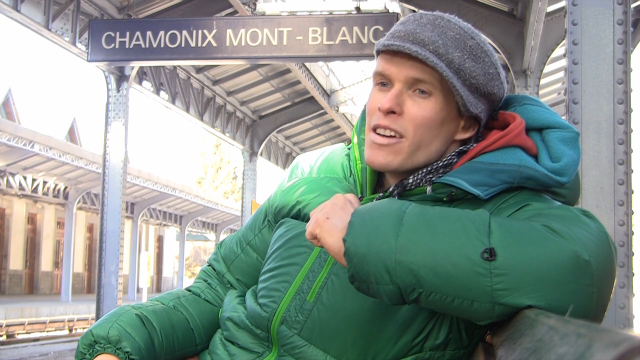
    Fransson currently lives in Chamonix, France, a skier’s and alpinist’s mecca in the French Alps. He trains 10 hours a day.

    From Fransson:

    “Society has an absurd general belief that life is about hanging on as long as possible. So people [are] often hanging on for the sake of hanging on and not for really living … I can go on for days about this, but the important things in life are unsayable, so let’s just live it out and see what we find behind the curtains in front of the big game we are all playing.”

    Here is a clip of Fransson skiing the Col de L´Aiguille Verte in Chamonix:

    [vimeo id=”19292027″ width=”600″ height=”350″]

  • 21 Underwater Photography Shots From The Azul Ocean That Will Blow Your Mind

    21 Underwater Photography Shots From The Azul Ocean That Will Blow Your Mind

    A few weeks ago, we had the opportunity to interview Arthur Koch from The Azul Ocean and find out a little behind his underwater photography magic. He even shared some of his favorite photos ever with us. But, we decided that wasn't enough.

    We asked Arthur if he'd come back and share a few more with us. So Arthur who is not only a great underwater photographer, but al

    l-around-good-guy, enthusiastically agreed. In fact, he not only shared one or two more, but 21 great photographs. So we've written enough, it's time to highlight what you clicked through for.

    21 Underwater Photography Shots From The Azul Ocean That Will Blow Your Mind

    **
    For more of Arthur's work, visit the Azul Ocean.

    zp8497586rq
  • Mike Hrostoski’s Tough Mudder Adventure

    Mike Hrostoski’s Tough Mudder Adventure

    This is a Nerve Rush reader experience post. We’ve profiled the Tough Mudder before, but facts only do so much to tell you about the level of adventure in an obstacle race. So loyal Nerve Rush reader Mike Hrostoski took it upon himself to jump in and find out for himself. Take it away Mike!

    Sometime this past spring, my friends Hannah and Lauren asked me if I wanted to run a Tough Mudder race with them. I recall the conversation over Facebook going something like this:

    Them: Hey, want to run Tough Mudder with us?

    Me: Huh? Tough Mudder? What is that?

    Them: It’s a 10-12 mile endurance event with obstacles designed by British Special Forces. We’ll run through miles of mud, crawl through underwater pipes, run up and down ski slopes, jump into a freezing cold river, climb a glacier, carry a log up a mountain, run through fire, and finish the race running through live wires with 10,000 volts of current running through them.

    Me: Hell yes!

    Fast forward to May 8, 2011 and I found myself staring up the slopes of Mt. Snow, VT with four other teammates. I came in with pretty high expectations of the race. I work out regularly, do yoga, and eat pretty well. I ran a half marathon lat October with no training and that was 13.1 miles. The Vermont Tough Mudder was only 10 miles so it couldn’t be that rough right?

    I was dead wrong. The first mile or so was straight up the mountain. We ran up and down the entire length of the mountain multiple times. In between running up and down ski slopes we dunked ourselves into freezing cold water time after time.

    At around mile 6 I had my first cramp. My calf completely locked up when I was pushing hard up a hill. I’ve gotten these before playing basketball so I just stretched it out, drank some more water, and pushed on. At around mile 8 the other calf locked up. A couple hundred meters after that my legs literally stopped working. They were completely cramping up from top to bottom. I’ve never experienced anything like that before. Soon I found myself on an ATV ride to the medic tent where I laid under heating blankets, ate a couple bananas and three Myoplex shakes, and drank around a gallon of water before I could even walk again. Bad times.

    Looking back at the race I realize that I didn’t drink anywhere close to enough water as I should have. And my training was basically non-existent. You know what the late, great John Wooden said, “Failure to prepare is preparing to fail.”

    Today is exactly six months from the day that I ran my first Tough Mudder. This Sunday I’ll try it all over again at the Tri-State Tough Mudder in my current home state of New Jersey. Big thanks to the Tough Mudder team for letting me run this one for free on a press pass. See, there are some perks to being a “published writer.”

    I’m feeling pretty good about this upcoming race. My diet has been super on point lately with my November Detox (I actually created a daily journal for it at: bit.ly/november-detox). I’ve also been training way harder than I did for the last race. In fact, I’m feeling good enough to even say:

    In a couple days I’ll be finishing the Tri-State Tough Mudder and checking another item off of the List of Adventure. Guaranteed.

    6 Days Later…

    I did it. I finished the Tri-State Tough Mudder. I barely finished, but I finished. Here’s how it all went down.

    I’ve been detoxing for the whole month of November, so to carb up the night before I ate the equivalent of a meal for three including an entire baking pan worth of sweet potato and pineapple casserole. Half of an entire pineapple and three sweet potatoes all cut into slices and baked in the oven for an hour with butter and cinnamon on top. All the dessert you need without any refined sugar. So delicious. I then got to bed super early and slept a solid ten hours with sweet dreams of running, jumping, crawling, and mudding (Really, I dreamt about the race the whole damn night).

    The morning started off like any other morning in November: 4 eggs, a whole pink grapefruit, and some yoga. I stopped by a convenience store to grab a bottle of water and three protein bars and hit the road for Raceway Park in Englishtown, NJ.

    When I got to the race site I was pleased to see flat land for as far as the eye could see. The Vermont Tough Mudder was nothing but running up and down mountains for ten torturous miles. NJ 1, Vermont 0.

    After signing my death waiver and checking in at the Media Check-In tent, I walked into the park to check out the scene. Pop quiz: What’s the main difference between an average New Jersey Tough Mudder and an average Vermont Tough Mudder? Around 20 pounds of muscle and no shirt. Why people in New Jersey are so jacked I don’t know, but there were plenty of guys running around that looked like Rambo. Of course I took the opportunity to join the shirtless New Jersey Tough Mudder crew, but kept my secret identity intact with the Luchador mask that has now traveled all over the world with me.

    Shortly after I checked in, I met up with my friend Lauren from the first Tough Mudder adventure and her friend Melanie. As soon as I met Melanie I knew we were going to get along. She had a red bandana on and a t-shirt that read “It’s The Freakin Weekend.” My kind of people. After the obligatory pre-race photoshoot to post Facebook pictures later, we lined up at the start. We walked up to the start just as the last heat had taken off so we got to line up in the front of our heat.

    After pumping us up with a little pre-race pep talk and reiterating the fact that we signed a death waiver, the emcee let us loose on the course. Unlike a usual race though, we started by chasing a monster truck. And since we were in the front of our heat, I started the Tri-State Tough Mudder sprinting behind a monster truck.

    I could explain the rest of the thirty-something obstacles in detail, but it’s easier to read about them all here on the Tough Mudder website: Tri-State Tough Mudder Course Map

    Some of the obstacles stuck out for me though, some because they were fun and others because they were absolutely brutal. The more memorable parts of the course were:

    • Swimming across a freezing cold river and climbing up a 15 foot rope ladder on the other side
    • Then immediately after that jumping off of a different 15 foot platform into the same freezing cold river and swimming back across
    • Running through the Mud Mile, a maze of trenches that had to be at least a quarter mile long through knee-high to waist-high mud
    • Crawling through mud under barbed wire 8 inches off the ground
    • Running through bales of straw soaked in kerosene and set on fire
    • Running around the actual race track carrying a tire
    • Successfully crossing a huge set of muddy monkey bars set over an ice cold lake
    • Crawling through muddy tunnels that were so long that you couldn’t see any light halfway through them
    • Getting shocked three times by live wires carrying a 10,000 volt shock

    Tough Mudder is also a great experience because of the tone that the race organizers set at the beginning of the race. All participants raise their right hand and recite the Tough Mudder pledge before they run the course. The pledge is: “As a Tough Mudder I pledge that… I understand that Tough Mudder is not a race but a challenge. I put teamwork and camaraderie before my course time. I do not whine – kids whine. I help my fellow Mudders complete the course. I overcome all fears.”

    I can’t even count the number of times I got a helping hand from a stranger pulling me through a dark muddy tunnel or pushing me up a 12 foot wall. In return I helped dozens of people over and under the obstacles. In a Tough Mudder race you aren’t running against the other participants, your running with the other participants and against the course. It’s really a great atmosphere.

    Of course the most memorable part of the day was crossing the finish line. The feeling of stepping across that line was such a great sense of accomplishment. For those 10-15 minutes after the race I felt nothing but pure happiness. My body was on the verge of failure again, but I just felt great.

    Completing the course has also set the baseline of what I know I can accomplish at a higher level. Several years ago I ran my first 5k. A year ago I ran my first half marathon. This weekend I ran a half marathon through hell. The next race will be a little harder,  a little longer, or a little tougher, but I know I’ll be able to do it. Success breeds success and right now I’m on a roll…

    We can’t wait to see what you do next Mike. Hopefully you’ll be able to share it with us (ahem, skeleton tryouts?). We couldn’t agree more – you’re on a roll!

    This post originally appeared on Michael’s own blog (first post, second post). Massive thanks to Mike for sharing this with the wider Nerve Rush audience. If you’re interested in guest posting on Nerve Rush with your own adventures or expertise, let us know – we’re always on the lookout for adventurists doing incredible things. Get in touch.
  • The Evolution of Kitesurfing

    The Evolution of Kitesurfing

    old-kitesurfing

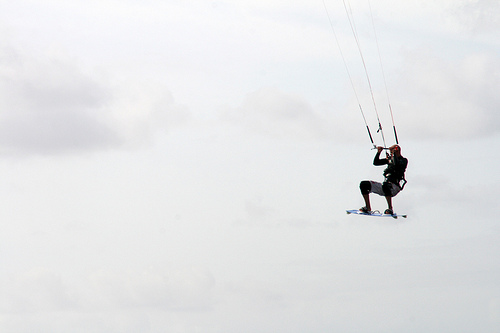
    We at Nerve Rush HQ are big fans of Kitesurfing. Whether you're learning how to kitesurf or a kitesurfing world record holder, we think kitesurfing has a ton of adventure to add to your love of extreme sports.

    But how did it all start anyways? Who came up with the great idea to strap a board to their feet, throw a kite in the air and hope the wind was blowing strong enough to keep them from drowning. Well, today we'll be diving in a little deeper to how kitesurfing came to be and where it started with a new series entitled The Evolution of Sport.

    Today's first installment, The Evolution of Kitesurfing is brought to you by Nerve Rush friend and adventurist historian (we literally just made up this title) Thom Wolfe. Take it away Thom.

    The Evolution of KiteSurfing

    Origins

    Kitesurfing is a relatively new sport/activity that finds its origin in several different areas. Kites have been around for over 2,500 years, first being used by the Chinese as communication devices. Physical evidence of surfing has been found in Peru dating back as far as 1500-2000 years ago. The design origins of kitesurfing come from traction kites. These kites were used on land to propel a vehicle or person that basically doubled the power of the wind by its design. However, the invention of kitesurfing would hinge on the ability to launch and re-launch the kite directly in the water, something a traction kite cannot accomplish.

    kitesurfing

    Development

    The first forms of kite surfing appeared in the 1980s and were referred to as “kite-skiing” and “flysurfing”. Cory Roese

    ler developed his Kiteski system with a framed kite, a reel bar, and water skis. You can sort of think of this as water skiing, but instead of being pulled by a boat you are pulled by a kite. This was the first commercially available kitesurfing product released in 1986.

    The Legaignoux brothers, Bruno and Dominique were the first to patent a curved wing inflatable kite referred to as the Flysurfer or Wipika system , which is the basic design used in modern kite surfing. These inflatable kites began development about the same time as the Kiteski system, but took 15 years to develop into a commercially available product being released in 1997.

    kitesurfing

    Modern Day

    Today, throughout the world there are hundreds of thousands of kite surfing enthusiasts. The first World Cup of Kite Surfing was held in 1998 in Hawaii. Now there are numerous kitesurfing competitions throughout the world on the local, regional, national, and international levels. Many countries and regions now have their kitesurfing associations with the International Kiteboarding Association being the global governing body.

    kitesurfing

    If you're interested in lending your expertise to thousands of Nerve Rush readers a month, let us know. Any and all guest post inquiries can be directed to Joel and Alan at our contact form. Stay adventurous out there!

    [Photo credit 1, 2, 3, 4.]

    zp8497586rq
  • Interview With Arthur Koch

    Interview With Arthur Koch

    I was scouring the interwebs the other day when I followed a link to The Azul Ocean and was instantly impressed. Focused on scuba diving and brilliant underwater photography, I discovered the creator was a man named Arthur Koch, with over 15 years in diving and underwater photography. I knew I had to talk to him so I tracked him down and he was gracious enough to answer a few questions. Here we go!

    So, underwater photography. How does one fall into such a cool hobby?

    I started diving in 1995, about a year later I picked in an Ikelite housing for the old Kodak disposable cameras.  My initial idea was to bring pictures home to remember my dives and to show friends and family.  Since then it has become a serious hobby and passion, I work regularly to improve my images by taking chases with different Underwater Photography Professionals, diving and shooting with friends who challenge me to improve.

    What kind of equipment do you use for underwater photography?? How much does underwater photography cost?

    I currently use Nikon D300 bodies, various lenses, Seacam Silver Underwater Housing and Ikelite strobes. I have over $20,000 USD invested in underwater camera equipment.  It’s not uncommon for me to jump in the water holding $13,000 in a camera set-up.

    You've traveled to 41 countries. What were some of your favorite to photograph?

    You know, they are all great!  Anytime you’re not in an office or factory and outside in nature, this is what it’s all about! (Nerve Rush note: we couldn't agree more!)

    1. Love the good old USA; North Carolina for it’s big animal action-the Sand Tiger Sharks; Florida for the diversity of fish life (they have done a great job of building a sustainable reef system) and Hawaii, they got it all, small, medium and large!
    2. Bonaire, Netherland Antilles’, in the southern Caribbean, awesome shore diving and great macro (small stuff).
    3. Solomon Islands in the Coral Sea, great macro, sharks, manta rays and schooling barracudas.

    What are 3 of the best photographs you've ever taken?

    This is a very difficult question…even with being my own worst critic…so many “speak” to me for different reasons.  With that in mind, my favorites change every day, but here are today’s picks.

     2008 NC – Sand Tiger Shark, Odontaspis tautus, USCG Spar Wreck IV

                                                 Diving off the NC coast is some of the best in the world; I just love the NC Sand Tiger Sharks!  This image was captured as she was heading to the surface to get a gulp of air for buoyancy.  B&W illustrates the textures; fine details of shapes and curves that bring her to life and highlights’ her natural beauty. 

    <a href="http://alan.mystagingwebsite.com/wp-content/uploads/2011/12/2010-Key-Largo-French-Angelfish-with-Southern-Stingray

    .jpg”>

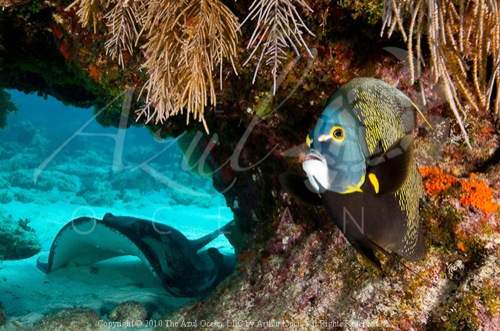
    2010 Key Largo – French Angelfish with Southern Stingray

    While diving a coral reef you often see nature gracefully orchestrating a concert of her beauty.  This image captures the natural beauty of a French Angelfish, the turquoise water of a swim through, the precise moment a Southern Stingray decides to swim away, all captured in slow motion that just grabs you!

    2011 Wakatobi – Red Whip Coral with the eye of a Mimic Filefish (Paraluteres prionuris) 

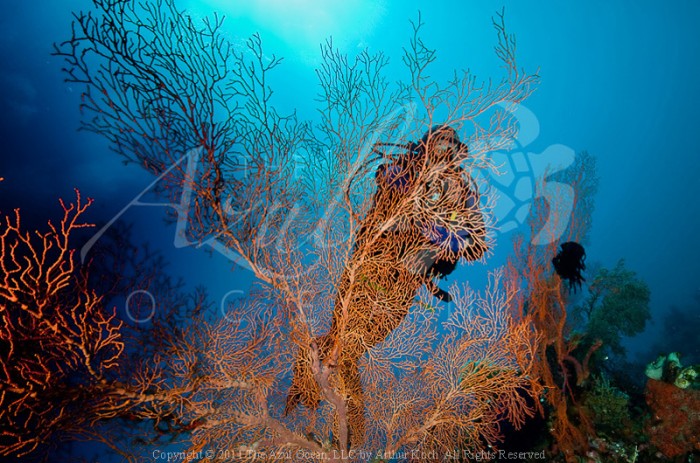
    This image is of a Mimic Filefish hiding in a growth of Red Whip Coral.  I spent the better part of 2 dives studying the fish’s behavior, potential photo opportunities and camera settings.  On the 3rd dive I captured about 10 images at different angles; the contrast of the yellow eye, red of the whip coral, the black background and the fish silhouette dramatically highlight the reefs delicate and often hidden magnificence.  This image marks turning point in my understanding of how to capture the oceans splendor and not just documenting its beauty.

    What new projects do you have on the table for 2012?

    I plan on exhibiting at 6 Art Festivals in Florida, South and North Carolina and Virginia. I’m leading an underwater photography trip aboard the Caribbean Explorer II in May to Saba N.A. and St Kitts.  I will also be attending Stephen Frinks Digital Masters Underwater Photography course in Bonaire, N.A. during July. In between, I'll be diving off Florida and the North Carolina coast. Please check Facebook for details and sign up for The Azul Ocean newsletter of other details and promotions that I'll be running in the near future.

    Where can Nerve Rush readers find more of you?

    You can find me all around the web. Here's a few good links to start:

    Massive thanks from the Nerve Rush crew to Arthur. We look forward to seeing much, much more of you and your work here at Nerve Rush in the near future.

    zp8497586rq
  • Introducing, 1000+ Gut-Wrenching Itineraries

    Introducing, 1000+ Gut-Wrenching Itineraries


    Nerve Rush HQ just got a little more fun.


    Greetings from Nerve Rush HQ.

    Happy Holidays and New Year! Here at Nerve Rush HQ, patiently awaiting the onslaught of winter (skeleton try-outs, anyone?), we’ve been experimenting with a few changes to our Internet home base. The biggest and most exciting of these changes is our partnership with Unreasonable Adventures, a perfect fit given the kind of impish, daredevil crowd you are.

    We’re now featuring 1000+ itineraries from around the world, trips you can research and book right here from Nerve Rush.

    Check them out!

  • Our Inaugural Gut-Wrenching Contest

    Our Inaugural Gut-Wrenching Contest

    ko generation 2 parkour shoeLadies and gentlemen of Nerve Rush fandom, I present to you one of the craziest, most insane contests you’ve ever seen. In all my years on the Internet superhighway, I have never come across a giveaway so epic in scope. Brace yourselves.
    We are giving away a pair of KO Generation 2 Parkour cross-training sneakers, the only shoes guaranteed to make you jump higher and longer, land more fluidly, flip more cohesively–you know, Parkour stuff.

    Contest Background

    Two weeks ago, the World Freerunning Parkour Federation reached out to Nerve Rush HQ to highlight some of their recent developments—an MTV episode featuring Daniel Arroyo, a number of kickass videos and a super snazzy online store, specific to Parkour training gear. The WFPF was righteous enough to suggest the giveaway, so give them some love.

    Contest Details

    We keep our entries easy over here. To enter, you must:

    [Answer this question in a comment below]: What’s the most extreme thing you have ever done?

    [Complete 1 of the following 3 tasks]:

    1. Follow us on Twitter (Already done so? SWEET.)
    2. RT this post using the amazingly awesome box at the end of this post.
    3. Like us on Facebook (Wait, already done this too? Aww, shucks.)

    We’ll narrow it down to 5 of our favorites. Then, we’ll open it up to you. Over 1 week, you can vote for whom you think deserves the shoes the most. Winner gets mad-ill Parkour sneaker swag.

    Once clad in the latest Parkour-friendly kicks, you’ll be able to do moves like this:

    [youtube id=”stsBxYWFgvY” width=”600″ height=”350″]

    Obligatory Fine Print

    • Commenting will close on January 31st, 2012. Voting will take place in February.
    • We know it’s a buzzkill, but for now the only shoe sizes available are men’s 9, 10, 10.5, 11 and 12. That is subject to change.
  • 17 Spectacular Photos from Inside a Wave with Clark Little

    17 Spectacular Photos from Inside a Wave with Clark Little

    Craig Little

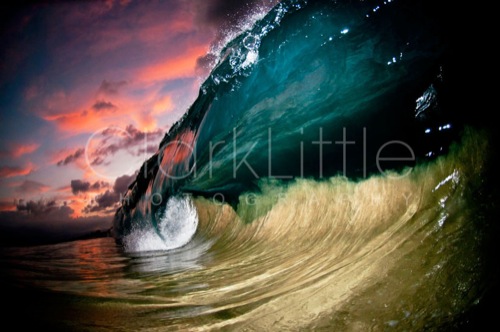
    Out in the water, there's nothing like a good wave. But the inside of a sick pipe is almost impossible to explain to someone who hasn't experienced it.

    Almost. That is, unless you're Clark Little. If you're Clark, you dive into these 30-40 foot waves with your incredibly expensive and bulky camera equipment, get battered by the waves and emerge with some of the most spectacular photos from inside a wave that you'll ever see. Check out this short video, Sandsliding, shot by Clark to get a taste of his craft.

    [youtube id=”2Bp4mQ14LMA” width=”600″ height=”350″]

    Surfing since the 80s, Clark made a name for himself on the Waimea Shorebreak on the island of Oahu in Hawaii. He discovered shore-break photography in 2007 when his wife asked him for a ocean photograph to decorate their bedroom. After heading out and coming back with a few photos, Clark was hooked.

    In the less than 5 years since, Clark has skyrocketed to the forefront of shore-break wave photography. And for good reason. He's been featured in National Geographic, the New York Times, LIFE, Geo, Sierra, Outdoor Japan and now Nerve Rush. Clark may be the very best in the world at what he does and the following photos will show you just exactly why.

    17 Spectacular Photos From Inside A Wave (By Clark Little)

    <a href='http://life4success.net/the-day-trade-forex-trading-and-information-systems' title='The Day T

    <a href='http://life4success.net/learn-catering-food-business-catering-recipe-related-products' title='Learn Catering – Food Bus

    iness, Catering & Recipe Related Products'>Learn Catering – Food Business, Catering & Recipe Related Products

    rade Forex Trading And Information Systems'>The Day Trade Forex Trading And Information Systems

    Clark uses specialized camera housings to protect the camera and deal with the surf break, but if you're looking to get your own wave photos, check out the waterproof Go Pro HD Surf Hero and see what you can capture. We'd love to see what you go out and capture.

    Special thanks to Clark Little for the usage of all photographs. All credit to Clark Little Photography.

    zp8497586rq
    zp8497586rq
    zp8497586rq
  • Inside the Underground World of Train Surfing

    Inside the Underground World of Train Surfing

    In America, trains don’t have the popularity that they once used to. On this side of the pond, the automobile and airplane still rule supreme. However, in other countries, trains are still a popular mode of transportation and are central to moving people and things around the country.

    So what do trains have to do with gut-wrenching adventure? More than you’d think.

    Enter Train Surfing

    Train surfing is based on a simple idea – instead of paying for a seat on the inside of a train, why not just ride for free on the outside?

    Train surfing is exactly what it sounds like and is a prime example of what happens when the practical collides with someone who’s got a taste for adventure.

    The sport of train surfing became popular in the 1990s in Germany as it was featured on television, and youth groups became attracted to the idea. Following injuries, the popularity of train surfing waned with a number of anti-train surfing campaigns.

    Train surfing was popularized once again in 2005 thanks to sites like YouTube, which allowed people to upload videos of themselves riding. The sport gained momentum and attracted a small but adventurous following, people seeking not only the thrill of riding but also the digital notoriety from their posted stunts. One leader of a German group of train surfers has even been known to ride the InterCity Express – the fastest train in all of Germany – at speeds of 300-400km/h (186-249mph).

    Similar to Parkour, train surfing celebrates no winners, and there is no score. The purpose is in the sport itself and exploring what dangers you’re willing to put yourself into.

    Train surfing is not without risks. Over 40 youths died in Germany alone in 2008 due to train surfing. Because of this, it is illegal in many countries and most places look at this as an incredibly stupid sport. We’re not sure we agree. While it’s definitely dangerous, most of the extreme sports we feature here would be considered by most people to be “stupid.”

    With all extreme things, there are always calculated risks you take throughout each adventure. Whether or not it’s a “stupid” risk is up to the adventurer themselves – only they know the true price of their actions and the value of the adrenaline rush they get. It’s sad that so many young people died – but as always, taks smart risks and know what you’re getting into. Whether you’re in India and need to get a ride for free or you’re in Germany and trying to get a thrill, hopefully you’ll have a little more background on train surfing and be able to make a smart and adventurous decision.

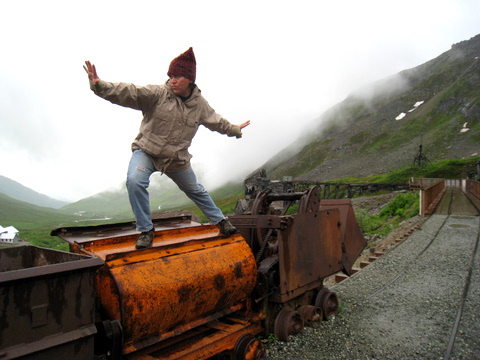
    [image via nomadjim]