Author: Abigail Wise

  • Dean Potter Performs the First Ever BASEline

    Dean Potter Performs the First Ever BASEline

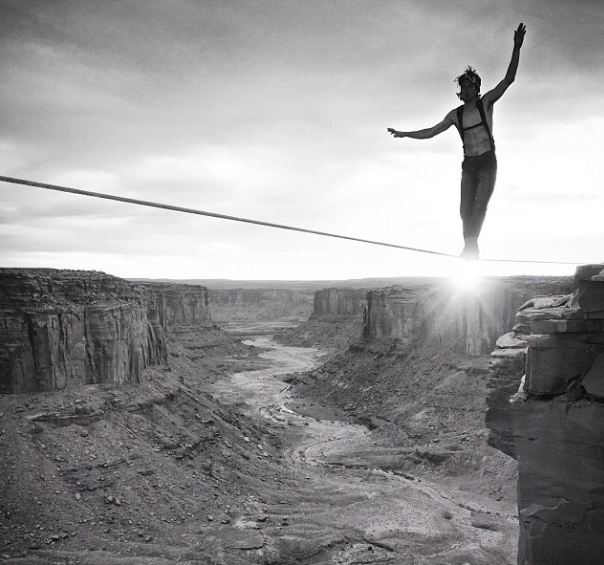
    Today, extreme athlete Dean Potter posted a photo on his Instagram feed of the first ever BASEline. He balanced, with his arms spread, across thin webbing, suspended above a deep canyon. While most would do everything in their power to stay on the line, clinging for dear life, Dean Potter was there to jump off.

    Dean Potter performed the first BASEline. BASElining, like it sounds, is a combination of BASE jumping and slacklining. Potter teetered across a line of webbing, wearing only his parachute pack and a pair of pants before diving into the air.

    Photo from Dean Potter's Instagram, by Jim Hurst
    Photo from Dean Potter’s Instagram, by Jim Hurst

    The feat was part of the promotion and research for Steven Kotler’s new book the Rise of Superman. The book examines the point of consciousness that all extreme athletes share. “How did they do it?,” the book’s website reads. “In a word, ‘flow.’ Flow is the source code of ultimate human performance. It is a rare and radical state of consciousness where action and awareness merge, self vanishes, time slows down and major aspects of physical and mental performance skyrocket.”

    With his Flow Genome Project, Kotler works to explore how this mental state allows rock climbers, snowboarders, surfers and other extreme athletes to make split-second decisions and push their bodies to the their limits.

    The book goes out on March 4, 2013, but you can watch the trailer here:

    [youtube id=”Utd1oeZuOb8″ width=”600″ height=”350″]

  • The History of Yosemite’s Camp 4

    The History of Yosemite’s Camp 4

    Camp 4, in Yosemite National Park, sees the sunrise last, leaving it a few degrees below chilly on any given fall day. Every morning, campers rise, many before dawn. They roll out of their tents, bundled in fluffy jackets and worn beanies, heat a quick breakfast on their portable stoves and pack up their shoes, ropes and slings before setting off with the hope of sending a new route.

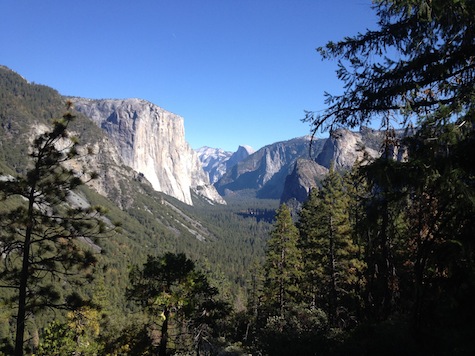
    Set deep in Yosemite Valley, west of Half Dome and east of El Cap, it’s no wonder that the crowded camp has housed world-famous climbers. As early as 1947, climbers such as Royal Robbins and Yvon Chouinard, who sent first ascents in the Valley, stayed at the campsite. As more climbers flocked to Yosemite, they set up camp at Camp 4, where they swapped techniques and climbing philosophies, making the campsite a sort of classroom for dedicated climbers.

    Many also credit Camp 4 with the founding of the popular sport slacklining. When climbers needed a rest day from a hard day on the rocks, they’d hook webbing around two trees and take turns balancing across the tightrope. Today, there are still a handful of slacklines set up in Camp 4, available for climbers to use while they break from sending big walls, just as they did decades before.

    In February, 2003 Camp 4 was officially listed with the National Register of Historic Places. In Yosemite’s news release of the registry, Linda McMillan, at the time Vice President of the American Alpine Club, said, “What makes this dusty little campground so historic and unique is its freewheeling, dynamic spirit and the people drawn to it over the decades. Camp 4’s spirit epitomizes the spirit of the American West–restless, unconventional, inventive, and filled with hope. Yosemite continues to offer new frontiers for the pioneers and explorers of its vertical walls.”

    Today, the climbing community still calls Camp 4 home. Some stay for weeks at a time, living on a diet of canned food and big walls. At the end of each day, climbers from Belgium, Italy and California come together to heat cans of beans and share stories from their day on the rocks. Some boast about newly sent routes, while others look for advice on how to tackle a stubborn problem. By 10 p.m. sharp, the camp falls silent and dying embers crackle softly as the climbers zip into their tents, drift off to sleep and prepare for the next day of climbing.

  • 5 Apps No Adventurer Should Be Without

    5 Apps No Adventurer Should Be Without

    In August, I loaded up my car with climbing gear, hiking boots, my new tent, my old, beat-up sleeping bag, my recently shaved dog and everything in between. We spent the better part of the last month road tripping from Myrtle Beach, north along the East Coast to Quebec, west to Montreal and back down south, along the Appalachian Trail. After three solid weeks on the road, I’ve come to appreciate my smartphone’s knowledge of the weather, sense of direction and ability to Google, “free camping [insert state here].” I also downloaded an embarrassing amount of iPhone apps throughout my trek. Here are the five I found most useful, that no adventurer should be without:

    AllTrails
    Price: Free

    AllTrails is the best hiking app on the market. Users vote on, review and contribute pictures from various hikes. Think of it as the Yelp! of hiking. With a wide variety of trails across the country, paths range from easy to difficult (and trust me, they mean difficult- many of the tougher climbs require technical climbing). Both mountain bike and hiking trails are featured, but hiking definitely dominates most of the database. The app features length, type of trail and all kinds of details, like if you should bring your dog or not. The best part is the option to search for trails around you, making AllTrails perfect for road trips and even discovering new hikes near home.

    Fishing Spots
    Price: Free

    This is awesome for finding good fishing spots nearby and what kind of fish users are catching. Users share tips for snagging the biggest catches in the area and demonstrate what type of bait to use. As far as apps go, it’s a bit on the excited side of notifications, but the information is incredibly useful and I’d highly suggest using this app if you’re looking for a new fishing spot.

    Slow Shutter Cam
    Price: $0.99

    Slow Shutter Cam’s simple to use and perfect for capturing starry night shots from your iPhone.

    Launch Sites
    Price: Free

    Those who travel with boats will love Launch Sites. It shows spots to launch kayaks, canoes and paddle boards all over the country. It has an extensive selection of over 17,000 launch sites across the U.S. Plus, fellow users report any fees, facilities and overall reviews of the launches.

    Woodall’s
    Price: Free

    Those desperate for a place to pitch their tent need look no further than Woodall’s iPhone app. Don’t let the name scare you. Although Woodall’s is primarily meant for RVs, there’s plenty of information about tent pitching too. Users filter their results based on location, pet availability and swimming sites. My only complaint is that most of the sites are in the $20+-range. I’d suggest checking out www.freecampsites.net before looking on the app, but it’s great in a pinch.

  • Mario Richard Dies in BASE Jump Accident

    Mario Richard Dies in BASE Jump Accident

    On Sunday August 18, Mario Richard, 47, was killed in a BASE jumping accident in the Dolomites of Italy. He left behind his wife, rock climber Steph Davis.

    The couple had been jumping in Trentino, Italy since the beginning of August. They’d made several successful jumps, but something went wrong in the air after Richard descended from Sasso Pordoi. Wearing a wing suit, he hit nearby rocks and had passed away by the time rescue teams reached his body.

    Richard, originally from Quebec, began BASE jumping in 1991. Even before that, enjoyed skydiving, but his love of the air goes back much further in time. In his website, he says he fascination with flight began as a child when he would craft garbage-bag parachutes for his G.I. Joe action figures. He and Davis lived together in Moab, Utah.

    Friends of Davis and Richard comment on Richard’s bravery and individuality. He will be missed by many. Andrew Bisharat, Editor at Large at Rock & Ice Magazine, posted a photo of a wing-suited Richard on Instagram Monday. In the caption, he wrote, “Mario, you were a rare bird indeed. May you fly free and your kindness, spirit, knowledge and inspiration live on.”

    [youtube id=”I3WmBXFof0A” width=”600″ height=”350″]

  • Wreck Diving in the Cold Water of Lake Michigan

    Wreck Diving in the Cold Water of Lake Michigan

    The only sound heard over the buzz of the motor as the boat cruised on Lake Michigan was “Everybody’s Got a Cousin in Miami” faintly tinkling tropical beats over the speakers. It was 50 degrees and sunny, but the wind had a leftover winter bite to it eight miles off the Chicago shoreline. The lake was blue and glasslike, clear with 100-foot visibility under the surface, an advantage of emerging early in the season before the algae started to grow. The water sat only 12 degrees above freezing. It was a cold day for wreck diving, even with a dry suit.

    “I hope you like Jimmy Buffett,” said Hank Fiene with a shrug to the blaring speaker. His grey hair danced a little in the wind as he looked over his shoulder, leaving both hands on the wheel. “Captain Jim’s crazy about him.”

    Captain Jim was a large man with a large personality. He had a tremendous smile and beer belly that jiggled beneath his under armor every time he bellowed a particularly enthusiastic laugh. His backwards baseball hat covered his thinning head of hair and his grey-white beard stood out against his tan face. The sunburned skin on his nose peeled away in places, exposing pink patches underneath. His hands gestured wildly whenever he spoke, which was often.

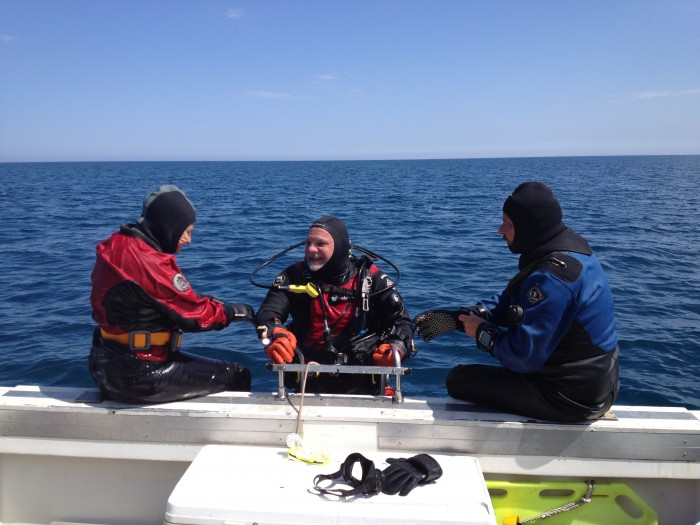
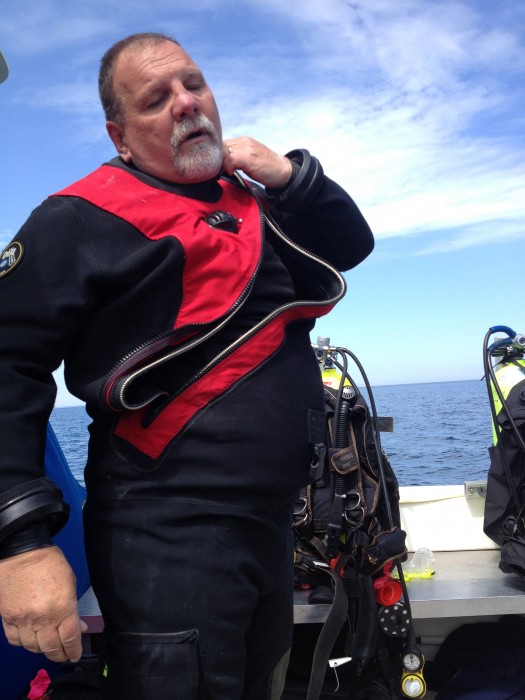
    As the boat slowed to a stop, Jim Gentile started to prepare for Windy City Diving’s first expedition of the season. Two days earlier, on April 14, he’d docked his boat at Burnham Harbor near the Planetarium. With a few grunts, he pulled his tight, black dry suit over his feet and legs, wiggling around as he yanked it over his hips and stomach. He gasped a couple times when he squeezed his head through the neck hole. “I think I gained a few pounds since the last time I wore this,” said Gentile as he tugged at the rubber lining that his large neck was spilling out of.

    Wreck diving in the freshwater of Lake Michigan offers a different experience than diving in saltwater. The freshwater doesn’t dissolve wood like saltwater does, giving divers the chance to check out a variety of old shipwrecks. Steamboats from the late 1800s, cargo ships from the early 1900s and one luxury yacht clutter the bottom of Lake Michigan.

    The shipwreck the Morais’ set out to visit that day was one that Gentile had sunk for his clients to observe. Gentile bought the Straits of Mackinac, a 204-foot car ferry, for $1 at an auction. First, Gentile, a former Environmental Protection Agency scientific diver, cleaned the ship, removing all of its lead-based paint, lubricants and espestice, an especially important precaution for the 33 million whose drinking water comes from the Great Lakes. Gentile used donations and fundraisers to fund the cleaning process. After selecting a spot and jumping through regulation hoops with organizations such as the Illinois Environmental Protection Agency and licensing with the Illinois DNR, a process that lasted 18 months, Gentile sunk the Straits.
    GentileThe day they sank the Straits of Mackinac, Gentile and Fiene set out at 5 a.m. They jumped into the icy water and Gentile swam around, scoping the space to make sure the zone was completely clear. The boat sits upright in 82 feet of water and Gentile and the Morais’ dove down to visit her on the 10-year anniversary of her sinking.

    Fiene, a long-time friend of Gentile, was along for the ride and to lend an extra hand, rather than diving into the 42-degree water himself. He zipped the captain in and both men went over to assist the first shipwreck scuba clients of the season. The clients were a South African pair. He laughed easily at Gentile’s jokes. She was quiet except for the loud, bright, sparkling blue polish chipping away on her fingernails. They both wore leftover tans from their diving trip in Hawaii a couple weeks earlier. After seeing the tropics, Antonetta, who had never been to the U.S. before, and her husband Frikkie Morais drove Route 66. Their final U.S. stop was Chicago, where they wanted to conquer their coldest dive yet: Lake Michigan.

    An Illinois native, Gentile grew up near Lake Michigan. He started diving on family trips to Florida 41 years ago at age 12. The scuba bug bit him. When he turned 16, he got certified. His instructor worked with Ralph Erickson, who went on to co-found the Professional Association of Diving Instructors, a training organization started in Chicago in 1966. It’s now the largest in the world. At the time, the certification process was mostly leftover military training. New divers stood by the side of a pool and tossed all of their gear into the water before diving in after it. The instructors told their students this was a valuable hiding skill to perfect if they were being shot at, an event Gentile doubted he’d encounter in his recreational dives. The entire process took between 12 and 16 weeks.

    Today, by watching instructional videos and sifting through readings ahead of time, the process is much faster. Gentile has certified divers in as little as two days. He requires divers to prove certification before jumping into the lake. He no longer certifies clients himself. Instead, he works with other companies in the Chicago area who take care of certification and rent equipment. Then, Gentile leads them into the depths.

    Gentile has accompanied visitors into the lake for 17 years. The first year, he took 30 divers into Lake Michigan. The next, he hit 70. Now, each year, he takes over 100 divers down. Depending on temperature, the seasons usually run from April to November, but Gentile loses 20% of the weekends to weather. Once the seas hit three feet, the waters require more skill to maneuver so too much wind is enough to cancel an expedition. The higher the waves, the higher the risk.

    Diving in Lake Michigan is different than scuba diving in more popular areas like the Red Sea or Turks and Caicos Islands. The freshwater is less dense than saltwater. Divers need less weight to maintain natural buoyancy in Lake Michigan than they do off the Pacific Coast.

    Even without the added weight for denser waters, the Morais and Gentile waddled around the ship in their gear. They moved bags and extra equipment to the front of the boat where it would stay dry. They secured zippers on their bulky suits. They strapped neon tanks of oxygen to their backs. They bounced up and down to stay warm.

    To combat the cold water left over from months of Chicago’s winter ice, Gentile requires his divers to wear dry suits if the water is colder than 55 degrees. Dry suits keep water out, which makes for better insulation in extremely low temperatures. Divers need a hearty soul to withstand the 42-degree water he and the Morais’ were plunging into. The cold temperatures require more cumbersome gear. “We tend to look more like spacemen than Caribbean divers,” said Gentile.

    Before jumping in, Fiene and Gentile grabbed three pairs of gloves and masks from an orange Gatorade tank of warm water. The scuba accessories steamed like breath on a cold, winter day as the three divers tugged them on. One by one, they plopped into the water. First Frikkie, followed by Antonetta, dropped into the lake. Each plunge sent sparkles of water flying, disrupting the calm lapping of waves. There, Fiene handed each diver a set of goggles, which they secured, grinning through chattering teeth. Finally, Gentile plopped in to join his clients, bobbing next to each other. Each grabbed the rope that would lead them to the bottom and followed it down to the shipwreck. As the cluster of bubbles floated farther away from the boat, the blobs of color blurred more until they blended completely with the dark below the surface. The only sound outside of the gentle lapping of waves was Jimmy Buffett twanging over the speakers.

    After about 20 minutes, the trio emerged from the depths. Antonetta popped up first, her goggles filled with blood. The pressure beneath the surface gave her a bloody nose, but she seemed unphased. She shrugged off any concern about the blood and eagerly waved for Fiene to help pull her out of the icy water. Frikkie surfaced next, chattering uncontrollably. Gentile surfaced last with a grin.

    All three divers fled from the wind to their dry possessions, quickly stripping off their wet scuba gear. The crew huddled together in the tiny, enclosed front of the ship, munching on Subway sandwiches. Antonetta said she couldn’t wait to tell her friends about the dive. They wouldn’t believe it. Jimmy Buffet returned to the speakers and Frikkie took sips of warm tea through his chattering teeth. It would be quite sometime before he stopped shivering.
  • Trail Running in Chicago

    Trail Running in Chicago

    muddy monk

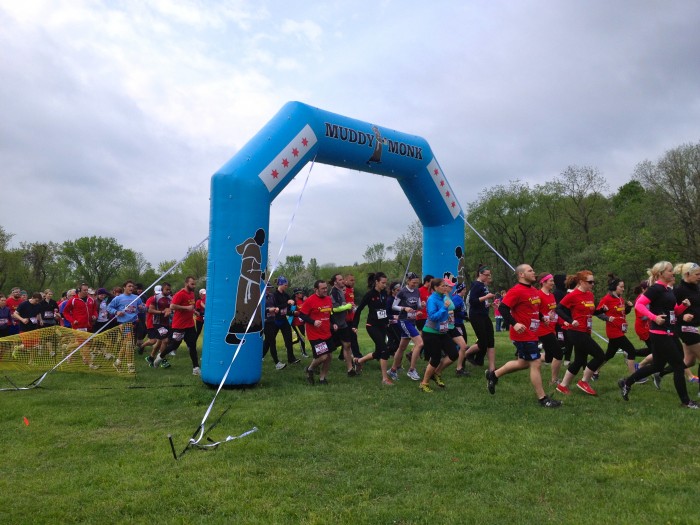
    Fidgeting racers wearing red T-shirts huddled behind the Muddy Monk race line. Serious runners, dressed in under armor, running bands and a watch to clock their times moved to the front. A herd of runners pushing strollers or running with dogs made up the middle of the crowd. In the back were the walkers, some even wearing blue jeans instead of running pants. The red shirts read “I heart Momma” on the front and the backs of some read, “I love my momma” while others proclaimed “I am loved.” It was the first annual Muddy Monk Mother’s Day 5K, one of 10 races this season.

    Trail runners are scarce in Chicago compared to either coast. Running enthusiasts often flock to Northern California, site of the Dipsea race, one of the oldest foot races in the U.S. Here, they can drive west to sprint along rough trails on shore of the Pacific Coast or head east to jog by the waterfalls and cliffs of Yosemite National Park. Others set out for New Hampshire, where they can weave through the White Mountains or compete in the Loon Mountain Race, one of the country’s most competitive trail running circuits. Instead of running through natural trails, most athletes in Chicago sprint along the smoothly paved Lake Shore Trail or weave through the loop and heavily congested Grant Park.

     For some runners, Muddy Monk events are their first real taste of trail running. Ryan Saurer, a tall man with a stocky build, first ran a Muddy Monk 10K in mid-April. Used to running on even terrain in Chicago, where he lives, the puddles and trees were new obstacles for him. “This was a whole new challenge cuz your ankles are rolling left and right in the mud,” said Saurer after the race, his shoes and calves caked heavily in mud.

    Because of the shortage of trail running opportunities in Chicago, Muddy Monk strives to build the trail community by hosting several trail races per year, each complete with a lively after party. Art Boulet, the founder of Muddy Monk trail races, runs a company that’s open to competitive racers who are focused on shortening their time, but those who are more interested in jogging through the course and grabbing a hotdog afterward are also welcome. Some of the less competitive runners would cross the finish line on May 11 nearly 50 minutes after the air horn sounded, averaging 16-minute miles, the pace of a quick-paced walk. That’s why Boulet works hard to organize snacks, drinks and prizes. He wants other urbanites to embrace the trail running community and enjoy the outdoors outside of the city. “I live in Wrigleyville so everything’s right there,” said Boulet. “All the great bars are there, but this gets me out of my neighborhood comfort zone and into the woods.”

    Excited chatter and children’s squeals rose from the crowd of runners waiting to start the Mother’s Day race. Dark clouds covered the sky. The chilly May morning air felt thick with rain and smelled of freshly cut grass. Eye of the Tiger pumped beats through speakers, the bass vibrating the soft ground nearby.

    The music went quiet as Boulet, stepped up to the mic. He wore a blue jeans speckled with mud stains and a blue and white baseball hat. His grey sweatshirt displayed four red stars framed by two blue, horizontal stripes, the Chicago flag. The name Muddy Monk is a nod to Boulet’s time at Princeton Theological Seminary and the dirty nature of trail running.

    “Thanks for coming out today,” said Boulet. He rolled up his sweatshirt, a tattoo of the Muddy Monk logo poking out from under his left sleeve. “Just a note about the trail: There are some muddy sections. Don’t be afraid to dive right through them or go around them. This is America. You have a choice.” Cheers rang from the crowd. Dogs barked. Children clapped. The air horn sounded and the racers were off.

    The runners pounded along the ground, soft after a night of rain. As they sprinted across the recently cut field, clumps of wet grass clung to their shoes and ankles. Majority of the more serious runners moved without a word, plugged into their headphones. Those in the back of the pack, trotted along, laughing and chatting about the brunch plans after the Muddy Monk as they headed toward the tree line.

    The races have come a long way from the first Halloween-themed one on October 28, 2012. Muddy Monk’s premiere event had three pieces of rebar on either side of the starting line with a fall-themed runner from Michael’s. At the October race, Boulet stood on a chair and said, “Ready, set go.” There were only two porta pottys for attendees, a large mistake he realized when he saw the mile-long line stretching from each. Just half a year later, the Mother’s Day race used bright yellow fencing and an inflatable start and finish line with the Muddy Monk logo printed on a light blue. Now, Boulet had a complete speaker system, music mixes and an air horn to get the racers going. This time, he knew to rent a whole line of porta pottys to scatter around the outskirts of the race area. In addition to learning from trial and error, the racers themselves also make helpful suggestions like the one to switch from the original plastic cups to paper ones so that they’re biodegradable if they blow away.

    Boutlet works with the trail coordinator from the Forest Reserve to obtain permission to use the land. Then, being a trail and ultra marathon runner himself, he tests out each trail before choosing it for a Muddy Monk event. He doesn’t measure for distance, he just runs through the grass, trees and mud. Then he returns home and maps it out on GPS to determine if it would be best suited for a 5K, 10K or half marathon.

    Nineteen minutes and 55 seconds after the racers disappeared into the trees, Anthony Katz crossed the Muddy Monk blow-up finish line breathing evenly. Mud splattered his bare calves, but his white T-shirt was dry. He’d barely broken a sweat. Members of the Boulet family cheered, handing him a medal and a finisher’s glass. He smiled and walked over to the finisher’s tent where music, bananas and Chicago Finch’s Beer Co. brews awaited him. Fellow runners chatting, munching on hotdogs and laughing between sips of cold beer would soon join him.

    On the course, one of the last waves of runners broke through the thick trees. They ran, their muddy shoes pounding the grass, mouths open, panting, gasping for air. A mother and son, with matching red hair jogged slowly, their hands clasped tightly together. They ran with the final blob of identical red race shirts that read, “I heart my momma” on the front. A sweat-drenched “I love my momma” was printed across the back of his shirt. His mother’s said, “I am loved.” Hand-in-hand, they crossed the finish line.

  • Kayaking in Chicago: Rain, Shine and Snow

    Kayaking in Chicago: Rain, Shine and Snow

    kayak chicago

    A line of kayakers bobbed like baby ducklings in the University of Illinois, Chicago pool, where just an hour earlier 10-year-old swimmers had raced each other, running laps through the lanes. The smell of chlorine was pungent in the humid air. Brian Westrick herded a group of five into the far corner of a pool. There, he demonstrated the lesson for the evening: slap, drop and roll.

    He smacked the water with his yellow paddle, sending drops flying onto his red, long-sleeved T-shirt and light brown hair. Next, he tilted his head away from the paddle in the water in a slow, dramatic movement. Finally, he rolled his hips, moving his weight away from his paddle and righting his tipped boat.

    The students, each sporting a life preserver and sea skirt, were there to master their kayaking skills. In Chicago, where Lake Michigan freezes during the long, winter months, kayakers head to the indoor pool to splash around. Some go to perfect techniques, while others just want to keep paddling. Dave Olson’s company, Kayak Chicago, has spent chilly months in the UIC pool for the last 15 years.

    On that April evening while rain poured outside, three separate organizations of kayak enthusiasts crowded the pool swarming together. Because all three were heavily involved in Chicago’s kayak community, many members from different groups spotted familiar faces across the pool. Olson’s Kayak Chicago students were there to learn the beginning moves of Eskimo Rolls. His instructors were also teaching Wounded Warrior kayakers, an organization that helps wounded members of the U.S. Armed Forces. Sharon Bloyd-Peshkin, a petite woman with big, blonde curls, helped lead the final group in the pool: the Chicago Area Sea Kayakers Association, a group dedicated to promoting safe paddling and protecting the waterways of the Chicago area.

    Chicago Area Sea Kayakers Association member Michael Taylor sat on the sidelines, watching members sign paperwork and zip into life jackets with a constant smile. Taylor, originally a boater, got hooked on paddling when he stumbled upon a kayaking magazine on a long plane ride seven years ago. “Girl, I couldn’t put it down,” said Taylor flashing his bright white teeth. “It was like a bug that bit me.”

    Since it was mid-October, a chilly time to launch a boat onto the Chicago rivers or lake, Taylor searched the web for indoor options. He came across Olson’s company and signed up for lessons at the UIC pool. In November, he bought the most expensive kayak the outdoor gear store Cabela’s sold, knocked down from $1,000 to $600 in the off-season.

    He never stopped kayaking. Today, he’s president of Calumet Waterway Stewards, a group dedicated to promoting Southland paddling and keeping waters clean for kayaking and canoeing enthusiasts. For his first time back to paddle the pool waters, he dressed in a bright blue shirt in thick black pants. He remembered how cold it was his first season in the chlorinated water seven years earlier.

    While Taylor’s fellow Chicago Area Sea Kayakers Association members exchanged greetings on the other side of the pool, Olson’s staff instructed Kayak Chicago and Wounded Warrior students. It was time for them to try the techniques Westrick demonstrated earlier. No one smiled or spoke for at least 10 minutes. One by one, they teetered back and forth, the sides of their boats barely dipping into the water.

    After several timid tips, one kayaker, a muscular man with a blue shirt, paddled to the center of the pool. His tattooed arms moved furiously. When he had as much space as he could find, a 10-foot circle of empty water around his yellow kayak, he began to tilt his boat with as much enthusiasm as he’d paddled. Swaying right and left, he dunked his yellow paddle into the pool over and over again. With a loud splash, he flipped his boat all the way over, forgetting to roll his hips away from his paddle as Westrick had demonstrated. Students around him stopped for a moment, watching as his bald head popped up from the pool lane. He glared at his up-side-down boat bobbing next to him.

    The onlookers returned to their cautious swaying, but Olson stayed still, watching. His lean body towered out of his bright yellow boat, his dark head of hair growing taller as he strained to see the bold captain of the overturned boat. A smile softened his angular features before he turned his boat and attention back to a middle-aged man splashing, on the verge of tipping himself.

    With summer finally here, the rivers and Lake Michigan have warmed up enough for kayakers to hit the outdoor waters. For tours, rentals and lessons check out kayakchicago.com.

  • Writing Rocks: The Story Behind Two of Today’s Biggest Climbing Writers

    Writing Rocks: The Story Behind Two of Today’s Biggest Climbing Writers

    matt samet climbing writerRock climber, journalist and former editor of Climbing magazine Matt Samet didn’t expect to become a writer. He originally started out studying geology at UC Boulder, but eventually switched to journalism. After graduating, he moved to Italy where he traveled Europe, reporting on the World Cup and sport climbing.
    Throughout it all, he battled an addiction to prescription drugs, which doctors had prescribed to him to help him cope with anxiety. The drugs affected his focus and vocabulary recall. He said his addiction hindered his writing ability because he couldn’t think coherently when he was coming off of them.

    Author John Long, on the other hand, had his own high: free soloing. Often credited for popularizing the form of climbing, Long pursued dangerous climbs in an effort to feel alive.

    “Climbing is not for everybody,” he said. “If you look at high performers doing these activities, they all tend to be people who gravitate toward intense experiences… A lot of times I wish I was like my daughter or someone else so that I wouldn’t have to do that to feel alive.”

    Long documented his free soloing experiences in one of his most prized pieces, the Stonemasters. The book depicts the dangerous climbs of famous adventurers in the 1970s. Published in 2009, the work took the Banff Film and Book Festival’s Grand Prize in 2010.

    Unlike Samet, Long comes from strictly a literary background, rather than a journalistic one. That’s never stopped him, however, from filling even his fictional tales with very real stories.

    “I don’t dream up some kind of thing and then go out and try to find an experience so I can write about it,” said Long. “I have always used a construct of fiction to write nonfiction stories, which is one of my tricks.”

    Long modestly credits his success as an author, as well as his free solo legacy, to the small amount of competition. He believes that because there weren’t many writing about climbing, and virtually none about soloing at the time, his work quickly rose to the top.

    “I’m not a journalist. I didn’t grow up studying journalism. I don’t do fact and figure stuff. I’ve always been a narrative writer,” said Long. “Literature is about experience and I always wrote from that perspective. Because I was one of the only guys doing that, I ended up being real popular. Not because I was any better, but because there wasn’t really anyone else.”

    Because of its small size, some question the quality of writing within the climbing community. While Long believes that quality adventure writing does exist, he doesn’t think that there’s an overwhelming amount of it.

    “The industry can’t support it [adventure writing],” said Long. “One of the reasons that I think I won so many awards on this stuff is because the bar’s so low.”

    Samet believes that it’s less rare to have both a strong climber and a talented writer. He knows many outdoor writers who are also trained journalists.

    “I certainly have put energy into both climbing and writing,” he said. “There are so many variants [of skill levels] that it’s hard to say that people are climbers first and writers second…I think that there’s plenty of education out there.”

    While his earlier work leans toward more technical writing for engaged climbers, Long’s most recent pieces strive to capture adventurous stories that even non-rock climbing readers would appreciate. The transition in his work is tied to the transition in his own life. These days, many of the people he’s surrounded by are part of the literary world, rather than heavily involved in his sport.

    “I’m trying to write that stuff for mankind, not a climbing audience,” said Long.

    Much of Samet’s work continues to cater to the climbing society. Last year, he published a climbing dictionary filled with the sport’s jargon. In Climbing Dictionary: Mountaineering Slang, Terms, Neologisms and Lingo, not only are words and phrases defined, but historical content is also thrown in. For example, for “harness” he examined what climbers did before harnesses and what the first ones looked like.

    Samet just released a memoir that documents his climbing adventures and battle against his addiction. Death Grip, a 300-page book, tells of how the author sought out risk, danger and adventure, while at the same time suffering from anxiety, depression, extreme dieting and a crippling dependency on benzodiazepines.

    “A lot of people think we have this glorious lifestyle where we jet around, and get assignments, and make tons of money, but it’s hard work like anything,” Samet said. “Even if you’re your own boss, you still need to sit down and kick your own ass at the computer when you’d rather be out playing.”

  • Why Rock Climbing Should Not be an Olympic Sport

    Why Rock Climbing Should Not be an Olympic Sport

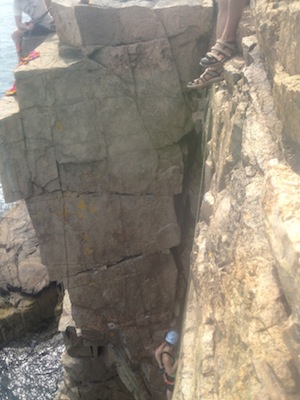
    It was a cool, July morning in the farthest eastern location of the continental U.S. and my dog and I were trapped between a rising tide and a 100-foot granite wall. Before rappelling onto the platform hovering over the water, my rock-climbing companion Marcus Basiri had convinced me that I could send the climb. He pointed out that I’d conquered higher grades on routes near our home in Boston. What my strong, agile friend failed to take into account was my crippling fear of unclipping myself 100 feet in the air to complete the final 10 feet of the route without any protection. My lack of sleep and Red Bull-induced energy were also working against me.

    Ted, my black Poodle-Bouvier mix, faced an even larger challenge. Four paws aren’t exactly ideal climbing equipment at Otter Cliffs. I decided to brave the Atlantic Ocean and swim to land, but the icy waves were too strong and cold for Ted’s 12-pound frame. Luckily, Tod, who was visiting Maine’s Acadia National State Park to lead a teen boy climbing expedition rushed to our rescue. He helped Marcus pack Ted into a backpack and teeter up the wall. Marcus’ chalked-up hands inched one over the other, grasping near-invisible ledges and cracks in the rough rock. His dark, shoulder-length hair remained secure in a low bun and Ted followed suit, keeping perfectly still. I swear he knew his life depended on it. The added weight pulled Marcus off balance, but finally, with Tod’s guidance, Ted and Marcus crawled up the wall to safety. If it wasn’t for the generous spirit of climbers like Tod at Acadia last summer, Ted may have been stranded at high tide.

    That’s the type of community that rock climbing consists of: people willing to sacrifice their afternoon to lend a hand. This type of sportsmanship is rare in a sports world often dominated by competition, prizes and rank. We read about steroid abuse, cheating and even gun violence surrounding athletes in basketball, soccer and football. Rock climbing steers clear of scandal, largely due to the laidback culture associated with the sport. Sport climbing making its way into the Olympic games risks sacrificing its tight-knit, encouraging community.

    In early 2012, the International Olympic Committee recommended wrestling be dropped from the 2020 Olympics to make way for a new sport. In September, wrestling will compete with baseball/softball, squash, karate, sport climbing, wakeboarding, wushu and roller sports for a place in the 2020 Olympics. Many climbing enthusiasts are eager to see their sport make it to the Games. Climber Adam Ondra admitted he’d compete if offered the opportunity, but plenty of climbers remain skeptical of the impact an Olympic slot would have on climbing. Those who embrace it for personal challenge, its tightly knit community or sheer adventure wonder how positive newfound popularity and enhanced competition will really be.

    Michaela Kiersch [18] visited her Chicago home gym, Hidden Peak, over 100 times in the last six months. She was training for climbing competitions such as the American Bouldering Series, the national bouldering competition, hosted every year in Colorado. In the past five consecutive seasons, Kiersch competed in three adult world cups, two adult world championships and five youth world championships, where she placed 16th in August 2012. Last year, she competed in nearly 20 competitions, including regional, national and world, at times placing just a couple spots below big industry names such as Sasha DiGiulian.

    But placing in national and world competitions is more than enough to satisfy Kiersch. Despite her success in the industry, she has reservations about rock climbing appearing in the Olympics in 2020.

    “I look at climbing as a giant family, but if it grows we won’t be able to get as close to each other because there will be so many people,” said Kiersch. “It will be about winning and the glory of being the gold medalist instead of accomplishing something great.”

    Kiersch worries that the familiar, friendly vibe of the climbing industry would fade with the sport’s Olympic acceptance. She admits the acceptance of rock climbing into the Olympics would bring the sport to more college campuses, resulting in college scholarships. Even though she’d love to pay for college with a climbing scholarship, she’s concerned that a newfound popularity would change her sport’s culture. At each competition, Kiersch and her competitors swap jerseys. This is how she makes friends from all over the world. Even the Russian climbers, whose instructors ban them from trading uniforms with other countries, have sneakily swapped with Kiersch, wanting to get in on the tradition.

    Not all rock climbers are as concerned as Kiersch about the impact of sport climbing entering the Olympic Games. Legendary rock climber Alex Honnold, whose fame for his free solo climbing and record-breaking speed has only gained momentum since he was featured on 60 Minutes in October of 2011, doubts the acceptance or denial will have much of an impact on the sport. He assumes that Olympic acceptance would bring some more mainstream media attention to the sport that’s already rapidly growing in indoor gyms. In fact, 1,000 people take up rock climbing every day at U.S. climbing gyms.

    “I don’t think that an Olympic appearance would drastically change that whole trend,” said Honnold. “It might speed things up a little bit. It might bring a bit more money to the sport, but probably wouldn’t revolutionize anything.”

    Although Honnold’s life surrounds climbing [he dropped out of UC Berkeley to live out of his van, traveling and climbing] and he holds records like his soloing of the Yosemite Triple Crown—Mt. Watkins, El Capitan and Half Dome—in 18 hours and 50 minutes, he doesn’t consider it competitive climbing.

    “Climbing is already pretty divided between indoor competition climbers and full on dirtbag adventurers,” said Honnold. “World cup competitors in Europe play a very different game than those of us who just climb outside all the time and travel and explore.”

    Acadia, Maine Otter

    While Honnold continues outdoor climbing adventures, joining climbing bums on Yosemite’s soaring granite domes, Kiersch spends her free time training kids at her home gym, not for the Olympics, but for the pure joy of watching their accomplishments.

    “A lot of people are inspired by the grades that pro climbers accomplish, but that’s not what inspires me,” said Kiersch. “I’m inspired when these kids overcome their fear of heights, send a problem that they’ve been working on for weeks or do four chin-ups instead of three. Accomplishing a goal that they’ve set and watching them get so excited gets me excited. The pro athletes are incredible for accomplishing such high grades, but in climbing, that kind of an accomplishment is more of a personal thing.”

    Allowing sport climbing into the Olympics goes directly against the personal goal achievement that Kiersch speaks to. It risks glamorizing the sport and shifting its focus from personal accomplishment to gold medals. This type of competition may negatively impact the kind of community that’s perfectly content practicing in a dirty old basement bouldering gym. It may even take some of the generosity out of climbers willing to sacrifice an afternoon of their favorite activity to save my dog Ted from a high tide. Do we really want to risk changing a sport where the champions are known for their encouraging words, generosity and pure love of the outdoors?

  • Chicago Climbs Rank, Not Mountains

    Chicago Climbs Rank, Not Mountains

    Michaela Kiersch [18] stared up at the colorful holds towering over her at a 40-degree angle. Around her, kids moved with the agility of monkeys up and down the walls, swinging, falling and hanging upside-down. “Dave, I’m gonna need a spot on this one,” Kiersch shouted across the chaos.

    She dusted some climbing chalk off of her black, yoga pants while she waited for coach Dave Hudson, an up-beat man with shaggy blond hair, to saunter over. Kiersch sat down, facing the wall and placed her feet on two holds. Her callused hands grabbed a higher hold and she began to move up the wall. She ascended slowly, but consistently, crossing foot over foot, hand over hand. Her muscular back flexed under her blue sports tank as she danced with the wall, her long, blonde ponytail swinging with each reach. Hudson stepped under her, supporting her with both hands, in case of a fall, but she never faltered. She finished the route and dropped to the mat with a thud.

    Hidden Peak Climbing Gym sits in the basement of a gymnastics facility in Goose Island, Chicago. A light dusting of chalk coats every shoe, couch and person in it. It’s about the size of a one-bedroom apartment and a wet spot appears on the carpet in the far corner of the room every time it rains. It’s a rough replacement for the soaring, granite domes of Yosemite or the steep, quartz cliffs of New York’s Gunks, but Chicago offers its climbers virtually no natural rock. Even without miles of mountains and boulders, this grungy rock gym turns out climbers strong enough to win national competitions. Kiersch is one of them.

    mk1

    In the past consecutive seasons, Kiersch competed in three adult world cups, two adult world championships and five youth world championships, where she placed 16th in August 2012. Last year, she competed in near 20 competitions, including regional, national and world, at times placing just a couple spots below big industry names such as Sasha DiGiulian.

    “At competitions, while you’re competitive, you’re cheering for your competitor… almost to do better than you. You want them to accomplish things that you know are pushing their limits,” said Kiersch. “It’s a really supportive community and I love that about it.”

    Even though she prefers sport climbing for its one shot, all or nothing opportunity at competitions, she’s training for the Open and Youth American Bouldering Series Nationals, held in Colorado Springs February 22-23 and March 1-3.

    Training involves three hours, four or five days each week, often focused on the same wall for 40 or 50 moves. Exercises cover everything from timed climbing circuits to chin-ups and pushups. Hudson sets new routes for his climbers every week. For Kiersch, the most challenging part of preparing for the 2013 American Bouldering Series was keeping momentum after a draining sport climbing season that spanned from February until October 2012. Her mental and physical exhaustion contributed to a rocky start, heading into her last youth bouldering season. Despite her shaky beginning, she’s stuck to a strict training schedule and hopes to do well at bouldering nationals.

    When she’s not training herself, Kiersch helps Hudson coach the rest of the youth team. Sophie [8] and Lila [10] admire Kiersch’s ability and encouragement. Both agree that Kiersch will sweep nationals. “I mean she is the 16th best climber in the world,” said Lila. “She’s my best climber,” said Sophie.

    Kiersch credits Hudson for the strong youth climbers coming out of Chicago in recent years. He trained Isabelle Faus and Kasia Pietras, who often make climbing news for difficult bouldering sends across the country. Though she started at a different gym, she headed to Hidden Peak in 2006 in search of Hudson’s training. Hidden Peak youth climbers often outperform those from other gyms with advantages of natural rock and larger facilities such as those in Boulder, Colorado.

    “I give Dave all the credit,” said Kiersch. “Our practices are more structured than the other teams [around the country]. He always comes to practice with a game plan: something we’re going to do and a reason it’s going to work.”

    Manager and coach Hudson has called Hidden Peak his home gym for over 15 years. He started climbing after college and broke into the climbing industry, managing gyms in California and Utah before returning to his hometown of Chicago.

    “The climbing scene in Chicago is a good one and smaller than some cities, but it’s no longer ‘small’ anywhere these days with the strong growth in the sport over the last 10 years,” said Hudson who loves the size and culture of Hidden Peak, in particular. “The Peak is great because it has that old school, almost co-op feel and friendliness.”

    Despite the strong cultural environment at Hidden Peak, Chicago climbers like Kiersch are starved for natural walls. Kiersch, along with other Hidden Peak members, often drive seven hours south to Kentucky’s Red River Gorge on a Friday evening, set up a tent in the middle of night, wake up, climb, sleep in a tent again and pack it up in the morning to drive back after another half day of climbing on Sunday. “Climbing outside is a nice oasis,” said Kiersch. “You get to warm up at your own pace instead of doing drills. You give it a good attempt because you want to, not because you have to.”

    The sport has seen a recent surge in gym climbing popularity. One thousand people take up rock climbing every day at U.S. climbing gyms. This trend will likely continue if rock climbing is accepted as an Olympic sport. Kiersch also believes that the acceptance of rock climbing into the Olympics would bring the sport to more college campuses, resulting in college scholarships. Even though she’d love to pay for college with a climbing scholarship, she worries that a newfound popularity would change her sport’s culture.

    “I look at climbing as a giant family, but if it grows we won’t be able to get as close to each other because there will be so many people,” said Kiersch. “It will be about winning and the glory of being the gold medalist instead of accomplishing something great.”

    While enthusiasts rally for the sport to be the next Olympic game, Kiersch will keep climbing routes in the grungy basement gym of Hidden Peak. Even though she spends majority of her time on the same, sloped wall, Hudson habitually switches up his the routes, bringing new challenges to his Chicago team.

    “I love that the movements are different every time you climb and there’s no limit to it,” said Kiersch, sitting in her tiny, home gym that she’s come to over 100 times in the last six months. “There’s always going to be something harder to climb.”

    Kiersch took second place at the Female Junior 2013 Bouldering Youth Nationals and Isabelle Faus placed third in the 2013 Female Bouldering Open Nationals.