Author: Abigail Wise

  • 5 Must-Have Apps for Rock Climbers

    5 Must-Have Apps for Rock Climbers

    We may head to the crags to unplug, but there’s no doubt that a little technology can go a long way toward your success on the rocks. Maybe you need a guide, or a few creative knots in your back pocket (figuratively and literally), or maybe you’re after a spot to pitch your tent. No matter which you’re after, here are five apps no rock climber should leave home without:

    The Mountain Project

    Screen shot 2014-09-29 at 9.36.49 PM

    The Mountain Project has long been acknowledged as a leading app for finding the best routes. The app is essentially a digital climbing guide that fits in your pocket. While the app definitely has a few bugs to work out, compared to the website, the developers have done an excellent job of creating a platform where climbers can share the routes and problems in areas around the country. Because of its widespread user base, major climbing areas are covered well and only continue to grow as more people use the application. It also divides climbing spots into type of climbing, along with grade, making it a step above many other digital climbing guides on the market. The Mountain Project is easily one of the widest spread, most used climbing networks.
    Price: Free

    KnotGuide

    Screen shot 2014-09-29 at 9.35.13 PM

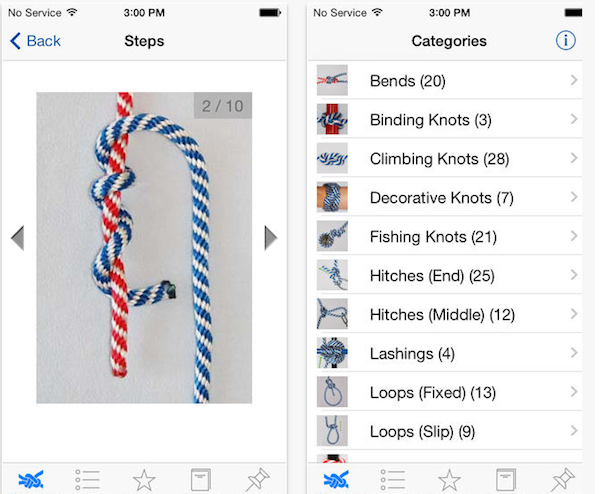
    Setting up anchors? Tying into a climb? Download KnotGuide. The beauty of setting up anchors is the creativity that goes into it. Depending on the equipment you have and trees and boulders you have to work with, there are countless ways for you to tie in. KnotGuide expands that creativity by increasing your knowledge of knots. Look up ones you’ve heard of or browse new knots. Either way, you can expand your climbing capability by increasing the flexibility of your anchor setting skills.
    Price: Free

    REI

    Screen shot 2014-09-29 at 9.33.26 PM

    In a pinch where you’re stuck on a climbing trip and suddenly realize you need more gear? REI has one of the most advanced outdoor adventure shopping apps out there. Not only can you find the closest REI to you, but you can do your research. Read up on the favorites of the nuts, ropes or shoes that you’re after, but not based on REI’s word. The reviews on the app are written by actual customers. Plus, REI’s return policy remains unbeatable.
    Price: Free

    Camp Finder

    Screen shot 2014-09-29 at 9.27.56 PM

    It’s not all about sending new ascents. When you’re on the rocks, eventually you’ll need a place to stay. Camp Finder helps those who love the outdoors find camping and RV spots across the country. It includes maps, photos and price ranges, so you always know exactly what you’re getting into. The app takes a bit of time to load though, so allow for ample internet connection or extra loading time.
    Price: $3.99

    Yonder

    Screen shot 2014-09-29 at 9.30.40 PM

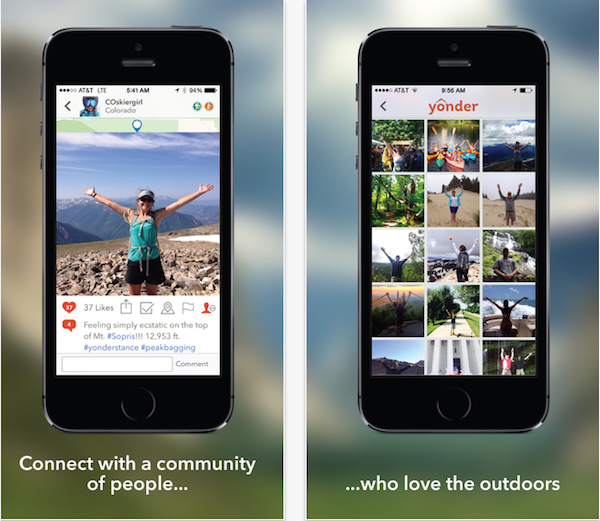
    Want to document your adventures on the mountains? Instagram tends to be crowded with inspirational quotes and food porn. Instaead, upload your pictures to Yonder, a photo sharing channel made specifically for the outdoor-minded. Here, you can post your adventure shots to those who actually appreciate and love the great outdoors.
    Price: Free

  • 5 Ways Rock Climbers Make The World A Better Place

    5 Ways Rock Climbers Make The World A Better Place

    Much of the focus in climbing media is centered around the great feats of talented athletes. We throw around speeds, grades and the phrase “free-climbing” to talk about triumphs in the community. What we don’t always hear as much about, however, are all of the other accomplishments rock climbers make. Being a climber means more than possessing killer strength and solid technique. For many, it also means a big heart and giving back to the community. Here’s how rock climbers make the world a better place.

    Climbers love the environment.

    leave no trace

    Like many outdoor adventurers, rock climbers care a whole lot about the place they spend so much of their time. National parks, state parks and Mother Earth in general are of great interest to many in the climbing community. Outdoor clothing company Patagonia has long been applauded for their strides toward environmentalism.  Many climbing areas and camps stick to a strict “leave no trace” policy. Sure, every now and then a climber behaves badly, but before Mother Earth can punish them, there’s usually a swift reprimand from fellow climbers.

    They spread energy.

    alex and van

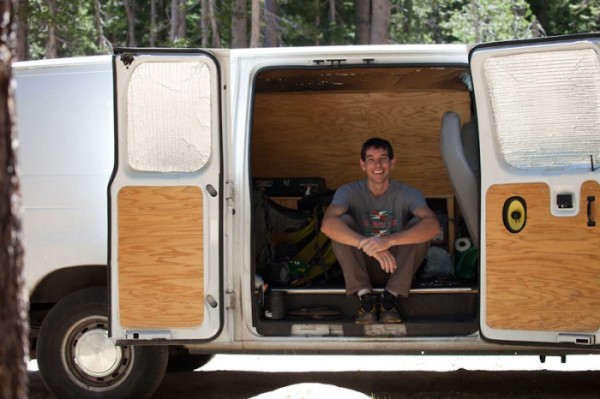
    In addition to valuing our world overall, many rock climbers have taken a special interest in renewable energy. Solar power company Goal Zero sponsors Alex Honnold, who owns and lives in a van completely powered by sunshine. His mom’s house also has solar panels, he says in an interview with NatGeo’s Adventure Blog.

    But beyond personal use, Honnold helps spread energy to those in need. The Honnold Foundation has helped support nonprofit solar projects. One included using solar power to bring residents in the Kayenta Region of the Navajo Nation clean water access.

    Climbers lead lives of health and well-being.

    sasha

    In a country where more than one third of adults are obese, approaching wellness consciously is important. And though, as a group, we may guzzle a bit too much beer and eat Ramen on the regular, overall, we care about our health (or at least live a healthier life than most without even realizing it).  Not only does climbing build solid, lean muscle, but it gets our hearts pumping from more than just adrenalin. An hour of climb time can burn more than 700 calories. All of those hours logged outside also result in a serious brain power boost, increasing memory, energy, creativity and relieving stress.

    They help at-risk youth.

    Screen shot 2014-09-04 at 6.50.03 PM

    Rock climbing has been proven to do wonders for self-efficacy, not to mention the sheer joy of overcoming fear and challenges. Organizations like Escalando Fronteras (Climbing Borders)  use this knowledge to help at-risk Mexican youth stay away from drugs, gangs and organized crime. By exposing children and teens to new opportunities that they may not otherwise experience, the organization strives to take advantage of the positive mentality that so often comes with climbing.

    Rock climbers inspire all of us.

    lynn hill

    Whether you climb or not, you can still be awed by the feats of some of the greats.  Lynn Hill paved the way for women climbers around the world, being the first woman to climb a 5.12d and the first to free-climb the Nose in 1993. In 1975, John Long had been the first to climb that same rock face in one day. Honnold climbed the three biggest rock faces in Yosemite in under 19 hours. Dave Graham and Daniel Woods eat V14s for breakfast. Climbers like these show us persistence, heart and a whole lot of badass. Climb on, guys!

  • How to Plan a Micro-Adventure on Your Bike

    How to Plan a Micro-Adventure on Your Bike

    Last week, my friends Andy Owens and Richard Cammett (accompanied by the lovely Abby Smith — and our two dogs Willow and Ted — in the car) rode bikes from Manhattan to Montreal. The boys were pros, having done the trip from Boston in their college years. I was a total noob, who definitely struggled, but am proof that you don’t need to be a diehard cyclist to plan your own biking adventure.

    I skinned both knees, got some gnarly bruises and even sat out for portions of the trip. But, as they say, you live, you learn. Here’s how to plan your own long distance cycling micro-adventure — minus the physical injuries.

    Step 1. Pick your destination.
    Choosing your cycling destination can be as systematic as a lottery raffle. We headed to Montreal because the boys had already made the trek from Boston several years before. If you want a little more order than throwing darts at a map, consider the following:

    • How long do you have to travel? Are we talking a weekend or a full week off of work? Also, ask yourself if you’d like any rest days and how much time you’d like to spend at your destination.
    • How many miles do you want to log every day? We rode roughly 100 per day (although I cheated and jumped in the car for dozens of miles here and there). I wouldn’t suggested more than 80 for beginner cyclists, but if you’d like to stop and sightsee along the way, you can always bump it down to 50. Then, crunch the numbers and figure out how far you can travel.
    • Pick a place that’s exciting to you for some reason. For us, Montreal was a lively city AND we got to cross the Canadian border (which makes it feel like you’ve logged some serious miles). Maybe you want to head south because you’re a diehard BBQ fan or maybe a band you like is playing in a city a couple hundred miles away. Choosing a destination that excites you is key to making all of your hard work feel worth it in the end.
    (cred: Abby Smith)
    Andy taking a water break (cred: Abby Smith)

    Step 2. Get your gear.
    I started the trip with virtually nothing, not even a bike, meaning I learned the very basics. Before you head out to REI or EMS, determine if you’ll have car assistance or not. Without a car, you’re going for the lightest, most minimal luggage ever (we’re talking dirty cycling shorts every day), but with a car following you, you have a lot more flexibility in terms of what you pack. We were lucky enough to have car assistance. This is the gear we couldn’t have succeeded without:

      • A bike: I’m sure most people interested in pedaling across the country not only already have a bike, but also know a lot more about them than I do. If you don’t, people like these guys can certainly help you out. Here’s what I learned from my trusty pals and my own experience: The lighter, the better (read: carbon fiber). Correct fit counts (ask the workers at the shop to help you with this one). Electronic gear-shifting systems are seriously smooth. And bikes are majorly expensive. I was lucky enough to get a BMC granfondo on loan that fit all of my above recommendations. It was incredibly fast, comfortable and easy to ride. It’s also worth more than my car and WAY out of reach had I needed to buy it myself.
        Cost: About $700 – however many thousands of dollars you’re willing to spend
      • Clip-in pedals: These are those small pedals that attach to cycling shoes. They allow you to pull, as well as push, with each pedal stroke. They’re essential for long distance trips because they distribute your leg power more efficiently and make your pedal rotations much more effective.
        Cost: I spent about $250 on both the shoes and pedals
      • Bike shorts: Trust me on this one. Your butt will thank you later.
        Cost: Around $30
      • Cycling gloves: These prevent blisters from the handlebars. They are 100 percent necessary. Go for lightweight ones with vents if you’re doing a summer ride. Sweaty hands are no fun.
        Cost: Roughly $25 – $50
      • Spare tubes: I packed three spares for our 400-mile trip and didn’t use one. One of the guys, on the other hand, blew through four on the first day. It’s better to err on the side of caution with these.
        Cost: $8 per tube
      • Spare tire: This is wise if you’re riding over a few hundred miles. I didn’t use mine, but one of the guys did. If you’re riding a route without bike shops along it, you probably want to pick one up before your trip.
        Cost: $50 – $70
      • Sunglasses: Not only will these shade your eyeballs from the sun, but they’ll also protect them from wind, bugs, rain and whatever else may be flying through the air. You don’t necessarily need to invest in cycling glasses – just make sure they fit under your helmet comfortably.
        Cost: $25 – $300
      • Either a jersey or saddle bag (or both): These carry your snacks, spare tubes and whatever else you’re bringing along.
        Cost: $40 – $60
      • Helmet: Duh.
        Cost: $50 – $250 

    Step 3. Train. Hard.
    This is the step that I made the biggest mistake on. I definitely didn’t train hard enough. Riding to work is not enough unless your commute is 50 miles. Start small with 15-mile rides and work your way up to the distance that you plan to ride every day on your trip. Also, unlike training for a marathon, at first you’ll want to allow 24 to 48 hours between long rides to let your muscles recover. But eventually, you’ll want to ride long distances back-to-back because that’s what you’ll do on your adventure. I started training about two months before the trip and that was definitely not enough, even with hard training. For a newbie setting out on a 400-miler, I’d suggest at least four months of prep. You may even want to Google around for a set training program (this 20-week one looks pretty legit). Something else that I learned the hard way? Clip-in pedals aren’t as easy as they look if you haven’t used them before so practice ahead of time.

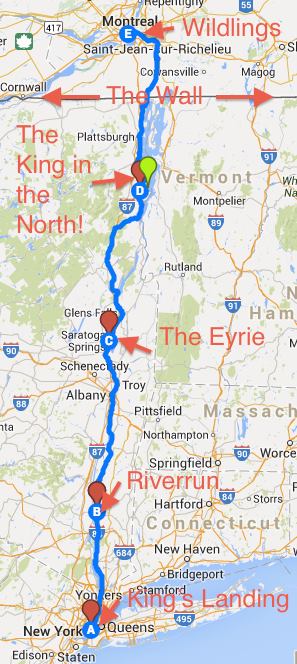
    Our route, Game of Thrones style (cred: Andy Owens)
    Our route, in Game of Thrones style (cred: Andy Owens)

    Step 4. Plan your route.
    Google Maps offers mostly reliable cycling directions, and I’d suggest using this to plan your route. We camped along the way, using sites found at state parks or from this awesome site. You could also stay in hostels, use Couchsurfing or Warm Showers, which is pretty much the cycling equivalent. My one word of advice would be to plan your stops directly along your route. Ten extra miles may not seem like a lot now, but it sure feels like it after you’ve already logged 90.

    Step 5. Pack your grub.
    How you approach this part is pretty personal. We basically lived off of Clif bars and energy gels, with a daily diner lunch. We also packed freeze-dried meals for camping. I always like to cook something that’ll reheat well (in this case, beans, chicken and rice), freeze it the night before the trip and bring it along to heat on a camping stove or fire the first night. That way, you’re not living on Ramen the entire time. Keep in mind that eight hours of cycling burns around 4,500 calories, so pack plenty and keep a couple granola bars on you at all times. Also, account for water, especially if you’re camping at sites without potable water. I filled up my two 20-ounce bottles every 25 miles or so.

    Step 6. Map out breaks.
    Don’t pedal through the miles so quickly that you can’t stop and enjoy the scenery. We stopped after day three of our four-day ride to take a full 36 hours off of the bike seats. Luckily, the boys had a friend from college who worked on a farm in upstate New York. We spent a day weeding crops, feeding pigs and chowing down on her amazing, homegrown meals. I’d highly suggest planning out breaks like these along the way. They make all of those miles more bearable and will often be the most memorable parts of your cycling micro-adventure.

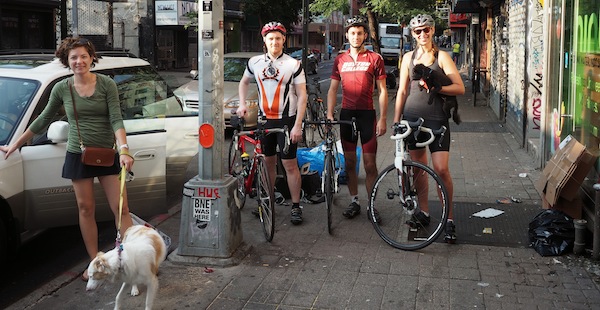
    From right to left: Abby S., Willow, Andy, Richard, me, Ted (cred: Chris Robles)
    From left to right: Abby S., Willow, Andy, Richard, me, Ted (cred: Chris Robles)
  • 7 Indoor Rock Climbing Gym Workouts

    7 Indoor Rock Climbing Gym Workouts

    Not all of us are lucky enough to live the dirtbag lifestyle, climbing outdoor rock on a daily basis. For those of us tied down by, you know, bills, careers, families, school or other obligations, it’s important for us to keep up — or even increase — our strength and technique at our local gyms. That way, when we hit the outdoor routes on the weekends, we’re ready to climb, send and conquer. Here are 7 indoor rock climbing gym workouts to practice at the local walls and get you ready to hit the crags.

    1. Build endurance by traversing the gym.

    indoor rock climbing training

    One of the fastest ways to build strength, technique and endurance is to traverse around the entire gym or bouldering cave. Set a stopwatch and climb. Focus on moving smoothly the entire time and continuously keep on climbing. Because you want to emphasize proper technique, don’t climb until the point of total exhaustion. Instead, work until you start to notice your hands and feet getting sloppy. Call it quits and try it again in another couple days. Remember, it doesn’t really matter how challenging the moves are as long as you’re continuously moving. Make it your goal to increase your minutes on the wall every single time you practice this traverse exercise.

    2. Grow strength on a campus board.

    Legend has it that the famous sport climber Wolfgang Gullich invented campus boards when he installed the first at his gym, “the Campus Center” (hence the name) in the late 80s. Since then, climbers have used the boards to build finger, arm and core strength by ascending and descending them using only their hands. To get started on one at your own gym, hang, with your fingertips, from the lowest slab. Engage your core and lift your bodyweight up until you’re able to grab the next slab with one hand. Repeat, using alternating hands, until you work your way to the top. If that’s too challenging, try beginning from the top and working your way down, slot by slot, in a controlled descent. Then, when you’re stronger you can aim for an ascent. As you advance, you can begin to go for longer reaches by skipping a slot or two between each grab.

    3. Perfect your hand technique by practicing weight distribution through different holds.

    One of the most important parts of climbing is knowing which holds require which type of grip and using your knowledge (and fast reflexes) to adapt quickly to new routes and problems. The Self-Coached Climber by Dan M. Hague and Douglas Hunter suggests building strength and technique on several types of holds. Some of the more challenging, yet most important holds to practice include:

    • Slopers: These are generally large holds with smooth, yet fairly gradual angles. They often require using a flat, full hand and grabbing the hold as close to the wall as possible. It can also be helpful to position your weight under the sloper, keeping it as low as possible.
    • Pockets: Named after their shape, these are often easy to grab, creating little bowls for your fingers to reach inside. However, they almost always only allow enough room for less than four fingers. The more challenging ones only fit a finger or two though. To practice these, work on your finger strength, choosing your strongest fingers to support your weight, careful to build strength in an effort to avoid injuries.
    • Pinchers: A pinch, or pincher, requires you to use your fingers and thumb in opposition, creating a claw-like grip. Because fingers are often stronger than a single thumb, try to position your weight across from your fingers so that they are forced to bear most of the weight through opposition.
    • Crimpers: Crimpers are tiny, horizontal notches in the rock, with a small ledge just big enough to fit your fingertips. They’re usually cut at a 90-degree angle. Because it can be tough to hold your entire weight on only your fingertips, try practicing these by laying your thumb flat across your fingertips, pressing down to provide extra security and strength.

    4. Get into some fancy footwork by climbing without your hands.

    One of the most common mistakes beginner climbers make is trying to drag themselves up the wall with their arms, not realizing that focusing on footwork creates a more efficient use of energy. But you don’t have to be a beginner to work on improving the way your feet climb. One way to force yourself to really focus on your lower half is to climb with a tennis ball in each hand, rolling along the wall. This way, you can still lean and balance against the wall, putting weight in your hands, but your feet will have to do all of the fancy work. Focus especially on using your toes, the most flexible, and therefore versatile, part of your foot.

    5. Run.

    rock climbing workout running

    Even if you’ve never logged more than a couple miles in your life, running can help improve your climbing endurance. These days, most major gyms offer a treadmill or two, along with some free weights, so take full advantage of these amenities! If you’re a total beginner, start out by setting small goals for yourself or even doing a combination of running and walking. Hate pounding along on a treadmill? Ditch your gym for the great outdoors and feel the wind in your hair and the pavement (or even better, trails) under your feet.

    6. End your climbs with pushups.

    rock climbing pushup training

    All of that pulling yourself up the wall can be exhausting on your muscles, so, according to instructors at Earth Treks in Maryland, it’s important to end your climbing workout with the opposite motion. The perfect opposite to pulling? Pushing. Not only are pushups great for your arms and legs, but they’ll work your entire core, which is vital to becoming a stronger climber. It doesn’t matter if you can do five or 50. Challenge yourself, power through and end your climb session on a high note.

    7. Get your yoga on.

    rock climbing yoga workout

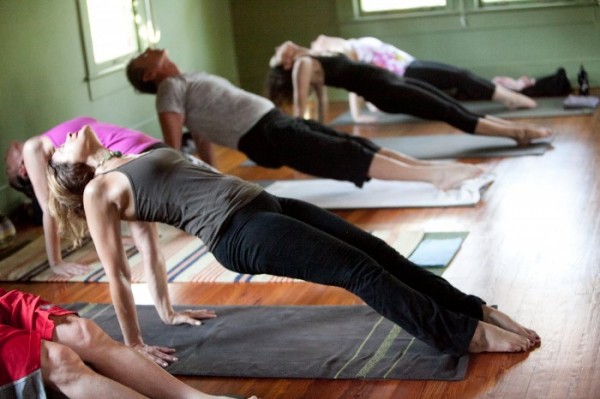
    Yoga helps climbers increase flexibility, build strength and work on their mental focus. That’s why more and more gyms are starting to offer classes to their members. Sign up for a class, enjoy yourself and try to practice at least a couple times each week. Namaste to that!

  • 7 Best Beginner Places to Rock Climb Around the World

    7 Best Beginner Places to Rock Climb Around the World

    There’s nothing like the feeling of fresh air, the beating sun and rough rock under chalked hands. But you don’t have to be Alex Honnold to enjoy some of the best crags in the world. Whether you want to jet overseas or stay put near your hometown, odds are there’s a good fit for you in one of these seven best beginner places to rock climb around the world.

    7. Frankenjura, Germany

    Don’t let its reputation for challenging sport climbing fool you. Frankenjura has over 8,000 established routes, including nearly 300 graded under 5.9. Known for its pocketed limestone and variety of route lengths, there’s a little something for everyone in this land of crags and picture-perfect forests. Beginners can fool around, build up technique and pick up some knowledge by watching the experts go hard on their down time.

    6. Red River Gorge, Kentucky, U.S.

    Some of the most popular climbing spots in the country aren’t necessarily the best for beginners. The East Coast Gunks, for example, is filled with trad routes, many of which are multi-pitch.  Seneca Rocks has a bit of sport climbing, but is still made up of almost solely traditional routes. Red River Gorge, however is about 2/3 sport climbing. The area saw a surge of traffic in the ’90s, which was when many of the bolts were put into place and continued to grow. While it’s a safe bet that newbies will run into some serious climbers at the Red, every weekend during the on-seasons the place is packed with a wide variety of levels, beginners included.

    5. Wye Creek, Queenstown, New Zealand

    Wye Creek sits just outside of Queenstown, the “adventure capital of the world,” and is home to an annual climbing festival each January. While mostly sport, Wye Creek offers a gigantic bang for its buck. Set on a cliff overlooking a bright blue, glacier-fed lake, even a short and simple climb feels like you’re on top of the world. The climbs are satisfying, and doable for beginners, but nothing beats the view.

    4. Boulder Canyon, Colorado, U.S.

    There’a reason that Boulder breeds so many serious climbers. The state offers an abundance of climbing options, meaning they’ve got a fair share of easier routes mixed in with the more challenging ones. Boulder Canyon features over 400 routes graded 5.9 and below, not to mention nearly 200 spots to set up a toprope anchor, for those not yet comfortable with sport or trad. Plus, it doesn’t hurt to kick back and enjoy Boulder’s killer beer scene after a hard day of climbing.

    3. Railay, Thailand

    railay beach rock climbing For those who are new to the sport, Railay, Thailand offers one of the most exotic places that still has a fair share of beginner routes. The pocket of paradise, accessible only by boat, features soaring, dramatic cliffs over the sparkling, blue water that surrounds the tiny island. With thousands of routes to choose from, a beginner is bound to find more than a few right up their alley. To make matters easier for climbers not yet comfortable with trad, nearly half of the routes in Railay are already bolted, making it simple to clip in and climb or boulder right over the water, where the warm waves will catch your fall.

    2. Yosemite National Park, California, U.S.

    Yosemite is known around the world as one of the most magical places to climb. With gigantic domes and magnificent cliffs, driving toward the park’s tunnel feels a bit like entering a different time. Thousands of climbers sweep through Yosemite’s granite each year, speaking different languages, living out of vans, tents and cabins and enjoying their sport in what’s arguably the climbing mecca of the world. And the park’s history is as rich as its climbs, including the famous Camp 4, a campsite-turned-climbing-classroom that bred some of the greatest stone masters of all time. Yosemite National Park is well worth a visit for any beginner, even if only to soak up some history and observe the greats.

    1. Your Neighborhood Gym

    The truth is that if you’re very new to the sport, it’s typically not safe nor practical to head outdoors right away, unless you have an experienced mentor or guide. For most people just taking on climbing, it’s easiest, safest and tremendously cheaper to start in your local rock gym. Sure, it may not be as glamorous as Thailand, Germany or Yosemite, but indoor climbing is a solid way to quickly build strength, technique and a circle of climbing buddies.

    Did we miss any? Let us know in the comments below!

  • The Top 10 Most Extreme Foods

    The Top 10 Most Extreme Foods

    Whether it be sports of food, the word extreme means something a little different to everyone. When we’re talking about the most extreme food, it’s a tough call to make. Which specific quality makes a food the most extreme? Is it the one that burns a hole in your mouth, the dish so disgusting that just the thought of it makes your stomach turn or is it a plate so large it could feed a small village? With sports, rock climbing isn’t more extreme than whitewater rafting. They’re both extreme in their own ways. So here, we mapped out the world’s top 10 extreme foods, according to a range of intense categories, each one extreme in its own way.

    The Spiciest

     Since 2012, South Carolina’s The PuckerButt Pepper Company has held the record for the spiciest chili in the world. It averages around 1,569,300 Scoville Heat Units (SHU), beating out the Bhut Jolokia, or the Trinidad Scorpion Butch T pepper, who’s hottest rating has come in at about 1.5 million SHU. The grand winner, The PuckerButt Pepper Company’s Carolina Reaper‘s hottest score was recorded at 2 million SHU.

    The Grossest

    While a far more subjective category than spicy chilies, we’re pretty sure many will agree that breast milk cheese is one of the most extreme foods in the world, thanks to its dramatic ick-factor. In 2010, a New York restaurant made the news for serving cheese made from the chef’s wife’s breast milk. Since then, it’s become sort of an underground trend, and has even taken on the ice cream department in addition to cheese.

    The Most Expensive

    Odds are, the most expensive food in the world cost more than your house… and it was a diamond-encrusted fruitcake worth $1.6 million in December 2005. The rich dessert came from Tokyo and took the baker half a year to design and create.

    The Most Poisonous

    The fugu is so poisonous that only specially trained, expert chefs are allowed to serve it in incredibly thin slices. Although considered a rare delicacy, the fish’s intestines are filled with poison that’s 1,200 times deadlier than cyanide. One wrong bite and a tiny tingling in your mouth could result in death within only 17 minutes.

    The Heaviest

    Guinness World Records documents a seemingly endless list of extreme foods, when it comes to size. From the biggest burrito (12,785.576 pounds) to the heaviest bagel 868 pounds, it seems that people have made the biggest of just about anything. The heaviest that we found, however, was the world’s largest pizza, which came in at the grand total weight of 26,883 pounds.

    The Longest

    The longest noodle was made in Japan in 2007, measuring in at 1,800 feet and 2 inches. The longest string of licorice was 1,702 feet and 9 inches. The longest sandwich? This tasty lunch was cooked up in Lebanon in 2011, measuring a grand total of 2,411 feet and 5 inches. Now that’s what we call the master of all sandwiches.

    The Most Deep-Fried

    Like the grossest food, the most deep-fried is also surprisingly subjective (and a little gross). We crown the deep fried butter, which is available at the Iowa State Fair, the greasiest, most deep-fried food of all time… and you thought we were going to say McDonald’s.

    The Rarest

    One of the rarest foods in the world is a black watermelon only grown on Japan’s northern island Hokkaido. The Densuke watermelon supposedly tastes similar to the green and pink ones we munch all summer long, except sweeter. In 2008, one sold for $6,100, making it the most expensive watermelon ever sold in Japan, and possibly even the world.

    The Most Synthetic

    Vegetarians around the world can rejoice over the world’s first lab-grown burger, which publicly announced its existence earlier this year, but has yet to perfect the science behind it. It may be a while before synthetic meat is available in grocery stores, but the meat of the future could mean big changes to the way we eat, making it one of the world’s most extreme foods.

    Most Dangerous

    Believe it or not, many of us eat the most dangerous food, according to Time Magazineall the time. That’s because children choke on them so often. Apparently hot dogs are responsible for 17 percent of choking incidents in kids, making those wieners the riskiest food to eat.

  • 9 of the World’s Most Extreme Jobs

    9 of the World’s Most Extreme Jobs

    For those who spend their days trapped in a cubicle, the idea of extreme jobs may be too far-fetched to understand, but for those who live for adventure, battling rough waves or traversing cliffs may be considered dream jobs. There are those out there who risk their lives on a daily basis in pursuit of thrill and a paycheck. Here are nine of the world’s most extreme jobs.


    9. Skydiving Instructor

    Skydiving instructors’ jobs involve much more than falling from great heights. Not only do these professionals have to worry about their own bodies and actions, but they’re also responsible for both teaching and assisting newbie jumpers.

    Wages: Outside of owning a skydiving business, the job of an instructor generally leans toward seasonal or part time, earning around $25 per every class taught.

    Extreme factor: What could be more thrilling than soaring through the air after jumping from a plane? Skydiving earns extreme job points for the simple act of the fall itself. It also involves the responsibility of another’s life. On average, there’s one death for every 142,000 jumps.
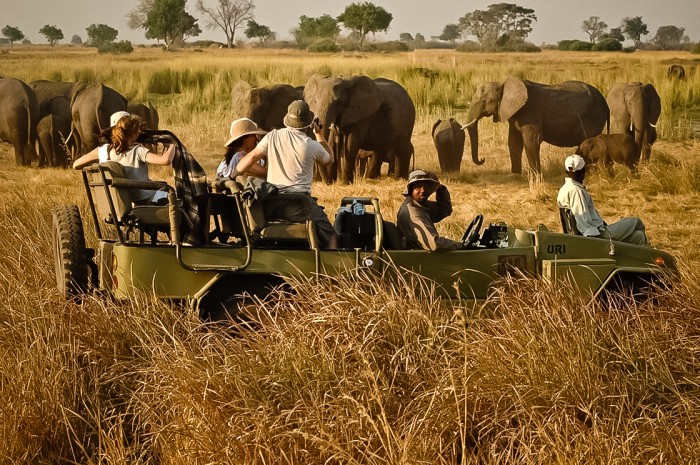
    safari

    8. Safari Guide

    Lions and tigers and bears… Safari guides get to see nature at its wildest. They learn about plants and animals, drive through rough terrain and are responsible for both their own survival as well as that of the group for extended periods of time.

    Wages: Wages may vary dramatically, depending on the location of the safari, but the median guide averages $73,000 per year.

    Extreme factor: The animals that safari guides encounter are often dangerous, but those in charge are trained to deal with them before hand. The real risks often come in smaller packages, like poisonous snakes or insects. There are also, of course, risks of diseases that aren’t seen in the U.S.

    whitewater rafting

    7. Whitewater Rafting Guide

    Whitewater rafting guides live a life of true adventure, cruising down wild rapids and steering their way through rough currents.

    Wages: Depending on experience, company and location, raft guides often make somewhere between $2,000 and $9,000 per season.

    Extreme factor: The extremity of a whitewater guide depends largely on the location and its surrounding rivers. While some guides may lead simple, lazy trips down a calm river, others could be navigating customers through class 5 rapids. As with any whitewater sport, for which the overall fatality rate is 0.87 deaths per 100,000, rafting has its share of danger.

    divers

    6. Scuba Diver

    Commercial divers get to experience the great unknown and see creatures most of us will never encounter. Divers may head underwater to inspect, fix or collect artifacts that sit below the water’s level. Some may even conduct experiments or run scientific tests.

    Wages: The median income for a commercial scuba diver is just under $48,000.

    Extreme factor: As always, with pushing the body to new extremes, come extreme risks. The most common causes of death for divers is equipment failure, heart attacks and mistakes in the ascent or descent. Roughly every 200,000 dives results in at least one death.
    pilot

    5. Search and Rescue Helicopter Pilots
    Outdoor adventurers take risks, often ill-advised ones, and for these mistakes are search and rescue helicopter pilots sent to save those in extreme danger. They may need to save sailors from sinking boats or rescue rock climbers from misjudged climbs.

    Wages: The median salary for a search and rescue pilot is $57,000.

    Extreme factor: These pilots fly into dangerous situations where others have already failed. They must right wrongs and often find themselves in life or death situations that require fast-thinking and skilled decisions. When one of these planes crashes, nearly one third of the accidents are fatal.

    mining

    4. Miners

    Although definitely not as typically “extreme” as other occupations on this list, miners face some of the highest fatality rates of all outdoor jobs.

    Wages: The average mining salary, depending on the state, could be anywhere between $40,000 and $100,000 per year.

    Extreme factor: Mining is one of the oldest, yet one of the most extreme professions in the outdoor world. If thought of as almost a form of caving, this makes sense. They risk cave-ins and suffocation on a daily basis. There are over 15 mining-related deaths per 100,000.

    crabfishingboat

    3. Fishermen

    There’s a reason the Discovery Channel’s the Deadliest Catch has been running for 10 consecutive seasons. Whether they’re battling choppy waters or reeling in gigantic catches, the life of a fisherman is rarely dull. It’s also one of the most deadly professions in the U.S.

    Wages: For risking their lives on a regular basis, fisherman are a bit short-changed. The median salary for a fishermen is just over $30,000.

    Extreme factor: With nearly 95 percent of the country’s salmon supply stemming from Alaska, many fishermen call the Last Frontier home. Alaska’s waters, however, are notoriously choppy and unpredictable, often resulting in massive waves and slick, icy decks. Over 120 out of 100,000 workers die on the job.
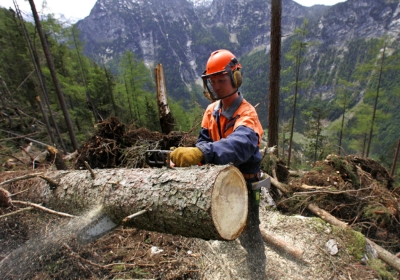
    logging

    2. Logging Workers

    Logging workers, like lumberjacks, are portrayed in folktales as strong, indestructible men like the famous Paul Bunyan with his Blue Ox. The fictional tale isn’t far off base when compared to modern day logging workers. The job demands grueling, manual labor, literally surrounded by risks.

    Wages: In today’s industry, logging workers average around $37,000 per year.

    Extreme factor: In many ways, logging workers are at Mother Nature’s mercy every single day. They’re surrounded by falling trees and sharp tools, resulting in nearly 128 deaths per 100,000 workers. But it’s not only about strength of overcoming fears, the physical part of cutting down and loading up timbre takes a ton of muscle.

    everest

    1. Everest Guides

    Mountaineering guides lead extreme lives, taking their lives, as well as their groups’ lives, into their hands with every climb, but Everest guides take extreme to an entirely different level. The world’s tallest peak has been conquered by more than 6,000, but has little over a 55 percent success rate for those who attempt it. And when guides lose their way or meet unlucky deaths on the mountains, climbing customers are left to find their own way back to safety, much like Jon Krakauer in Into Thin Air.

    Wages: Mountaineers are generally paid by the day, but wages range dramatically based on company, position and mountain and climb they’re guiding. A guide at Mount Rainier may start at $125 per day, but those on bigger, more dangerous mountains, such as Everest, they tend to make more. Climbers pay between $5,000 and $7,000 for a Sherpa guided summit attempt. Western-guides, on the other hand, expect their climbers to fork over somewhere between $45,000 and $65,000.

    Extreme factor: Not only must these workers be incredibly skilled mountaineers, but they must also deal with changing weather and altitude adjustments. Often, they need to make split-second, life or death decisions. Fatality rates for anyone who climbs Everest are incredibly high. In fact, there have been over 4,000 deaths of Sherpas, those who are often much more acclimated to the mountain’s conditions, in the past decade. A Sherpa stationed at a base camp on Everest is 10 times more likely to die than a commercial fisherman, making an Everest mountaineering guide the most extreme job in the world.

  • Chicago’s First Big Rock Climbing Gym Set to Open This Winter

    Chicago’s First Big Rock Climbing Gym Set to Open This Winter

    Chicago’s skyline towers over any hill within a several-hour-radius- not the ideal terrain for rock climbers. Countless yoga studios, weight rooms and pools clutter the third largest city in the country, enough to satisfy any athlete, with the exception of climbers. Outside of a handful of rock walls thrown into gyms as afterthoughts, and one solid, yet tiny, bouldering room, Chicago lacks an indoor rock climbing facility. As soon as Winter 2014, this will all change when First Ascent comes to the Windy City.


    I had a conversation with three climbers who are spearheading the new gym’s launch to find out details about what we can expect from First Ascent. CFO Joe Zentmyer’s heading the gym’s financial needs, while Dan Bartz is taking charge of most of the gym’s groundwork. Jon Shepard runs general business oversight and the legal side of First Ascent. All three are heavily involved in the climbing community, along with majority of the investors backing Chicago’s first big rock gym.

    First Ascent will reside on the north side of Chicago, north of Logan Square, near Avondale, at 3500 N. Spaulding Avenue.  The new gym will offer climbers 26,000 square feet of climbing, including a main wall and 5,000 square feet of bouldering. Climbers will have the opportunities to lead, sport climb and top rope, and a fitness center featuring weights and cardio machines will be available for cross training. First Ascent will even save space for a yoga studio, where climbers can stretch and strengthen. An added café and locker rooms with showers will give work commuters somewhere to climb and freshen up before or after work.

    “There will be lots of climbing surface,” said Shepard. “With anything from beginner terrain to expert, overhanging and lead terrain.” Shepard said that it is especially exciting for all of those who head down to the Red River Gorge, the best close climbing to Chicago (and close, meaning 400 plus miles). Many at the Red encounter trouble sending new routes because of their lack of training space options. First Ascent will give those dedicated climbers a spot to train for their next big projects during the workweek.

    While First Ascent’s steep climbs and advanced bouldering will cater to the elite climbers, the First Ascent team also hopes to draw in beginners and everyone in between. Classes in safety, technique and outdoor climbing will be offered, as the First Ascent team, especially Bartz, a Teach for America alum, highly values education within the sport.

    The team behind First Ascent is also interested in expanding competition climbing in Chicago. While elite climbing competitions have gained more media hype in recent years, there aren’t as many competitive opportunities for average climbers. The opening of a large rock gym, like First Ascent, could bring attention to Chicago as a mecca for this type of climbing competition, with the potential to grow the climbing community in the Midwest.

    “The Chicago climbing community is extremely unique,” said Bartz. “Because we live so far away from real rock, you really have to be dedicated to the sport, so there’s a really supportive network here. Everyone’s down-to-earth. It’s kind of that Midwestern charm that you get a little bit too.” Bartz expects First Ascent to work with that community and grow it, giving climbing access to those who just don’t have it right now. He also hopes it will unite a currently fragmented community, divided between small gyms scattered throughout the city. “We’re excited to have a place where everyone can climb together and allow people from different climbing pockets to come together, meet each other and get psyched up for their next project,” said Bartz.

    So why has it taken so long for a solid rock gym to make it to Chicago? According to Zentmyer, it’s really tough to build one in the Chicago area. It’s challenging to find the right location and real estate situation for a building as big as a climbing gym requires, not to mention the funding to back it. A location change, moving First Ascent from the South Loop to the Logan Square/Avondale location also slowed down the project, but with the kinks worked out, the gym should be up and open this coming winter. The First Ascent team members attribute a large portion of their success to sourcing themselves directly from Chicago, the city they’re building in, surrounding themselves with the climbers for whom they’re building First Ascent.

    Rock climbers in the Windy City anxiously await the long overdue arrival of a large rock gym, like First Ascent, pulling with it the potential to put Chicago on the map in the rock climbing world.


    Photo courtesy of Walltopia

  • Daniel Woods’ Second Lucid Dreaming Ascent

    Daniel Woods’ Second Lucid Dreaming Ascent

    Daniel Woods completed the second ascent of Lucid Dreaming (V15), after dark on Tuesday, January 28. The problem is set on Grandpa Peabody Boulder in the Buttermilks of Bishop, California. The crux of the problem requires a dyno, launching from a small, left-hand pinch, according to the Bishop Bouldering Blog, who reported Paul Robinson establishing the line in March of 2010.

    “Last night was a surreal moment for me. It was pitch black out with a couple lights shining to light up the golden pathway of Paul Robinson’s Lucid Dreaming,” Woods posted on his Instagram feed. “The humidity and cold combination was just right to be able to stick to the glassy, non-existent holds. I had a nervous feeling in my stomach about what was going to happen if I got through the crux section and had to commit to the final 30 foot slab section in the dark…”

    Woods first attempted the problem last March without success, but posted that this time around, every move felt perfect. He wore a headlamp to help him through the slab section in the dark.

    Richard Tyler Gross photographed the ascent and Kyle Berkompas captured it on video. Uncut video footage will soon be released, according to Woods’ Instagram, but nearly one month later, the footage has yet to go public. While we wait, check out the video above of Woods in La Sportiva’s Athlete Spotlight.

    Photo courtesy of Daniel Woods’ Instagram

  • Extreme Hiking: Volcanoes, Craters and Lakes Hotter than 100 Degrees C

    Extreme Hiking: Volcanoes, Craters and Lakes Hotter than 100 Degrees C

    Adventurers travel to New Zealand in search of the perfect hikes, occasionally dominating all nine Great Walks in one visit. The problem with the Great Walks, at least during the summer holiday season of December and January, is that everyone wants to do them. That makes for overbooked huts and campsites. But visitors can experience the extremities that New Zealand has to offer by visiting geothermal hikes on the North Island.

    Tongariro Alpine Crossing

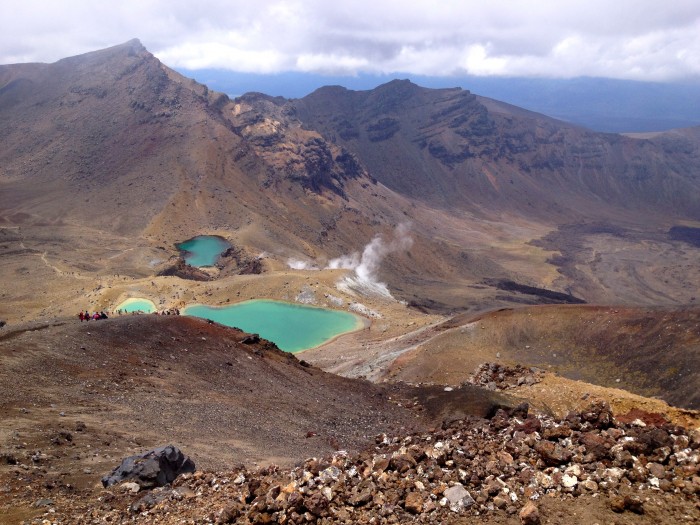
    The Tongariro Alpine Crossing is ranked again and again as the best day hike in New Zealand. A mini version of the three-day Northern Circuit trek, the Tongariro Alpine Crossing takes hikers past three volcanoes, volcanic craters and stunning, glowing blue lakes. Covering nearly 20 km, the track takes anywhere from six to 10 hours to complete, depending on if walkers choose to summit Mt. Tongariro.

    It begins on mostly flat land, zigzagging over volcanic rock and a small river. The trail is well marked and, unfortunately, rather crowded. About three km into the hike, a small trail leads off to a trickling waterfall. As it continues, the track carries up to Mt. Tongariro, the mountain that inspired Mt. Doom in Lord of the Rings. This is where the going gets quite a bit rougher. A steep hike up stairs and sharp inclines brings trekkers to the base of Mt. Tongariro, an active volcano that last erupted in August, 2012. Here, hikers can choose to scramble to the summit, a rocky climb, with virtually no path, or carry on toward the crater summit instead.

    The crater summit looks down into reddish, purple rocks with steam rising from within. Not much further, sit three lakes that shine blue-green behind the stinky, sulfur steam that clouds around them. The hike ends by descending in dozens of zigzags, back and forth. Finally, the last couple kilometers lead into the woods and over a rushing river. There’s no bridge so walkers must prepare to hop across on rocks.

    Waiotapu

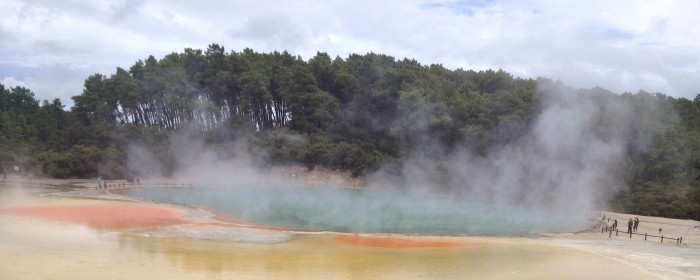
    Waiotapu’s tagline is “a geothermal wonderland,” and that it is. The hike through the park is much less extreme than the Tongariro Alpine Crossing and only takes most visitors an hour or two to complete. But the sites make up for what the hike lacks in extremity.

    The walk passes through several colorful lakes, ranging from lime green to aqua. The lakes all sit at well over 100 degrees C and stink strongly of steamy sulfur. Many fizz as Co2 bubbles to the surface. The trek also passes by bubbling, acidic mud swamps, gurgling as their air pockets surface, along with several purple and lime green craters and caves, formed by acidic steam and mingling minerals.

    IMG_9632

    Hot Springs

    Just outside of Waiotapu, hikers who’ve often stopped by on their way back from one of New Zealand’s Great Walks, can soothe aching legs in the natural hot springs. Just a few minutes from Waiotapu’s visitor center, travelers park their cars and dive in, but a sign nearby warns swimmers to keep their heads above water at all times to avoid the risk of contracting malaria.

    About 40 miles South, outside of Lake Taupo, is another hot springs more popular with locals. Hot water rushes down a small waterfall at Thermal Park, were it meets cooler water and creates a warm swimming spot. The pool on top of the waterfall is hotter than the average hot tub and an excellent place to revive sore, hiking muscles.