Category: Blog

  • Trail Running in Chicago

    Trail Running in Chicago

    muddy monk

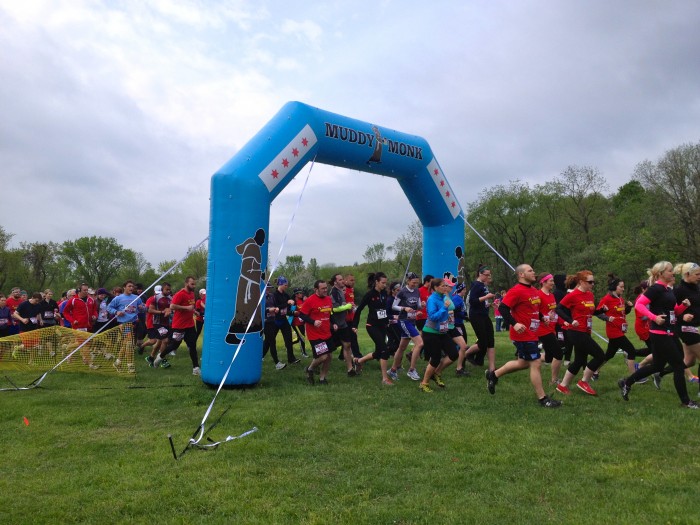
    Fidgeting racers wearing red T-shirts huddled behind the Muddy Monk race line. Serious runners, dressed in under armor, running bands and a watch to clock their times moved to the front. A herd of runners pushing strollers or running with dogs made up the middle of the crowd. In the back were the walkers, some even wearing blue jeans instead of running pants. The red shirts read “I heart Momma” on the front and the backs of some read, “I love my momma” while others proclaimed “I am loved.” It was the first annual Muddy Monk Mother’s Day 5K, one of 10 races this season.

    Trail runners are scarce in Chicago compared to either coast. Running enthusiasts often flock to Northern California, site of the Dipsea race, one of the oldest foot races in the U.S. Here, they can drive west to sprint along rough trails on shore of the Pacific Coast or head east to jog by the waterfalls and cliffs of Yosemite National Park. Others set out for New Hampshire, where they can weave through the White Mountains or compete in the Loon Mountain Race, one of the country’s most competitive trail running circuits. Instead of running through natural trails, most athletes in Chicago sprint along the smoothly paved Lake Shore Trail or weave through the loop and heavily congested Grant Park.

     For some runners, Muddy Monk events are their first real taste of trail running. Ryan Saurer, a tall man with a stocky build, first ran a Muddy Monk 10K in mid-April. Used to running on even terrain in Chicago, where he lives, the puddles and trees were new obstacles for him. “This was a whole new challenge cuz your ankles are rolling left and right in the mud,” said Saurer after the race, his shoes and calves caked heavily in mud.

    Because of the shortage of trail running opportunities in Chicago, Muddy Monk strives to build the trail community by hosting several trail races per year, each complete with a lively after party. Art Boulet, the founder of Muddy Monk trail races, runs a company that’s open to competitive racers who are focused on shortening their time, but those who are more interested in jogging through the course and grabbing a hotdog afterward are also welcome. Some of the less competitive runners would cross the finish line on May 11 nearly 50 minutes after the air horn sounded, averaging 16-minute miles, the pace of a quick-paced walk. That’s why Boulet works hard to organize snacks, drinks and prizes. He wants other urbanites to embrace the trail running community and enjoy the outdoors outside of the city. “I live in Wrigleyville so everything’s right there,” said Boulet. “All the great bars are there, but this gets me out of my neighborhood comfort zone and into the woods.”

    Excited chatter and children’s squeals rose from the crowd of runners waiting to start the Mother’s Day race. Dark clouds covered the sky. The chilly May morning air felt thick with rain and smelled of freshly cut grass. Eye of the Tiger pumped beats through speakers, the bass vibrating the soft ground nearby.

    The music went quiet as Boulet, stepped up to the mic. He wore a blue jeans speckled with mud stains and a blue and white baseball hat. His grey sweatshirt displayed four red stars framed by two blue, horizontal stripes, the Chicago flag. The name Muddy Monk is a nod to Boulet’s time at Princeton Theological Seminary and the dirty nature of trail running.

    “Thanks for coming out today,” said Boulet. He rolled up his sweatshirt, a tattoo of the Muddy Monk logo poking out from under his left sleeve. “Just a note about the trail: There are some muddy sections. Don’t be afraid to dive right through them or go around them. This is America. You have a choice.” Cheers rang from the crowd. Dogs barked. Children clapped. The air horn sounded and the racers were off.

    The runners pounded along the ground, soft after a night of rain. As they sprinted across the recently cut field, clumps of wet grass clung to their shoes and ankles. Majority of the more serious runners moved without a word, plugged into their headphones. Those in the back of the pack, trotted along, laughing and chatting about the brunch plans after the Muddy Monk as they headed toward the tree line.

    The races have come a long way from the first Halloween-themed one on October 28, 2012. Muddy Monk’s premiere event had three pieces of rebar on either side of the starting line with a fall-themed runner from Michael’s. At the October race, Boulet stood on a chair and said, “Ready, set go.” There were only two porta pottys for attendees, a large mistake he realized when he saw the mile-long line stretching from each. Just half a year later, the Mother’s Day race used bright yellow fencing and an inflatable start and finish line with the Muddy Monk logo printed on a light blue. Now, Boulet had a complete speaker system, music mixes and an air horn to get the racers going. This time, he knew to rent a whole line of porta pottys to scatter around the outskirts of the race area. In addition to learning from trial and error, the racers themselves also make helpful suggestions like the one to switch from the original plastic cups to paper ones so that they’re biodegradable if they blow away.

    Boutlet works with the trail coordinator from the Forest Reserve to obtain permission to use the land. Then, being a trail and ultra marathon runner himself, he tests out each trail before choosing it for a Muddy Monk event. He doesn’t measure for distance, he just runs through the grass, trees and mud. Then he returns home and maps it out on GPS to determine if it would be best suited for a 5K, 10K or half marathon.

    Nineteen minutes and 55 seconds after the racers disappeared into the trees, Anthony Katz crossed the Muddy Monk blow-up finish line breathing evenly. Mud splattered his bare calves, but his white T-shirt was dry. He’d barely broken a sweat. Members of the Boulet family cheered, handing him a medal and a finisher’s glass. He smiled and walked over to the finisher’s tent where music, bananas and Chicago Finch’s Beer Co. brews awaited him. Fellow runners chatting, munching on hotdogs and laughing between sips of cold beer would soon join him.

    On the course, one of the last waves of runners broke through the thick trees. They ran, their muddy shoes pounding the grass, mouths open, panting, gasping for air. A mother and son, with matching red hair jogged slowly, their hands clasped tightly together. They ran with the final blob of identical red race shirts that read, “I heart my momma” on the front. A sweat-drenched “I love my momma” was printed across the back of his shirt. His mother’s said, “I am loved.” Hand-in-hand, they crossed the finish line.
  • 3 Hidden Mountains to Ski in Europe

    3 Hidden Mountains to Ski in Europe

    I know, it’s the middle of  summer.

    But that doesn’t mean we can’t dream of that first big snow fall. Personally, I can’t wait to strap my skis back on for another season. Lately I found myself looking at a map of Europe, wondering how many countries it was possible to ski in. I quickly found that there are countless remote and unusual ski resorts around the world. But if you’re interested in other hidden opportunities, read below.

    Here are our favorite three:

    Skiing in Serra da Estrela, Portugal

    The Vodaphone Ski Resort within Serra da Estrela National Park is home base to some of the best skiing conditions on the entire Iberian Peninsula. The Portuguese landscape is lush and wild, a true winter playground in the heart of seductive Portugal.

    Skiing in Gudauri, Georgia

    There’s no sweet tea or peaches in this Georgia. Despite recent unrest in the Caucasus region, Georgia is an extremely pleasant place to travel. I’ve been there! The food is amazing, the people are incredibly friendly, particularly toward Americans. Little did I know that it’s possible to ski there.

    While very few people in Gudauri speak English, the ski tour guides do. The Caucasus Mountains are riddled with massive peaks, many over 16,000 feet. If you’re looking for a unique winter experience, Georgia is a great place to travel. Don’t forget to hang out in Tbilisi, the capital city!

    Skiing in Bláfjöll, Iceland

    No one comes to Iceland for downhill skiing. The slopes just aren’t good enough. That said, other forms of ski touring, like cross-country skiing, ski mountaineering and Telemark skiing, are becoming increasingly popular.

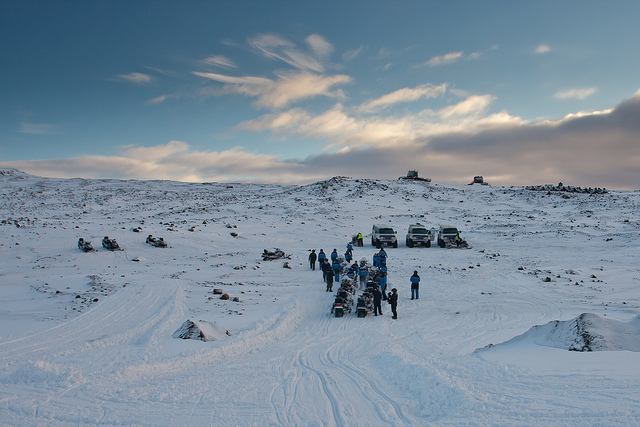
    Bláfjöll, which is located just 21 miles southeast of Iceland’s capital, Reykjavík, is the country’s largest ski center. It has 15 lifts, a snowboarding course and cross-country tracks.

    photo: Haukur H.

    Have you skied in any of these countries before?

  • Extreme Scootering with Mitch Baldry

    Extreme Scootering with Mitch Baldry

    [vimeo id=”48787907″ width=”600″ height=”350″]

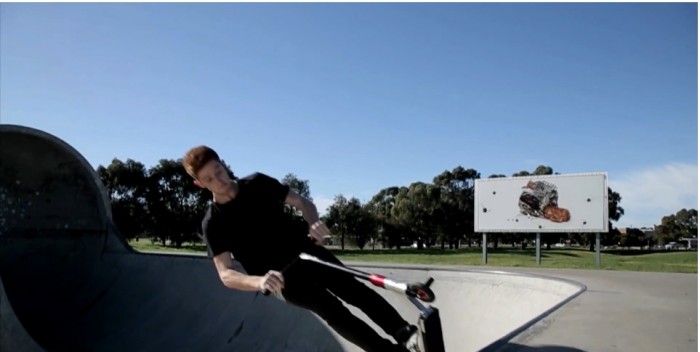
    From INFINITYLIST Productions, this clip features Mitch Baldry, one hell of an extreme scooterer. Might have to add this to my list of extreme sports!

  • Kayaking in Chicago: Rain, Shine and Snow

    Kayaking in Chicago: Rain, Shine and Snow

    kayak chicago

    A line of kayakers bobbed like baby ducklings in the University of Illinois, Chicago pool, where just an hour earlier 10-year-old swimmers had raced each other, running laps through the lanes. The smell of chlorine was pungent in the humid air. Brian Westrick herded a group of five into the far corner of a pool. There, he demonstrated the lesson for the evening: slap, drop and roll.

    He smacked the water with his yellow paddle, sending drops flying onto his red, long-sleeved T-shirt and light brown hair. Next, he tilted his head away from the paddle in the water in a slow, dramatic movement. Finally, he rolled his hips, moving his weight away from his paddle and righting his tipped boat.

    The students, each sporting a life preserver and sea skirt, were there to master their kayaking skills. In Chicago, where Lake Michigan freezes during the long, winter months, kayakers head to the indoor pool to splash around. Some go to perfect techniques, while others just want to keep paddling. Dave Olson’s company, Kayak Chicago, has spent chilly months in the UIC pool for the last 15 years.

    On that April evening while rain poured outside, three separate organizations of kayak enthusiasts crowded the pool swarming together. Because all three were heavily involved in Chicago’s kayak community, many members from different groups spotted familiar faces across the pool. Olson’s Kayak Chicago students were there to learn the beginning moves of Eskimo Rolls. His instructors were also teaching Wounded Warrior kayakers, an organization that helps wounded members of the U.S. Armed Forces. Sharon Bloyd-Peshkin, a petite woman with big, blonde curls, helped lead the final group in the pool: the Chicago Area Sea Kayakers Association, a group dedicated to promoting safe paddling and protecting the waterways of the Chicago area.

    Chicago Area Sea Kayakers Association member Michael Taylor sat on the sidelines, watching members sign paperwork and zip into life jackets with a constant smile. Taylor, originally a boater, got hooked on paddling when he stumbled upon a kayaking magazine on a long plane ride seven years ago. “Girl, I couldn’t put it down,” said Taylor flashing his bright white teeth. “It was like a bug that bit me.”

    Since it was mid-October, a chilly time to launch a boat onto the Chicago rivers or lake, Taylor searched the web for indoor options. He came across Olson’s company and signed up for lessons at the UIC pool. In November, he bought the most expensive kayak the outdoor gear store Cabela’s sold, knocked down from $1,000 to $600 in the off-season.

    He never stopped kayaking. Today, he’s president of Calumet Waterway Stewards, a group dedicated to promoting Southland paddling and keeping waters clean for kayaking and canoeing enthusiasts. For his first time back to paddle the pool waters, he dressed in a bright blue shirt in thick black pants. He remembered how cold it was his first season in the chlorinated water seven years earlier.

    While Taylor’s fellow Chicago Area Sea Kayakers Association members exchanged greetings on the other side of the pool, Olson’s staff instructed Kayak Chicago and Wounded Warrior students. It was time for them to try the techniques Westrick demonstrated earlier. No one smiled or spoke for at least 10 minutes. One by one, they teetered back and forth, the sides of their boats barely dipping into the water.

    After several timid tips, one kayaker, a muscular man with a blue shirt, paddled to the center of the pool. His tattooed arms moved furiously. When he had as much space as he could find, a 10-foot circle of empty water around his yellow kayak, he began to tilt his boat with as much enthusiasm as he’d paddled. Swaying right and left, he dunked his yellow paddle into the pool over and over again. With a loud splash, he flipped his boat all the way over, forgetting to roll his hips away from his paddle as Westrick had demonstrated. Students around him stopped for a moment, watching as his bald head popped up from the pool lane. He glared at his up-side-down boat bobbing next to him.

    The onlookers returned to their cautious swaying, but Olson stayed still, watching. His lean body towered out of his bright yellow boat, his dark head of hair growing taller as he strained to see the bold captain of the overturned boat. A smile softened his angular features before he turned his boat and attention back to a middle-aged man splashing, on the verge of tipping himself.

    With summer finally here, the rivers and Lake Michigan have warmed up enough for kayakers to hit the outdoor waters. For tours, rentals and lessons check out kayakchicago.com.

  • Extreme Sports in a Non-Extreme City

    Extreme Sports in a Non-Extreme City

    extreme sports in a cityDo you live in a large city? Wonder what it’s like for people who live in places like Boulder, Colorado; Chamonix, France; Wellington, New Zealand or Anchorage, Alaska? Extreme activities in your backyard?

    I live in Boston. Sure, we’ve got the White Mountains not too far away, and some pretty nice biking trails right outside of the city, but Boston certainly isn’t extreme.

    So are you like me, living out an urban existence, working a full-time job and yearning for the next adventure? What can you do? Here are your options.

    1. Get creative and extreme-ify your surroundings.

    You don’t have to climb mountains or jump out perfectly good airplanes to get a proper dose of adrenaline. What about some urban climbing? Or train surfing? Many opportunities arise as you start to rethink your landscape. Stairs become jump pads, buildings become scalable and nooks and crannies become epic parkour territory.

    It’s all about perspective, I guess.

    2. Get outside (of the city, I mean).

    Most of the cities you find around the world will have outdoor opportunities within a half-day’s drive. If you don’t own a car you can always rent one that’s big enough to fit your purpose. If you’ve got your own equipment, you can throw it into a car, which fits bikes, bags as well as snowboards. But if you don’t, many outfitters will rent you gear. I’m talking about skiing, snowboarding or ice climbing in the winter, and mountain biking, kayaking or cycling in the summer. Very easy to rent the necessary gear and apparel, folks.

    3. Become an armchair adrenaline junkie.

    Sometimes, all you’ve got is a TV, laptop screen or mobile phone. I get it. You’re sick, or recuperating, or lack funding, or scared – no worries! You can still get amped up with the right content. From amateur GoPro to award-winning films out of production houses like Sender Films, there are plenty of options. That’s what Nerve Rush is for, of course. We’ll curate the best clips and post ’em right here.

    photo via andrew c mace

  • Roaming Free, a Land Rover Parkour Story [Sponsored Video]

    Roaming Free, a Land Rover Parkour Story [Sponsored Video]

    Professional Stunt. Performers Shown. Do Not Attempt.

    Parkour can’t be that hard, right? This clip makes it look easy. And fun!

    In a new advertisement that brings Land Rover mind share to a more extreme buyer persona, four parkour traceurs romp around the woods, flipping and twisting and tumbling in slow motion. The film is beautifully shot. The light is right. The clips maintain a sense of fluidity, not unlike the very philosophy of parkour itself. Getting from point A to point B in as fluid and efficient of a motion as possible.

    Parkour Background

    While this notion of efficient movement through an environment has been around for centuries–think how we evolved as a human species–modern parkour materialized as an organized practice during World War I and II as part of French military training. Since then, it’s grown in popularity and has been featured in movies like Casino Royale and all over the Internet superhighway.

    Parkour is a philosophy, a low-impact and efficient approach to movement, and in the broader sense, to living. In that sense, one can practice parkour anywhere, though most often it’s performed in an urban environment. The Tempest Freerunning Academy in Los Angeles, similar to an indoor rock climbing gym, is one example of a location dedicated specifically to practicing parkour. Many of parkour’s top athletes come from France and Eastern Europe.

    How Much Does Parkour Cost?

    Unlike other extreme sports, parkour is more of a philosophy than anything else. Because of this, all you need are some sturdy sneakers, comfortable clothing and the right landscape. You should probably work on your upper body and core strength, so that might cost you a gym membership. It’s an approachable sport that’s easy to get into but incredibly difficult to master.

    Note: This post is sponsored by Land Rover.

  • Writing Rocks: The Story Behind Two of Today’s Biggest Climbing Writers

    Writing Rocks: The Story Behind Two of Today’s Biggest Climbing Writers

    matt samet climbing writerRock climber, journalist and former editor of Climbing magazine Matt Samet didn’t expect to become a writer. He originally started out studying geology at UC Boulder, but eventually switched to journalism. After graduating, he moved to Italy where he traveled Europe, reporting on the World Cup and sport climbing.
    Throughout it all, he battled an addiction to prescription drugs, which doctors had prescribed to him to help him cope with anxiety. The drugs affected his focus and vocabulary recall. He said his addiction hindered his writing ability because he couldn’t think coherently when he was coming off of them.

    Author John Long, on the other hand, had his own high: free soloing. Often credited for popularizing the form of climbing, Long pursued dangerous climbs in an effort to feel alive.

    “Climbing is not for everybody,” he said. “If you look at high performers doing these activities, they all tend to be people who gravitate toward intense experiences… A lot of times I wish I was like my daughter or someone else so that I wouldn’t have to do that to feel alive.”

    Long documented his free soloing experiences in one of his most prized pieces, the Stonemasters. The book depicts the dangerous climbs of famous adventurers in the 1970s. Published in 2009, the work took the Banff Film and Book Festival’s Grand Prize in 2010.

    Unlike Samet, Long comes from strictly a literary background, rather than a journalistic one. That’s never stopped him, however, from filling even his fictional tales with very real stories.

    “I don’t dream up some kind of thing and then go out and try to find an experience so I can write about it,” said Long. “I have always used a construct of fiction to write nonfiction stories, which is one of my tricks.”

    Long modestly credits his success as an author, as well as his free solo legacy, to the small amount of competition. He believes that because there weren’t many writing about climbing, and virtually none about soloing at the time, his work quickly rose to the top.

    “I’m not a journalist. I didn’t grow up studying journalism. I don’t do fact and figure stuff. I’ve always been a narrative writer,” said Long. “Literature is about experience and I always wrote from that perspective. Because I was one of the only guys doing that, I ended up being real popular. Not because I was any better, but because there wasn’t really anyone else.”

    Because of its small size, some question the quality of writing within the climbing community. While Long believes that quality adventure writing does exist, he doesn’t think that there’s an overwhelming amount of it.

    “The industry can’t support it [adventure writing],” said Long. “One of the reasons that I think I won so many awards on this stuff is because the bar’s so low.”

    Samet believes that it’s less rare to have both a strong climber and a talented writer. He knows many outdoor writers who are also trained journalists.

    “I certainly have put energy into both climbing and writing,” he said. “There are so many variants [of skill levels] that it’s hard to say that people are climbers first and writers second…I think that there’s plenty of education out there.”

    While his earlier work leans toward more technical writing for engaged climbers, Long’s most recent pieces strive to capture adventurous stories that even non-rock climbing readers would appreciate. The transition in his work is tied to the transition in his own life. These days, many of the people he’s surrounded by are part of the literary world, rather than heavily involved in his sport.

    “I’m trying to write that stuff for mankind, not a climbing audience,” said Long.

    Much of Samet’s work continues to cater to the climbing society. Last year, he published a climbing dictionary filled with the sport’s jargon. In Climbing Dictionary: Mountaineering Slang, Terms, Neologisms and Lingo, not only are words and phrases defined, but historical content is also thrown in. For example, for “harness” he examined what climbers did before harnesses and what the first ones looked like.

    Samet just released a memoir that documents his climbing adventures and battle against his addiction. Death Grip, a 300-page book, tells of how the author sought out risk, danger and adventure, while at the same time suffering from anxiety, depression, extreme dieting and a crippling dependency on benzodiazepines.

    “A lot of people think we have this glorious lifestyle where we jet around, and get assignments, and make tons of money, but it’s hard work like anything,” Samet said. “Even if you’re your own boss, you still need to sit down and kick your own ass at the computer when you’d rather be out playing.”

  • Perfect Getaway Final Round

    Perfect Getaway Final Round

    Argh!

    It’s the last week of our Nerve Rush treasure hunt, a Perfect Getaway challenge sponsored by Captain Morgan.

    To enter, you simply have to answer the following riddle about Captain Henry Morgan. It requires a bit of Google research. When you know the answer, post a comment at the bottom of the post.

    The mechanism used to set the prisoner free; the number of these found in the 2010 Panama excavation is this challenge’s key.

    As a reminder, here is some of the loot at stake!

    1. Osprey Men’s Aether 85 Backpack
    2. Men’s G-Shock Watch – DW6900DS-1
    3.  Jawbone Big Jambox Wireless Bluetooth Speaker
    4.  GoPro HERO3 BLACK Edition
    5.  Beats By Dre Beatbox Portable
    6.  New iPad mini
    7.  Nike+ SportWatch GPS powered by TomTom
    8.  Revo “Guide” Sunglasses
    9.  AT&T Pantech Element
    10.  ROK Espresso Machine
    11.  Apple TV
    12.  Solargorilla
    13.  Fossil Estate Framed Duffle
    14.  Kindle Fire HD 8.9” 4G LTE Wireless
    15.  Ninja Mega Kitchen System
    16. Masterbuilt – 30-inch Electric Digital Smokehouse
    17.  Samsung – 2.1 –Channel Soundbar with Wireless Subwoofer
    18.  Samsung Digital Camera MV800

    Again, what’s the answer?

    The mechanism used to set the prisoner free; the number of these found in the 2010 Panama excavation is this challenge’s key.

  • Perfect Getaway: Round Two

    Perfect Getaway: Round Two

    Argh Matey!

    We’re back in week two of our Captain Morgan Treasure Hunt, a real contest with real prizes.

    To enter this week, you simply have to answer the following riddle about Captain Henry Morgan.

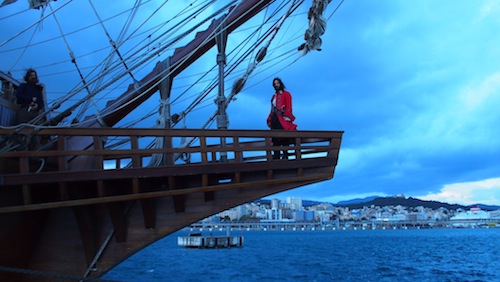
    The Captain’s vessel is of great fame. The answer to this challenge is in its name.

    Got it? Let us know in the comments. As a reminder, all comments, right or wrong, are valid entries in an epic contest giveaway.

    As a reminder, here is some of the loot at stake!

    1. Osprey Men’s Aether 85 Backpack
    2. Men’s G-Shock Watch – DW6900DS-1
    3.  Jawbone Big Jambox Wireless Bluetooth Speaker
    4.  GoPro HERO3 BLACK Edition
    5.  Beats By Dre Beatbox Portable
    6.  New iPad mini
    7.  Nike+ SportWatch GPS powered by TomTom
    8.  Revo “Guide” Sunglasses
    9.  AT&T Pantech Element
    10.  ROK Espresso Machine
    11.  Apple TV
    12.  Solargorilla
    13.  Fossil Estate Framed Duffle
    14.  Kindle Fire HD 8.9” 4G LTE Wireless
    15.  Ninja Mega Kitchen System
    16. Masterbuilt – 30-inch Electric Digital Smokehouse
    17.  Samsung – 2.1 –Channel Soundbar with Wireless Subwoofer
    18.  Samsung Digital Camera MV800

    In case you need one more reminder, enter to win one of the prizes above by answering the following riddle in a comment below:

    The Captain’s vessel is of great fame. The answer to this challenge is in its name.

  • Captain Morgan Treasure Hunt: Clue #1

    Captain Morgan Treasure Hunt: Clue #1

    Ahoy!

    It’s the first week of our Captain Morgan treasure hunt. The first clue is here and daylight is ticking! So challenge your inner adventurer & start the hunt with the riddle below:

    Clue #1

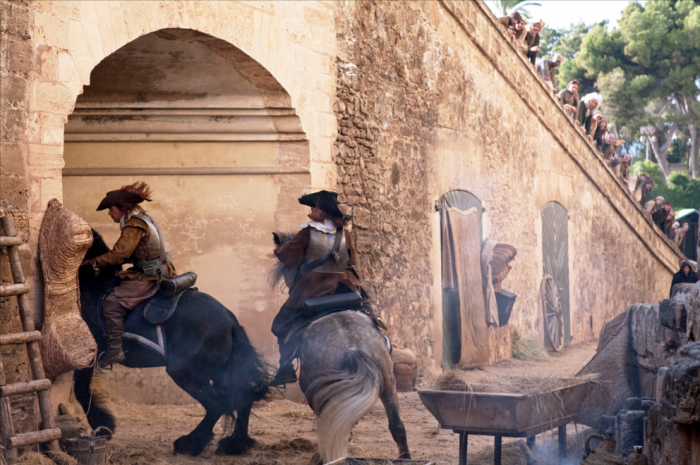
    In 1668, Morgan sealed the prisoner’s fate. Atop a creature he got away, the number of which you must say.

    Watch the video below to unravel this puzzle’s answer.

    [youtube id=”ctrUY4CWocY” width=”600″ height=”350″]

    Remember, solve the mystery in the video and then comment below.

    Important: Post your answer in the comments for a chance to win some serious loot. Of course, Nerve Rush has to win the swag too, so the more you share, the better swag we’ll get to give away. The highest number of comments on this post wins & ONLY the comments left here on the Nerve Rush site count towards that total.

    Now a prepared adventurer always knows what’s at stake, so while we know there’s untold treasure in the adventure ahead, we have confirmation that if we total the most comments out of the other 10 sites hunting for the treasure, we’ll be picking at least two of the following prizes from the booty and give them away to our crew (that’s you) to help you prepare for your next adventure.

    Some of the Loot at Stake

    1. Osprey Men’s Aether 85 Backpack 
    2. Men’s G-Shock Watch – DW6900DS-1
    3.  Jawbone Big Jambox Wireless Bluetooth Speaker 
    4.  GoPro HERO3 BLACK Edition 
    5.  Beats By Dre Beatbox Portable 
    6.  New iPad mini
    7.  Nike+ SportWatch GPS powered by TomTom
    8.  Revo “Guide” Sunglasses
    9.  AT&T Pantech Element
    10.  ROK Espresso Machine
    11.  Apple TV
    12.  Solargorilla
    13.  Fossil Estate Framed Duffle 
    14.  Kindle Fire HD 8.9” 4G LTE Wireless
    15.  Ninja Mega Kitchen System
    16. Masterbuilt – 30-inch Electric Digital Smokehouse
    17.  Samsung – 2.1 –Channel Soundbar with Wireless Subwoofer
    18.  Samsung Digital Camera MV800

    Remember, solve this riddle & comment below. The captain is waiting.

    In 1668, Morgan sealed the prisoner’s fate. Atop a creature he got away, the number of which you must say.