Category: Blog

  • Extreme Treasure Hunting with Captain Morgan

    Extreme Treasure Hunting with Captain Morgan

    Public service announcement!

    Over the next few weeks, you’ll have the chance to participate in a treasure hunt. You can win a number of goodies. Think GoPro cameras, sponsored parties and all kinds of adventure gear. Boom.

    Inspired by the real Admiral Henry Morgan, a notorious 17th-century British buccaneer, Captain Morgan is bringing real-life adventure back into their brand, launching a series of “Perfect Getaway” videos put together by an Academy Award-winning crew. Explosions, sound effects, you name it. Let’s get extreme.

    Nerve Rush and Captain Morgan are working together in a sponsored campaign, rife with REAL prizes, fame and fortune.

    Here’s how to win:

    Starting Monday, April 15th, I’ll be posting one video per week on the site. The first installment is below.

    [youtube id=”ctrUY4CWocY” width=”600″ height=”350″]

    Follow Captain Henry Morgan as he implements a strategy to rescue one of his crew members, held captive by his nemesis Don Alonzo.  Each new video will move Morgan’s adventure forward.

    In the next video installment, a clue will be released sometime during the video. Answer the clue by commenting at the bottom of the post.  That’s it. All correct answers will be considered as entries in the contest giveaway. The more comments from the Nerve Rush community, the more prizes. It’s a community effort, so bring your friends.

    Huzzah!

    If you’re interested in learning more about adventure, treasure hunting and Captain Morgan, check out their real search for buried treasure off the coast of Panama.

  • Why Rock Climbing Should Not be an Olympic Sport

    Why Rock Climbing Should Not be an Olympic Sport

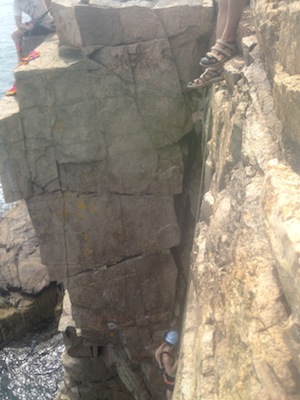
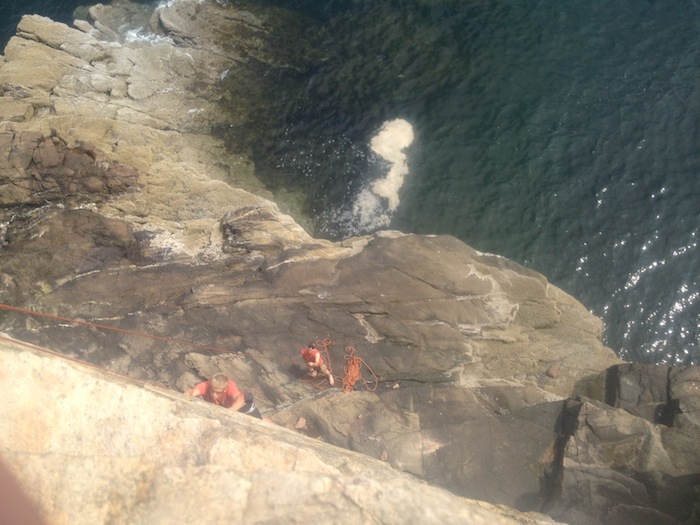
    It was a cool, July morning in the farthest eastern location of the continental U.S. and my dog and I were trapped between a rising tide and a 100-foot granite wall. Before rappelling onto the platform hovering over the water, my rock-climbing companion Marcus Basiri had convinced me that I could send the climb. He pointed out that I’d conquered higher grades on routes near our home in Boston. What my strong, agile friend failed to take into account was my crippling fear of unclipping myself 100 feet in the air to complete the final 10 feet of the route without any protection. My lack of sleep and Red Bull-induced energy were also working against me.

    Ted, my black Poodle-Bouvier mix, faced an even larger challenge. Four paws aren’t exactly ideal climbing equipment at Otter Cliffs. I decided to brave the Atlantic Ocean and swim to land, but the icy waves were too strong and cold for Ted’s 12-pound frame. Luckily, Tod, who was visiting Maine’s Acadia National State Park to lead a teen boy climbing expedition rushed to our rescue. He helped Marcus pack Ted into a backpack and teeter up the wall. Marcus’ chalked-up hands inched one over the other, grasping near-invisible ledges and cracks in the rough rock. His dark, shoulder-length hair remained secure in a low bun and Ted followed suit, keeping perfectly still. I swear he knew his life depended on it. The added weight pulled Marcus off balance, but finally, with Tod’s guidance, Ted and Marcus crawled up the wall to safety. If it wasn’t for the generous spirit of climbers like Tod at Acadia last summer, Ted may have been stranded at high tide.

    That’s the type of community that rock climbing consists of: people willing to sacrifice their afternoon to lend a hand. This type of sportsmanship is rare in a sports world often dominated by competition, prizes and rank. We read about steroid abuse, cheating and even gun violence surrounding athletes in basketball, soccer and football. Rock climbing steers clear of scandal, largely due to the laidback culture associated with the sport. Sport climbing making its way into the Olympic games risks sacrificing its tight-knit, encouraging community.

    In early 2012, the International Olympic Committee recommended wrestling be dropped from the 2020 Olympics to make way for a new sport. In September, wrestling will compete with baseball/softball, squash, karate, sport climbing, wakeboarding, wushu and roller sports for a place in the 2020 Olympics. Many climbing enthusiasts are eager to see their sport make it to the Games. Climber Adam Ondra admitted he’d compete if offered the opportunity, but plenty of climbers remain skeptical of the impact an Olympic slot would have on climbing. Those who embrace it for personal challenge, its tightly knit community or sheer adventure wonder how positive newfound popularity and enhanced competition will really be.

    Michaela Kiersch [18] visited her Chicago home gym, Hidden Peak, over 100 times in the last six months. She was training for climbing competitions such as the American Bouldering Series, the national bouldering competition, hosted every year in Colorado. In the past five consecutive seasons, Kiersch competed in three adult world cups, two adult world championships and five youth world championships, where she placed 16th in August 2012. Last year, she competed in nearly 20 competitions, including regional, national and world, at times placing just a couple spots below big industry names such as Sasha DiGiulian.

    But placing in national and world competitions is more than enough to satisfy Kiersch. Despite her success in the industry, she has reservations about rock climbing appearing in the Olympics in 2020.

    “I look at climbing as a giant family, but if it grows we won’t be able to get as close to each other because there will be so many people,” said Kiersch. “It will be about winning and the glory of being the gold medalist instead of accomplishing something great.”

    Kiersch worries that the familiar, friendly vibe of the climbing industry would fade with the sport’s Olympic acceptance. She admits the acceptance of rock climbing into the Olympics would bring the sport to more college campuses, resulting in college scholarships. Even though she’d love to pay for college with a climbing scholarship, she’s concerned that a newfound popularity would change her sport’s culture. At each competition, Kiersch and her competitors swap jerseys. This is how she makes friends from all over the world. Even the Russian climbers, whose instructors ban them from trading uniforms with other countries, have sneakily swapped with Kiersch, wanting to get in on the tradition.

    Not all rock climbers are as concerned as Kiersch about the impact of sport climbing entering the Olympic Games. Legendary rock climber Alex Honnold, whose fame for his free solo climbing and record-breaking speed has only gained momentum since he was featured on 60 Minutes in October of 2011, doubts the acceptance or denial will have much of an impact on the sport. He assumes that Olympic acceptance would bring some more mainstream media attention to the sport that’s already rapidly growing in indoor gyms. In fact, 1,000 people take up rock climbing every day at U.S. climbing gyms.

    “I don’t think that an Olympic appearance would drastically change that whole trend,” said Honnold. “It might speed things up a little bit. It might bring a bit more money to the sport, but probably wouldn’t revolutionize anything.”

    Although Honnold’s life surrounds climbing [he dropped out of UC Berkeley to live out of his van, traveling and climbing] and he holds records like his soloing of the Yosemite Triple Crown—Mt. Watkins, El Capitan and Half Dome—in 18 hours and 50 minutes, he doesn’t consider it competitive climbing.

    “Climbing is already pretty divided between indoor competition climbers and full on dirtbag adventurers,” said Honnold. “World cup competitors in Europe play a very different game than those of us who just climb outside all the time and travel and explore.”

    Acadia, Maine Otter

    While Honnold continues outdoor climbing adventures, joining climbing bums on Yosemite’s soaring granite domes, Kiersch spends her free time training kids at her home gym, not for the Olympics, but for the pure joy of watching their accomplishments.

    “A lot of people are inspired by the grades that pro climbers accomplish, but that’s not what inspires me,” said Kiersch. “I’m inspired when these kids overcome their fear of heights, send a problem that they’ve been working on for weeks or do four chin-ups instead of three. Accomplishing a goal that they’ve set and watching them get so excited gets me excited. The pro athletes are incredible for accomplishing such high grades, but in climbing, that kind of an accomplishment is more of a personal thing.”

    Allowing sport climbing into the Olympics goes directly against the personal goal achievement that Kiersch speaks to. It risks glamorizing the sport and shifting its focus from personal accomplishment to gold medals. This type of competition may negatively impact the kind of community that’s perfectly content practicing in a dirty old basement bouldering gym. It may even take some of the generosity out of climbers willing to sacrifice an afternoon of their favorite activity to save my dog Ted from a high tide. Do we really want to risk changing a sport where the champions are known for their encouraging words, generosity and pure love of the outdoors?

  • 36 Pull-Ups in 60 Seconds: Meet Ron Cooper

    36 Pull-Ups in 60 Seconds: Meet Ron Cooper

    cooper pull up world recordMeet Ron Cooper, world record holder for the most number of pull-ups in 60 seconds.

    Ron competed in Ninja Warrior last year, won a Warrior Dash and has top finishes in many local New England races. He often competes with his wife, Katie, a former All American 5K runner.

    I asked Ron to tell us a bit about his training schedule, the Guinness World Record process and his future plans.

    Ron, thanks for joining us!

    36 pull-ups in 60 seconds. Congratulations! How did you train for that?

    Thanks! I’ve been doing pull ups twice a week since high school, and usually my pull up sessions are fairly intense. Apparently the compounding effect of doing so many pull ups over such a long time was enough to sneak my name into the Guinness World Records.

    In terms of training for the record, I stuck to twice a week pull up sessions, each of which lasted about a half hour. I did and still do five to seven sets of various types of pull ups and chin ups twice a week.

    Can you walk through the Guinness World Record process start to finish?

    The process is actually a little cumbersome, which is probably why not many people make attempts. First I had to contact Guinness to let them know I was going to have a record attempt. Upon their green light that I could make the attempt, I then had to follow their lengthy instructions to insure the integrity of the attempt. First I had to coordinate a bunch of disinterested parties to help make the attempt official. I had to have two video cameras filming me from two different angles, the front and the side, to make sure my form was proper (no kipping, full arm extension on descent, chin above bar on ascent). I also needed a photographer, a timer, a police officer, a personal trainer as a judge, and some type of media coverage. Then I had to mail all my “proof” footage and signed documents into Guinness, and wait a few months for their response. Getting the certificate and the letter that I set the record in the mail was absolutely awesome. I’m just an every day guy, so to have a Guinness World Record is a lifetime achievement that I’m very proud of.

    You’re going to be on Ninja Warrior? How did that happen?!

    I still have to get on the show for this year! The audition process is going on now, and I should likely know if I’m on or not in the next few weeks. I got on last year, and got royally humbled on the first obstacle. The competition is very real, and the obstacles are insanely difficult. I’d love to get back on the course and have some redemption.

    I first saw American Ninja Warrior when I was flipping through channels one night a couple of years ago and was immediately entranced. Once I discovered that there was going to be open casting for the following season, I went into high training mode. I eventually sent in an audition video, and managed to get the invite. My wife, Katie, even got invited down to compete, so we made a family affair of it. We brought our kids down to Miami, where the filming was for our region, and had a blast. We met some great people, and competed alongside some of the best athletes in the country for obstacle racing.

    In your opinion, what are 3 things people can do to improve their fitness?

    Here are three rules I live by that if others live by they will have maximum success in fitness. Rule number one is consistency. Every morning at 5:30 AM when I hit the gym or the roads for a run I always know that 95% of the battle is just getting out the door. Once I’m in motion I know I’ll give a good effort, I always do. Consistency led me to a Guinness World Record, but most importantly it has led me to a healthy lifestyle.

    ron cooper warrior dash

    Rule number two for me is to stay within myself. It’s good to use the bar someone else has set as motivation, but at the end of the day we are all unique and have our own strengths and weaknesses, and someone will always be better. As long as I do the best I can and give it my all each and every day, I can’t be mad.

    Rule number three is to always be a student. I’m always looking for ways to improve, and never think I know everything. Learning new training keeps it fun and interesting, and leads to better gains. This is especially true with obstacle racing. Since these races really only have become mainstream since 2010, we’re all learning. There are no rule books.

    What’s on the horizon? Any races or events this summer?

    I’m signed up for several obstacle course races this summer. I love them. They are so much fun. I’m currently signed up for Warrior Dash, Superhero Scramble and Spartan Race. I’m sure I’ll do some local road races too. Nothing to get the pulse going like a race.

    I might even attempt to beat my own Guinness World Record for pull ups. I unofficially did 39 pull ups in a minute recently, 3 better than my previous record. I’d like to have my best effort be the one I put forward.

    But in the meantime, I’ll keep my fingers crossed that I can get back on American Ninja Warrior, and if so, I’ll do my best to get some revenge on the course for last year.

  • Chicago Climbs Rank, Not Mountains

    Chicago Climbs Rank, Not Mountains

    Michaela Kiersch [18] stared up at the colorful holds towering over her at a 40-degree angle. Around her, kids moved with the agility of monkeys up and down the walls, swinging, falling and hanging upside-down. “Dave, I’m gonna need a spot on this one,” Kiersch shouted across the chaos.

    She dusted some climbing chalk off of her black, yoga pants while she waited for coach Dave Hudson, an up-beat man with shaggy blond hair, to saunter over. Kiersch sat down, facing the wall and placed her feet on two holds. Her callused hands grabbed a higher hold and she began to move up the wall. She ascended slowly, but consistently, crossing foot over foot, hand over hand. Her muscular back flexed under her blue sports tank as she danced with the wall, her long, blonde ponytail swinging with each reach. Hudson stepped under her, supporting her with both hands, in case of a fall, but she never faltered. She finished the route and dropped to the mat with a thud.

    Hidden Peak Climbing Gym sits in the basement of a gymnastics facility in Goose Island, Chicago. A light dusting of chalk coats every shoe, couch and person in it. It’s about the size of a one-bedroom apartment and a wet spot appears on the carpet in the far corner of the room every time it rains. It’s a rough replacement for the soaring, granite domes of Yosemite or the steep, quartz cliffs of New York’s Gunks, but Chicago offers its climbers virtually no natural rock. Even without miles of mountains and boulders, this grungy rock gym turns out climbers strong enough to win national competitions. Kiersch is one of them.

    mk1

    In the past consecutive seasons, Kiersch competed in three adult world cups, two adult world championships and five youth world championships, where she placed 16th in August 2012. Last year, she competed in near 20 competitions, including regional, national and world, at times placing just a couple spots below big industry names such as Sasha DiGiulian.

    “At competitions, while you’re competitive, you’re cheering for your competitor… almost to do better than you. You want them to accomplish things that you know are pushing their limits,” said Kiersch. “It’s a really supportive community and I love that about it.”

    Even though she prefers sport climbing for its one shot, all or nothing opportunity at competitions, she’s training for the Open and Youth American Bouldering Series Nationals, held in Colorado Springs February 22-23 and March 1-3.

    Training involves three hours, four or five days each week, often focused on the same wall for 40 or 50 moves. Exercises cover everything from timed climbing circuits to chin-ups and pushups. Hudson sets new routes for his climbers every week. For Kiersch, the most challenging part of preparing for the 2013 American Bouldering Series was keeping momentum after a draining sport climbing season that spanned from February until October 2012. Her mental and physical exhaustion contributed to a rocky start, heading into her last youth bouldering season. Despite her shaky beginning, she’s stuck to a strict training schedule and hopes to do well at bouldering nationals.

    When she’s not training herself, Kiersch helps Hudson coach the rest of the youth team. Sophie [8] and Lila [10] admire Kiersch’s ability and encouragement. Both agree that Kiersch will sweep nationals. “I mean she is the 16th best climber in the world,” said Lila. “She’s my best climber,” said Sophie.

    Kiersch credits Hudson for the strong youth climbers coming out of Chicago in recent years. He trained Isabelle Faus and Kasia Pietras, who often make climbing news for difficult bouldering sends across the country. Though she started at a different gym, she headed to Hidden Peak in 2006 in search of Hudson’s training. Hidden Peak youth climbers often outperform those from other gyms with advantages of natural rock and larger facilities such as those in Boulder, Colorado.

    “I give Dave all the credit,” said Kiersch. “Our practices are more structured than the other teams [around the country]. He always comes to practice with a game plan: something we’re going to do and a reason it’s going to work.”

    Manager and coach Hudson has called Hidden Peak his home gym for over 15 years. He started climbing after college and broke into the climbing industry, managing gyms in California and Utah before returning to his hometown of Chicago.

    “The climbing scene in Chicago is a good one and smaller than some cities, but it’s no longer ‘small’ anywhere these days with the strong growth in the sport over the last 10 years,” said Hudson who loves the size and culture of Hidden Peak, in particular. “The Peak is great because it has that old school, almost co-op feel and friendliness.”

    Despite the strong cultural environment at Hidden Peak, Chicago climbers like Kiersch are starved for natural walls. Kiersch, along with other Hidden Peak members, often drive seven hours south to Kentucky’s Red River Gorge on a Friday evening, set up a tent in the middle of night, wake up, climb, sleep in a tent again and pack it up in the morning to drive back after another half day of climbing on Sunday. “Climbing outside is a nice oasis,” said Kiersch. “You get to warm up at your own pace instead of doing drills. You give it a good attempt because you want to, not because you have to.”

    The sport has seen a recent surge in gym climbing popularity. One thousand people take up rock climbing every day at U.S. climbing gyms. This trend will likely continue if rock climbing is accepted as an Olympic sport. Kiersch also believes that the acceptance of rock climbing into the Olympics would bring the sport to more college campuses, resulting in college scholarships. Even though she’d love to pay for college with a climbing scholarship, she worries that a newfound popularity would change her sport’s culture.

    “I look at climbing as a giant family, but if it grows we won’t be able to get as close to each other because there will be so many people,” said Kiersch. “It will be about winning and the glory of being the gold medalist instead of accomplishing something great.”

    While enthusiasts rally for the sport to be the next Olympic game, Kiersch will keep climbing routes in the grungy basement gym of Hidden Peak. Even though she spends majority of her time on the same, sloped wall, Hudson habitually switches up his the routes, bringing new challenges to his Chicago team.

    “I love that the movements are different every time you climb and there’s no limit to it,” said Kiersch, sitting in her tiny, home gym that she’s come to over 100 times in the last six months. “There’s always going to be something harder to climb.”

    Kiersch took second place at the Female Junior 2013 Bouldering Youth Nationals and Isabelle Faus placed third in the 2013 Female Bouldering Open Nationals.

  • Chase Norton Completes 10-Day, 228-Mile Solo Trek Across Death Valley

    Chase Norton Completes 10-Day, 228-Mile Solo Trek Across Death Valley

    This is the most incredible thing I’ve ever heard of happening here. But we still must charge you a $10 entrance fee. – NPS Ranger, Death Valley National Park

    He did it. Chase Norton did it.

    If you recall, Chase Norton set out just eleven days ago to tackle a 228-mile trek across Death Valley. He set out solo, fully self-contained, prepared to endure marathon-plus mileage.

    I just received a note from Chase himself. The email came through at 9:18pm EST. Below is the email in its entirety. Takes about four minutes to read through. Chase, we salute you, sir!

    Chase Norton Way

    Final Statistics: 10 days; 226.32 miles; 479,919 steps

    I write this out as my last email of a successful journey throughout this incredible region of the world. Last night ended what has been the most difficult but rewarding adventure of my life, pushing myself beyond what I even thought was possible and discovering how truly powerful we as humans are. Moments of doubt and indecision creep into the brains of most attempting large feats but during these times are when I reached deep and pushed through to be smiling at the end of the day knowing the mental mountains I had just summited.

    Two nights ago when I was atop Telescope peak and a strong wind storm destroyed my camp, shelter and scattered many of my items, for once in this long journey I was lost. It was near 0 degrees not factoring in wind chill and I was now completely unprotected. I stopped, let the fear take over for two minutes, then gathered myself and set to figure out how I would survive that night. The personal growth through hardship which occurred throughout the sleepless night will help to define and align myself into the future.

    When the sun rose, I put on my shoes and quickly packed up to finish my journey and get down from this elevation. The summit of the Panamint Range is very interesting. Very narrow at most sections with jagged snow covered rocks. One often decides to either walk directly on the true summit or down slightly on the more broad western side if possible. The snow at some portions was waist deep and required rolling out of it similar to what I might imagine quick sand to be. I reached a peak needed to connect with a saddle and from there I let gravity and snow help while I slid down many portions with my ice axe as my brake. At the middle of a saddle, I dropped down into Water Canyon via a scree slide/dry stream. The dry stream was choked with huge dead trees and going was slowed until I reached a fast flowing stream and known path out to Panamint City. Old buildings, tall chimney and remnants of previous backpackers were scattered across the landscape. Knowing my ride was waiting in Ballarat I picked up pace and headed down Surprise Canyon. This had the most water ive come to find in DV National Park. Waterfalls and deep pools of waters were with me along the remainder of my hike. The sun set slowly as I ran out of the canyon and out onto a dirt road heading in the direction of Ballarat. Around 7pm I notice a distinctly newer car than those surrounding it near an old jail building. With a jovial “Hey, I’ve been looking for someone whose been hiking around for a while” and a smile, Hawkins opened the door and with that ended a chapter to a grand adventure.

    I want to thank the many people involved in this trek. My parents for their love, support and concern enough to constantly monitor my progress. My Uncle and Aunt who took me into their home and treated me like a son then brought me to the start line of our journey. Olivier for his incredible mind and visions by bringing this idea of a DV trek to the table and allowing us to work it out to make it is what we have done. Him and I look forward to the videography and photography our team will provide in the future. Hawkins for her tireless effort and devotion to our team. She has been the one relaying my sat com messages to this great list of supporters and then replaying your messages back.

    And of course, lastly to you all. This was funded, supported and motivated by most everyone on this list. From loving family members to simple adventure enthusiasts, I want to thank you for being apart of this moment in time. When I get my hand on a computer I will be writing back to each and every person who emailed me.

    Tonight I sit in Panamint Valley. The sun has set and the full moon is rising. My time here is only half done but for once I feel complete peace and happiness.

    Aloha,

    Chase

  • Muay Thai: A Closer Look at the Thai Martial Art

    Muay Thai: A Closer Look at the Thai Martial Art

    Muay Thai is a centuries-old Thai martial art that in recent decades has become known and respected internationally. Increasingly, foreigners are being attracted to the sport and many relish the prospect of travelling to Thailand to learn the basics from a professional muay Thai instructor.

    Apart from the obvious advantages of learning Muay Thai at its source, the chance to visit an exotic country like Thailand plays a part too in attracting aspiring “nak muay” (Thai kick boxers) from far and wide. Whether it’s for beaches, night-life or simply to sample Bangkok’s sumptuous street food, it’s not a bad place to be for anyone looking to learn some of the basics of muay Thai. Flights to Bangkok are numerous from most major cities, and there are often affordable travel deals available.

    Muay Thai venues are found in towns and cities throughout Thailand. The most important of these are in Bangkok, especially Ratchadamnoen Stadium and Lumpini Stadium. Both of these venues are easily reached by taxi. Ratchadamnoen Stadium is very close to the famous travelers area of Khaosan Road, while Lumpini Stadium is located near to the well-known Lumpini Park. Ticket prices at these venues are around 2000 baht(£40) but are significantly cheaper elsewhere.

    For those interested in a more ‘hands-on’ experience of learning the basics, Muay Thai training gyms are plentiful throughout Bangkok and other Thai cities and towns. However, only those in Bangkok or in Thailand’s second city, Chiang Mai are likely to be staffed by trainers who speak English well enough to explain the techniques of Muay Thai. It should also be kept in mind that there’s a lot more to this martial art than fighting. Elaborate rituals are performed that honor the tradition of the sport. Foreigners need to be mindful of this. Showing any disrespect to such a revered tradition while standing next to a professional Muay Thai boxer wouldn’t be the smartest of moves.

    One popular training center for foreigners and locals alike is Petchyindee Gym, which is near Lumpini Stadium. It’s run by Sammuen Porthawee, a highly-experienced instructor and former champion of the sport. Another is Jaroenthong Professional Boxing School in Ramkamhaeng, an outer district of Bangkok. It’s also run by a former world champion, but Ramkamhaeng is quite far from central Bangkok and takes a bit of time and effort to get there. Prices vary by location, but around 200-300 baht (£4-5) per hour is a typical price. For a more remote and rural location, Samkamphaeng’s Santai Gym in Chiang Mai province in north Thailand is quite popular.

    Anyone from Britain or any other Western countries can enter Thailand for up to 30 days without a visa, which is ideal for anyone just looking for a few days of casual training. At the other end of the scale, formal training over a long period (up to a year) requires a student visa, obtainable from any Thai Embassy or Thai Consulate.

    photo credit: Kulturang Ewan

  • Ueli Steck, Now Powered by Sun

    Ueli Steck, Now Powered by Sun

    goal zero logoGoal Zero, the leader in portable solar power solutions, welcomes professional speed climber, solo climber and record-setting alpinist Ueli Steck as its newest brand ambassador.

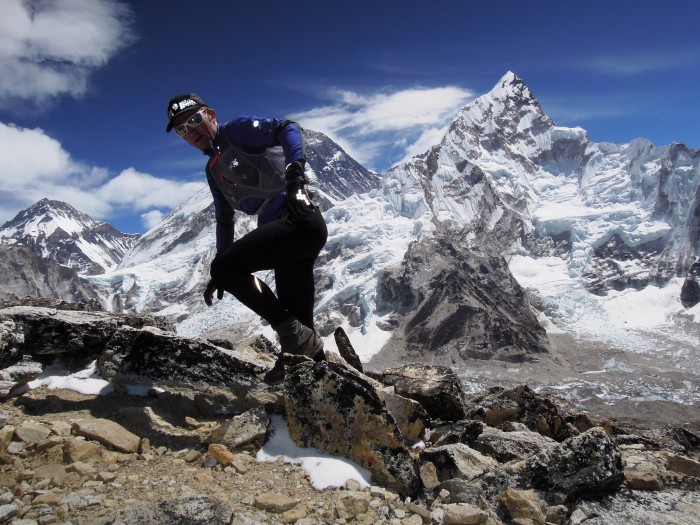
    With his incredible record of solo ascents and speed climbs and a career that spans almost 20 years, Steck is known for his passionate devotion to all things alpine. He lives beyond the means of any normal man, usually scaling the side of Everest. Since his lifestyle takes him thousands of feet above sea level, and any wall plug for that matter, Steck relies on his Goal Zero Solar Panels and Rechargers to keep his gear charged up and ready to go.

    “My Sherpa 50 Solar Recharging Kit helps me stay connected with the world. As a pro climber, I have to keep people updated on where I am and what I’ll be doing next. With Goal Zero, I never have to worry about running out of power.”

    ueli steck khumbu valleyGoal Zero’s growing list of ambassadors ranges from slackliners to anglers, photographers to alpinists. The company searches for athletes and individuals with a passion for living life to its fullest with zero regrets, zero boundaries, and zero apathy. Steck embodies the Goal Zero way of life in every way possible


    “We are excited to bring such an accomplished athlete to the Goal Zero Team,” says James Atkin, the Director of Community Marketing at Goal Zero. “Ueli Steck’s lifestyle is exactly what Goal Zero is all about and being able to solar power his lifestyle is definitely an honor.”

    Follow all of Ueli Steck’s solar-powered adventures with his Sherpa 50 Solar Recharging Kit on Goal Zero’s Facebook page, Facebook.com/GoalZero

  • Hitting the Line: Slacklining Trend Continues to Grow

    Hitting the Line: Slacklining Trend Continues to Grow

    In the 70s, after climbing hard all day, exhausted rock climbers would return to camp at Yosemite National Park and look for a way to occupy the time until their next climb. With armfuls of rope, webbing and carabiners at their disposal, climbers started to slackline. They’d pull webbing tight between two trees and take turns balancing across the line. In recent years, the sport has gained momentum and popularity through competitions, taking it to new lengths by longlining, higher heights through highlining and flips and tricks through tricklining.

    Due to the new demand for supplies, companies started producing nylon webbing, which resulted in a new competitive market. Gibbon Slacklines currently dominates this industry offering a range of gear from webbing of various widths to graphic T-shirts.

    [youtube id=”0GQOdhU-RMc” width=”600″ height=”350″]

    Some companies are starting to take the business side of slacklining outside of gear. Dakota Collins founded Rocky Mountain Slackline LLC, filled with what he refers to as slacklining consultants. Collins’ company strives to spread the sense of balance, peace and control that he feels while balancing on a slackline. Rocky Mountain Slackline offers courses and guidance in all areas of the sport in an effort to share the fast growing trend.

    Collins had only been slacklining for about a year and was in college studying sustainability, but after falling in love with the sport, he decided to take a break to go full force with his slacklining company.

    “Here at Rocky Mountain Slackline, we don’t actually sell any slacklines. We’re just trying to sell the service,” said Collins. “We’re really trying to get it out there in the community and get people exposed to it so they can see what the benefits are behind slacklining.”

    slacklining a canyon

    Rocky Mountain Slackline hopes to accomplish this through workshops, camps and clinics for everyone from recreation center workers to those involved with school and education programs. From tricklining at promotional gigs to planning a record-breaking longline trek up a mountain, Collins has his hands in virtually every aspect of the sport.

    “It’s applicable to anyone’s lifestyle and whatever you’re looking to get out of it, you can,” said Collins. “Slacklining for me is therapeutic. And that’s what I’m really going after. That’s my big shabam.”

    But not everyone looks as positively at slacklining. National parks worry about damaging natural resources by stripping tree bark or snapping tree trunks. City officials who work in public parks also frown upon slackliners spreading long lines across crowded areas, tripping visitors and causing bike accidents. For these reasons, it’s been banned across many parks and college campuses in both the U.S. and Canada.

    Collins hopes to help overcome some of these negative connotations by teaching responsible slacklining behavior. He urges slackliners to always wrap trees, protecting both the bark and the athletes’ gear. Another solid rule Collins adheres to: never set up on a tree less than 12 inches thick in order to avoid snapping the trunk. He also strives to leave an outdoor area even cleaner than when he arrived and encourages his clients to follow suit.

    “We want to show the community that it’s safe, beneficial and a new type of fitness training,” said Collins. “It’s not just some hippie, pot smoking sport.”

    photo & video credit: Mike Barry, Rocky Mountain Slackline LLC

  • Amy Clover’s 30×30 Project

    Amy Clover’s 30×30 Project

    The following is a guest post from Amy Clover. Amy writes at Strong Inside Out and can also be found via @stronginsideout.

    Let’s just start by getting this out there: I’m not an extreme sports person. I don’t run ultras. I’m not an Ironman. I don’t scale cliffs.

    What I am, is an extreme hope enthusiast.

    What does that mean?

    I am proof that hope for those with mental illness is real, and I’m fighting to get them to find help.

    Clover_Clip_56_v3_retouched_1920x1080 (1)

    Now, I realize some of you may be squirming in your seats right now. Most people aren’t comfortable with the topic of mental illness. It’s taboo. It’s not something we acknowledge openly. It’s something we ignore and write off as rare, and we hope they get it all figured out on their own just as long as we’re not bothered by their negative energy.

    There’s a stigma around depression that makes reaching out for help seem like a sign of weakness. What people don’t realize is how prevalent it is, and how much worse it gets if you don’t talk about it.

    And that’s exactly what I’m fighting against. Hear me out…

    You see, my life has been full of extreme ups and downs, having been diagnosed with clinical depression and obsessive compulsive disorder in high school. I didn’t reach out because when I did, I was told to “just get over it,” or lectured by someone who had never experienced it.

    After years of keeping my pain inside, and seeking support in all the wrong ways (alcohol, drugs, toxic relationships), I reached a point at which I just didn’t want to struggle anymore. The pain was too much for me to handle on my own.

    I decided to end it.

    My roommate found me with a knife to my wrist, and stole it away from me. Luckily, I was put into an inpatient program the next day… though I didn’t know it at the time.

    Being thrown into a prison-of-sorts full of people who were much worse off than I was, was a bucket of ice water in the face. I had no freedom: I’d eat at a certain time, talk at a certain time, sleep at a certain time, take meds I didn’t want to take at a certain time…

    I got to thinking about all the freedom I had been taking for granted. I started getting furious with the people who told me that this pain was a life sentence, and that the only way to alleviate it was with medication. I refused to believe that this was the end game for me.

    I decided to start trying. Even if hope was futile, I would take action to change my life.

    Over the next few years, I rode a roller coaster of extreme success and failure, getting close to that same darkness a couple times. The difference, however, was that every time I lost hope, I took action to regain it again.

    And slowly, I did. I found fitness and taking action to be the most effective combination for replacing negative thinking patterns with positive ones.

    Now, I empower others to take action in their own lives through my personal training business and my site, Strong Inside Out. I promote physical and mental wellness through actionable steps people can take immediately.

    But I wanted to do more. I wanted to show people far and wide that hope is real. I wanted to create something extreme that would shock hope into those who feel lost.

    That’s why I created The 30×30 Project; a hope movement.

    30x30revealvideolink

    To celebrate the 30th birthday I almost didn’t have, I’ll be teaching 30 donation-based bootcamps in 30 different cities to benefit the nonprofit, To Write Love On Her Arms. They provide hope and peer support for those who struggle with depression, self-injury, substance abuse and suicide.

    To check out the video about my story and the movement, please click here.

    I believe that every one of our stories is important, and that no one should stay silent if they’re suffering. With your help, we can show every one of those people who are living in the darkness that there is light.

    No, I’m not running for days at a time or climbing Mt. Kilimanjaro, but I am living in extreme vulnerability in hope that I can help others.

    Depression is not weakness, it’s a condition to be faced and dealt with. If you know anyone who is suffering (and chances are that you do), please share the movement with them, and consider contributing if you, too, know that hope is real.

    Have you come face-to-face with mental illness? What words of hope would you offer someone else who is struggling right now?

    Write your message of hope in the “Retweet This Post” box below before the title (or in place of it if it’s long).

  • 3 Places to Look for Adventure in 2013

    3 Places to Look for Adventure in 2013

    It’s nearly the end of January, and let me guess…you haven’t even started to map out your 2013 vacation spots.

    How shameful.

    Fortunately, you’re here. Here at Nerve Rush HQ, we value adventure, hence when we were dreaming up our 2013 bucket list vacation ideas, we had a gut-wrenching kind of itinerary in mind.

    Without further ado, here are three spots to look for adventure in 2013.

    1. Myanmar

    [vimeo id=”56605338″ width=”600″ height=”350″]

    Uh, see that video? Looks gorgeous. Until recently, Myanmar wasn’t the kind of country one would simply travel to. In fact, it’s still a little complicated, what with politics and all. While Obama has lifted a number of sanctions against the country, travel companies are slowly seeing an uptick in their clients’ interest in Myanmar.

    If you’re looking for an offbeat and authentic travel experience, with a flair of spiritual adventure, look no further than Myanmar.

    2. Namibia

    In 2010 I visited Swakopmund, Namibia and had the time of my life. I went sandboarding in the world’s oldest desert. I talked to others who had taken helicopter rides, visited the beach, gone quad-biking, hot-air ballooning, surfing, camel riding – I was blown away at this small coastal down which had been deemed the adventure capital of Africa.

    A couple of fun facts–it’s the second-least densely populated country (behind Mongolia), and Shiloh Jolie-Pitt, the daughter of Brad and Angelina, was born here.

    [vimeo id=”14343631″ width=”600″ height=”350″]

    This year, Namibia hosts the 2013 Adventure Travel World Summit, which is expected to draw more than 600 visitors from the adventure travel industry. Might have to start looking at plane tickets.

    3. Iceland

    Why Iceland? Because not only is it ridiculously awesome if you’re interested in the outdoors, but it’s a stone’s throw from the U.S. Seriously, it’s really easy to get to. From Boston or New York, you can find round trip plane tickets via Icelandair for $600-800, including a free stopover in cities like Copenhagen or Amsterdam.

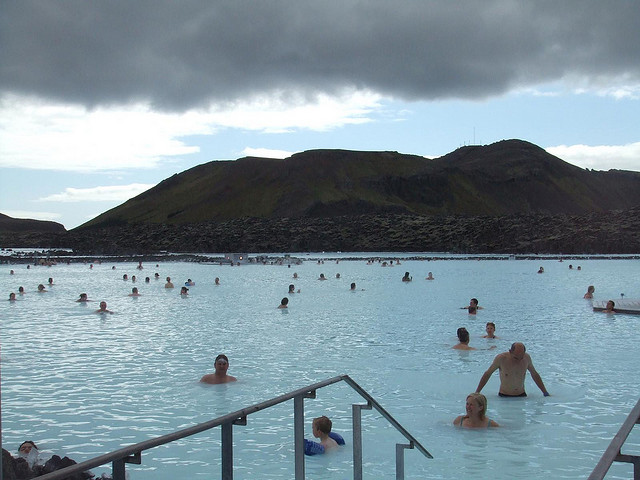
    Iceland boasts wild food (try the rotten shark meat or the local spirits), an assortment of adventure activities and some remarkably relaxing volcanic hot springs. For such a small island, it’s jam-packed with adventure. I don’t care what the guidebooks tell you – give yourself a minimum of 3 full days.