Category: Blog

  • Norseman Xtreme Triathlon [Race Profile]

    Norseman Xtreme Triathlon [Race Profile]

    This race profile comes from Mark Vermeersch, a triathlete for Team Timex and independent consultant who traveled to Norway to race the Norseman Xtreme Triathlon, deemed the hardest Ironman-distance triathlon in the world.

    norseman triathlon course

    In the fall of 2011, I watched the Norseman video for the second time, having heard about the race through the triathlon grapevine. The Norseman video drove me to sign up for the Norseman Triathlon in 2012, which also happened to be the race’s 10th anniversary. For those unfamiliar, Norseman is billed as the world’s hardest Ironman-distance triathlon, containing thousands of feet of vertical climb, not to mention the jump off the ferry into freezing water (at race start) and weather conditions that change quickly (and are often quite cold).

    Though this sounds miserable at first glance, the scenery is beyond gorgeous. The Norwegian people are extremely supportive and the enthusiasm of the race organizers and participants is contagious.

    Eidfjord norseman triathlon

    It is a unique race experience, but not for the faint of heart. Going into the race, my training had been sporadic, which, in retrospect, was suboptimal (to say the least!) given the challenge presented by Norseman.

    On race morning, I rolled out of bed at 1:15am for the 3:00am check-in. Per usual, I was quickly awake, myself, and for once, nervous for the race. Once 3:45 rolled around, it was time to hop on the ferry.

    [youtube id=”vLKTxesPAHM” width=”600″ height=”350″]

    For a point of reference, I’m the bald guy who looks like he wants to cry at 0:59! Though I was quite nervous on the ferry, once I plummeted into the cold waters 2.4 miles from Eidfjord, I realized it was just another race (a statement I made to my brother Matt in the first transition) and that I should focus on enjoying it (especially given that my training had been sub-par; my goal was just to get a black t-shirt, awarded to the top 160 finishers at the summit of Gaustatoppen mountain). Swimming went off without a hitch, as I put minimal effort in to conserve as much energy as possible for the bike and run portions. With a time in the high-58s, I was one of the first competitors to hit shore.

    Exiting T1, the (roughly) 4,000 foot climb was quite enjoyable, as I passed about the same number of people who had passed me, again, focusing on conserving energy. The scenery was ridiculous, as we basically traveled along a river that had carved out a beautiful valley. Near the top of the climb, my support crew caught me for the first time.

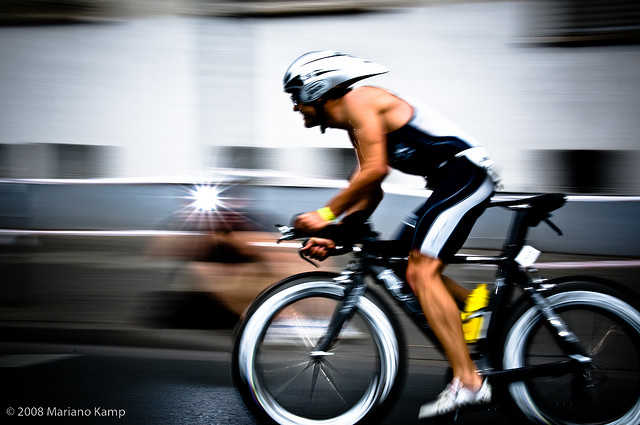
    mark vermeersch norseman triathlon

    Shortly thereafter, I threw on a coat, as the temperature had dropped from about 60 in Eidfjord to about 45. Let me tell you, descending a couple thousand feet in 45-degree weather is less-than-stellar. It was on the descent that the wheels fell off (figuratively). Looking at my watch, I was “only” 3:45 into racing with a 12-hour “ish” expected finishing time. It was after a 10-minute stop with my support crew on the road where I decided to mail it in; I didn’t have 8 more hours of racing left in the tank. Ultimately, a huge disappointment, especially given the time I had put into training and the trip.

    Watching the Norseman video again today left me close to tears, as I want to finish Norseman SO BADLY. One thing is for sure, I WILL return in pursuit of the elusive black t-shirt.

    Target date: 2014. Keep your eyes peeled for an update—and a picture of me in a black t-shirt.

  • Chase Norton’s 228-Mile Solo Trek Across Death Valley

    Chase Norton’s 228-Mile Solo Trek Across Death Valley

    It’s ironic that, as a child, Chase Norton used to spend more time indoors, tinkering with his computer, than outside. These days, he prepares for adventures like a 228-mile solo trek across Death Valley.

    Born in Georgia, Norton moved to Honolulu to study at the University of Hawaii. It was the Napali Coast that changed him. At one point during his studies, Norton was out drinking with friends. Empowered from a recent hike, he naively boasted that one day he would hike the entire Ko’olau Mountain Range on Oahu.

    Unknown to Norton at the time — the spine of the Ko’olau had never even been attempted.

    On his first trip into the Ko’olau, Norton shouldered a sixty pound pack. Over time, as he gained experience in the mountains, learning to navigate the trails of volcanic terrain, Norton reduced his pack down to twenty pounds.

    It only took him two tries – in March of 2012 Norton hiked the entire Ko’olau Mountain Range via the KST, or Ko’olau Summit Trail. His life as an endurance athlete was only beginning.

    chase norton oahu challenge

    via Olivier Renck

    Death Valley: Chase’s Way

    On February 14th, Chase Norton seeks to hike the entirety of Death Valley National Park, a north-to-south path over 228 miles long. He will attempt the expedition solo, fully self-contained. He will cross canyons, dunes, summit ridges and valley floors.

    Norton has teamed up with Olivier Renck, adventure photographer and videographer, to create a short film, Death Valley: Chase’s Way, that highlights the experience.

    I asked Chase to write up some notes regarding his upcoming journey. Read below for his thoughts.

    Chase Norton Way

    Solo: One Man’s Will to Adventure, Inspire, and Endure

    The Mountains Are Calling:  After five years spending every spare moment exploring Oahu’s terrain, untold hours pouring over topographic maps, and one failed bloody attempt, I became the first person to successfully complete an eight day trek along the entire summit of the Ko’olau Mountain range. I planned it solo and entirely self sufficient as to try and reduce any failures but of my own. Over time, these requirements would force a deep understanding and knowledge of my gear, the land, weather and my mind/body or else force me to become another statistic being airlifted out.  As I prepare to leave Hawaii this month, I take with me the many lessons learned and am able to put them towards future adventures worldwide. The next challenge is possibly the antithesis to Hawaii’s mountains (a reason I love it) but stays true to me, a full 228-mile solo traverse of Death Valley National Park through its canyons, sand dunes, snow capped peaks and salt flats all while being captured in a short film, Death Valley: Chase’s Way.

    Trekking:  To feel at home.  I enjoy the struggle and focus that I feel alone in the wilderness. To stand tall in the face of a challenge is not bred into us but learned through experiences of misery and hardship. I do not laugh while the darkness closes in nor rejoice at the calluses formed from my machete. Determination:grit:survive until the clouds part and I crawl out of my cave able to reflect:learn:grow. Mountains continue to teach me how to be a better man allowing me an attempt at being a true contribution to humankind. Personal growth does not come without injury and fear but I find they are unique lessons rarely taught and worth learning. This is why I trek: to make a better me.

    Freedom: The Death Valley project is truly one of a kind, being a fully self-contained and solo backpacking trek from north to south across the largest park in the continental U.S.  Many of the days are marathon plus mileage with the last day totaling nearly 50 miles.  I will leave the roads behind and instead opt to run across sand dunes, canyons,  ghost towns, summit ridges and valley floors.  Beauty alongside misery while one discovers their limits and then breaks through them.  This trek embodies an idea I love: To put everything you need to survive in a pack and just run for days and weeks alone.

    A Message Within the Artwork: The journey is encapsulated within a short film we are going to create, Death Valley: Chase’s Way, which will be used as a message of inspiration in talks to schools and businesses through my recently founded business, Chase LIFE. I wish to inspire others to live more active adventurous lives while pursuing their passions. So many of us go through the motion of life, but are not really alive with drive and aware of our absolute potential. I hope to ignite this spark inside everyone to remind people to live life to the fullest and without limits.  For the filming, I have teamed up with an experienced and National Geographic published photographer/videographer, Olivier Renck. I believe that Death Valley captured through Renck’s lens will embody not only the awe inspiring journey, but the incredible place itself.  Nature has been the subject of novels, poems and films because of its ability to inspire. It is my hope that this film will be thought of as a work of art, capturing man alone enduring within the vastness of a beautiful landscape.

    Join Me: We are seeking support in order to make the Death Valley project a reality. Kickstarter has allowed us to share this project with the masses and through a multitude of pledges/rewards that we created you can get involved and follow my journey through the desert.  Be there with me through the adventure on whatever level interests you; emails from on the trail, a bound book of my trail notes, images of Death Valley by Olivier, or by receiving a copy of the short film.

    Please visit the project to learn more about it and how you can get involved: http://www.kickstarter.com/projects/chaseway/death-valley-chases-way

    You can reach Chase Norton on the web at thechasenorton.com

  • Matt Samet: Fighting Drugs with Rocks

    Matt Samet: Fighting Drugs with Rocks

    Rock climber Matt Samet, 41, former editor-in-chief of Climbing Magazine, didn’t plan on becoming a writer too. During a break from studying geology at the University of Colorado at Boulder in the early ‘90s, a conversation with his father helped point him toward journalism.

    “It’s funny. It’s the kind of thing that only a father could say,” said Samet. “My dad was like, ‘Just think about what happens when you’re 40 and your fingers hurt all the time and you’re living in a van at the climbing area. Is that what you really want?’ And even then, I knew that he had a point.”

    Samet, a native of Albuquerque, N. M., went on to study journalism and moved to Italy, traveling across Europe to report on the World Cup and sport climbing.

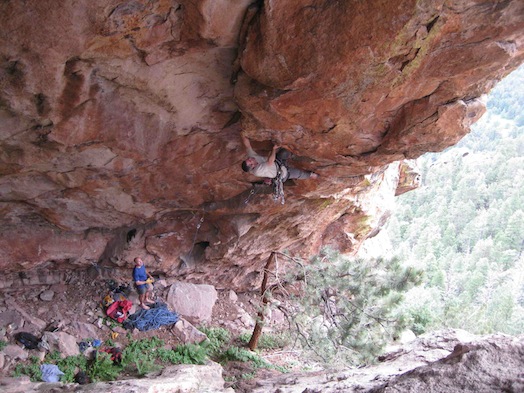
    Samet, an accomplished climber himself, has tackled routes that most rock climbers never touch. He redpointed [successfully completing a climb from the ground without ever putting weight on the rope while pinning all of the safety gear as the climber ascends] difficult climbs such as Zulu, at Colorado’s Rifle Mountain Park. He was the first to complete Chewbacca, a bouldering problem [typically climbs done on huge boulders] on West Mountain at Hueco Tanks State Historic Site in Texas. The feat is so challenging and dangerous that no other rock climber has ever successfully repeated it.

    But one of the toughest ascents Samet conquered wasn’t on a rock wall. Throughout his traveling, writing and climbing, Samet said he battled an addiction to prescription drugs.

    At age 21, doctors prescribed Samet some benzodiazepine tranquilizers to help him cope with anxiety and panic attacks. Although benzodiazepines, such as Ativan, Klonopin, and Xanax, are often prescribed to treat anxiety, the FDA recognizes the risk of severe addiction to these medications. The FDA warns that withdrawal symptoms of Xanax can include life-threatening seizures. The FDA also says that spontaneous reporting system data suggest that the risk of dependence is greatest for those treated longer than 12 weeks. At one point, Samet took benzodiazepines daily for seven years.

    matt samet rock climbing

    Samet’s memoir tells his story of climbing and addiction. Death Grip is set for release on February 11, 2013. The 300-page book narrates how the author sought out risk, danger and adventure, while at the same time, suffering from anxiety, depression, extreme dieting and a crippling dependency on benzodiazepines.

    His drug use was not always apparent to those around him.

    “I never knew he was on benzodiazepines,” said Pete Takeda, a fellow climber who met Samet in 1992. “I imagine he was just maintaining rather than being high.”

    Samet had been off of all the benzos for about a year when he first started dating his wife, Kristin Bjornsen, in February of 2007, she noted. He was still suffering withdrawal symptoms, such as panic attacks, trouble breathing during approaches to climbs and heat sickness on sunny days, she added. On the couple’s first road trip together to Canyon City, after dating for a month or two, the stress of travel and a new environment aggravated his symptoms.

    “He went into a dark, silent state,” said Bjornsen. “I thought it was me, that I was boring him or he was unhappy in the relationship and not having a good time. Over time, I’ve learned not to take it personally, that he just needs space during those times.”

    As a writer and editor, Samet said that one of the downfalls of his addiction was that the drugs affected his focus and vocabulary recall.

    “When I was coming off of them, I couldn’t form coherent thoughts for a year or two,” said Samet. “You can read Burroughs, who was a junkie, or Bukowski, who was an alcoholic and think, ‘These guys got messed up all the time and sat down to write.’ But I don’t think they really did. I think it was just a literary persona that they adopted. I really don’t think it helps anyone’s writing.”

    The benzodiazepines, not only affected Samet’s writing, but they dulled his fear during dangerous climbs, such as Chewbacca in Texas and Primate at the Flatirons, near Boulder, Colorado.

    Something that drug addiction and rock-climbing have in common is an increase in dopamine levels, said Michael Bardo, a professor of psychology at the University of Kentucky and the director of the Center for Drug Abuse Research Translation. He said that high-risk takers have a greater release of dopamine in the brain compared to low-risk takers. A stimulating event, such as rock climbing, is an attempt to overcome the under arousal.

    Samet said that, throughout his life, rock climbing has helped him cope with anxiety and agoraphobia.

    “It’s a fear that you can relate to and understand and, to a large degree, control,” said Samet. “It’s within you to find a solution and push through your fear. Whereas in most other areas of life, scary, weird, creepy things can happen, over which you have no control and often no understanding.”

    Fellow rock climber Ted Lanzano, who met Samet in 2008, admires Samet for his consideration. Last fall, Samet and Lanzano climbed a route called Choose Life in the Flat Irons of Boulder, Col., that Samet had established 10 years earlier.

    “He called it Choose Life not for political reasons,” said Lanzano. “But rather because of a decision he made not to climb the route on lead on traditional gear, which would have been extremely dangerous.”

    Even though Samet completed Choose Life without falling long before Lanzano, he continued climbing the route with Lanzano, waiting for him to successfully finish.

    “Climbers and other more serious athletes have a tendency to be a little self-centered and Matt is not like that at all,” said Lanzano. “Most climbers would have moved on after completing the route, but he still went up to there with me multiple times so I could keep trying. I eventually did it, largely thanks to Matt’s support.”

  • Inside the Livestrong Foundation

    Inside the Livestrong Foundation

    Let’s set aside the fact that Lance Armstrong has been asked to return $4 million in Tour de France prize money. It’s the “most sophisticated doping scheme in sports history,” they say.

    Let’s focus on the good that Lance Armstrong has done for the world. If it wasn’t for him the Lance Armstrong Foundation, now called the Livestrong Foundation, wouldn’t exist. To date, over $450 million has been raised to inspire and empower people affected by cancer.

    The Livestrong Foundation, based in Austin TX, was started in 1997. Aside from inspiring and empowering those affected by cancer, the Livestrong Foundation seeks to provide practical information and tools. At one point, they used to offer funding for direct cancer research, but that is no longer the case.

    In October of 2012, in the wake of a cycling doping scandal, Lance Armstrong voluntarily stepped down as chairman of the foundation. “”To spare the foundation any negative effects as a result of controversy surrounding my cycling career, I will conclude my chairmanship,” he provided in a statement.

    At the moment, Doug Ulman serves as president and CEO of the Livestrong Foundation. Armstrong no longer sits on the board of directors.

    And we can’t talk about the foundation without mentioning the wristband.

    The Livestrong wristband was launched in May 2004 as a fund-raising item. It was developed by Nike and their advertisement agency Wieden+Kennedy. This seemingly simple yellow silicone band generated quite the following. Sold for $1 individually or in packs of 10, 100 and 1200, the goal was to raise $25.1 million, which was achieved in only six months.

    By the end of 2004, the band was quite popular. John Kerry, Matt Damon and several athletes at the Athens 2004 Olympic Games were spotted wearing a Livestrong wristband. I personally remember them selling out on the website for weeks at a time.

    Of course, if you’d like to make your own wristband, you can order wristbands yourself via a website like Label Yourself. Pretty easy and, who knows, maybe it’ll help you bring awareness to an important cause.

    photo credit: sfxeric

  • Risks and Rocks: The Mentality Behind Mountain Sports

    Risks and Rocks: The Mentality Behind Mountain Sports

    most dangerous sports in the world

    Rock climber and former Climbing Magazine editor Matt Samet knows his sport is dangerous. Until last year, he was the only climber to have successfully scaled Primate, a 90-foot route on Seal Rock in the Flatirons above Boulder, Col. With protective gear that was likely to tear under impact of a fall at the hardest sections, Samet climbed the most difficult part, 60 feet above the ground and over a giant boulder that he jokingly named “The Pillow.”

    In the past two decades, climbing’s popularity has increased, resulting in an influx of climbing gyms in Chicago and elsewhere. But injury rates are on the rise too. The number of patients treated in U.S. emergency rooms rose 63 percent since 1990, according to the Center for Injury Research and Policy of the Research Institute at Nationwide Children’s Hospital in Columbus, Ohio.

    Samet respects the dangers, but climbing creates a healing kind of fear compared to the agoraphobia and anxiety he suffers from. For years, he said he used prescription benzodiazepines to treat his condition and that led to a benzo addiction. Now, instead of using drugs, Samet relies on rock climbing near his home in Boulder, Col., for relief.

    “It [rock climbing] is a fear that one can understand because you have a reason to be anxious or frightened at that point: you don’t want to fall,” said Samet. “It makes sense in a way that’s not chaotic. So in a way that’s the cure for the angst I feel in modern society.”

    Whether climbers hit the Himalayas or a rock wall in the gym, rock climbing offers a rush.

    That may be why drug use is often connected psychologically to rock climbing through a parallel personality dimension. Researchers call the personality trait that drug users and rock climbers have in common sensation seeking, according to Michael Bardo, a professor of psychology at the University of Kentucky Director and Director of the Center for Drug Abuse Research Translation. Sensation seekers are more likely to partake in high-risk activities, he said. Experts say that sensation-seekers’ brain function reinforces risky behavior.

    Bardo works at a research center that views risk-taking as a predictor of drug use. Bardo said that high-risk takers tend to have a greater release of dopamine [a chemical neurotransmitter that helps control the brain’s pleasure and reward centers] than low risk takers.

    “The current thought is that the brain of risk-taker is under-aroused and thus the stimulating event is an attempt to overcome this under arousal,” said Bardo.

    Not all researchers agree that rock climbers should be classified as risk-takers. Dr. Eric Brymer, psychologist and researcher at Queensland University of Technology, in Australia, said that non-participants have typically associated risk taking and extreme sports in the same way that drug taking and risk taking have been linked. But his research suggests that risk taking and extreme sports are not necessarily tied together, Brymer said.

    “Most athletes spend years training and learning to ensure that risks are not taken,” he said. “I would not classify extreme sport athletes as risk takers.”

    Colorado climber Ben Spannuth agrees that a significant amount of training, discipline and reflection are necessary for rock climbing. The sport demands almost daily practice to get into a rhythm of feeling comfortable and moving well across the rock, he said.

    “When I feel challenged everything seems to drown out except the immediately upcoming series of holds and how I’m going to move through them,” said Spannuth. “To be honest, the majority of the time I spend climbing is actually spent hanging on a rope thinking about what movement the holds are going to create.”

    alex honnold rock climbing fitness

    Immediacy and challenge as well as discipline and training are important to rock climber Alex Honnold, famous for free-soloing, a form of climbing done without any ropes or protection.

    “I only set projects a few months out,” said Honnold. “I don’t have a big plan, I just go climbing all the time.”

    The part of rock climbing that is so physical plays a role in brain chemistry. Physical activity increases dopamine release in the pleasure pathway, said Bardo. Experts note that other physically demanding sports such as running, football and tennis also stimulate pleasure sensations.

    “Any novel or stimulating events release dopamine in pleasure pathways of the brain,” said Bardo. “Rock climbing is certainly novel and stimulating.”

    Honnold, a Sacramento, Calif., native who spent 16 years learning his sport, said he would not classify the stimulation he finds in free-soloing as a surge of adrenaline. An intense rush while soloing would indicate a problem and safety concern.

    “I wouldn’t say I get a rush,” said Honnold. “I would say I get a deep satisfaction. Doing something challenging and doing it well is one of the best feelings in the world. Skydiving is a rush. Or dropping in on a big line on skis. But climbing is so slow and demanding that’s it’s not the same kind of rush”.

    Spannuth said that this aspect of challenge and problem solving, combined with physical activity has a positive effect on lifestyle. The action portion helps relieve stress, and much of the benefit comes from his love of the sport. Climbing certainly isn’t the only sport people enjoy, said Spannuth. But activities that contain physical challenges combined with problem solving and social components seem more likely to have these effects for him than something like forcing a mandatory run on the treadmill for 30 minutes each day.

    “In my mind, it’s far from a workout when I head to the climbing gym or to climb outside,” said Spannuth. “Furthermore, climbing has additional mental health benefits by getting people outside.”

    Mountaineer Billi Bierling, who works for Elizabeth Hawley of the Himalayan Chronicler, said she too enjoys the physical challenge and outdoor aspect of climbing mountains. She said she feels privileged to take long treks up mountains, such as Everest and Makalu, because she gets to witness views that most people never see.

    “When I come back from an expedition, of course my body feels tired, but I feel good because I’ve been outside for the last seven weeks and I haven’t had to deal with an office,” said Bierling. “For me, that is an expedition. For a lot of people, it’s the summit, but for me the summit is a bonus.”

    These days, athletes aren’t only risking their lives climbing mountains, but jumping off of them as well. Recently, BASE jumping has taken off. Extreme athletes, such as Nasr Al Niyadi and Omar Al Hegelan, jump from fixed objects, often mountains, and use a parachute to break their fall.

    A recent study published in the New Zealand Medical Journal found that 35 BASE jumpers observed suffered an injury in at least one of the 9,914 total jumps they had collectively made, resulting in an estimated 0.4 percent injury rate. Professional football has a 6.9 percent chance of injury per player per game, according to the National Football League Players Association’s injury report, “Dangers of the Game of Football.”

    Honnold said that flying sports, including paragliding, speed wings and BASE jumping, have a growing presence in the mountains. He also said that the increase in climbing gyms is bringing new talent into the sport. These gyms make climbing more accessible, especially in cities without mountains, and allow athletes to build strength and technique for outdoor climbing.

    “I don’t know where the sport is heading,” he said. “Except for the obvious: harder and faster.”

    As mountain sports increase in both popularity and risk-level, Bardo pointed out that risk-taking should not be viewed as a fully negative personality trait.

    “If you look at this type of behavior in animal species [such as monkeys], risk-takers are often the best at locating new sources of food, water and mates,” said Bardo. “On the downside, they are also most likely to fall victim to predators.”

    photo courtesy of Andrew Burr

  • Navigating 8 Las Vegas Skateparks

    Navigating 8 Las Vegas Skateparks

    While Las Vegas may be known for its casino gambling, those that live in the city know
    that the city has plenty to offer for any interest, including skateboarders. There are eight
    skateparks in Las Vegas with varying degrees of difficulty. Below we give you a brief
    overview of the various skateparks in Vegas.

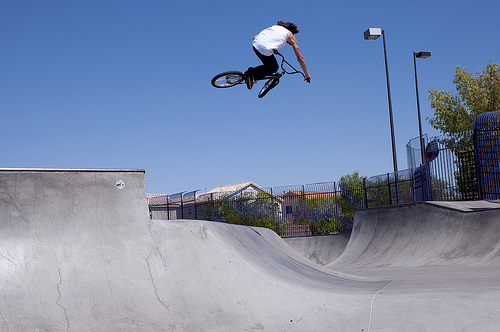
    las vegas skatepark

    Beginner Parks

    Las Vegas has five skateparks that are set up for beginner to intermediate skateboarders.
    Many of these parks are simple setups with little to no supervision and many do not even
    have phones so parental guidance is suggested.

    The largest of the beginner parks is Duck Creek Park located on Pollack Dr. The park is
    an impressive 10,000 square foot in size and even has some shaded areas to allow skaters
    to cool off some during the Vegas summer. While the park is primary for the beginner to
    intermediate skater, there are some advanced aspects to the park.

    Winchester Park on South McLeod Drive is a gated skate park that is a bit better
    maintained than most of the beginner parks. The park can be used day or night, has water
    fountains on site, and has 8,000 in square footage.

    Intermediate Parks

    There are two parks in Vegas that are exclusively intermediate to advanced level parks.
    These are Silverado Ranch Park on Gillespie St and Desert Breeze Park on Spring
    Mountain Rd.

    Desert Breeze Park is an intermediate to advanced level park that also has 2 hockey
    rinks on-site. These are used for Extreme Thing, Fox’s 54321, and the Tony Hawk Tour.
    Silverado Ranch Park is not quite as fancy as Desert Breeze Park, but is located in one of
    the higher end areas of Vegas.

    Hollywood Skatepark

    The only advanced level skatepark in Vegas is Hollywood Skatepark on South
    Hollywood. This park has supervision on premises and is only open during supervised
    hours. In addition, this park offers Skateboard Clubs, BMX clubs, skateboarding classes,
    and open skate.

    That’s just some skate parks in Vegas, some other might be underground, or only locals would
    know. So yes, there are some fun things to do in Vegas other than
    poker – like skate! Who knows what you’ll get yourself into.

    Have fun!

    photo credit: Vanessa (EY) & ctbrynt

  • EXCLUSIVE: David Goggins 24-Hour Pull Up World Record: Take #2

    EXCLUSIVE: David Goggins 24-Hour Pull Up World Record: Take #2

    This is a Nerve Rush exclusive article on one of our favorite athletes on the planet, David Goggins.

    Update 9/28: A wrist injury prevented David from hitting his goal this time around. Congratulations to him and his girlfriend for raising awareness for the Special Operations Warrior Foundation. You can read more about their joint world record attempt here.

    “I haven’t slept well in 2 months.”

    That’s what David Goggins says after September’s very public failure on The Today Show. After going on national television to break the world record of 4,020 pull ups in 24 hours, David had to stop – 2,588 pullups in – due to a partial tear in his forearm.

    I would have never gone national television if I didn’t think I could have actually done it.

    The culprit, a portable pull up bar that David brought into The Today Show studio. While it was portable, that also meant it wasn’t bolted down – which meant the bar would be physically swinging throughout the attempt. This caused David to have to compensate by using muscles not typically used on his training reps and eventually led to his forearm tear.

    “I’m not one to make excuses. It was my bad. It was my call. It’s all on me.”

    That said, he wasn’t satisfied with just trying, he needed to “clean up the mess.”

    This is about redemption


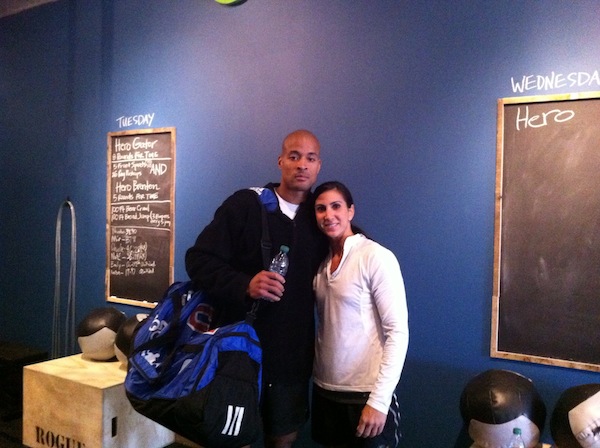
    David Goggins Pullups World Record

    David Goggins Pullup World Record Details

    November 25th, 2012

    Crossfit Brentwood Hills – Nashville, Tennessee

    David Goggins is going to be re-attempting to break the world record in less than a week. While most people are gearing up for turkey and stuffing, David’s got one thing on his mind: breaking the record. Finding redemption.

    After finding out about this new attempt via Crossfit Brentwood Hills, we got in touch with David via phone and got to personally interview David – one of our favorite athletes around here.

    Right in line with the redemption theme, Goggins’ second attempt will be decidedly more low-key than the first nationally televised one. Hosted by Crossfit Brentwood Hills in Nashville, Tennessee, Goggins will again attempt to break the 4,020 pull up mark in 24 hours. His girlfriend Dawn Griner will be attempting the record for females by attempting to do 2,500+ pull ups in the same time frame.

    We’re doing sorta the “low-budget Guinness record.” Goggins said. The cost to have a Guinness certified verification come out in person is close to $7,000, “so we’ll film the whole thing and submit the documentation for it on our own.”

    On David’s last attempt, he finished over 2.000 pull ups in just six hours into the event. The current record stands after Stephen Hyland stopped 7:50 hours into the event and left the remainder of the 24 hours unused.

    David Goggins Pullups Record3

    Driven By Failure

    Despite failing publicly in front of “millions and millions” of people, David isn’t deterred.

    A lot of people will give up after they tried and say ‘oh well, I tried.’ NO. Get back up and keep trying!

    Because despite what most people would think, failure doesn’t stop him. Failure drives him

    Failure is a powerful thing for your brain. I fail a lot. I’ve never done anything in my life the first time. I’m the king of failure.

    He related that the second time he approaches things, he’s better focused, has a plan of attack, is dialed in, and (as he says), “I’m angry.”

    “I would have never put myself on national television if I didn’t think I could do it, but I had to go on the next day and humbly say what I said. But I haven’t slept well in 2 months.”

    This is more than just a record to David. He needs to see what he is made of.

    David Goggins Pullups Record2

    Nothing Special

    Despite evidence to the contrary, Goggins insists that he is nothing special.

    “I am not superhuman. I am not a freak.” He insists that he is just working it out between him and God, so that “when I die, I can know when I’m lying in my casket that I every ounce of will I had, I used.”

    While we’d love to still imagine that he is superhuman, David points out his girlfriend Dawn as a prime example of his point.

    “I want to talk about my girlfriend Dawn. She is 39 years old. She never did sports. Never did running. Nothing. 6-7 months ago, she could do maybe 7 pull ups. Now she is doing workouts of 700 pull ups in 3 hours…anybody from any side of the street can do it.

    As the interview wound down, I had to ask David one last question.

    “David, if you hit 4,021 (the record) before the 24-hour mark, are you going to stop there or are you going to keep going for the full 24 hours just to see what you’ve got inside?”

    “I’ll let you answer that question”, he responded.

    That’s what we thought.

    ______

    Best of luck to David & Dawn on their joint attempt this upcoming Sunday in Nashville! Get after it.

    David Goggins’ World Record Attempt Official Press Release

    Pull Up World Record Event Information

    November 25th, 2012

    Crossfit Brentwood Hills, Nashville Tennesse

    –> Follow Nerve Rush on Twitter for up to the minute coverage.

    –> Subscribe for more exclusive content like this.

  • 8 Leadership Skills I Applied to Finishing My First Ironman

    8 Leadership Skills I Applied to Finishing My First Ironman

    This is a guest post from Jarie Bolander, an engineer by training, entrepreneur by nature and leader by endurance. Jarie combines leadership and endurance athletics over on his blog, Leading from Within. You can also find Jarie on Twitter via @EnduranceLeader.

    On July 28th, 2012, I achieved one of my life goals. I finish an Ironman distance triathlon. It ended up taking me 13:53:21 to complete the 2.4 mile swim, 112 mile bike and 26.2 mile run. Getting through the race took a tremendous amount of dedication, mental fortitude, support from family and friends and lots and lots of training.

    My successful completion of an Ironman only occurred because I chose to stay positive and lead myself to victory by tapping into the following leadership skills:

    1. Setting A Goal

    All organizations and individuals need goals. Without goals, we are adrift on the sea of life.

    Goals need to be specific and achievable for us and not what society might thrust upon us.

    My Ironman goal was to finish. I had some rough time goals in mind for each leg but my real goal was to finish before the cut-off time of 16 hours. My specific goals for each leg were:

    • Swim: Goal: 1 hr. (Actual time 1:10 hrs)
    • Bike: Goal: 7 hrs. (Actual time: 7:06 hrs)
    • Run: Goal: 5 hrs. (Actual time: 5:19 hrs)
    • Overall: Goal: 13 hrs. (Actual time: 13:53:21)

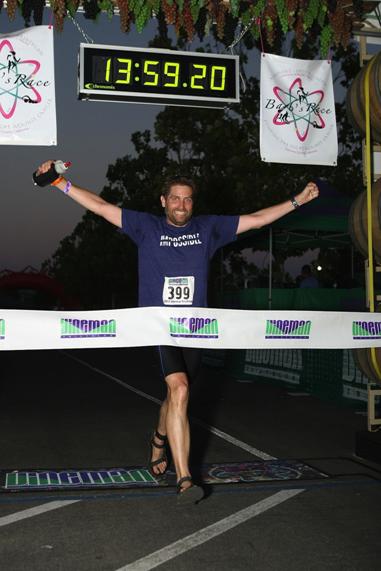
    You’ll notice that the actual times don’t add up to 13:53:21. That’s because there are two transitions (Swim to Bike and Bike to Run) that are timed separately. You’ll also notice that the time in the picture is different. My wave started 6 minutes later than the official race time.

    Even though I did not hit my overall goal, I’m happy with my performance since I finished before the sun went down and the cut off time.

    Next time, I’ll do better.

    Jarie Finishes First Ironman2. Devising A Plan

    Goals are great but without a plan to achieve them, goals are just empty promises.

    Plans are a good way to determine if your goal is actually achievable. Without a solid plan, your goals will be next to impossible to achieve.

    My plan to complete the Ironman was to device a training schedule that got me in shape to finish–yet not consume–all my free time. I decided that the best plan was to train by time and not distance. That way, I could plan my life accordingly. I got this idea from Be Iron Fit —an excellent book on training by time not distance.

    3. Gathering Support

    All leaders need supporters to help them achieve their goals. Supporters are also how a leader gauges their organizations impact and reach. A solid group of supporters will be invaluable for a leader and their organizations ability to get stuff done.

    My support network is wide and diverse. Some, like on the Impossible League, I have only met virtually, while others I see daily. These supporters were a vital part of my success because they believed I could do it and frankly, I did not want to let them or myself down.

    4. Sticking to the Plan by Executing It

    Once a specific and achievable goal is defined, a plan devised and support gathered, it is now time to execute the plan.

    If the plan is solid, then it will be easy to implement. If it’s not, then the desire will be to constantly change the plan. This needs to be avoided since a constantly shifting plan is just as bad as no plan at all.

    Executing my training plan was pretty simple —only train enough to finish. This meant I had to get the time in by training around my life. This also meant that I had to resist the urge to overtrain (e.g. Put in more miles instead of sticking to my time based training plan).

    Another big aspect of training is getting started. There were some days I really just wanted to stay in bed but forced myself to train instead. Those were some of the best training days I ever had.

    5.  Zigging and Zagging When You Have To

    Plans can and should change when conditions warrant. Every leader needs to know when the path they are on is just not going to get them there.
    By zigging and zagging, you can adjust your plan according to the situation you find yourself in.

    I had to zig and zag a couple of times to stay on my training plan and to complete the race.

    The biggest zig and zag came 3 weeks before the race. I got a nasty cold that would just not go away. I had to stop training for 3 days to recover. Even after that, the cold lingered but it did slowly get better. I’m glad I rested when I did, because on race day, my cold was completely gone.

    6.  Helping Others Succeed

    The main job of a leader is to build other leaders and help as many people as they can be successful. This is the only way to create an organization that can sustain itself and perform at a high level. The same goes for individuals.

    The reason I love racing is because of the esprit de corp that endurance athletes have. I have never met an endurance athlete that did not want everyone to finish.

    For me, helping others succeed is giving my fellow endurance athletes the encouragement to endure on. This takes many forms but the most powerful one is words of encouragement. I always say something positive to anyone I may pass or passes me.

    7. Finishing Strong

    Goals are meant to be completed and there is no better feeling than pushing hard to finish strong. Finishing strong is all about enjoying the final movements when the plan comes together, the team is excited and the finish line is in sight.

    The picture that accompanies this post is me crossing the finish line. Notice that I’m in full stride, arms raised and smiling. Sure, I was tired and sore but I felt the energy of the crowd, the courage in my heart and the pride in knowing that I did it.

    8. Thanking Your Supporters

    A leader can never say thank you enough. It’s probably the most important two words a leader will ever utter other than I’m sorry.
    Thanking supporters not only gives them the recognition they deserve but it also reinforces the fact that it took others to achieve the goal.

    I had a lot of support in my quest to be an Ironman. Some of this support was from people I met on the course (thanks Michael), those online and all my friends and family. To all of you, thanks!

    What’s Next?
    The great thing about finishing a life goal is that inspires you to want to achieve another one. I’m not exactly sure what’s next but two things keep on popping up —an ultra-marathon or a Goruck. Whichever one I do (I might do both), I know that I’ll apply these same leadership skills to finish strong.

  • Boxing, a Gut-Wrenching Sport

    Boxing, a Gut-Wrenching Sport

    It was when I watched Raging Bull in high school that I discovered boxing’s brilliance as a sport. A 1980 biographical film directed by Martin Scorsese, Raging Bull stars Robert De Niro as Jake LaMotta, an Italian American boxer whose insatiable appetite for boxing ultimately destroys his family. The film is rife with intensity for both boxing as a sport and boxing as a lifestyle.

    In 2004, ESPN ranked boxing as one of the world’s most difficult sports. Years and years of training can come down to one prized championship fight. By the way, if you’re trying to find Ricky Hatton vs Vyacheslav Senchenko tickets at Stubhub, get on it. This is going to be one hot fight.

    Boxing’s roots can be traced back to the ancient Greeks, who accepted it as an Olympic game as early as 688 B.C. Since then, a myriad of styles and philosophies around training and actual fighting have developed. In popular culture, we even celebrate when notable boxing referees opt for retirement. For such a seemingly simple idea — put two men in a confined space, wrap their hands in gloves and let them duke it out in a series of timed rounds — the sport of boxing is much more complex than one might think. And it’s that delicate mélange of simplicity and complexity that I love so much.

    For example, let’s talk offense. There are jabs and crosses, hooks and uppercuts, cross-counters and short straight-punches and half uppercuts. There are three different ways to stand — an upright stance, a semi-crouch or a full crouch, all three styles with their own particular advantages and disadvantages. Defense is another story, with bobbing and clinching, footwork and slipping and pulling away. Like any sport, boxing’s focal vocabulary illuminates the sport’s many nuances.

    Boxing is one of those sports that is oft-overlooked. But remember, even though it might not be as flashy or exciting as newer sports like wingsuit flying or bossaball, boxing is by far one of the most historic and extreme sports we have.

    photo credit: What What

  • Felix Baumgartner 22-Mile Supersonic World Record Stratos Skydive

    Felix Baumgartner 22-Mile Supersonic World Record Stratos Skydive

    red bull stratosFolks, skydiving history will soon be made.

    Felix Baumgartner, Austrian aviation specialist, plans to leap out of a space capsule from an altitude of 120,000 feet, rocketing his way at predicted speeds of over 700 mph to the earth’s surface.

    UPDATE:

    [highlight color=”yellow”]10/14 | 3:42pm EST: And he did it. WAHOO![/highlight]

    Quick Essentials

    Some quick facts you should know:

    > The planned jump is 120,000 feet, or 22 miles above the Arizona desert

    > The freefall should be around 5 minutes and 30 seconds. Felix Baumgartner is predicted to break Mach 1, the speed of sound, ripping through the air at speeds of over 700 miles per hour.

    > Baumgartner will travel in a 55-story high balloon, built out of a polyethylene plastic that happens to be one-tenth the thickness of a sandwich bag. This balloon is incredibly lightweight and will carry him all the way from the ground up to 120,000 feet.

    Check out this CGI video to get a visual sense of what to expect:

    [youtube id=”VCqnQq86fkY” width=”600″ height=”350″]

    The History: Seven Years, Felix Baumgartner and Red Bull

    Called the Red Bull Stratos Project, this multi-million dollar, seven-yar endeavor involves experts in the field of aeronautics, engineering and medicine.

    Felix Baumgartner, the protagonist in this epic storyboard,  is a 43-year old former Austrian paratrooper who has 2500+ jumps to his name. Baumgartner’s celebrated history of daredevil stunts include world records for the lowest BASE jump and for being the first to skydive across the English Channel. Who comes up with ideas like this?

    [youtube id=”r-TCO2IdoTA” width=”600″ height=”350″]

    In the video above, you’ll get a stronger sense of the complexities of the project. Joe Kittinger, meteorologist and current world record holder, has been advising Felix throughout the process. In 1960, Kittinger jumped from 102,800 feet, as part of Project Excelsior.

    During initial bouts of claustrophobia, Kittinger helped Felix develop a 40-item checklist to help ease his mind. Even though a specially designed balloon carries Baumgartner upward at a speed of 1000 feet/minute, there is significant alone time in the process.

    If the jump proves successful, Baumgartner plans to hand his 25+ year daredevil drawers up, to settle down with his girlfriend and to fly a rescue helicopter. The man recognizes that he has been pushing the limits — this is his final hoorah.

    Check out this video of Felix Baumgartner performing a 96,000 foot, second test jump over the summer.

    [youtube id=”s_SzUnkYcR4″ width=”600″ height=”350″]

    The Jump: 22 Miles, 700+ MPH

    Click the image below for a play-by-play mission timeline:

    felix baumgartner red bull stratos

    What Could Go Wrong

    Unfortunately, a lot could go wrong.

    For one, Baumgartner could find himself in a flat spin. In low air, high-altitude dives like this, an uncontrolled flat spin could push Baumgartner to an unconscious state. He could face temporary blindness as blood rushes to his head and extremities. Yikes.

    It is predicted that Baumgartner will step out of his capsule into temperatures of minus 10 degrees Fahrenheit. As he rockets toward earth, he could experience up to minus 70 degrees Fahrenheit. Fortunately, his custom-designed space suit should protect him up to temperatures of minus 90 degrees.

    When Baumgartner’s body approaches the speed of sound, shock-shock interaction could endanger his pressurized suit. Hopefully, because these sonic forces are less intense when the air is thin, it won’t be an issue.

    The Skydiving Suit: Custom-Engineered

    felix baumgartner supersonic skydive

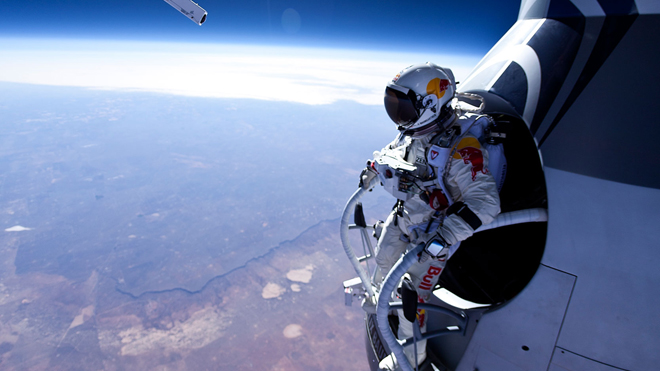
    Any skydive above 62,000 feet requires a pressurized suit. Otherwise, water in the body turns to gas, and the body distends via a process called ebullism.

    Not fun.

    Red Bull partnered up with the David Clark Company, based out of Massachusetts, to create a custom suit modeled on those worn by Air Force pilots during high-altitude recon missions.

    The suit has four layers — a liner, a bladder fitted to Baumgartner’s body, mesh to hold the bladder in place and a flame-retardant exterior. The suit is designed to protect Baumgartner from a fairly large temperature range, -90 to 100 degrees Fahrenheit, with a ventilation hose to provide warm or cool air as needed.

    The composite helmet weighs 8 pounds, with a retractable sunshade visor and an integrated heating circuit to prevent fogging. The helmet is also equipped with an oxygen regulator that will pump out 100% oxygen during the ascent and descent. A drinking port will provide Baumgartner with enough water.

    Finally, five cameras will live on the suit to film what will undoubtedly be the ride of Baumgartner’s life.

    Follow Along in Real Time

    The whole shebang will be broadcast live, without feed delay or interference — an engineering marvel, I might add — from Red Bull Stratos.

    There are also several tweets from Red Bull – below are a few notables:

    https://twitter.com/RedBullStratos/status/255415156702584832

    https://twitter.com/RedBullStratos/status/255466402809516032

    https://twitter.com/RedBullStratos/status/255313839053221888

    https://twitter.com/RedBullStratos/status/255158801370603520

    https://twitter.com/RedBullStratos/status/254740216185778176

    [photos via Red Bull Content Pool]