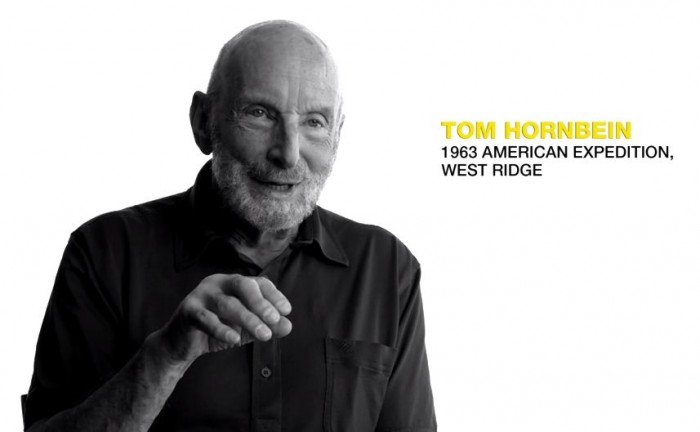
National Geographic speaks to people who know Mt. Everest best. Climbers and Sherpas both present and past wax philosophical on the world’s highest peak.
Tag: mountaineering
-

9 of the World’s Most Extreme Jobs
For those who spend their days trapped in a cubicle, the idea of extreme jobs may be too far-fetched to understand, but for those who live for adventure, battling rough waves or traversing cliffs may be considered dream jobs. There are those out there who risk their lives on a daily basis in pursuit of thrill and a paycheck. Here are nine of the world’s most extreme jobs.
9. Skydiving Instructor
Skydiving instructors’ jobs involve much more than falling from great heights. Not only do these professionals have to worry about their own bodies and actions, but they’re also responsible for both teaching and assisting newbie jumpers.
Wages: Outside of owning a skydiving business, the job of an instructor generally leans toward seasonal or part time, earning around $25 per every class taught.
Extreme factor: What could be more thrilling than soaring through the air after jumping from a plane? Skydiving earns extreme job points for the simple act of the fall itself. It also involves the responsibility of another’s life. On average, there’s one death for every 142,000 jumps.
8. Safari Guide
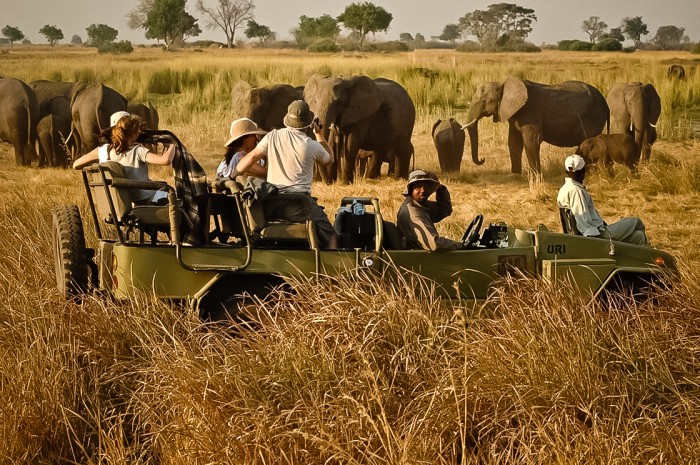
Lions and tigers and bears… Safari guides get to see nature at its wildest. They learn about plants and animals, drive through rough terrain and are responsible for both their own survival as well as that of the group for extended periods of time.
Wages: Wages may vary dramatically, depending on the location of the safari, but the median guide averages $73,000 per year.
Extreme factor: The animals that safari guides encounter are often dangerous, but those in charge are trained to deal with them before hand. The real risks often come in smaller packages, like poisonous snakes or insects. There are also, of course, risks of diseases that aren’t seen in the U.S.

7. Whitewater Rafting Guide
Whitewater rafting guides live a life of true adventure, cruising down wild rapids and steering their way through rough currents.
Wages: Depending on experience, company and location, raft guides often make somewhere between $2,000 and $9,000 per season.
Extreme factor: The extremity of a whitewater guide depends largely on the location and its surrounding rivers. While some guides may lead simple, lazy trips down a calm river, others could be navigating customers through class 5 rapids. As with any whitewater sport, for which the overall fatality rate is 0.87 deaths per 100,000, rafting has its share of danger.

6. Scuba Diver
Commercial divers get to experience the great unknown and see creatures most of us will never encounter. Divers may head underwater to inspect, fix or collect artifacts that sit below the water’s level. Some may even conduct experiments or run scientific tests.
Wages: The median income for a commercial scuba diver is just under $48,000.
Extreme factor: As always, with pushing the body to new extremes, come extreme risks. The most common causes of death for divers is equipment failure, heart attacks and mistakes in the ascent or descent. Roughly every 200,000 dives results in at least one death.
5. Search and Rescue Helicopter Pilots
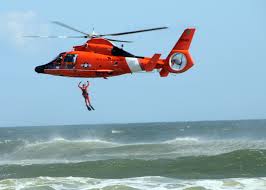
Outdoor adventurers take risks, often ill-advised ones, and for these mistakes are search and rescue helicopter pilots sent to save those in extreme danger. They may need to save sailors from sinking boats or rescue rock climbers from misjudged climbs.Wages: The median salary for a search and rescue pilot is $57,000.
Extreme factor: These pilots fly into dangerous situations where others have already failed. They must right wrongs and often find themselves in life or death situations that require fast-thinking and skilled decisions. When one of these planes crashes, nearly one third of the accidents are fatal.

4. Miners
Although definitely not as typically “extreme” as other occupations on this list, miners face some of the highest fatality rates of all outdoor jobs.
Wages: The average mining salary, depending on the state, could be anywhere between $40,000 and $100,000 per year.
Extreme factor: Mining is one of the oldest, yet one of the most extreme professions in the outdoor world. If thought of as almost a form of caving, this makes sense. They risk cave-ins and suffocation on a daily basis. There are over 15 mining-related deaths per 100,000.

3. Fishermen
There’s a reason the Discovery Channel’s the Deadliest Catch has been running for 10 consecutive seasons. Whether they’re battling choppy waters or reeling in gigantic catches, the life of a fisherman is rarely dull. It’s also one of the most deadly professions in the U.S.
Wages: For risking their lives on a regular basis, fisherman are a bit short-changed. The median salary for a fishermen is just over $30,000.
Extreme factor: With nearly 95 percent of the country’s salmon supply stemming from Alaska, many fishermen call the Last Frontier home. Alaska’s waters, however, are notoriously choppy and unpredictable, often resulting in massive waves and slick, icy decks. Over 120 out of 100,000 workers die on the job.
2. Logging Workers
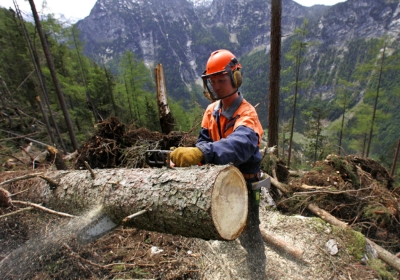
Logging workers, like lumberjacks, are portrayed in folktales as strong, indestructible men like the famous Paul Bunyan with his Blue Ox. The fictional tale isn’t far off base when compared to modern day logging workers. The job demands grueling, manual labor, literally surrounded by risks.
Wages: In today’s industry, logging workers average around $37,000 per year.
Extreme factor: In many ways, logging workers are at Mother Nature’s mercy every single day. They’re surrounded by falling trees and sharp tools, resulting in nearly 128 deaths per 100,000 workers. But it’s not only about strength of overcoming fears, the physical part of cutting down and loading up timbre takes a ton of muscle.

1. Everest Guides
Mountaineering guides lead extreme lives, taking their lives, as well as their groups’ lives, into their hands with every climb, but Everest guides take extreme to an entirely different level. The world’s tallest peak has been conquered by more than 6,000, but has little over a 55 percent success rate for those who attempt it. And when guides lose their way or meet unlucky deaths on the mountains, climbing customers are left to find their own way back to safety, much like Jon Krakauer in Into Thin Air.
Wages: Mountaineers are generally paid by the day, but wages range dramatically based on company, position and mountain and climb they’re guiding. A guide at Mount Rainier may start at $125 per day, but those on bigger, more dangerous mountains, such as Everest, they tend to make more. Climbers pay between $5,000 and $7,000 for a Sherpa guided summit attempt. Western-guides, on the other hand, expect their climbers to fork over somewhere between $45,000 and $65,000.
Extreme factor: Not only must these workers be incredibly skilled mountaineers, but they must also deal with changing weather and altitude adjustments. Often, they need to make split-second, life or death decisions. Fatality rates for anyone who climbs Everest are incredibly high. In fact, there have been over 4,000 deaths of Sherpas, those who are often much more acclimated to the mountain’s conditions, in the past decade. A Sherpa stationed at a base camp on Everest is 10 times more likely to die than a commercial fisherman, making an Everest mountaineering guide the most extreme job in the world.
-
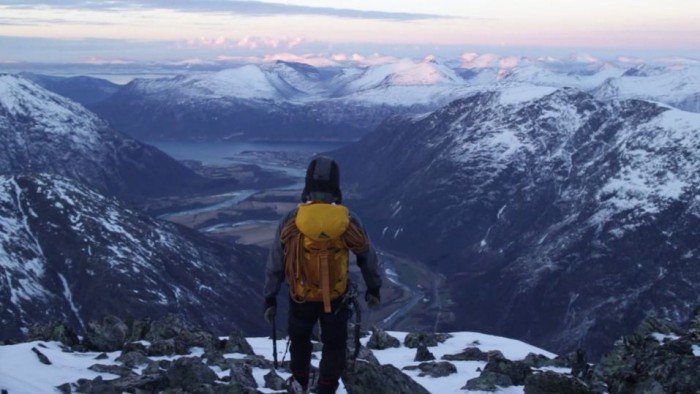
Joika Dreams: Norwegian Mountaineering
A short film trailer highlighting classic Norwegian mountainering on Romsdalshorn, Innerdalstårnet, Snøhetta and Gaustatoppen.
-

Steve House: Shattered Ice Climbing Movie
“The wrong place, is it here? The wrong moment, is it now? Will I know?” After achieving his dream summit, Steve House finds himself empty.
-
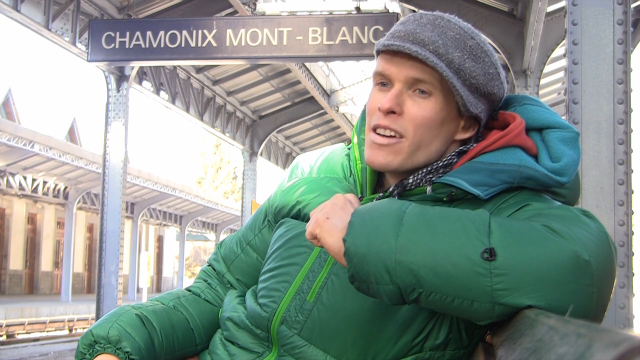
Swedish Andreas Fransson’s Ski Descent of Denali
In the summer of 2013, I plan to climb Mt. McKinley, the highest mountain in North America. And when I stand on the summit, I plan on representing Nerve Rush in the triumphant, glorious manner it deserves.
As it stands, this expedition is about 1.5 years away. In the meantime, as I pad my bank account for the necessary gear and logistics, I also begin to think about a training schedule that will optimize my chances at reaching the summit. Standing tall at 20,320 feet, Denali is no easy climb.
Currently in armchair-mountaineering mode, I occasionally find myself browsing the Internet for Denali-related resources. Training programs, trip reports, maps, you name it. Just recently, I stumbled upon something remarkable and definitely Nerve Rush worthy.
Andreas Fransson, Swedish Alpinist Extraordinaire
Andreas Fransson, a 28-year old Swedish alpinist and extreme skier, has the rare kind of prowess we at Nerve Rush HQ tend to swoon over. Not only is he capable of scaling mountains with world-renowned alpinist, but he’s one of the best extreme skiers in the world, buddying up with the likes of French snowboarder Xavier de Le Rue.
In 2010, Fransson shattered the upper half of his body in the French Alps when a wet-slab avalanche ripped him from his rappel. A year later, in May 2011, he broke new ground with a solo first descent of Denali’s south face, a route called the “baddest unskied line in North America.”
After a month of alpine-style climbing on the mountain, ascending and descending to acclimate and familiarize himself with the route, Fransson took 12.5 hours to descend the 8,000-foot south face of the mountain. Much of this trip was done at night..without a headlamp!
Riding with 177-centimeter Nordica Enforcers, Fransson descended on a precarious and seemingly never-ending surface that featured sections of 70-degree ice.
After returning safely to base camp, Fransson, in true extreme form, decided that the adventure wasn’t done. He took a rest day then climbed Denali’s Cassin Ridge, one of the most famous alpine climbs in the world, in a mere 33-hour round trip push. To lend some perspective, the Cassin Ridge has been climbed in under 36 hours fewer than 10 times. And, following this second successful venture, Fransson skied the Messner Couloir, a 5,000-foot, 45-degree descent. All told, he slept 3 hours in 3 days.
Fransson currently lives in Chamonix, France, a skier’s and alpinist’s mecca in the French Alps. He trains 10 hours a day.
From Fransson:
“Society has an absurd general belief that life is about hanging on as long as possible. So people [are] often hanging on for the sake of hanging on and not for really living … I can go on for days about this, but the important things in life are unsayable, so let’s just live it out and see what we find behind the curtains in front of the big game we are all playing.”
Here is a clip of Fransson skiing the Col de L´Aiguille Verte in Chamonix:
[vimeo id=”19292027″ width=”600″ height=”350″]
-
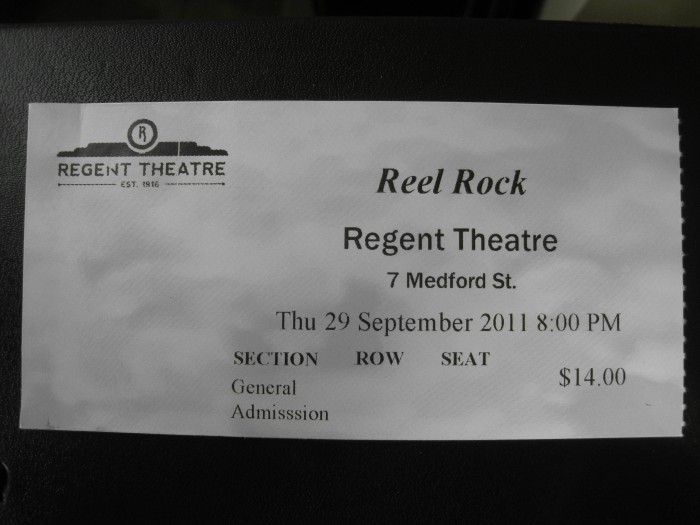
Reporting Live: 2011 Reel Rock Film Tour
A few weeks ago, Nerve Rush HQ received an email:
I bought two tickets to the Reel Rock Film Tour…The six movies being shown look incredible.
I hopped on over to the website and found this trailer:
Boom goes the dynamite–I was in. Waiting in line, I realized I should have gotten there earlier. The theater was packed.

History of the Reel Rock Film Tour
The first Reel Rock film tour premiered in 2006 in Boulder, Colorado, featuring two new climbing movies. Founded by Josh Lowell and Peter Mortimer, both who have been producing and directing adventure films for more than a decade, the Reel Rock film tour is organized annually and promotes films about rock and ice climbing, mountaineering, BASE jumping and other adventurous mountain sports. The tours often include gear raffles, athlete appearances and signings and fundraising for non-profit organizations. The tour is put on by Sender Films and Big Up Productions, who team up with North Face and Windstopper as primary sponsors.
Reel Rock Film Tour 2011

This year, the 6th annual film tour kicked off with two winners from a filmmaking competition. The judges picked one winner, and online votes (or “the people”) chose the other winner.
The judges choice, “Crash Pad Test Facility,” featured a comical sequence of tough situations, all of which were handled miraculously by the bouldering crash pad. The people’s choice, “The Climber Kid,” was a climbing parody of The Karate Kid.
There were six other films:
Ice Evolution
A beautiful film shot at British Columbia’s Helmcken Falls, maniac ice climber Will Gadd, a 30+ year veteran to the sport, shows us his dream climb–a heinously difficult but perfectly aesthetic overhanging climb behind a waterfall. Gadd and Tim Emmett dodge 30 foot icicly bombs and climb undoubtedly the hardest pure ice climb in the world. My favorite part of the film? When Gadd and Emmett used a metal detector to hunt down ice-covered bolts from the previous season. It was hilarious.Cold
“What the fuck am I doing here? We have to get down.” Over the past 26 years, 16 expeditions have tried and failed to climb Gasherbrum II, one of Pakistan’s highest peaks (over 8,000 meters), in the winter. In February 2011, Simone Moro, Denis Urubko, and Corey Richards became the first to achieve this goal, surviving -50 degree temperatures and a massive avalanche. In this first-person look at modern super-alpinism, Richards captured both the glory and pain of the trip.Project Dawn Wall
Tommy Caldwell, one of the world’s best rock climbers, has devoted the last decade of his life to opening free climbing routes on Yosemite’s El Capitan. Three seasons into his ultimate project–the seemingly impossible Dawn Wall–Tommy documents his first big ground-up push, showing us pitch after pitch of 5.14 first ascents. Eventually, an epic storm shuts the team down for the season, but boy did they come back with some nutty footage–imagine what it looks like to sleep on a completely vertical face. Ever heard of a portaledge?Origins: Obe & Ashima
One of the more inspiring adventure films I’ve seen, Obe & Ashima profiles nine-year old Ashima Shiraishi, a New York City bouldering prodigy under the tutelage of her passionate coach, Obe Carrion, a former professional. In part of the film, they head to Hueco Tanks, TX, seeking out the highest concentration of boulder problems in the U.S., where Ashima tears it apart. After climbing the notoriously difficult V12 Martini Right, Obe says to Ashima, “This is how psyched feels.”Race for the Nose
It’s the wildest competition known to man, the speed record on the Nose route of Yosemite’s El Capitan. For 50+ years, the world’s best climbers have been one-upping each other, racing up 3,000 feet of vertical granite rock in under 3 hours, risking life and limb to shave mere seconds from the climb. In this film, we follow Dean Potter and Sean Leary, who duke it out with other teams for rock climbing’s ultimate prize.Sketchy Andy / Slacklife
Andy Lewis is a nutty guy who, among other hobbies, enjoys BASE jumping, naked slacklining and aerial “trick-lining.” This film showcases someone who is pushing the limits–some might think too far–with some pretty gnarly feats. Below are some highlights, not from the film tour, of Andy’s best. -
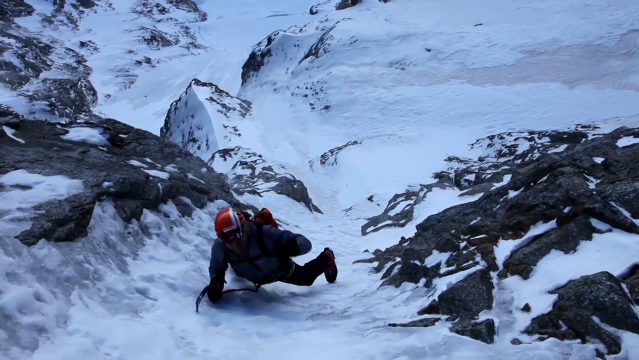
Ueli Steck Speed Solos North Face of Grand Jorasses
The soundtrack title is “Human After All,” which is comical considering Ueli Steck is nowhere near human. We’ve showcased his speed solo ascent of the Eiger before, but this clip is equally as impressive. Watch Ueli Steck conquer the north face of the Grand Jorasses in Chamonix, France.


